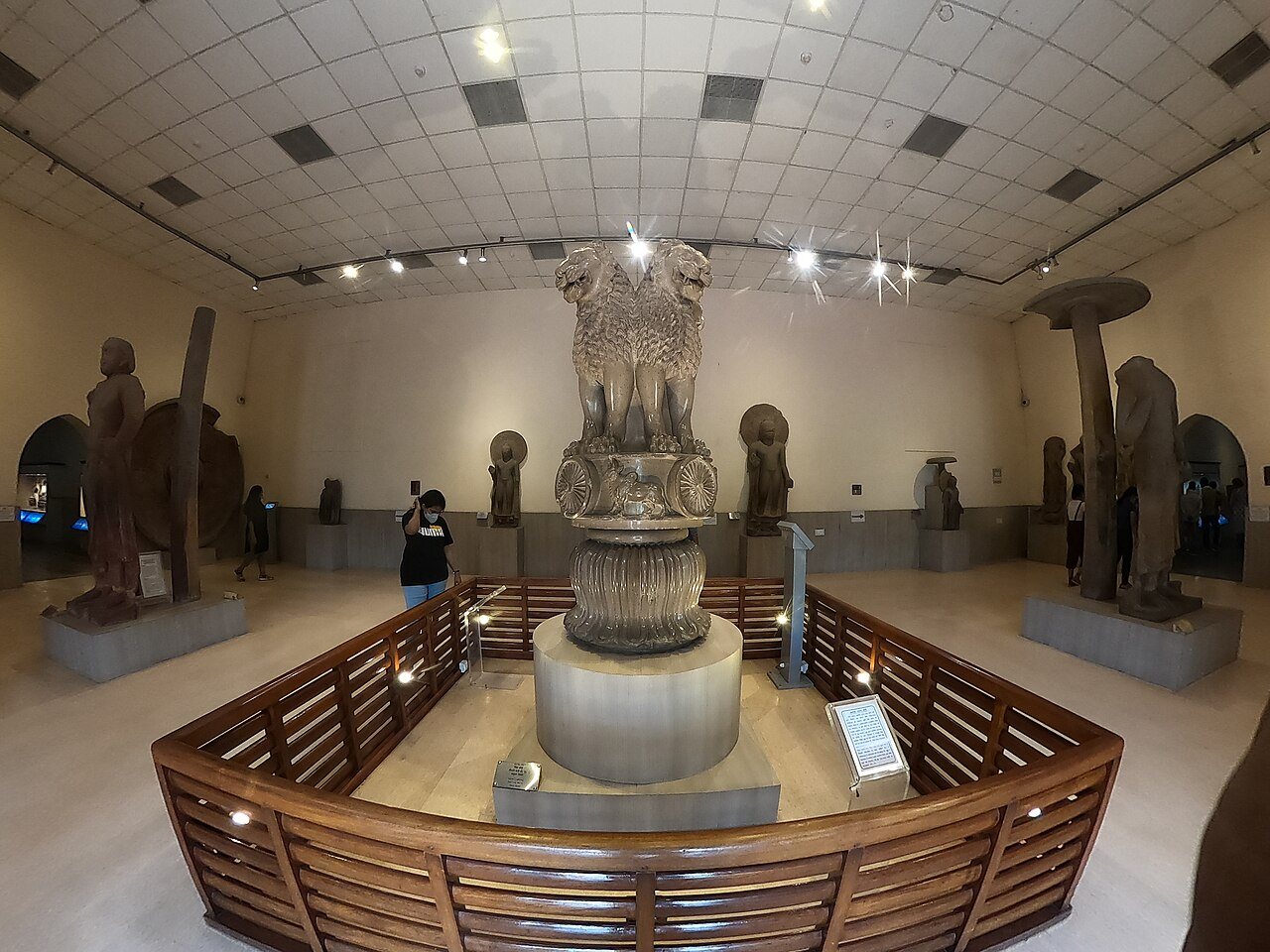
Open an Indian passport, or look at the top of a rupee note, or at the badge on a government car in Delhi, and there they are: four lions standing back to back on a drum, with a wheel beneath them. The lions were carved around 250 BC and stood for two thousand years on a pillar in a deer park at Sarnath, until a British engineer dug them out in 1905. They belong to the one emperor in history I know of who put his own war guilt in writing and then had the writing cut into cliffs so it could not be lost. He ruled for about thirty-six years, and by his own account spent most of them making up for something he did in the eighth.
The war he did not need
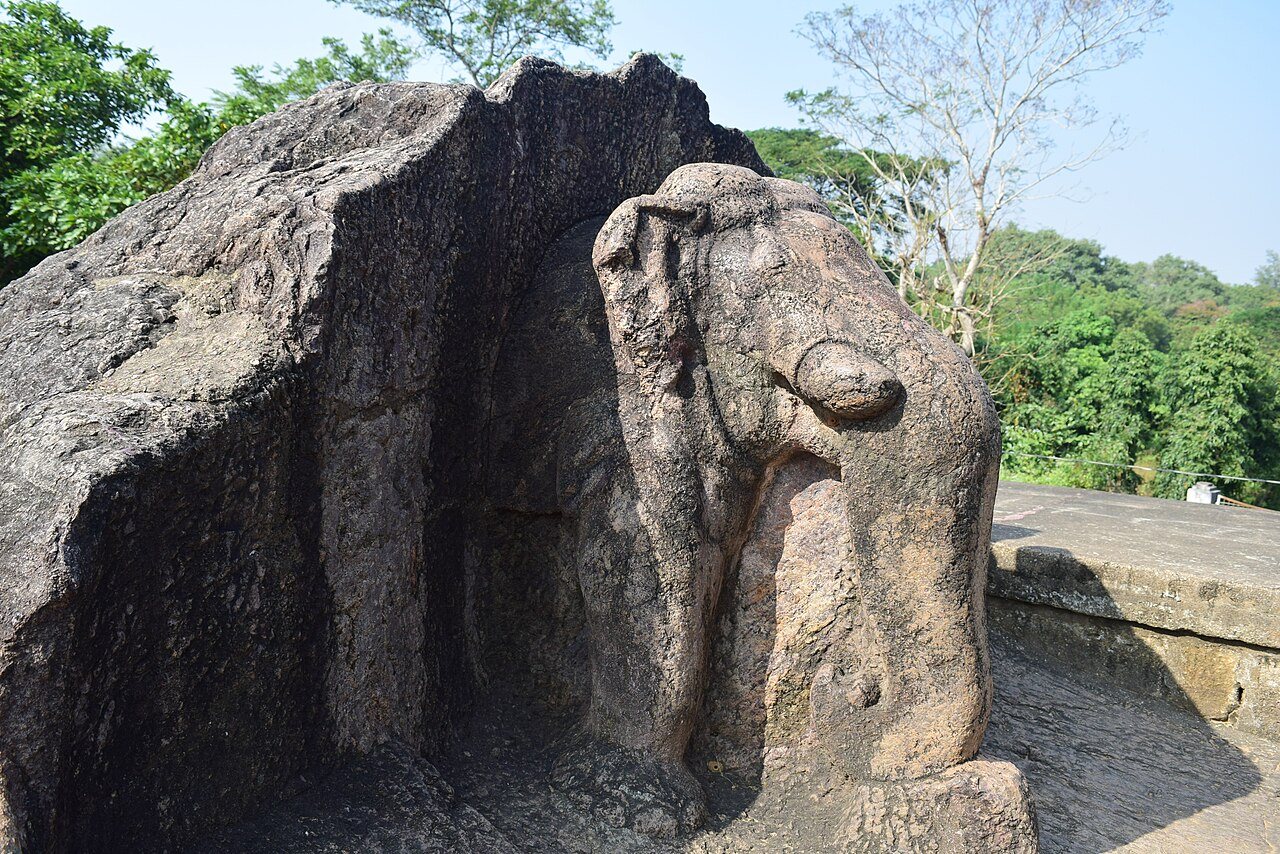
The rock-cut elephant at Dhauli, near Bhubaneswar, which stands above one set of Ashoka's edicts in Kalinga. Photo: Bikash Ojha, CC BY-SA 4.0, via Wikimedia Commons
Ashoka Maurya came to the throne around 268 BC, the grandson of Chandragupta, who had taken the Ganges plain from the Nanda kings and the Indus from Alexander's successors. The Sri Lankan chronicles, written centuries later by Buddhist monks who liked a conversion story, say Ashoka killed ninety-nine brothers to get the crown. Historians treat that as a monk's number. What everyone agrees on is that by the time he turned to Kalinga, on the Bay of Bengal coast where Odisha is today, he already ruled almost all the subcontinent and did not need it.
Kalinga had ports, elephants and a reputation for fighting. The campaign, around 261 BC, was short, and the casualty figures come from the winner, which is unusual. His thirteenth Rock Edict says that a hundred and fifty thousand people were carried off, a hundred thousand were killed and many times that number died afterwards of the usual causes. Nobody now reads those figures as a census. What matters is that the emperor chose to publish them.
An apology in four alphabets
The edicts are the oldest readable royal inscriptions in India: fourteen major rock edicts, a set of pillar edicts and dozens of minor ones, cut on boulders, cliff faces and polished sandstone columns from Kandahar in Afghanistan to Karnataka in the south. Most are in Prakrit written in Brahmi; those on the north-west frontier are in Kharosthi, and at Kandahar the emperor's words are given in Greek and Aramaic for the people Alexander had left behind. The emperor, in other words, was writing to be read.
In the thirteenth edict he describes the conquest, says the king "felt remorse" because the conquest of an unconquered country involves slaughter, death and the carrying away of people, and declares that from now on his only conquest will be conquest by dhamma, a word that means something like right conduct and covers kindness to animals, respect for other sects, obedience to parents and not killing people. He then sends greetings to five named Greek kings, including Antiochus in Syria and Ptolemy in Egypt, as if to tell them that the policy was theirs to copy.
There is a detail in the stone that I find more revealing than the remorse. At Dhauli and Jaugada, the two edict sites that are actually in Kalinga, the thirteenth edict is missing. In its place are two separate edicts addressed to the officials of the conquered province, telling them to treat the people justly, because "all men are my children". The emperor would confess the slaughter to the whole empire. He would not rub the noses of the people it had happened to in it. Whether that was tact or politics, the man had a sense of his audience.
What he kept
Here is the decision that the sentimental version leaves out. Ashoka did not give Kalinga back. He kept it, garrisoned it and sent governors to it. In the same edict in which he regrets the war, he warns the forest tribes on his borders that he has power and will use it if they do not behave. He abolished the royal hunt, cut the palace kitchen's slaughter to two peacocks and a deer a day (the edict is quite specific), planted shade trees along the roads and sent missionaries to Sri Lanka. He did not disband the army.
The Mauryan empire broke up within fifty years of his death in about 232 BC, and India mostly forgot him. The Brahmi script went out of use and the edicts became marks on rocks. Firuz Shah Tughlaq, the sultan of Delhi, had a pillar hauled to his capital in 1356 and asked his learned men what it said; they could not tell him.
The lions come back
James Prinsep, an assay master at the Calcutta mint with a hobby, cracked Brahmi in 1837 by working out from short donor inscriptions at Sanchi which signs spelled "gift of". The edicts could then be read, but they were signed only "Devanampiya Piyadasi", Beloved of the Gods, and it took the Sri Lankan chronicles, and finally an edict found at Maski in 1915, to put Ashoka's name to the title.
By then the lions were out of the ground. F. O. Oertel found the Sarnath capital in 1905, broken from its pillar but almost whole, and it went to the small museum built beside the site, where it still is. On 26 January 1950, the day India became a republic, the new state took the capital as its emblem, and the wheel from the drum beneath the lions had already gone onto the flag in 1947. The man who raised the pillar kept what he had conquered and said he was sorry, in writing, on rock. I have always thought the republic chose its symbol carefully, and that the choice is less comfortable than it looks.
Enjoyed this story?Get a new one every day on social.