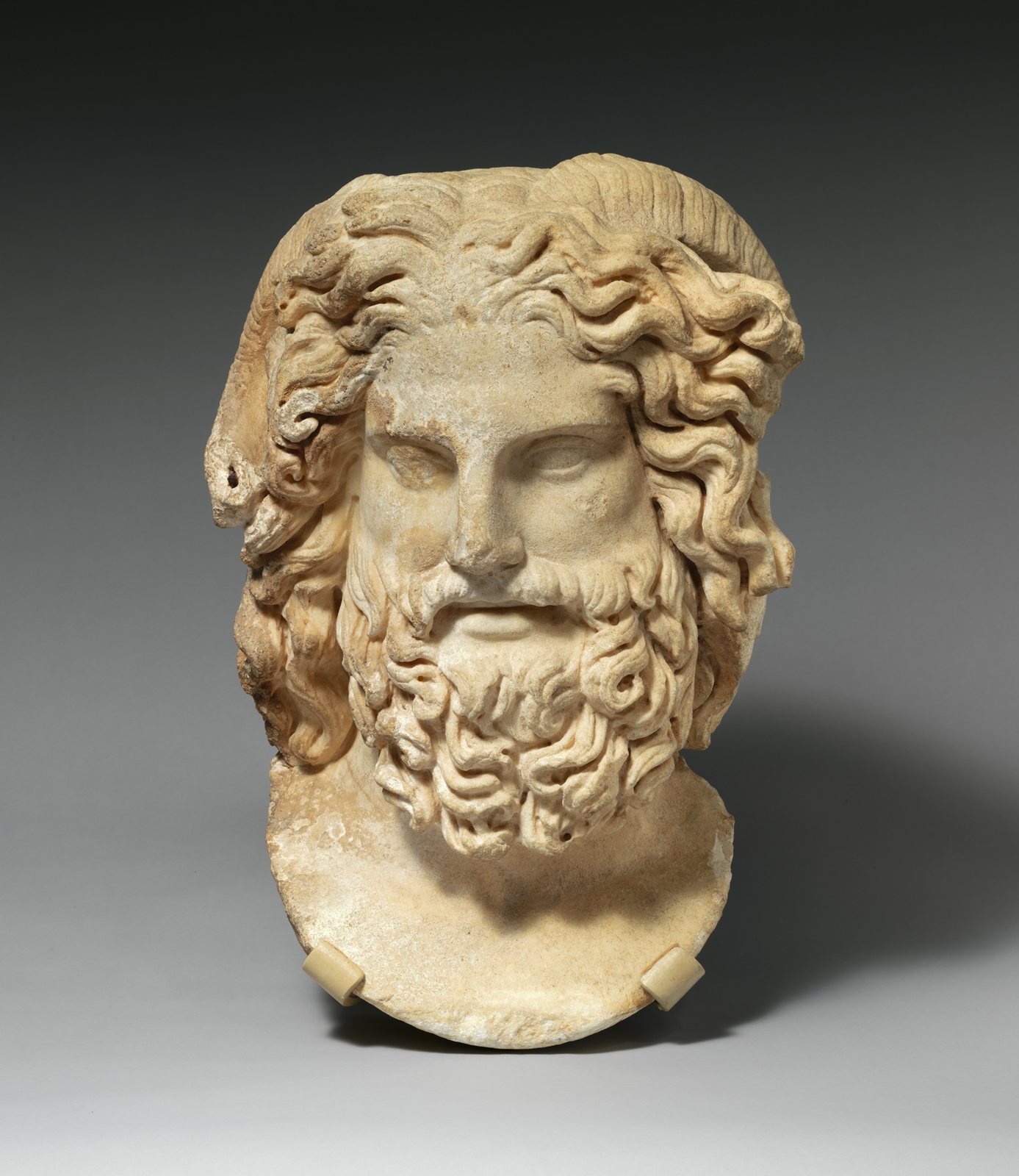
Photo: Marble head of Zeus Ammon, about 120 to 160 AD, The Metropolitan Museum of Art, CC0 public domain
Fifty thousand men. That is the figure Herodotus gives for the army the Persian king Cambyses sent west from Thebes into the desert in about 524 BC, and it is the figure that has kept people searching the sand ever since. Nothing of them was ever found. Herodotus, writing a century later, says so himself: the soldiers reached the oasis seven days' march from the Nile, set out from there toward the oracle of Ammon, and after that nobody could say what became of them, except that the people of the oasis told a story about a wind.
What Herodotus was told
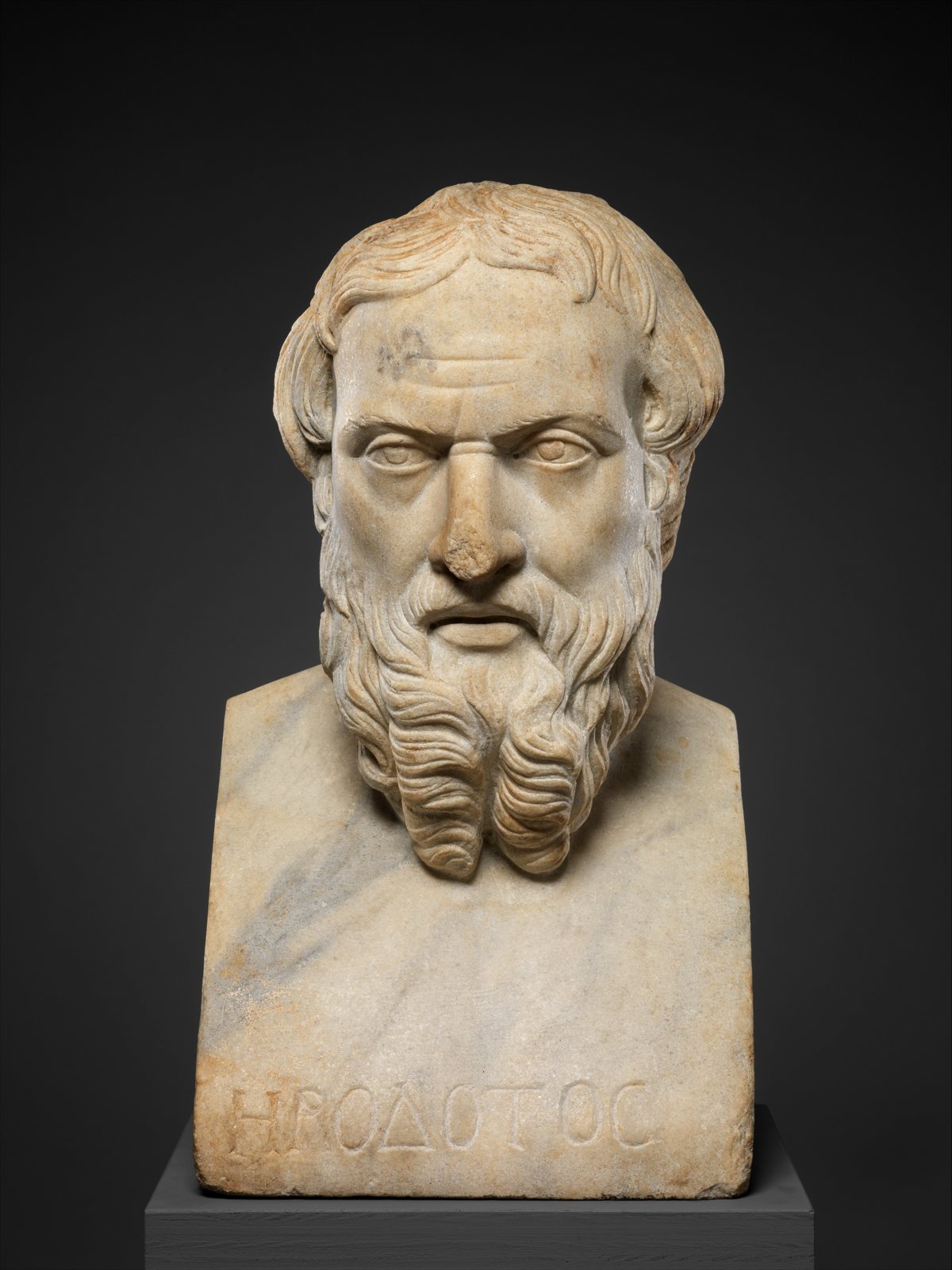
Marble bust of Herodotus, Roman copy of the 2nd century AD. The Metropolitan Museum of Art, CC0 public domain
Cambyses II, son of Cyrus the Great, had conquered Egypt in 525 BC. According to Herodotus he then lost his mind: he stabbed the sacred Apis bull, murdered his brother, married his sisters, and launched three campaigns at once, against Carthage, against the Ethiopians of the upper Nile and against the Ammonians, whose oracle sat at Siwa, far out in the Western Desert near what is now the Libyan border. His orders for the last were to enslave the Ammonians and burn the oracle.
The Ethiopian campaign, Herodotus says, ran out of food and the men drew lots and ate one another until Cambyses turned back. The Siwa column fared worse. It got as far as the oasis the Greeks called simply Oasis, almost certainly Kharga, and marched on into the open desert. Halfway to Siwa, while the men were eating, a violent south wind rose and buried them where they sat.
That is the whole of the account: a few lines in Book Three. Herodotus is careful to say it is what the Ammonians reported, and the Ammonians had every reason to tell a good story about the god who had protected them.
Some of the rest is suspect too: an inscription from the Apis bull's own burial at Saqqara shows Cambyses honouring the animal in proper pharaonic style, and Herodotus's informants were Egyptian priests who disliked the Persians. The army, though, really does seem to have gone out and not come back.
Everyone who went looking
The desert between Kharga and Siwa is a few hundred miles of dunes, gravel plains and the Great Sand Sea, and from the 1930s onward it attracted exactly the kind of person you would expect. László Almásy, the Hungarian explorer later turned into the hero of The English Patient, looked for the army between his other projects. Orde Wingate, who would go on to run guerrilla campaigns in Ethiopia and Burma, spent January 1933 searching for it with a small camel party and found nothing.
The biggest effort was American. In 1983 and 1984 a journalist named Gary Chafetz led a six-month expedition backed by Harvard and the National Geographic Society, with an ultralight aircraft, across about a hundred square kilometres of dunes southwest of Bahariya Oasis. They found some five hundred burial mounds. The bone fragments inside dated to roughly 1500 BC, a thousand years too early. On the way home Chafetz was arrested in Cairo, and the charges went away after he donated the ultralight to the Egyptian government, which is the kind of ending these stories tend to have.
Then in November 2009 two Italian brothers, Angelo and Alfredo Castiglioni, announced in a documentary that they had found the lost army near Siwa: human remains, bronze weapons, a silver bracelet, an earring. Egypt's antiquities chief, Zahi Hawass, called the claim unfounded and misleading and pointed out that the brothers had no permit to dig in the country. Nothing was ever published in a journal. (The Castiglionis had made a career of sensational films about Africa in the 1970s, and archaeologists did not feel obliged to take the new one on trust.)
The sandstorm as spin
The most interesting idea came not from the sand but from a temple. Olaf Kaper, an Egyptologist at Leiden University, had been excavating at Dakhla Oasis, south of the route to Siwa, and in 2014 he announced that temple blocks there carried the name of Petubastis III, a shadowy Egyptian who proclaimed himself pharaoh in rebellion against the Persians soon after the conquest. Dakhla, Kaper argued, was the rebel's base, and an army marching west from Thebes toward the oases would have been marching straight at him.
His reading is that Cambyses' column was not swallowed by weather at all. It was ambushed and destroyed by Petubastis, who went on to be crowned in Memphis. A few years later Darius the Great put down the revolt and, Kaper suggests, let the sandstorm story stand, because a divine wind looks better in the record than a defeat by a native rebel. Herodotus, arriving a few generations on, heard the sanitised version.
It is a theory, and Kaper says so. It explains the silence of the Persian sources better than a storm does, though it still does not explain where fifty thousand sets of bones went. Then again, neither does anything else.
Still out there
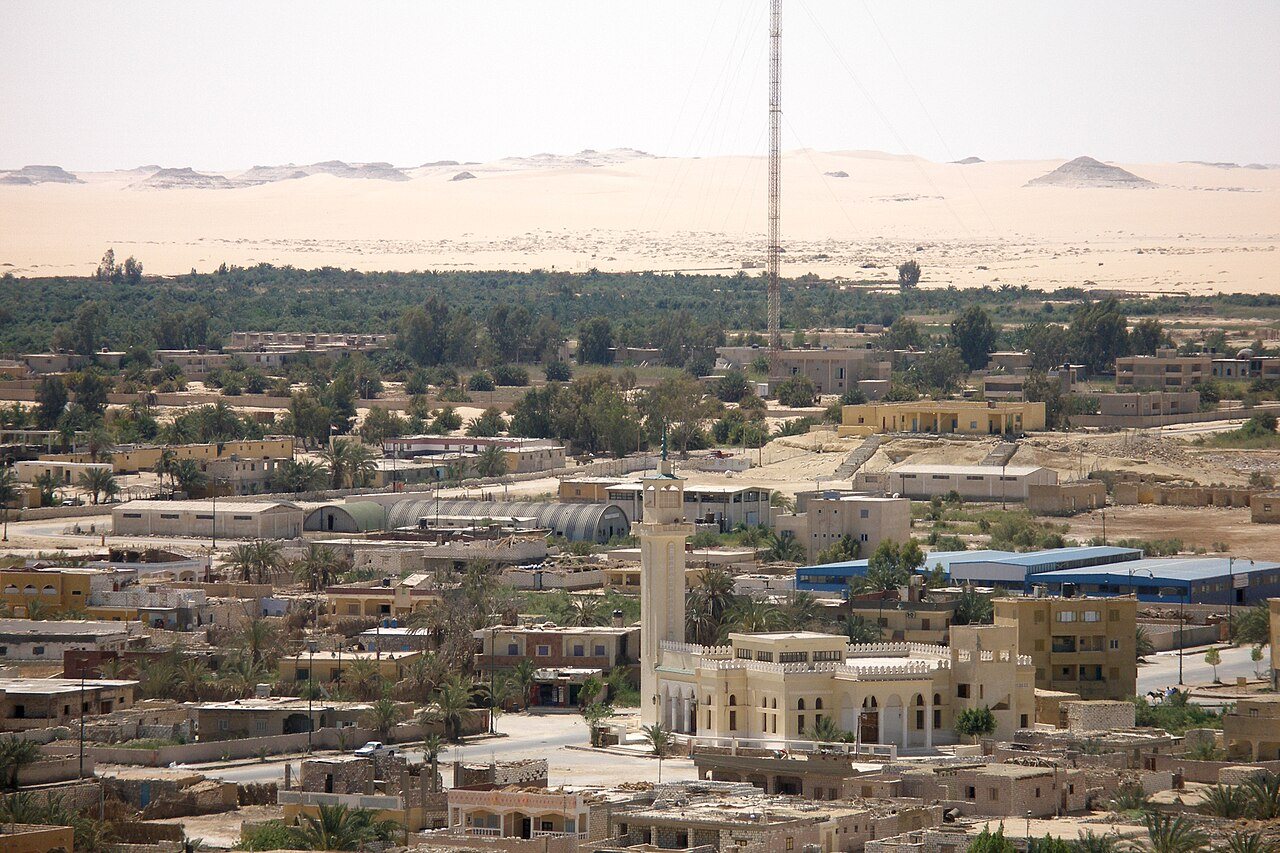
The town of Siwa today, with the desert beyond the palm groves. Photo: Vyacheslav Argenberg, CC BY 4.0, via Wikimedia Commons
Siwa today is a town of date palms and salt lakes with a ruined oracle temple on a hill, where Alexander the Great went to be told he was a god in 331 BC, two centuries after Cambyses tried to burn the place. The desert around it still produces a headline about the lost army every few years, usually with a photograph of a dune.
The figure is probably the problem. Fifty thousand is Herodotus being Herodotus. Lose five thousand men to a rebel in a dry wadi and nobody bothers to write it down. Lose fifty thousand and you get a wind from God and twenty-five centuries of people with metal detectors.
Enjoyed this story?Get a new one every day on social.