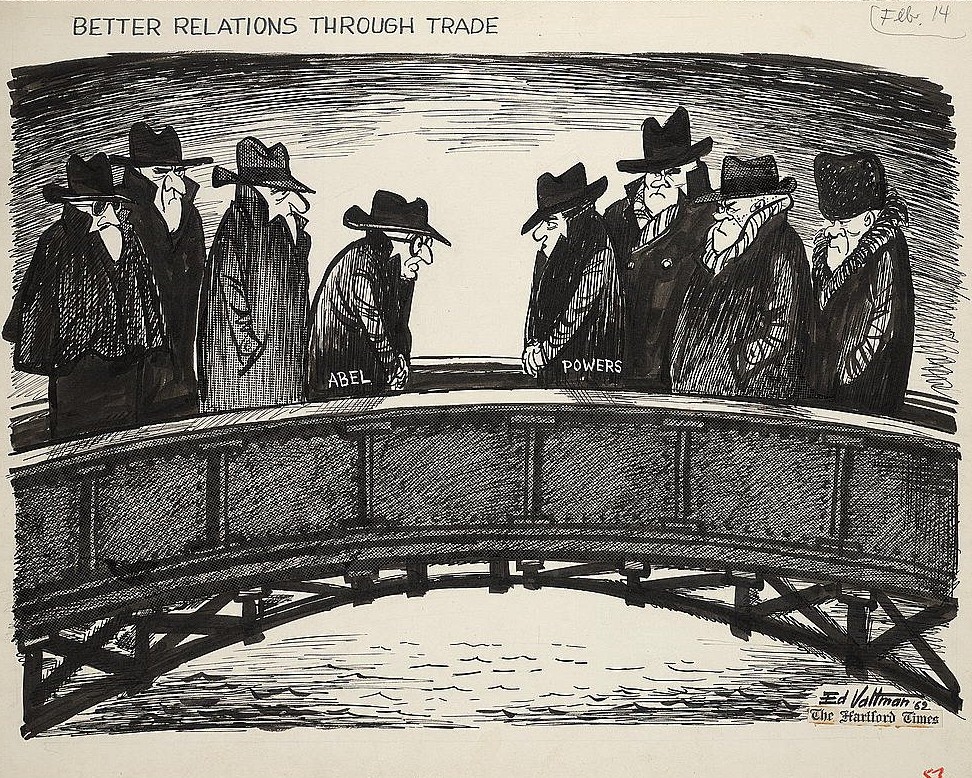
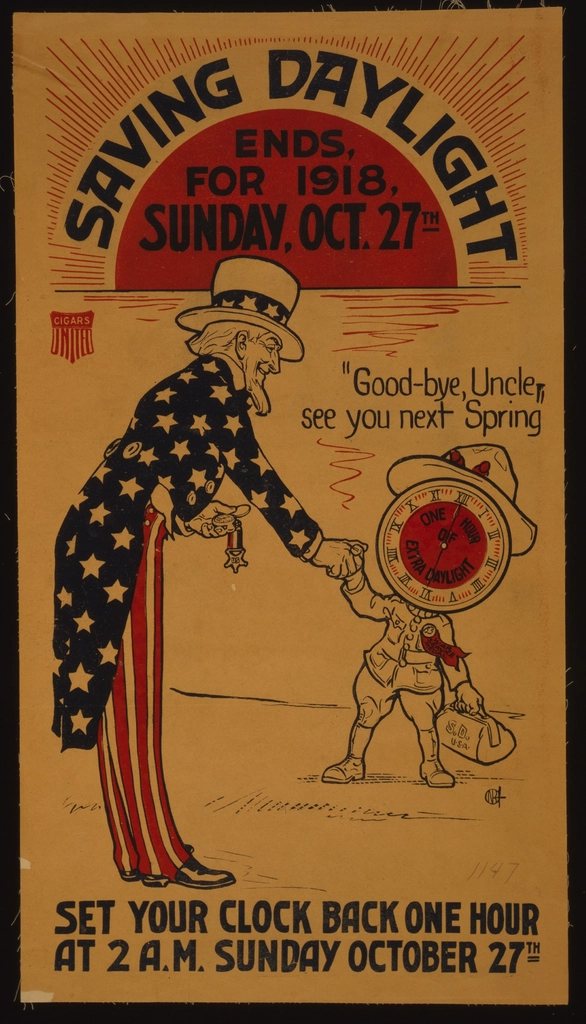
Cartoon: Edmund S. Valtman, The Hartford Times, 14 February 1962, Library of Congress Prints & Photographs Division, no known restrictions
Stephen Hubbard, a retired schoolteacher from Michigan, was driven out of a Russian prison on Wednesday and taken to St Petersburg to be flown home. He is seventy-four. He had been held since April 2022, when Russian troops picked him up in Izium in eastern Ukraine, and he was serving six years and ten months for mercenary activity after a closed trial, a charge his lawyer and family say is false. Vladimir Putin announced the release himself, in front of the American envoy Steve Witkoff, and the Kremlin said it was done at Donald Trump's request and because of Hubbard's health. Trump said the United States gave nothing in exchange.
That last sentence is what made me sit up. Americans have come out of Russian prisons fairly regularly over the past few years, but almost always at a price: Trevor Reed for a convicted drug smuggler in 2022, Brittney Griner for the arms dealer Viktor Bout that December, Evan Gershkovich and Paul Whelan in a sixteen-for-eight exchange in Ankara in 2024. A straight release is rare. The trade is the Cold War's invention, and it was worked out, more or less from scratch, on a steel bridge over the River Havel in February 1962.
A bridge with a white line down the middle
The Glienicke Bridge carries the road from the south-west corner of Berlin across the Havel into Potsdam. After 1945 that put it on a border: the Berlin end in the American sector, the Potsdam end in the Soviet zone that became East Germany. The East Germans renamed it the Bridge of Unity in 1949, which was not a joke they intended, and then closed it to ordinary traffic.
It suited an exchange because it was quiet, long enough that each side could see the other coming, and controlled by the Soviets and the Americans directly rather than by the two Germanys, so neither Bonn nor East Berlin had to admit the other existed. Somebody painted a white line across the middle of the roadway. People walked to it from each end, stopped, and were identified.
Powers for Abel, February 1962
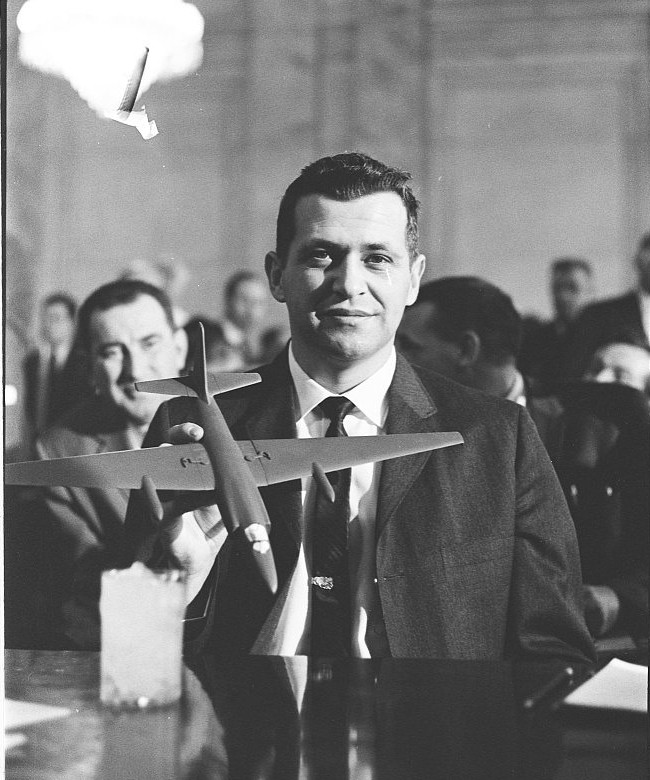
Francis Gary Powers holding a model of the U-2 at a Senate Armed Services hearing in Washington, March 1962, a month after the exchange. Photo: Warren K. Leffler, Library of Congress Prints & Photographs Division, no known restrictions
The first man to cross it the famous way was Rudolf Abel, which was not his name. He was William Fisher, a Soviet intelligence officer born in Newcastle upon Tyne to Russian émigré parents, who had run a network in New York under cover as an artist until the FBI arrested him in a Manhattan hotel in June 1957. He got thirty years. His court-appointed lawyer, a Brooklyn insurance specialist named James Donovan, argued at the sentencing that it would be foolish to execute him, because one day the United States might hold a Soviet agent it wanted to trade. The judge agreed.
The agent turned out to be a pilot. Francis Gary Powers was flying a U-2 from Pakistan to Norway on 1 May 1960 when a Soviet missile brought him down near Sverdlovsk. Eisenhower's government said a weather plane had strayed, then had to admit otherwise when Khrushchev produced the pilot, alive, and the wreckage. Powers was tried in Moscow that August and given ten years.
Donovan, now acting unofficially for Washington, negotiated with a Soviet contact in East Berlin through the winter of 1961 and 1962, and the deal grew as it went: in return for Abel the Americans wanted Powers and also Frederic Pryor, a Yale graduate student arrested in East Berlin the previous August. On the morning of 10 February 1962 Pryor was released at Checkpoint Charlie, and a little before nine Powers and Abel were walked out from opposite ends of the Glienicke Bridge. They passed each other at the line without, as far as anyone recorded, saying a word.
The cartoon at the top of this story ran in the Hartford Times four days later. Its caption, "Better relations through trade", was sarcastic at the time. It turned out to be a forecast.
The rules of the market
Over the next three decades the bridge saw only a handful of exchanges, but they set the terms every later swap has followed.
The first rule was asymmetry. The Soviets held few Westerners, so one American or West German usually bought several Eastern agents. In June 1985, in the largest exchange of the Cold War, four Eastern bloc spies held in the United States, among them the Polish officer Marian Zacharski, were traded for more than twenty people held in East Germany and Poland who had worked for Western services. The second rule was that the men in the middle were lawyers rather than diplomats: Donovan in 1962, and later the East Berlin lawyer Wolfgang Vogel, who brokered most of the German traffic and grew rich doing it. The third, and the most durable, was that nobody ever admitted equivalence. Each side said it was recovering an innocent and releasing a criminal.
The man who refused to walk straight
The last exchange on the bridge, on 11 February 1986, broke the pattern a little. Anatoly Shcharansky was not a spy. He was a Jewish refusenik and human rights campaigner who had spent nine years in Soviet prisons and camps on a treason charge nobody outside the USSR believed. His release, with three Western agents, in return for the Czech-born CIA mole Karl Koecher, his wife and three others, was the first time a prisoner of conscience was put into the scales alongside the professionals.
Shcharansky later wrote that his KGB escorts told him to walk straight across to the American side. He zigzagged instead, on principle, which I have always thought the best single piece of behaviour in the history of the bridge. He arrived in Israel that night as Natan Sharansky and went on to a career in its cabinet.
After the Wall
The bridge reopened to ordinary traffic on 10 November 1989, the day after the Wall came down, and it is now simply the way you drive from Berlin to Potsdam, with a plaque and a trickle of tourists who have seen the Spielberg film. The market it served did not close. It moved to airfields: Vienna in 2010, for ten Russian sleeper agents including Anna Chapman; Abu Dhabi for Griner and Bout; Ankara in 2024, with seven countries involved and Vadim Krasikov, a convicted assassin, as the piece Moscow wanted most.
What the bridge built, and what has lasted, is the idea that a detained foreigner is an asset with an exchange rate. Critics have said since 1962 that each swap raises the price of the next, and the record of the past decade, in which Russia has arrested a succession of Americans on charges that would not survive an open court, is hard to read any other way.
What Hubbard's case leaves open
Which brings me back to Wednesday. Hubbard was the only American in Russian custody whom Washington had formally designated as wrongfully detained, and he came home with no Russian walking the other way. The Kremlin called it a goodwill gesture, made at a meeting about Ukraine in the same week as an energy arrangement that eases American sanctions on Russian fuel. The White House says the two things are unconnected.
I have no reason to doubt that no prisoner was traded. But sixty-four years of this business suggest the price is not always a person, and the full accounts of these exchanges tend to appear about thirty years after the fact, when the files open and the lawyers write their memoirs. Donovan's came out in 1964 and left a good deal out. We will find out in due course what, if anything, was on the other side of this one. I would not bet on nothing.
Enjoyed this story?Get a new one every day on social.