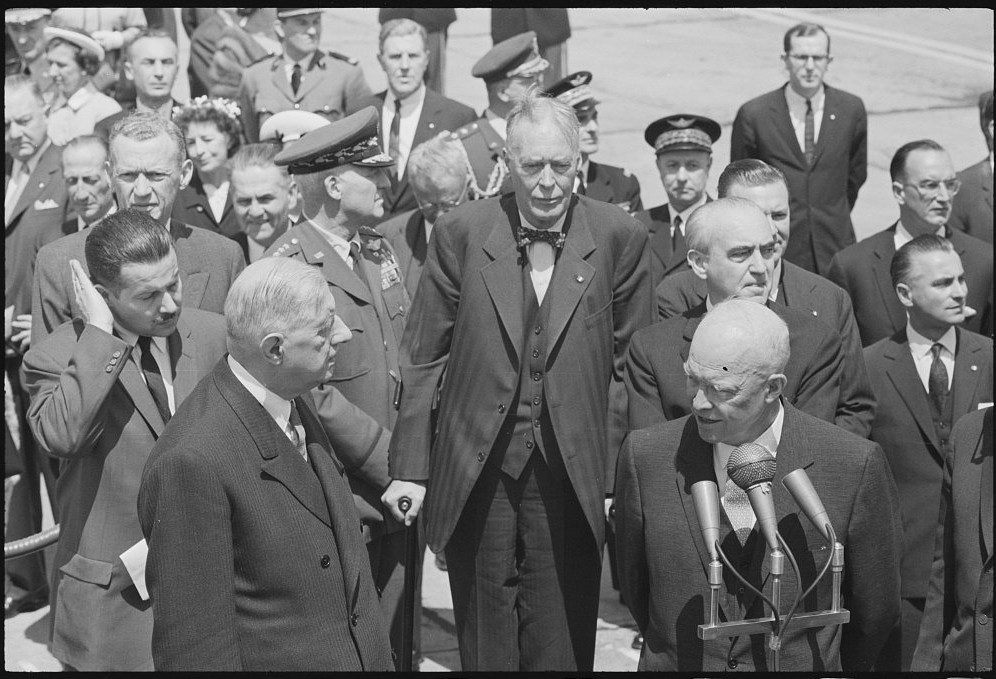
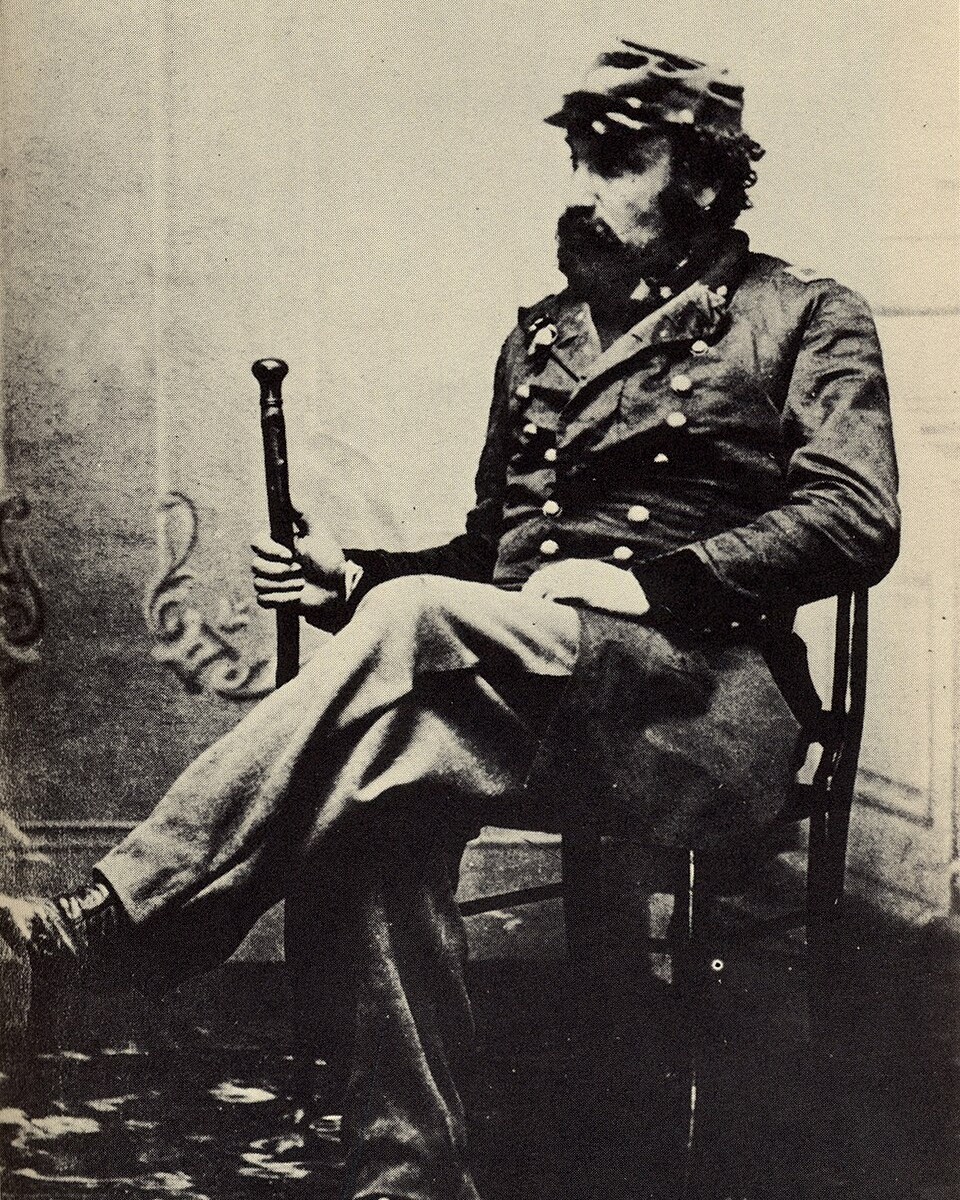
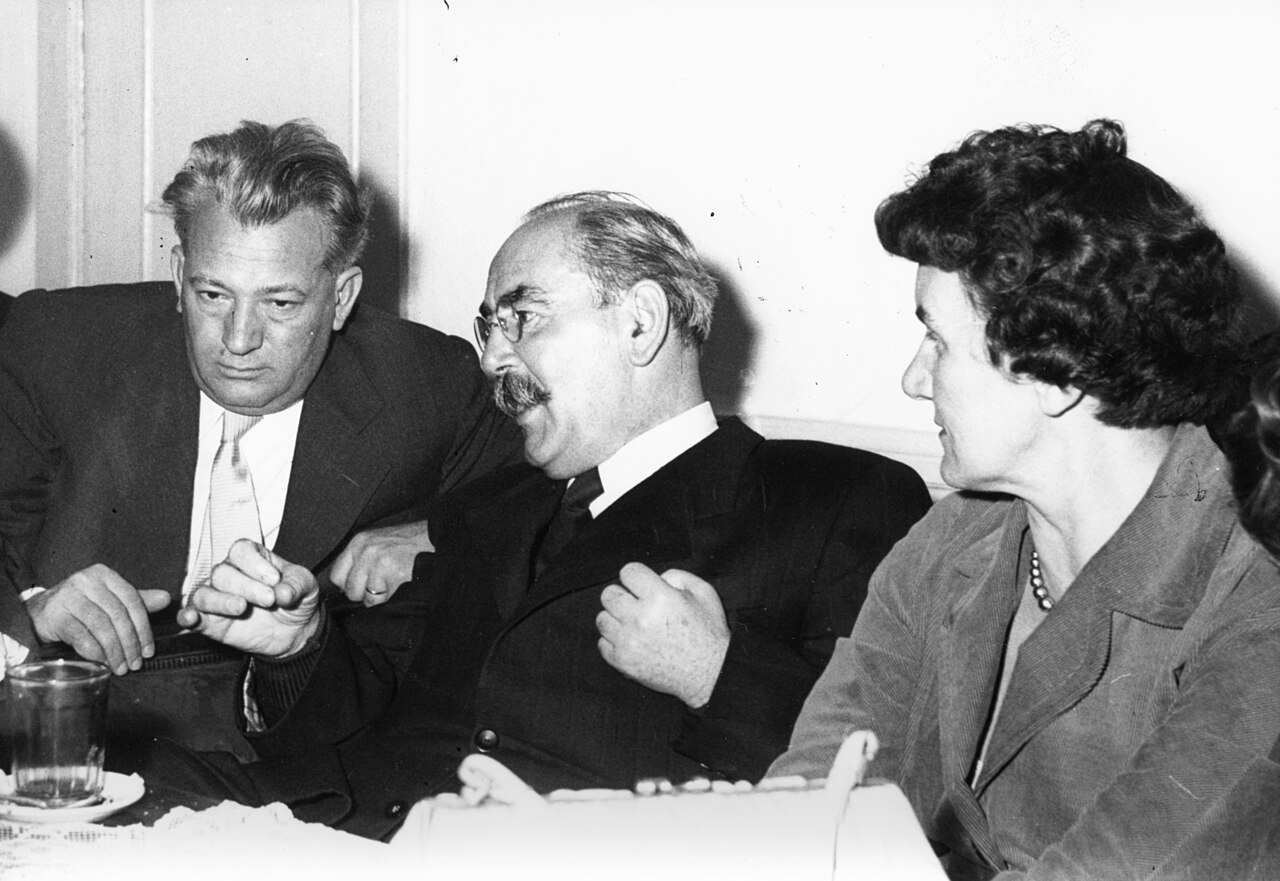
Photo: Thomas J. O'Halloran, April 1960, Library of Congress Prints & Photographs Division, no known restrictions
A little before noon on Wednesday 29 May 1968, Charles de Gaulle told his prime minister that he was tired, that he was going home to Colombey-les-Deux-Églises for twenty-four hours to think, and that the cabinet meeting scheduled for that afternoon would have to wait until the next day. Georges Pompidou, who had been running the government through three weeks of riots and a general strike, believed him. Then the president's helicopter left the Élysée's landing ground at Issy-les-Moulineaux, and for the rest of the day nobody in the French government could find him.
I keep coming back to that afternoon because of what is happening in France now. Tomorrow, 24 October, the yellow vests have called a second round of national protests under the slogan "Macron doit partir", Macron must go, with the CGT union and student groups joining. The government is putting about 90,000 police on the streets after admitting it lost control of the previous Saturday, Lyon has banned all demonstrations, and Paris, Marseille and Bordeaux have been under partial curfews. Emmanuel Macron, who cannot run again in 2027, is being asked to leave early. The last president to hear that demand from streets this size was de Gaulle, and his answer began with a disappearing act.
How a 77-year-old lost his country in three weeks
May 1968 started as a student quarrel at Nanterre, moved to the Sorbonne when the police cleared it on 3 May, and became something else on the night of 10 May, when students built barricades in the Latin Quarter and the riot police went in with tear gas while the whole thing was broadcast live on transistor radios. The unions called a one-day strike in sympathy on 13 May. The workers did not go back. Within a fortnight factories across the country had been occupied, the trains and the post had stopped, petrol was running out and the estimates of people on strike ran to ten million.
De Gaulle was seventy-seven. He had come to power in 1958 to end the Algerian crisis and had rewritten the constitution around himself. He had been in Romania on a state visit when the barricades went up, and his instinct, which was to treat the whole thing as a tantrum, was failing him. On 24 May he went on television to offer a referendum on "participation". It was a flat, elderly speech and he knew it; he said afterwards that he had been "wide of the mark".
Pompidou tried money instead. The Grenelle agreements, signed on 27 May with the unions, offered a 35 per cent rise in the minimum wage and about 10 per cent for everyone else. The workers at Renault's Billancourt plant, told the terms by their own union leaders, booed and stayed out. On 28 May the left began openly discussing a provisional government.
Where the helicopters went
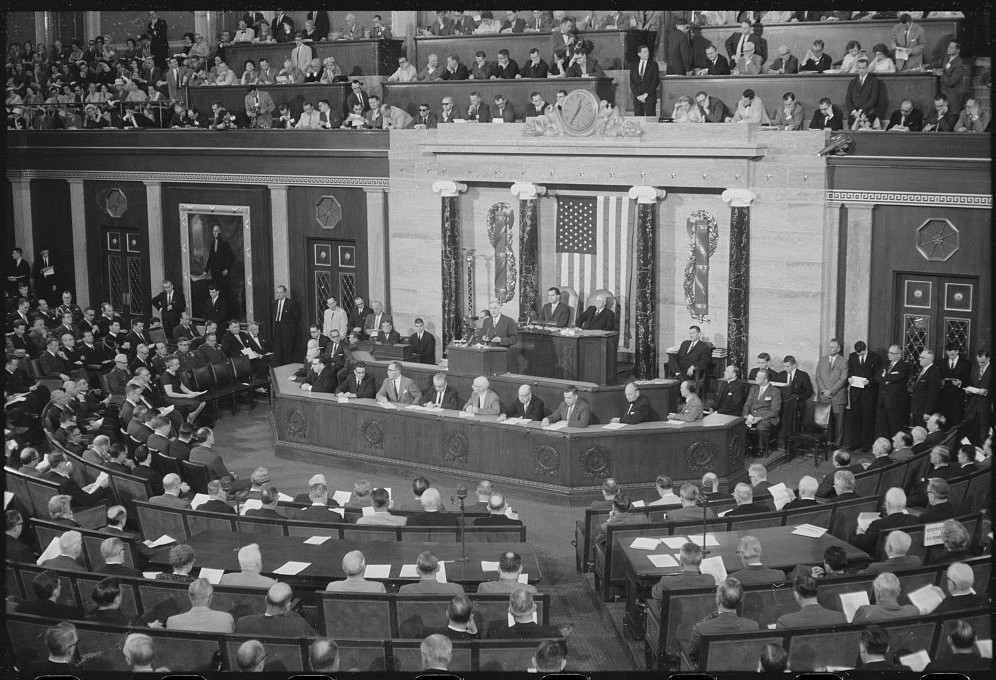
Photograph of Charles de Gaulle addressing a joint session of the United States Congress in April 1960. Warren K. Leffler, Library of Congress Prints & Photographs Division, no known restrictions
The helicopters did not go to Colombey, or not at first. They flew to the air base at Saint-Dizier, refuelled, and crossed the Rhine to Baden-Baden, headquarters of the French forces in Germany and of their commander, General Jacques Massu. Massu had been de Gaulle's man in Algiers in 1958 and had been sacked by him in 1960 for talking too freely to a German newspaper; they were not close. De Gaulle arrived unannounced with his wife Yvonne, his son's family and, if the stories are right, the family jewellery in a bag.
What was said in Massu's office is known only from Massu, who told it several times and not always the same way. In his account de Gaulle was exhausted and talked of everything being finished. Massu, a blunt paratrooper, is supposed to have told him that a man who had got France out of worse than this could not walk away from a student riot, and that the army was loyal. It took, by Massu's reckoning, about an hour. Then the president got back into the helicopter and flew to Colombey after all, where he slept.
Historians have argued ever since about what that hour was. One school holds that de Gaulle really did crack, and that Massu talked a broken old man back into his job. The other, which his family and several biographers prefer, holds that the trip was theatre: he wanted France to feel the chair empty for a day, and he wanted to be sure of the army first. I lean, cautiously, towards a bit of both. A man staging a disappearance does not usually pack his wife's jewellery.
The four and a half minutes on the radio
He was back in Paris by lunchtime on 30 May. Pompidou, who had spent the previous afternoon unable to reach his own head of state, found him transformed. The cabinet met at three. At half past four de Gaulle spoke to the country on the radio, since the television staff were on strike, for four and a half minutes.
He would not resign, and he would not change his prime minister. He was dissolving the National Assembly and calling an election, and if anyone tried to stop it by force he would use the powers the constitution gave him. France, he said, was threatened with dictatorship, by which he meant the Communists, a charge the Communist Party, which had spent the month trying to calm the strikers down, found bitterly unfair.
Within an hour the Champs-Élysées filled with people. The Gaullists had been organising the march for days and part of the crowd was bussed in from the provinces, but it was enormous, somewhere between 300,000 and a million depending on who counted, and it was the first time in a month that the other France, the one that wanted the trains to run, had shown itself in the street. People sang the Marseillaise. The strike did not end that night, but it began to.
What the decision cost
The election on 23 and 30 June produced a majority the ten-year-old Fifth Republic had never seen. De Gaulle's party and its allies won 354 of the 487 seats; the Communists lost half theirs. The student movement, which had never had a plan for July, dissolved into the summer. The Sorbonne was cleared on 16 June with hardly a fight.
De Gaulle paid for it in a way he had not expected. Uneasy that Pompidou had emerged as the real victor of June, he replaced him in July with Maurice Couve de Murville, a loyal diplomat with no following of his own. In April 1969 de Gaulle held his referendum at last, on the Senate and the regions, told the country he would go if he lost, and lost, 52 per cent against. He resigned the next morning. Pompidou succeeded him in June.
The empty chair
That is the thing I would point out to anyone drawing the comparison this weekend. De Gaulle did not survive May 1968 by giving the crowd what it wanted, or by meeting it with force, though he threatened to. He survived by removing himself from the picture for one afternoon, so that the people who wanted him gone had to look at what gone would mean, and by then going straight to the voters over the heads of everyone in Paris. It is not a trick that works twice; he tried it once more, eleven months later, and the country took the other option.
He went home to Colombey and wrote his memoirs. He died there on 9 November 1970, in his armchair, playing patience.
Enjoyed this story?Get a new one every day on social.