Mansa Musa Took So Much Gold to Mecca in 1324 That Cairo's Price Crashed
By Tomás Ferreira · October 23, 2026 · 5 min read
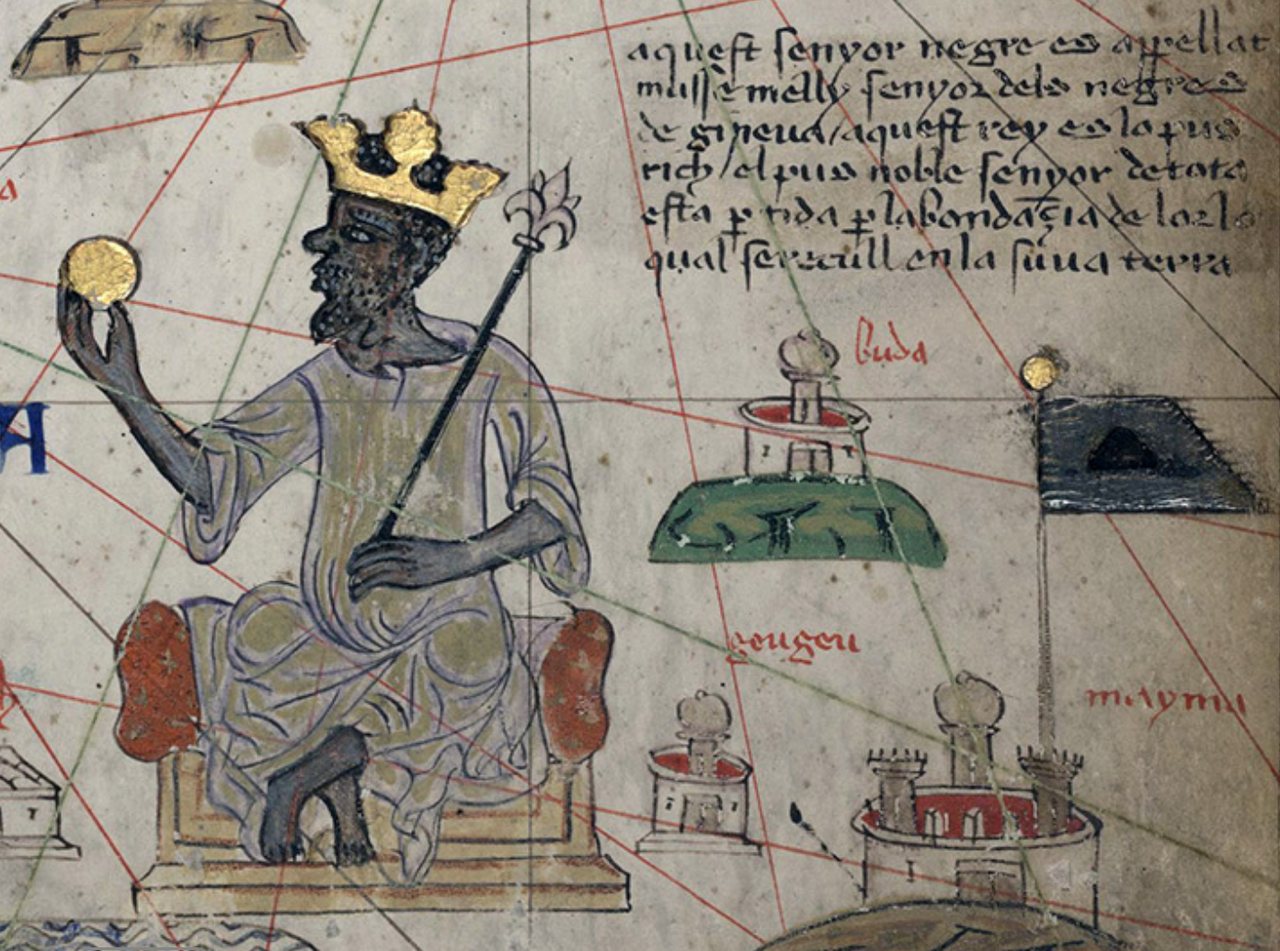
Detail of a medieval map showing a crowned Black king seated on a throne holding a gold coin and a sceptre, with Catalan text beside him
Detail of the Catalan Atlas (1375), attributed to Abraham Cresques, Bibliothèque nationale de France, via Wikimedia Commons (CC BY-SA 4.0)

The price of gold in Cairo fell in the summer of 1324 and, according to the one man who went around asking, had still not recovered twelve years later. The man was al-Umari, an official in the Mamluk chancery, who wrote up what Cairo remembered of the visit in the late 1330s. The visitor was Musa, mansa of Mali, on his way to Mecca with a caravan that nobody who saw it ever managed to describe without the numbers getting bigger.

Of all the rulers I have written about here, Musa is the one whose fame rests most completely on a single decision. He decided to make his pilgrimage in public. Plenty of Muslim kings went on hajj; Musa went as a demonstration, with the wealth of the Western Sudan loaded on camels, through the one city in the Islamic world where everybody who mattered would see it. The consequences outlasted him by centuries, and some of them are in the news this month.

A king who inherited a throne because the last one sailed away

Musa came to power around 1312, and the story of how is the best thing al-Umari recorded. Musa told the governor of Cairo that his predecessor had refused to believe the ocean had no far shore. He had sent out 200 ships to find it, got one back, and then set off himself with 2,000 ships and never returned, leaving Musa as his deputy to rule. Whether the voyage happened as described, nobody can say; it rests on Musa's word as reported second-hand. But it tells you something about the court he came from, which had the money to lose two thousand ships and the curiosity to try.

Mali in 1324 ran from the Atlantic to beyond the Niger bend and controlled the goldfields of Bambuk and Bure, which supplied a large share of the gold that circulated in the Mediterranean world at the time; some historians say most of it. The gold left by camel across the Sahara and came back as salt, cloth, horses and books. Musa's capital was Niani, probably, though archaeologists still argue about where Niani was. He was a devout Muslim ruling a largely non-Muslim population, and the hajj was both a duty and a way of telling the Islamic world that Mali was part of it.

What Cairo saw

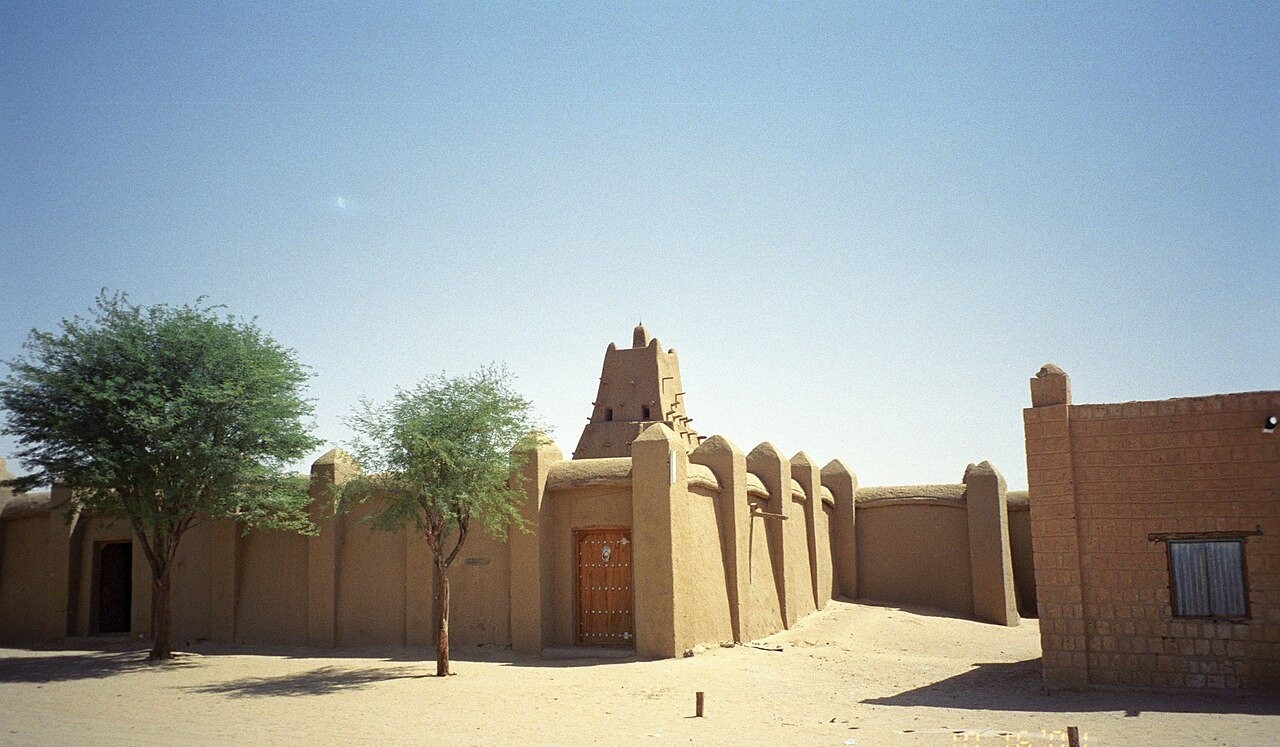
Photograph of the mud-brick Sankoré mosque in Timbuktu, Mali, with its pyramid-shaped minaret. upyernoz, CC BY 2.0, via Wikimedia Commons

The caravan left in 1324 and reached Cairo in July. Later chroniclers give it 60,000 people, 12,000 slaves each carrying a bar of gold, and 80 or 100 camels each loaded with 300 pounds of gold dust. I do not believe the numbers and I do not think the chroniclers did either; they are the medieval way of saying "more than you can imagine". What the contemporary sources agree on is the effect. Musa gave gold to every official who received him, to every holy man, to every emir's household, and he and his followers bought in the markets without haggling, so that prices of everything, not only gold, went up. Then the gold they had spent flooded the exchanges and its value fell.

There was one awkward moment. The Mamluk sultan, al-Nasir Muhammad, expected visitors to kiss the ground before him, and Musa, who was a sultan himself, would not. He was eventually persuaded to prostrate himself on the understanding that he was doing it to God, and the audience went ahead. He stayed three months, went on to Mecca, and on the way home ran out of money. The man who had crashed the Cairo gold market had to borrow from Cairo's merchants at ruinous interest to get back across the desert, which the merchants no doubt enjoyed.

What he brought home

In Mecca he had met a poet and architect from Granada, Abu Ishaq al-Sahili, and persuaded him to come to Mali. Al-Sahili built Musa an audience chamber at the capital and, in Timbuktu, the Djinguereber mosque, which is still standing, kept up by regular coats of fresh mud. Musa also brought back scholars and books, and he brought back Timbuktu itself, in a sense: his general had taken Gao, the main rival on the Niger, while he was away, and the king stopped there on his return to receive its submission. Under Mali, Timbuktu stopped being a camp where the camel caravans met the river canoes and started being a city with mosques, a scholarly quarter around Sankoré, and a trade in manuscripts.

The other thing he brought home was a reputation that travelled without him. Fifty years after the pilgrimage, a Majorcan mapmaker, probably Abraham Cresques, drew the Western Sahara on the great Catalan Atlas of 1375 and put a Black king in a gold crown at its centre, seated on a throne, holding up a nugget the size of an orange. The caption calls him "Musse Melly, lord of the Blacks of Guinea", and says that the gold found in his land makes him "the richest and noblest king in all this region". It is the only likeness of Musa that exists, and it was drawn by a man who never saw him, from the stories that had reached the Mediterranean ports. The Portuguese captains who began feeling their way down the African coast in the following century were, among other things, looking for the king on the map.

The city he made, this week

Detail of the Catalan Atlas (1375) showing Mansa Musa enthroned with a gold nugget, Bibliothèque nationale de France, via Wikimedia Commons (CC BY-SA 4.0)

Timbuktu's manuscripts, the descendants of the books Musa's scholars began collecting, are the part of the story that is still moving. In 2012, when al-Qaeda-linked fighters took the city, local families and librarians smuggled most of the collection, some 28,000 manuscripts by one count, out of town and down to Bamako, in metal trunks, by road and by river. They were brought back to Timbuktu only this past August, after local leaders asked for them. The reason it took thirteen years is that the fighters never really went away: the same al-Qaeda affiliate, JNIM, attacked Timbuktu as recently as June and has since been strangling the country's fuel supply to pressure the military government in Bamako. Mali has been run by soldiers since a coup in 2020. The manuscripts are home; whether they are safe is another question.

As for how much gold went to Cairo, we will never know, and I have made my peace with that. Al-Umari's twelve-year price slump is the only measurement anyone took, and it was taken from memory, by people who had been handed gold by a stranger and could be forgiven for remembering it as more than it was.