Photo: Viktor Sekularac / Waging Nonviolence, CC BY 4.0, via Wikimedia Commons
On the morning of 29 September 2000 the miners at the Kolubara coal field, forty miles south of Belgrade, put down their tools and did not pick them up again. Kolubara feeds the power stations that supply roughly half of Serbia's electricity, which is why seven thousand men walking off the job mattered more than any speech. The police came to the pit on 4 October, decided the crowd was too big to arrest, and left.
The next day the government fell. Serbia votes again tomorrow, 25 October, in an election forced by nearly two years of protest that began with a railway station canopy and ended with a president resigning. The man who resigned, Aleksandar Vučić, was the minister of information in the government the miners brought down. He was thirty years old at the time. I think the story of that October is worth telling again, because almost everyone in it is still alive and most of them are still in politics.
An election nobody was supposed to lose
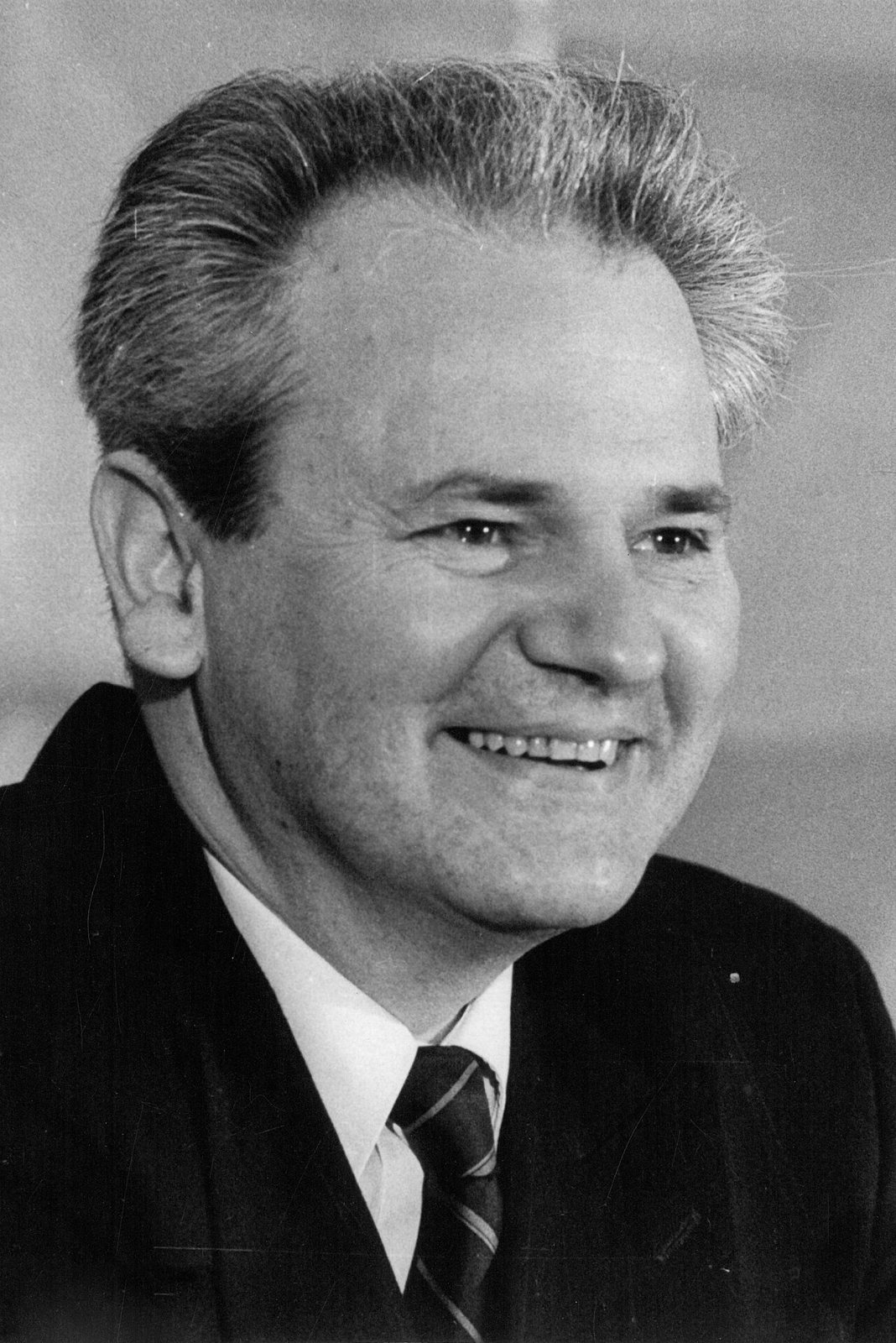
Slobodan Milošević. Photo: Stevan Kragujević, CC BY-SA 3.0, via Wikimedia Commons
Slobodan Milošević had run Serbia since 1987 and the rump Yugoslavia since 1997. He had lost four wars, most recently to NATO over Kosovo in 1999, and had survived all of them. In July 2000 he changed the federal constitution so that the president would be elected by popular vote rather than by parliament, and then called the vote early, for 24 September. He expected to win against an opposition that had spent a decade splitting into ever smaller parties.
The opposition, for once, did not split. Eighteen parties formed the Democratic Opposition of Serbia and put up a single candidate, Vojislav Koštunica, a dry constitutional lawyer with no scandal attached to him and a reputation for being hard to like, which turned out to be a qualification. On the night of the vote the opposition's own count gave him an outright majority. The Federal Election Commission said he had 48.96 per cent, just under the line, and ordered a second round for 8 October.
Koštunica refused to take part. He had won, he said, and he was not going to run again against a man who counted the votes.
The students with the fist
The campaign that made the refusal stick had started two years earlier, in October 1998, among students at Belgrade University who had watched the regime take over their faculties and close the independent radio station B92. They called themselves Otpor, which means Resistance, and their symbol was a clenched fist stencilled in black on white, cheap enough to spray on any wall in the country. They had no leader on purpose. The police arrested about two thousand of them in 2000 and could never find the one whose arrest would end it.
Otpor's slogan for the election was two words, "Gotov je", which means "He's finished", printed on stickers that appeared on lamp posts and police cars and, by the end, on the doors of government offices. The students had read Gene Sharp's handbooks on nonviolent action and had been trained, in Budapest, with money that came in part from American foundations, which Milošević's television mentioned every night. It did not help him much. The stickers were funny, the nightly bulletins were not, and in a country that had been laughing at its government in private for a decade that counted for something.
The day itself
The opposition called everyone to Belgrade for Thursday 5 October. The regime blocked the roads. The blockade is the part of the story that still gets told in Serbian bars, because it was beaten by a town. Čačak, a hundred miles to the south, sent a convoy of several thousand people led by its mayor, Velimir Ilić, with lorries, buses and earth-moving equipment at the front to push the police trucks out of the road. The police at the checkpoints mostly let them through.
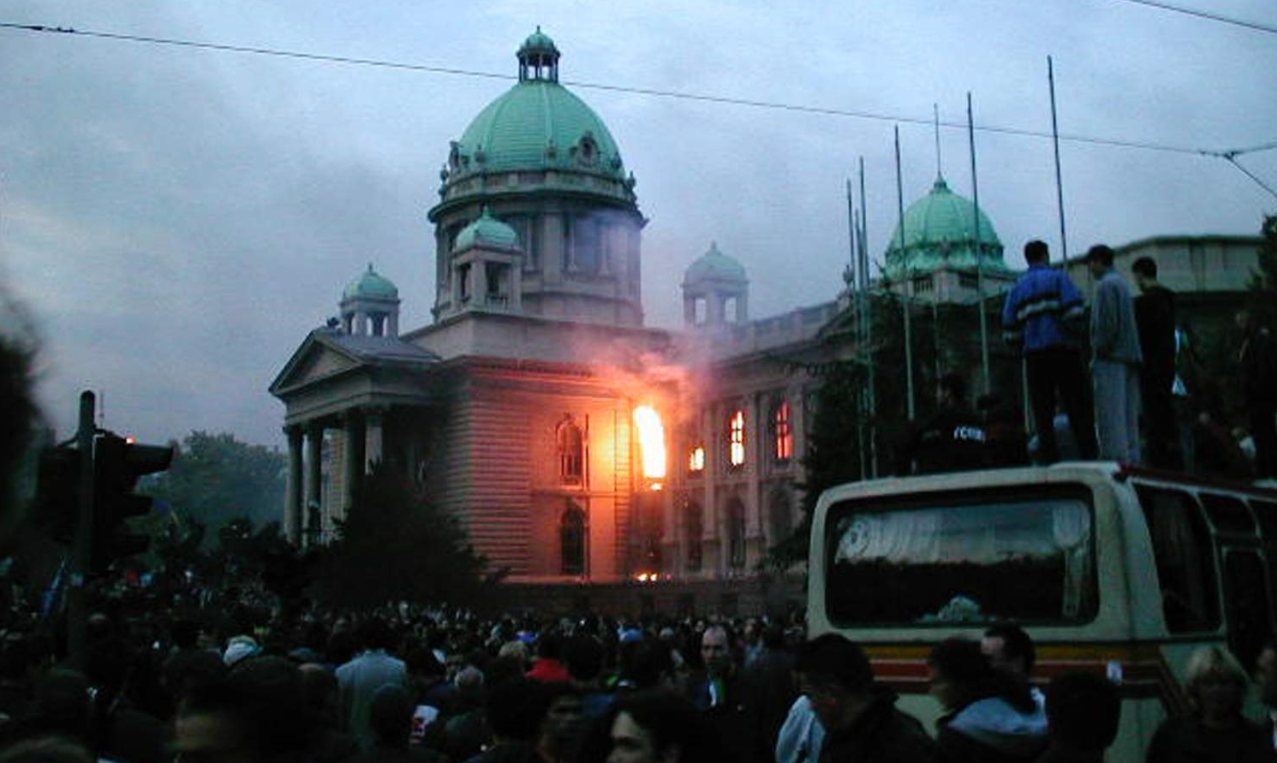
By early afternoon there were, depending on who was counting, between half a million and a million people in the centre of Belgrade. The federal parliament was the first target. Tear gas was fired, the crowd came back, and by four o'clock the building was open and its ground floor was burning, along with a good many of the ballot papers from 24 September. The state television headquarters, which Serbs called TV Bastille, was next. A man named Ljubisav Đokić, who had driven his wheel loader into the city from a village out to the east, put the bucket through the entrance. The machine was not a bulldozer, as everyone later said, but the name Bulldozer Revolution stuck and Đokić never managed to correct it.
Two people died that day, one of a heart attack and one who fell from a lorry. The police were ordered to fire and did not, and the army stayed in its barracks. Milošević's generals and his own secret police chief had, by most accounts, decided the night before that they would not shoot into the crowd. That decision, more than anything the crowd did, is why the day was one day and not a week.
He's finished
Milošević appeared on television on the evening of 6 October, congratulated Koštunica, said he intended to spend more time with his grandson, and conceded. Koštunica was sworn in on 7 October. The Kolubara miners went back to work.
Six months in the villa
Milošević stayed in his villa in Belgrade for six months. He was arrested on 1 April 2001 after a thirty-hour standoff at the villa. On 28 June, the Serbian national day, the new government put him on a helicopter to The Hague to face the war crimes tribunal, without telling Koštunica first. He died in his cell on 11 March 2006 with the trial unfinished, which is still, for many Serbs, the worst possible ending.
Otpor dissolved into a political party, won less than two per cent in 2003, and disappeared. Its founders went on to train activists in Georgia, Ukraine and Egypt, where the fist turned up again on the walls of Cairo in 2011.
Why the same people are on the ballot
Here is the part that makes tomorrow's vote strange. In the last government before 5 October, the minister of information, in charge of the television that called the students foreign agents, was Aleksandar Vučić of the Serbian Radical Party. He was elected to parliament at twenty-three. After 2008 he rebuilt himself as a pro-European moderate, founded the Serbian Progressive Party, and has run the country since 2012 as prime minister and, from 2017, as president.
The protests that forced him out began on 1 November 2024, when the concrete canopy of the newly renovated railway station in Novi Sad fell on the people standing beneath it and killed sixteen. Students blamed corrupt contracting and occupied their faculties, as Otpor's generation had. In March 2025 somewhere over a hundred thousand people stood in Belgrade for the biggest demonstration since 2000. This September Vučić resigned the presidency, with his second term nearly over and a third barred by the constitution, and announced he would stand for prime minister instead. His ally Ana Brnabić, the speaker, is acting president.
So the election tomorrow pits his Progressive Party against a student list of professors and professionals that has never contested anything, in a country where the last student movement that won did so in an afternoon and then watched most of its gains leak away over the following decade. Vučić has said on American television that he will concede on the night if he loses. In 2000 the man he worked for said much the same, right up to the point where he did not.
Enjoyed this story?Get a new one every day on social.