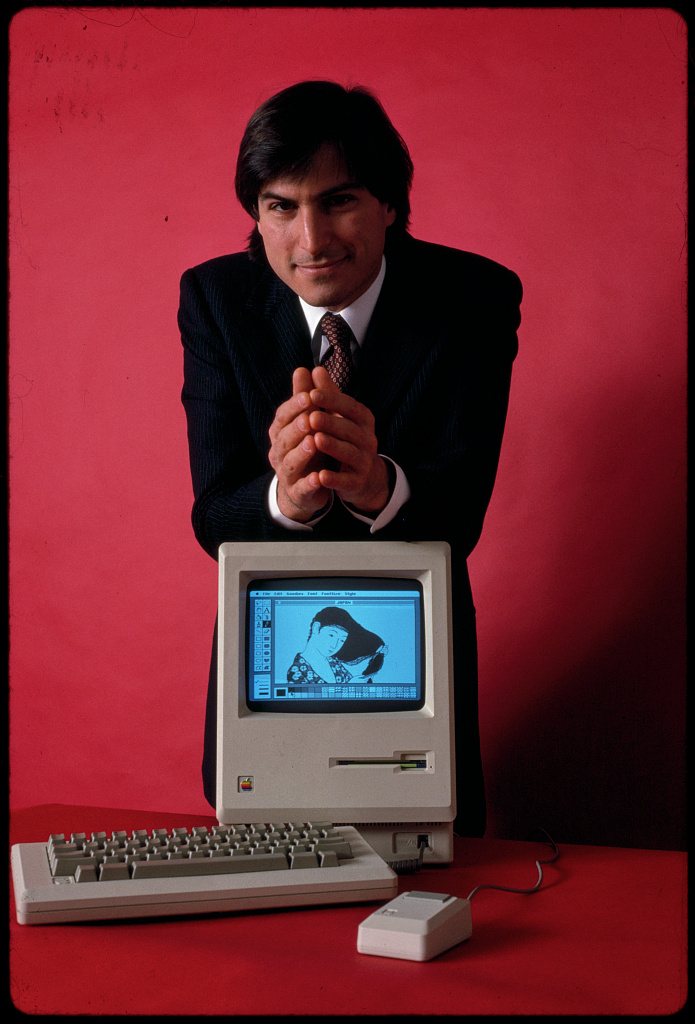
Photo: Bernard Gotfryd, 1984, Library of Congress Prints & Photographs Division, no known restrictions on publication
Thirty-three years. That is how long Jensen Huang ran Nvidia, from the day he co-founded it in 1993 to Thursday, when the company filed a short notice with the Securities and Exchange Commission saying he had resigned as president, chief executive and director, effective immediately. The chief financial officer, Colette Kress, is interim CEO. The filing gives no reason. It came after days of press reports and a board meeting about his future, and in it the board thanks him for his "immeasurable contributions."
Founders leave the companies they built all the time. A founder leaving the world's most valuable chip company in a single afternoon is rarer, and the precedent most people reach for is Apple in 1985, when the board chose a hired executive over the man whose face was on every product launch.
A founder who was never the boss
The odd thing about Jobs in 1985 is that he had never actually run Apple. He and Steve Wozniak started the company in 1976, famously out of the Jobs family garage in Los Altos, but the grown-up money came from Mike Markkula, a retired Intel manager who put in a large sum, brought in a professional chief executive, Michael Scott, and later took the job himself. Jobs was chairman of the board from 1981 and the company's public face. The directors, Markkula and the venture capitalist Arthur Rock among them, did not think he was ready to be chief executive, and they said so.
He was very rich by then. Apple's stock market flotation in December 1980 was the largest since Ford's in 1956, and it made several hundred employees millionaires overnight. What it did not make Jobs was the person in charge. So when Apple went looking for a new chief executive in 1982, Jobs went looking with it.
The Pepsi man
Steve Jobs was 28 when he hired John Sculley in 1983. Sculley was president of PepsiCo's soft drink business, and he was a marketing man, which was exactly what Jobs thought Apple lacked. The line Jobs is supposed to have used to close the deal, asking whether Sculley wanted to sell sugared water for the rest of his life, comes from Sculley's own telling, and he has repeated it for forty years, so we can probably take it as close.
For a while the two were inseparable. Then the Macintosh, launched in January 1984 with the famous Super Bowl advert, sold well for a few months and then badly. It was slow, it had too little memory and there was not much software for it. By early 1985 Apple had unsold Macs in its warehouses, Steve Wozniak had left and was telling reporters the company had lost its way, and Jobs, who ran the Macintosh division, was fighting with Sculley in front of everyone.
Two board meetings and a trip to China
The board met on 10 and 11 April 1985. Sculley told the directors he could not run the company with Jobs running Macintosh, and asked them to back him. They did, and agreed that Jobs should give up the division. For several weeks nothing much happened, because Sculley kept putting the conversation off.
Jobs used the time to try to turn the board around, and then to get rid of Sculley altogether. The plan, as most accounts tell it, was to move while Sculley was away on a business trip to China at the end of May. Jean-Louis Gassée, the Frenchman Jobs had lined up to take over Macintosh, told Sculley instead. Sculley cancelled the trip. At the executive staff meeting on Friday 24 May he confronted Jobs in front of the senior team and went round the table asking each of them to choose. They chose Sculley.
On 31 May Apple announced a reorganisation. About 1,200 jobs went, and Jobs kept the title of chairman with no part in running the company. His new office was in a building on the Apple campus that he called Siberia, mostly empty, well away from the people he used to manage.
Out by September
He lasted the summer. Apple posted the first quarterly loss in its history. Jobs sold his shares in blocks, all except one, and started talking to some of the Macintosh team about a new company. On 17 September 1985 he wrote to the board resigning as chairman, and Apple sued him a few days later for taking staff and, it claimed, confidential plans with him. The suit was settled the following year.
The new company was NeXT. It made expensive, handsome black computers that very few people bought. He also paid George Lucas for a computer graphics group in 1986 that became Pixar, which turned out rather better. In December 1996 Apple, by then on its second chief executive since Sculley and in real trouble, bought NeXT for a little over $400 million, and Jobs came back with it. He was running Apple again within a year. In a commencement speech at Stanford in 2005 he said that getting fired from Apple had been the best thing that could have happened to him, which is an easier thing to say twenty years later with the iPod selling.
What happens at Nvidia now is a matter for its board and its shareholders. As far as I know, no one at Nvidia has a building called Siberia.
Enjoyed this story?Get a new one every day on social.