Photo: Carol M. Highsmith, 2016, Library of Congress Prints & Photographs Division, no known restrictions
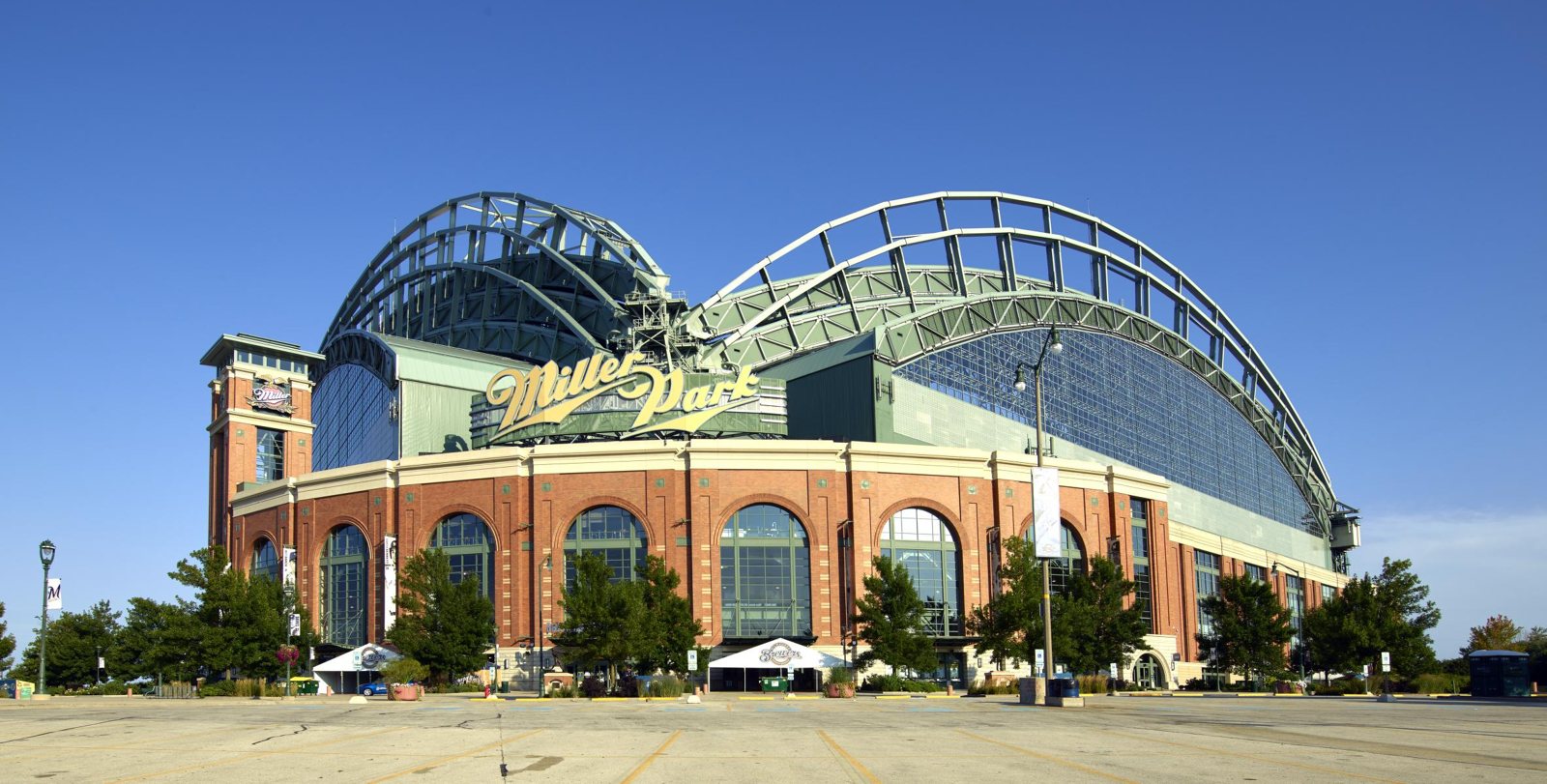
On Friday night the Milwaukee Brewers host Game 1 of the World Series against the Tampa Bay Rays. It is the club's first trip to the Series since 1982, and neither team has ever won one. What the broadcast will probably not mention is that the Brewers did not start out in Milwaukee, or as the Brewers. They began as the Seattle Pilots, a team that existed for exactly one season, drew terrible crowds, ran out of water in the late innings and went bankrupt the following spring.
The Pilots are mostly remembered now, if at all, as the team in Jim Bouton's Ball Four. They deserve a little more than that, if only because the way they fell apart is the reason a city of under 600,000 people in Wisconsin has a major league club at all.
A team Seattle was not ready for
Seattle got its team in a hurry. The American League had planned to expand in 1971, but when the Athletics left Kansas City for Oakland after the 1967 season, Senator Stuart Symington of Missouri threatened baseball's antitrust exemption unless Kansas City got a replacement at once. The league moved expansion up to 1969, gave Kansas City the Royals and, to keep the numbers even, gave the other new club to Seattle.
The owners were Dewey and Max Soriano, brothers from the Seattle baseball scene, with most of the money coming from William Daley, who had owned the Cleveland Indians. They did not have a major league ballpark. What they had was Sick's Stadium, a minor league park built in 1938 for the Seattle Rainiers, which the city agreed to enlarge from about 11,000 seats to around 25,000 while a domed stadium was planned. Seattle voters had approved the dome in 1968. It would not open until 1976.
The expansion was rushed and the stadium work was rushed. At the home opener on April 11, 1969, workers were still bolting seats into place as fans arrived. The Pilots beat the Chicago White Sox 7 to 0, which turned out to be the high point of the year.
Water pressure and six-dollar box seats
Sick's Stadium had a plumbing problem that became the Pilots' defining joke. When the crowd went above about 10,000, water pressure in the upper sections dropped so far that the toilets stopped working after the seventh inning or so. Players complained that the showers ran cold.
The owners charged the highest ticket prices in the league anyway, with box seats at six dollars, which in 1969 was real money. (I have seen the figure in several places and I believe it.) Attendance came in at 677,944 for the season, near the bottom of the league, and the club lost money from the first month.
On the field the Pilots went 64 and 98 and finished last in the new American League West. They had a few good players, Tommy Harper stole 73 bases, and a pitching staff that included Bouton, a former Yankee trying to hang on with a knuckleball. Bouton kept a diary. Published the next year as Ball Four, it became one of the best-selling sports books ever written, and it is the only reason most people under seventy have heard of the Pilots.
The winter the team was for sale
By the end of the 1969 season the Sorianos and Daley wanted out. A local group led by the hotel executive Eddie Carlson offered to buy the club and keep it in Seattle, but the deal was structured partly as a non-profit and the other American League owners voted it down. That left a Milwaukee car dealer named Allan H. "Bud" Selig.
Selig had been trying to bring baseball back to Milwaukee since the Braves left for Atlanta after the 1965 season. Now he offered 10.8 million dollars for the Pilots. The league stalled; Washington's politicians were furious.
What settled it was money, or the lack of it. The Pilots could not meet their obligations. The club went into bankruptcy, and on March 31, 1970, a federal bankruptcy referee in Seattle, Sidney Volinn, ruled that the club was insolvent and approved the sale to Selig's group. The season was due to open in a week.
Six days to become the Brewers
The players were at spring training in Tempe, Arizona, and had no idea which city they were going home to. The story that the equipment truck sat at the end of camp waiting for a phone call to tell the driver whether to head north to Seattle or east to Milwaukee has been told so often that I half suspect it has been polished, but the broad fact is right: the team learned where it lived days before it played.
Selig named the club the Brewers, after the minor league team Milwaukee had supported for decades before the Braves arrived. There was no time for new uniforms. The club took the Pilots' uniforms, pulled the lettering off and stitched "Brewers" on in its place, and if you look at photographs from April 1970 you can see the ghost of the old name where the stitching had been. The colors stayed blue and gold, which is why the Brewers still wear them.
They opened on April 7, 1970, at County Stadium against the California Angels and lost 12 to 0. The crowd was over 37,000, which the Pilots had never managed once.
What Seattle got in return
Seattle did not accept this quietly. The city, King County and the State of Washington sued the American League for breach of contract, and the case dragged on for years. It ended in 1976 with a settlement under which the league agreed to put an expansion team in the new Kingdome. The Seattle Mariners began play in 1977. The lawsuit is one of the reasons Seattle has a team today, so in a roundabout way the Pilots produced two franchises.
Sick's Stadium went back to minor league use and was torn down in 1979.
From County Stadium to Friday night
The Brewers took a while to get good. The 1982 team, nicknamed "Harvey's Wallbangers" after manager Harvey Kuenn, won the American League pennant and lost the World Series to St. Louis in seven games. The club moved to the National League in 1998, when baseball realigned, which is why this week's opponent comes from the American League Milwaukee once belonged to.
Selig, the car dealer who bought a bankrupt team, became baseball's commissioner, first on an acting basis in 1992 and formally from 1998 until 2015. The franchise he moved has never won the championship. This year's Brewers won 103 games, the most in the club's history, and swept the Dodgers to reach the Series. Game 1 is Friday at American Family Field, which was built next door to County Stadium before the old park came down.
The Sick's Stadium site in Seattle's Rainier Valley is now a Lowe's hardware store. There is a sign at the corner of Rainier Avenue and McClellan Street, a replica of home plate near the exit doors, and markers on the floor inside the store showing where the bases were.
Enjoyed this story?Get a new one every day on social.