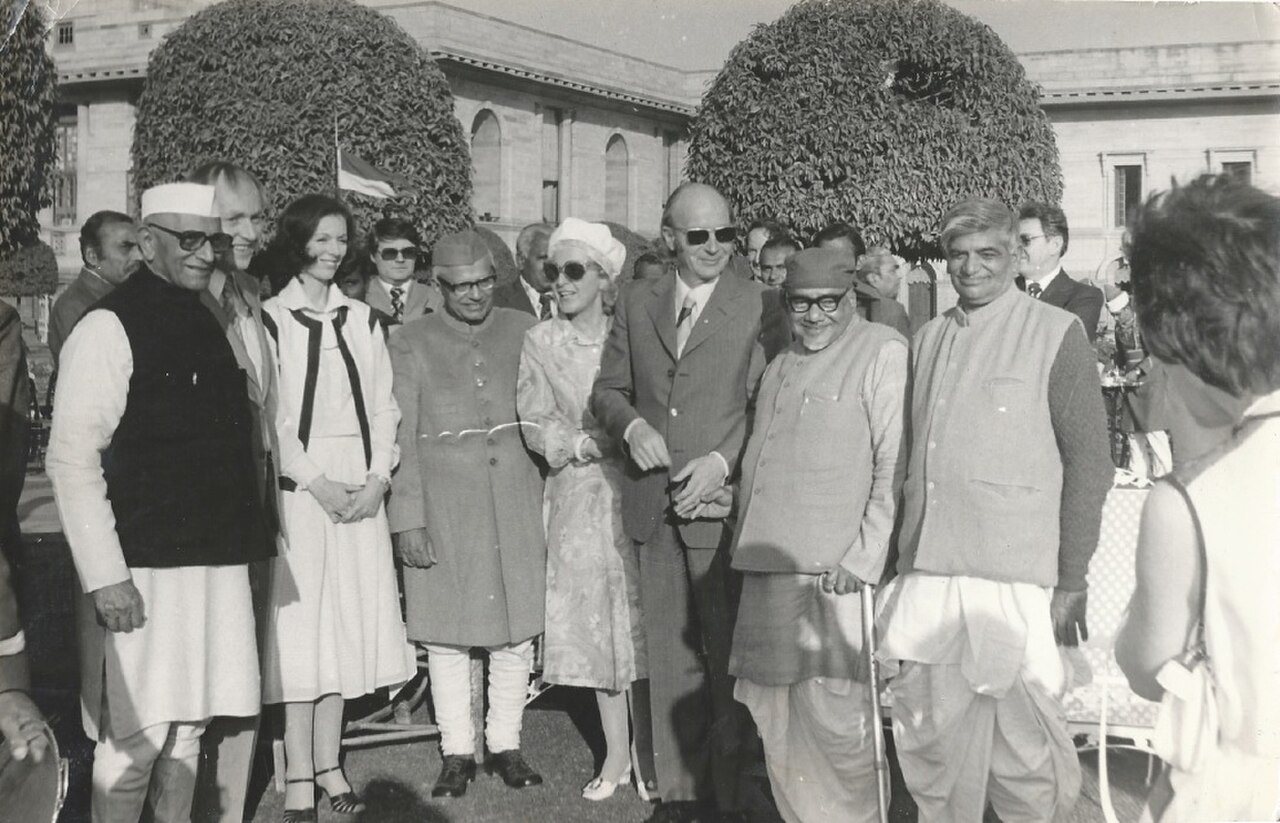
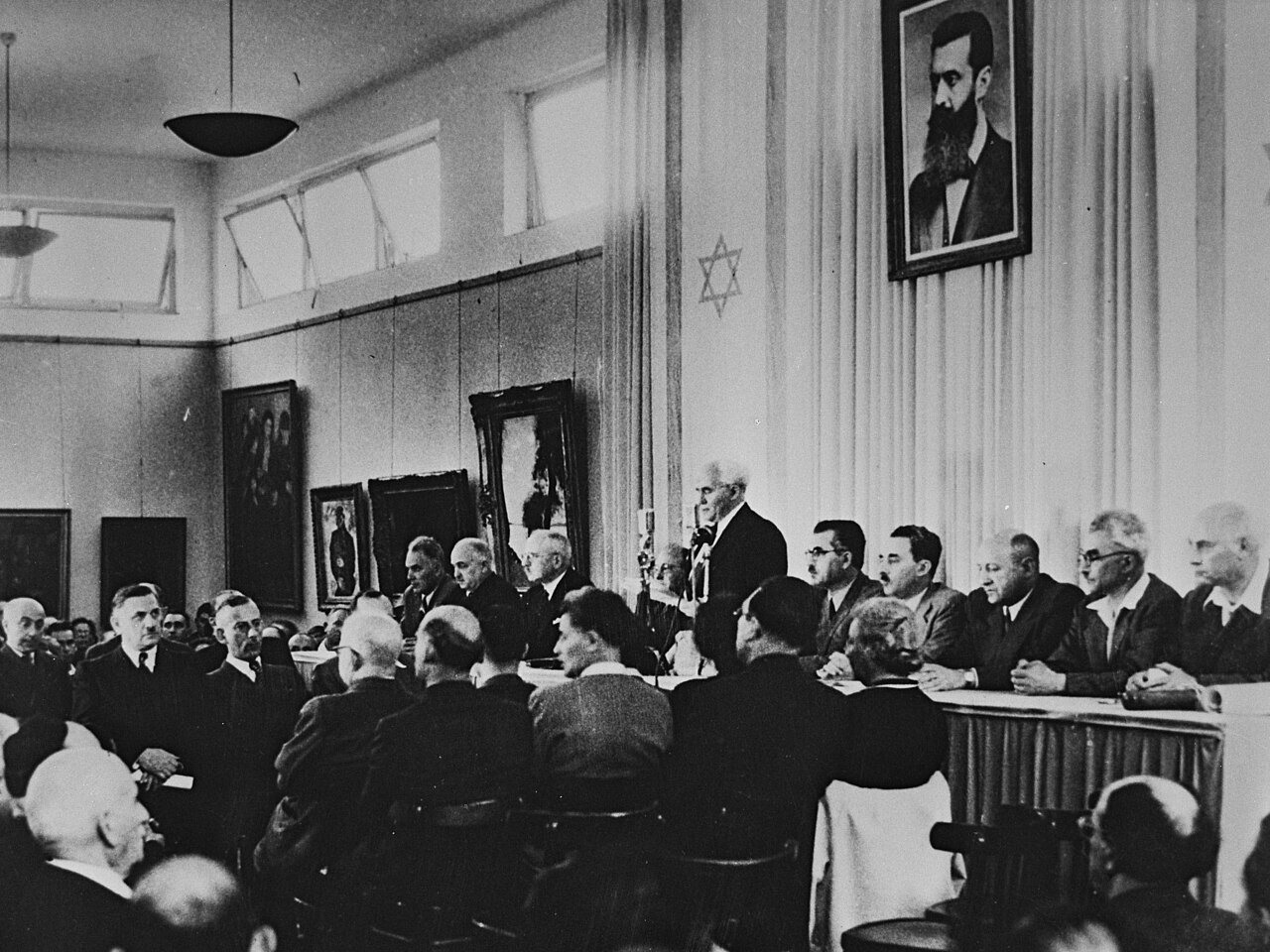
Photo: Morarji Desai (left) with Mani Ram Bagri and guests, by Viksb, CC BY-SA 3.0, via Wikimedia Commons
A single Indian banknote in 1977 could be worth 10,000 rupees. Very few people ever held one. It was the largest note the Reserve Bank of India issued, and along with the 1,000 and 5,000 rupee notes it was understood to live mostly in the safes of merchants, contractors and people who preferred their income not to be written down anywhere. On 16 January 1978, the government of Morarji Desai announced on All India Radio that all three were finished. The next day the banks stayed shut so that they could count what they had.
India has just passed the tenth anniversary of the better-known version. On the evening of 8 November 2016, Narendra Modi went on television and withdrew the 500 and 1,000 rupee notes, about 86 per cent of the cash in the country by value. The Reserve Bank later found that 99.3 per cent of the withdrawn money had come back into the banks, which was awkward for the argument that it would trap hoarded black money. The anniversary coverage this month has mostly been about two other numbers. Digital payments have grown beyond what anyone predicted in 2016, and cash in circulation, which was supposed to shrink, reached ₹43.46 lakh crore in October, its highest level in five years. The government has said it has no plans to revisit the exercise.
The prime minister who liked a hard choice
Desai was 81 when he became prime minister in March 1977, the first person outside the Congress party to hold the job. He had been a colonial civil servant in Gujarat, quit in 1930 to join Gandhi's civil disobedience campaign, and spent years in British jails. As chief minister of Bombay State in the 1950s he enforced prohibition with real enthusiasm. As Indira Gandhi's finance minister he fell out with her, left the government in 1969, and was locked up again during her Emergency in 1975. He won the 1977 election at the head of the Janata Party, a coalition of almost everybody who disliked her.
He was famously austere and famously sure of himself. Black money, which in Janata speeches was tied to the Congress years, was exactly the kind of moral problem he liked to attack head on.
The governor who said no
The man who had to carry it out did not agree. I.G. Patel, the governor of the Reserve Bank, argued against it. He wrote later, in his memoirs, that the idea that black money sat in suitcases and under mattresses was naive. The economist Y.K. Alagh, then at the Planning Commission, remembered Patel telling Desai in Gujarati that it would not work, because the money was kept in land, gold and dollars. The finance minister, H.M. Patel, was in the room and only smiled, according to Alagh.
H.M. Patel had his own record on this. In 1972, writing in a Gujarati journal, he had called demonetisation not worthwhile and said it would cause a great deal of hardship to innocent people without touching the causes of undeclared income, which he listed as high taxes, controls and corruption. Six years later he introduced the bill. Why he went along with it is not clear from anything he left behind, and I am not going to guess.
The ordinance spoke of the "illicit transfer of money" and of damage to the national economy. Anyone holding the notes had a short window to exchange them, with a declaration of where the money came from, and lying on the form could cost up to three years in prison. The queues in Bombay and Delhi grew so long that police were called to some branches and the deadline was extended to 25 January. The Times of India noticed a new trade in "have-notes," poorer people who lent their names to exchange other people's money for a fee. Parliament passed the law in March, after a debate in which members on both sides asked why it had come just before several state elections.
What 1978 actually did
Not very much, and with much less pain than 2016. The old high notes were a small share of the money supply (estimates differ, and a retired bank chairman quoted by ThePrint put the cash withdrawn at somewhere between 15 and 20 per cent), so most Indians never saw one and lost nothing. Gold and commodity prices dropped for a while. The black economy carried on in land and jewellery, as both Patels had said it would.
The note ban had in fact been tried once before that, in January 1946, when the colonial government withdrew the 1,000 and 10,000 rupee notes for the same stated reason. Both came back in the 1950s. The 1,000 rupee note then went again in 1978, returned in 2000 and was cancelled for the third time in 2016, which must be some kind of record for a piece of paper.
I think the most useful thing anyone can read about the 2016 note ban is still a 1972 article in a Gujarati magazine by the man who signed the 1978 one.
Enjoyed this story?Get a new one every day on social.