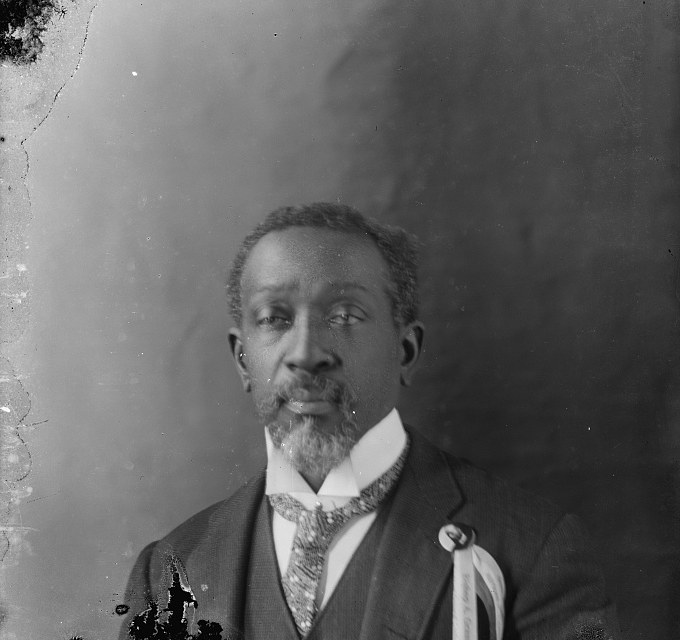
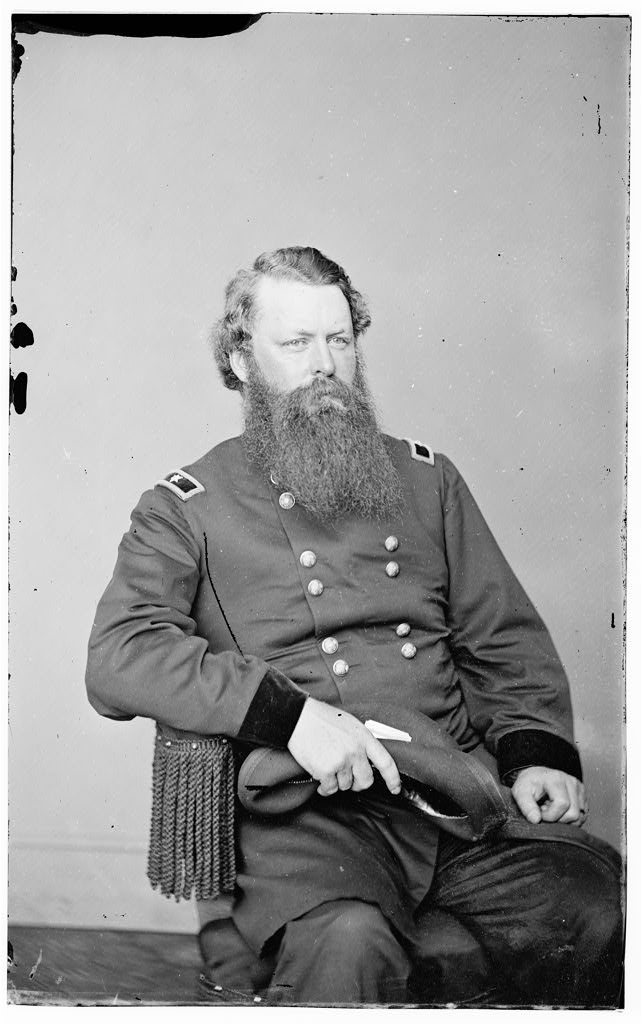
Isaiah T. Montgomery, photograph by C.M. Bell, between 1873 and 1890, Library of Congress Prints & Photographs Division, no known restrictions
In the summer of 1890 Isaiah Montgomery was busy building a town. Three years earlier he and his cousin had bought land in the Mississippi Delta, deep in Bolivar County, and started clearing woods for a settlement of Black farmers that they called Mound Bayou. Montgomery had been born enslaved on a plantation owned by Jefferson Davis's brother. Now he ran a store, sold lots and dealt with the railroad.
That July the voters of Bolivar County also sent him to Jackson as a delegate to a state constitutional convention. Of the 134 delegates, he was the only Black man. What he did there is still argued over, and the document the convention wrote is still the constitution of Mississippi.
A count that is not over
Mississippi voted on November 3. Eight days later the U.S. Senate race between the Republican incumbent, Cindy Hyde-Smith, and the Democrat, Scott Colom, has not been called. Colom led by 65 votes on election night; by Monday the Associated Press had his lead at 2,574, about a quarter of a percentage point. County clerks have until Friday, November 13, to certify.
A large part of what is still being counted is affidavit ballots, cast by people who turned up at the polls and found they were not on the active list. Reporting by Mississippi Today and others has traced many of those inactivations to address data from Experian, the credit bureau, which the secretary of state's office used to check the rolls. Experian says it has not worked for the state since 2025 and that its product was never meant to validate voter records. Voters who were marked inactive had until 5 p.m. on Tuesday to prove who they were.
Mississippi has been arguing about who gets onto its rolls, and who stays there, for a long time. The rules it still argues over were written in the summer of 1890.
"We came here to exclude the Negro"
The convention met in Jackson from August. Its president, Solomon S. Calhoon, did not hide its purpose. "We came here to exclude the Negro," he told the delegates, and nobody in the hall seems to have thought he was exaggerating.
The problem, as the white delegates saw it, was arithmetic. In 1890 about 57 of every 100 Mississippians were Black. The Fifteenth Amendment said the vote could not be denied on account of race. Black voting had already been crushed by fraud and intimidation since the end of Reconstruction (a Mississippi judge told the convention there had not been a full vote and a fair count in the state since 1875), but fraud was messy and attracted federal attention. The delegates wanted something that would hold up in court.
They built it out of rules that never mentioned race. A voter had to pay a poll tax of two dollars a year, for two years running, well before the election, and keep the receipt. He had to be able to read a section of the state constitution, or, if he could not, to "understand" it and give a reasonable interpretation when it was read to him. Who counted as understanding was up to the registrar. A list of disqualifying crimes was written in as well, chosen by the delegates from among the offences they believed Black men were more likely to be convicted of.
Montgomery's vote
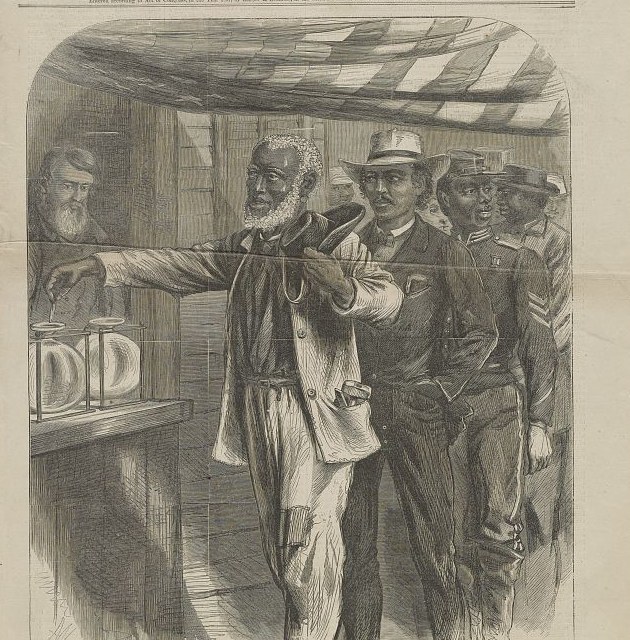
The first vote: a Black man in a worn coat drops his ballot into a glass box while other Black voters, including a soldier, wait in line. Wood engraving after Alfred R. Waud, Harper's Weekly, November 16, 1867, Library of Congress, no known restrictions
Montgomery sat on the committee on the elective franchise, and he voted for its franchise article. When he explained himself on the floor, he argued that a literacy test would leave the vote with the "stable, thoughtful, and prudent element" of the population, and that if Black Mississippians were to be shut out, it should be because a man was ignorant and not because he was black. More of them, he hoped, would qualify as schools improved.
It is easy to call that a betrayal, and plenty of people have. It is also worth remembering where he was standing: a lone Republican in a hall of white Democrats who had already decided the outcome, with a fragile Black town in the Delta that depended on their goodwill. Two weeks after the vote he told a northern newspaper the suffrage rules "did not wholly suit" him but were "the best that could be done." I do not think he believed that for long. In a private letter to Booker T. Washington years later, he wrote that white talk of "pure government" was a sham.
Never put to the voters
The convention passed the new constitution with eight votes against and did not submit it to a popular vote. It simply proclaimed it, and it took effect on November 1, 1890.
The effect was quick. After the new registration, the rolls held roughly 70,000 white voters and about 9,000 Black ones, in a state where Black residents were the majority. The Republican presidential vote, 26 percent in 1888, was under 3 percent in 1892. In 1898, in Williams v. Mississippi, the U.S. Supreme Court looked at the scheme and let it stand, because the law did not name race on its face. Other Southern states had been watching. Within a few years South Carolina, Louisiana, Alabama, Virginia and others had copied the poll tax, the literacy test and the understanding clause, and "the Mississippi plan" became a phrase.
What is left of 1890
Most of the machinery is gone. The Twenty-fourth Amendment and the Supreme Court killed poll taxes, and the Voting Rights Act of 1965 ended literacy tests. None of that has anything to do with Experian. The complaints reported so far this year are about bad data and short notice.
But the 1890 constitution itself is still Mississippi's constitution, amended many times and never replaced. Section 241, the list of disqualifying crimes, is still in it, with a lifetime voting ban for some of those offences. Federal courts have heard challenges to it more than once, and the Supreme Court declined to take up one in 2023. Mound Bayou is still there too, a town of about 1,500 people on Highway 61, and it still calls Isaiah Montgomery its founder.
Enjoyed this story?Get a new one every day on social.