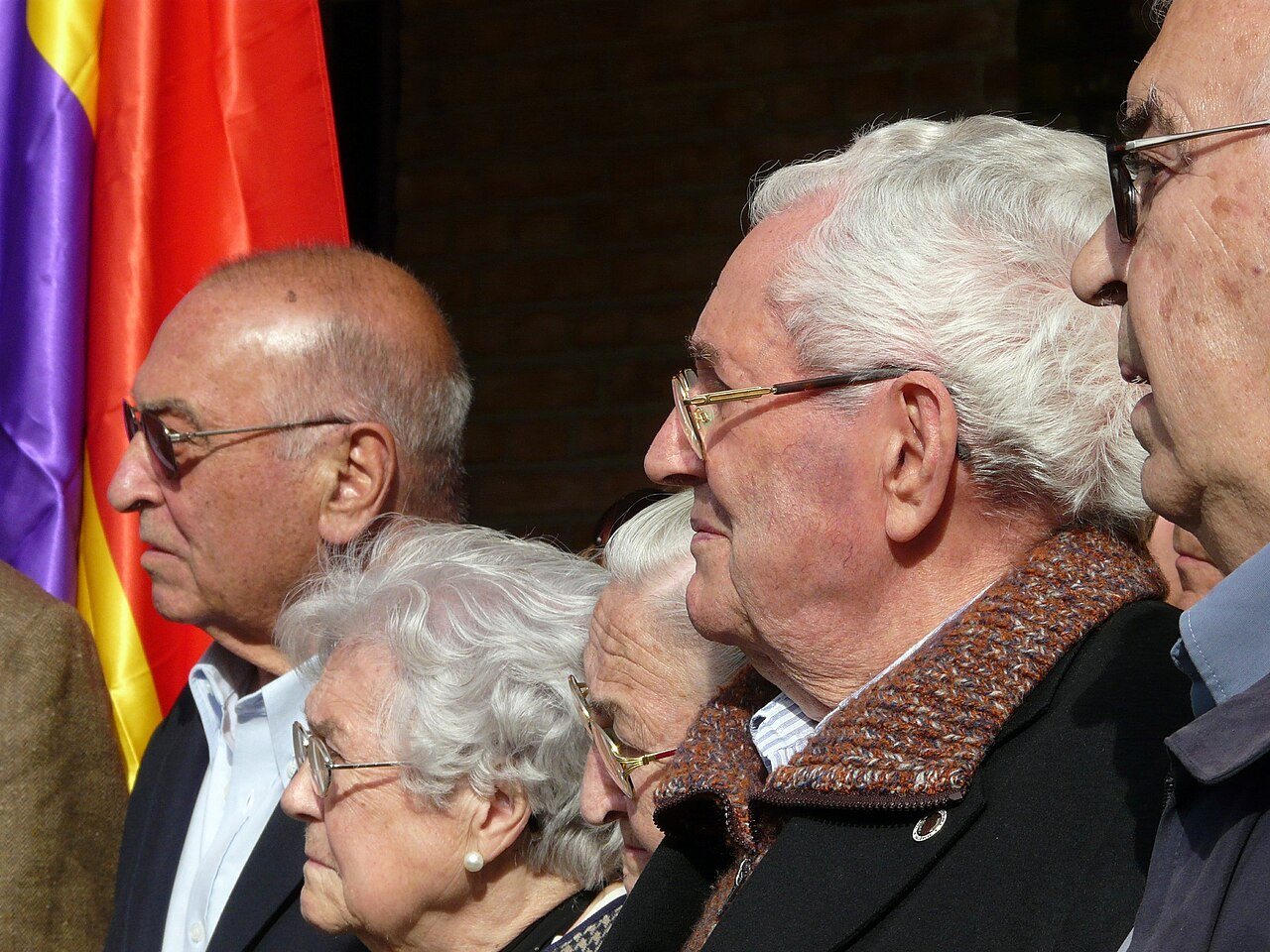
Photo: Brocco from Madriz, Nicolás Redondo and Marcelino Camacho at a later tribute in Madrid, CC BY-SA 2.0, via Wikimedia Commons
At midnight on 14 December 1988, the picture on Televisión Española went black. Nobody announced it on air. The signal was simply cut as the strike began, and to this day the accounts disagree on exactly who pulled it (the strikers at the transmitters, by most versions). People who were still up in Madrid, Seville and Bilbao looked at a dark screen and understood that the next day was going to be unusual.
It was. By most accounts the country stopped. There were no buses and no metro in the big cities, the motorways were close to empty, and electricity demand fell by about a quarter. The unions claimed around eight million strikers. The figure is theirs and should be read as such, but nobody serious has argued that 14-D, as Spaniards still call it, was anything other than the largest strike the country had seen.
What makes it worth remembering this week is who it was aimed at. The prime minister was Felipe González of the Socialist Party, and one of the two unions that called the strike was the UGT, which had been founded by the same man who founded his party.
Wednesday, and the strike before the vote
On Wednesday Spain had its first general strike since 2012. It was called for 24 hours over housing and rents, with the tenants' union pushing and the two big confederations, CCOO and UGT, backing it. The usual war of numbers followed. The unions said participation ran from about 41 per cent in Castilla-La Mancha to over 80 per cent in Catalonia and Andalusia; the employers' organisations, CEOE and Cepyme, put it under 5 per cent. Barcelona's march ended in looting and barricades, with about fifty arrests in the city and 74 across Spain, according to the Interior Ministry.
Pedro Sánchez, another Socialist prime minister, has called a general election for 29 November. So the strike landed in the middle of a campaign. That is new. In 1988 there was no election in sight, which is partly why it hurt González so badly.
A party and a union with one founder
Pablo Iglesias, a Madrid typesetter, founded the Spanish Socialist Workers' Party in 1879 and the General Union of Workers, the UGT, in 1888. For most of the following century the two worked as one movement, outlawed together under Franco and legal again together in 1977. When González won his landslide in October 1982, with 202 of the 350 seats in Congress, UGT leaders sat on the Socialist benches.
The leader of the UGT through the whole decade was Nicolás Redondo, a metalworker from Bilbao who had done time in Franco's prisons. He was a Socialist deputy himself. He resigned his seat in 1987 after a row over the government's budget, which tells you how things were going.
The other confederation, Comisiones Obreras, had grown out of the clandestine factory committees of the 1960s and was close to the Communists. CCOO and UGT had spent most of the decade competing. In December 1988 they called a strike together, which hadn't happened before.
The youth employment plan
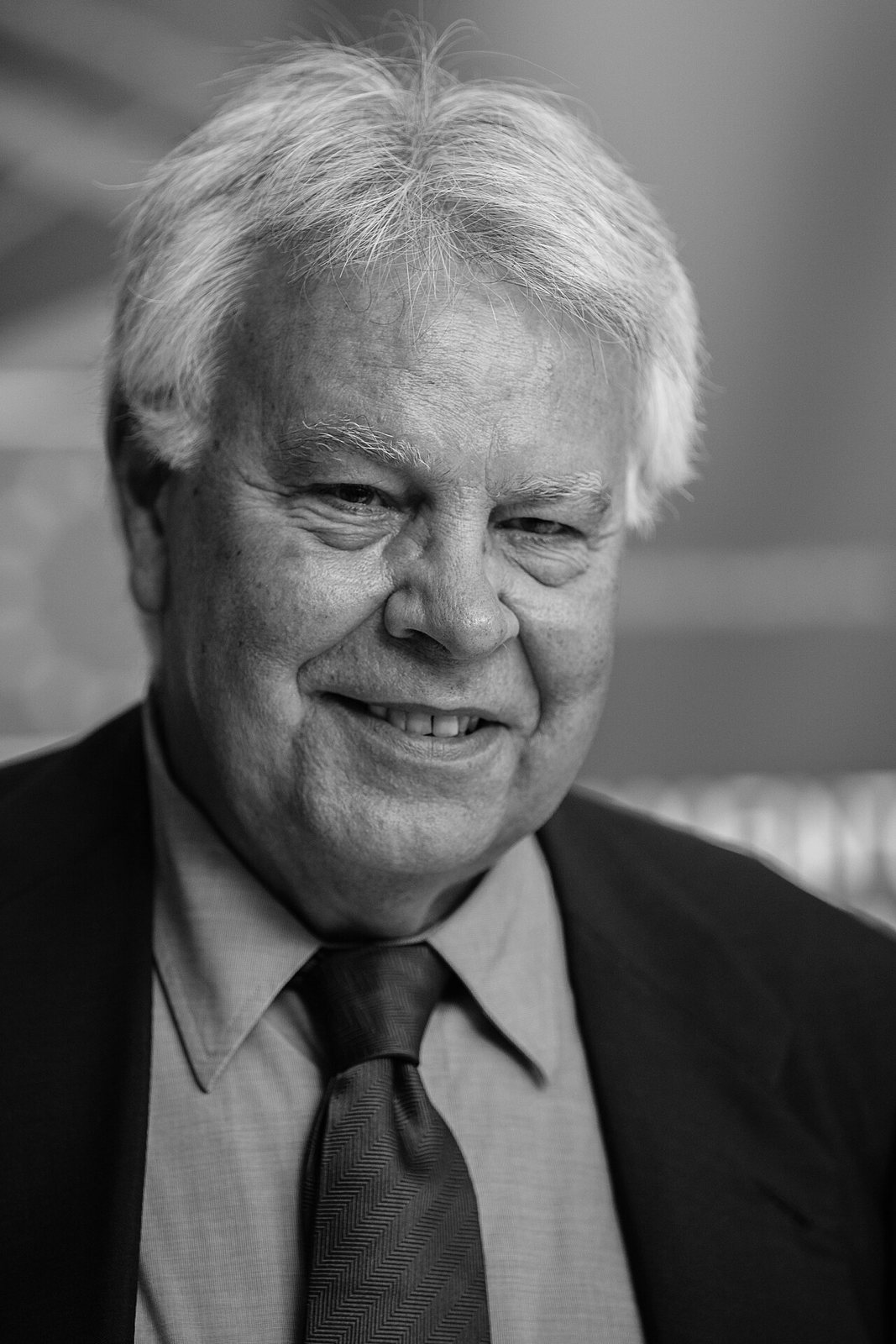
Felipe González, prime minister of Spain from 1982 to 1996, photographed in July 2013. Photo: Claude Truong-Ngoc, CC BY-SA 3.0, via Wikimedia Commons
The trigger was a scheme called the Plan de Empleo Juvenil. Spanish unemployment was about 1.5 million, worse among the young, and the government proposed to subsidise employers who took on people under 25 on short contracts at the minimum wage. The unions read it as a way of making a whole generation temporary. According to the historian Sergio Gálvez, the plan was not in the Socialist programme at the 1986 election, which made it harder to defend as the will of the voters.
Behind the plan sat a longer grievance. González's governments had shut down or shrunk large parts of the steel, shipbuilding and mining industries in what was called reconversión, and tens of thousands of jobs had gone with them. The unions had accepted wage restraint through the lean years. By 1988 the economy was growing fast, Spain was in the European Community, and they wanted a share. The government's answer, in their view, was a contract for young people that looked more like a trainee grant than a job.
Young people themselves had marched in Madrid on 1 December. The strike call went out for the 14th.
The day the country stayed home
The striking thing about 14-D, in the accounts I have read, is how ordinary it was. There were pickets and some scuffles, and fewer than 200 arrests across the whole country according to Gálvez. Mostly people did not go to work. Shops shut. Valencia Plaza's retrospective has the El Corte Inglés department stores as almost the only thing open in central Madrid, and a picket throwing peseta coins at customers going in on calle Princesa, which is the sort of detail nobody would bother to make up.
Gálvez also has the professional footballers forming a strike committee, with Emilio Butragueño and Míchel of Real Madrid among its leaders. I would like a second source for that before I put any money on it, but the matches did not take place.
The Interior Ministry under José Luis Corcuera had promised the employers that businesses would be protected. Very few of them wanted to open.
What González gave and what he kept
The government withdrew the youth plan. At the cabinet meeting two days later, according to Gálvez's reading of the record, there was a serious row and González came close to resigning. He later described the strike as the hardest moment of his time in office, and he did not forgive the UGT. Relations between party and union were never the same.
In the following year the government made what the press called a social turn: non-contributory pensions for people who had never paid in, wider unemployment cover and pay rises in the public sector. Some economists have since blamed that spending for part of the deficit Spain carried into the recession of 1993. Others think the turn was overdue. On the core economic policy, the unions got little. Redondo later said he regretted not calling a second strike.
I find it hard to read 14-D as a simple union victory, and I suspect Redondo did too.
The vote that followed
The general election came in October 1989, ten months after the strike. Spaniards who had shut the country down for a day went back and voted for the man they had shut it down against. The Socialists lost votes but won 175 seats, one short of an absolute majority. Spain has had several general strikes since, in 1992, 1994, 2002, 2010 and twice in 2012, and none of them came close to that Wednesday in December. The latest finished on Wednesday night, and the polls open in seventeen days.
Enjoyed this story?Get a new one every day on social.