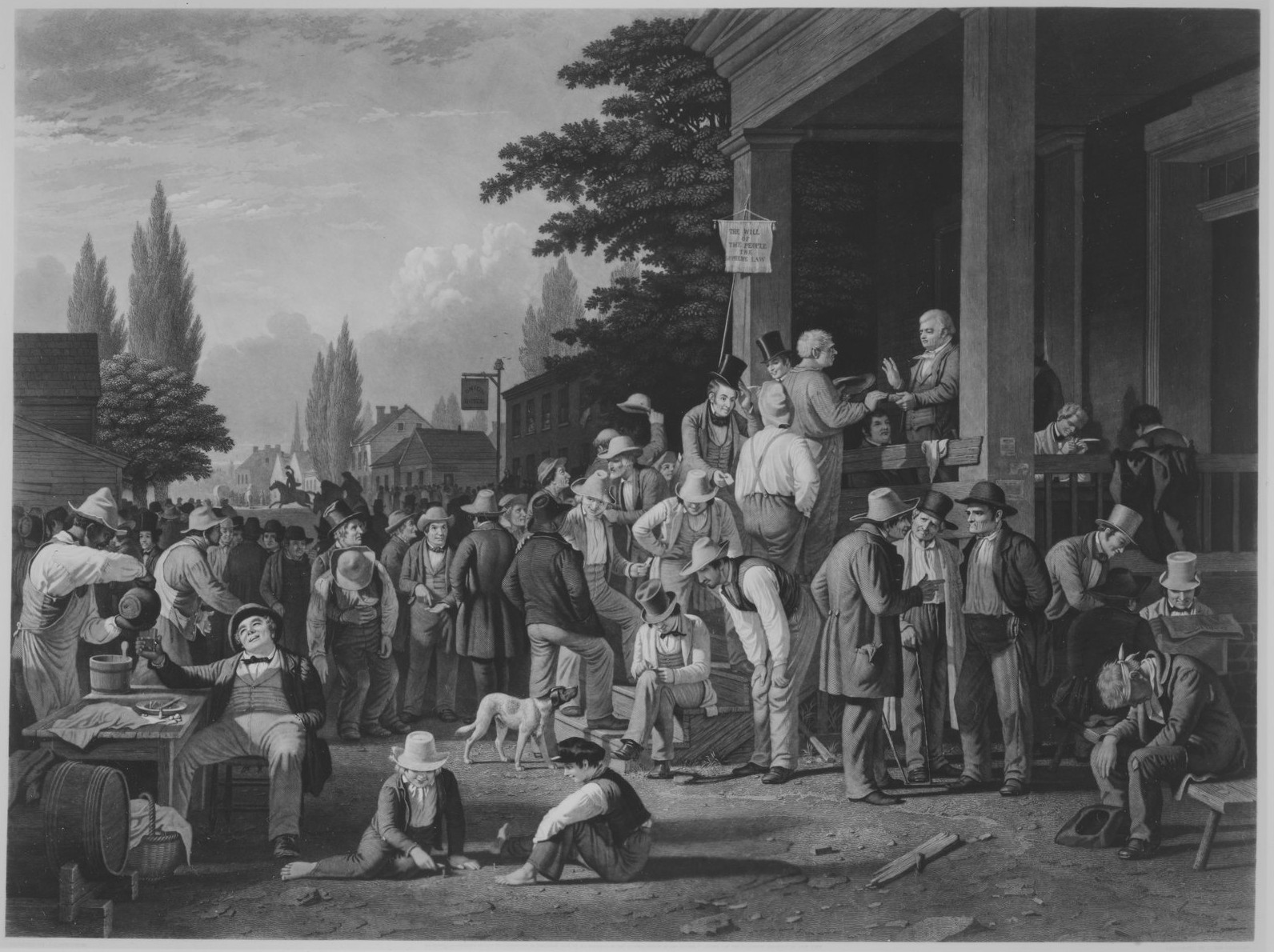
John Sartain after George Caleb Bingham, The County Election, engraving, The Metropolitan Museum of Art, CC0
A reader wrote to me last week with a question I had never properly looked into: why is Election Day a Tuesday? Not a weekend, not a holiday, a working Tuesday in November, so that in eleven days' time, on 3 November, tens of millions of people will vote before work or in a line that forms after five o'clock. The short answer is that Congress chose the day in 1845 for a country that no longer exists, and nobody has managed to change it since.
A country with no fixed voting day
For the first half century of the republic there was no national Election Day at all. A law of 1792 told the states to choose their presidential electors at any point within a 34-day window before the first Wednesday in December, when the electors met. Each state picked its own date. Some voted in late October, some in early November, and the newspapers printed the early results while other states were still deciding.
Two things made the window a problem. One was the telegraph. Morse sent his first message from Washington to Baltimore in May 1844, and it was obvious that a result in one state would soon be known in another the same day, in time to change how people voted. The other was plain cheating. With a month to play with, a man could vote in one state and then cross the line and vote again in the next, and the complaint was loud after the 1844 election.
The law of 23 January 1845
So in December 1844 an Ohio congressman, Alexander Duncan, brought in a bill to make every state choose its electors on the same day, and on 23 January 1845 President Tyler signed it. The day it fixed was "the Tuesday next after the first Monday in the month of November". It applied only to presidential elections. House elections were brought on to the same day by a law of 1872, and the Senate followed once senators were directly elected after 1913. The states mostly moved their own contests to the same date because running two elections cost twice as much.
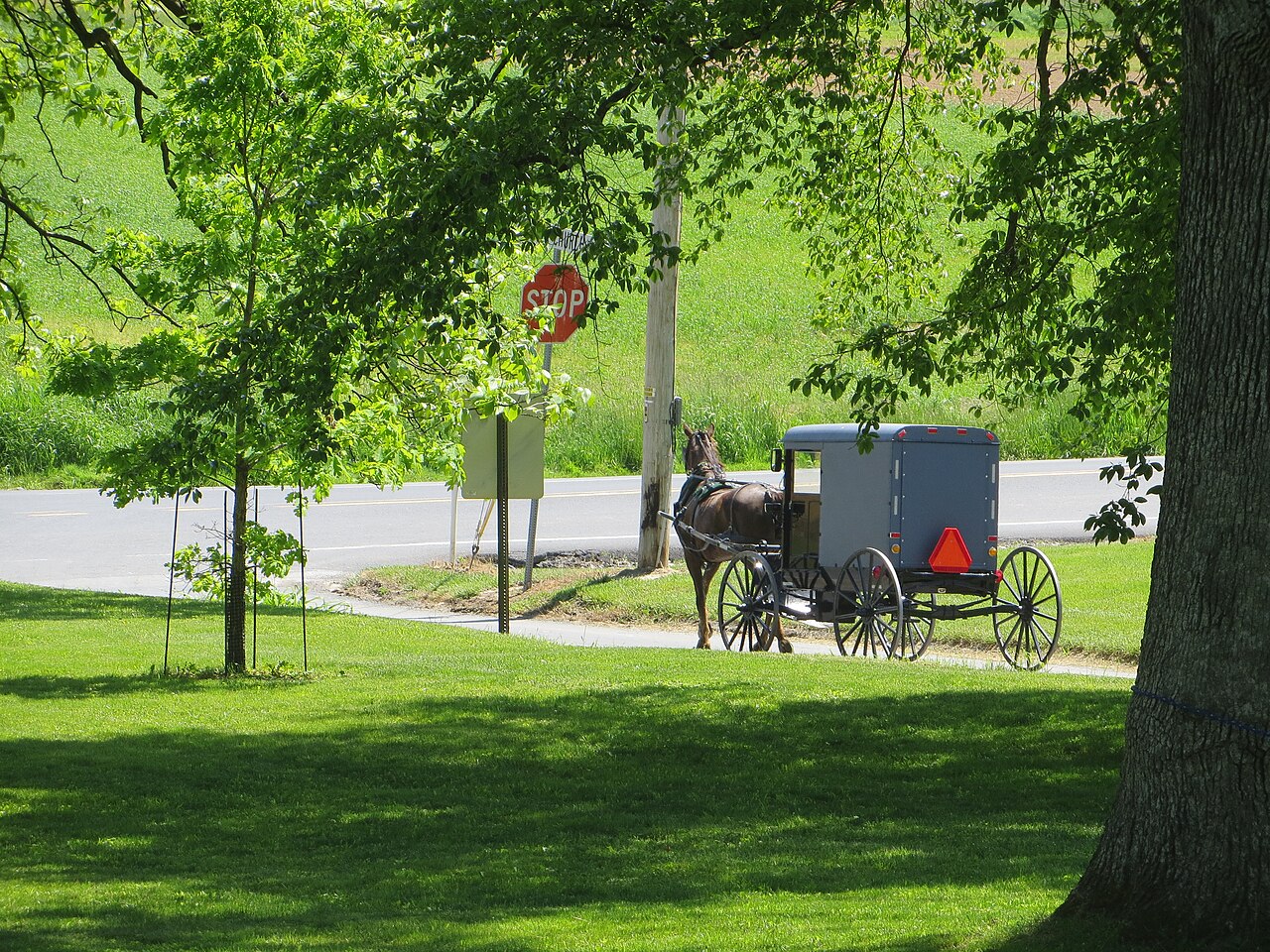
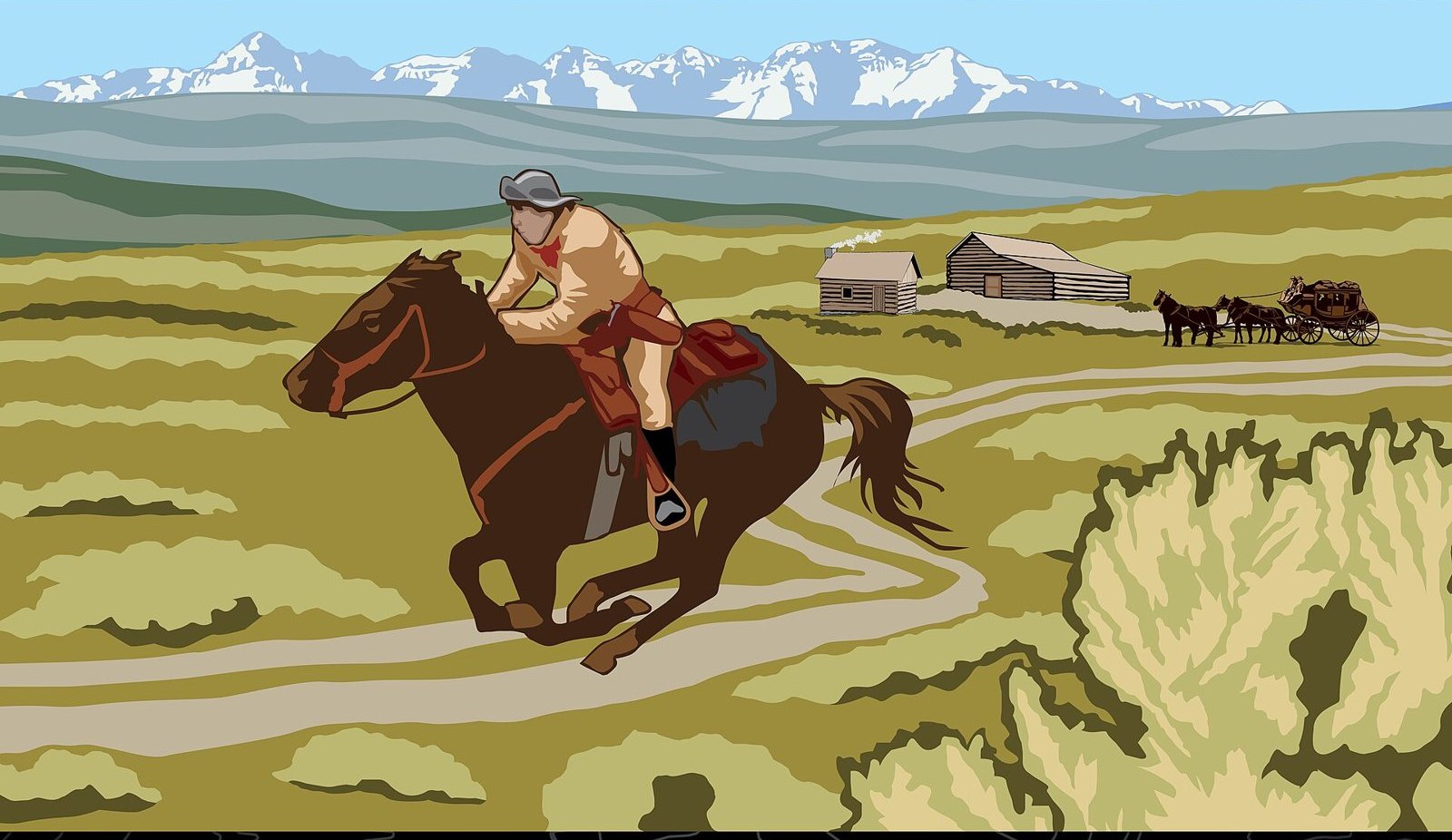
The reasoning behind the date is where the folklore starts, and I want to be careful about what is actually known. November is well documented: the harvest was in, the roads had not yet turned to mud or ice, and the law had to stay inside the old December deadline for the electors. Tuesday was chosen because most Americans lived on farms, the polling place was at the county seat, and for many of them that was a day's ride away. Sunday was the Sabbath, so a man could not set out until Monday morning. He voted on Tuesday and rode home.
The further detail you will read everywhere, that Wednesday was ruled out because it was market day, is repeated in every explainer and I have never been able to trace it to the debates themselves. It may well be true. The "first Monday" clause has a firmer footing: it stops the election from ever landing on 1 November, All Saints' Day, when merchants also closed their books for October.
What the Tuesday turned into
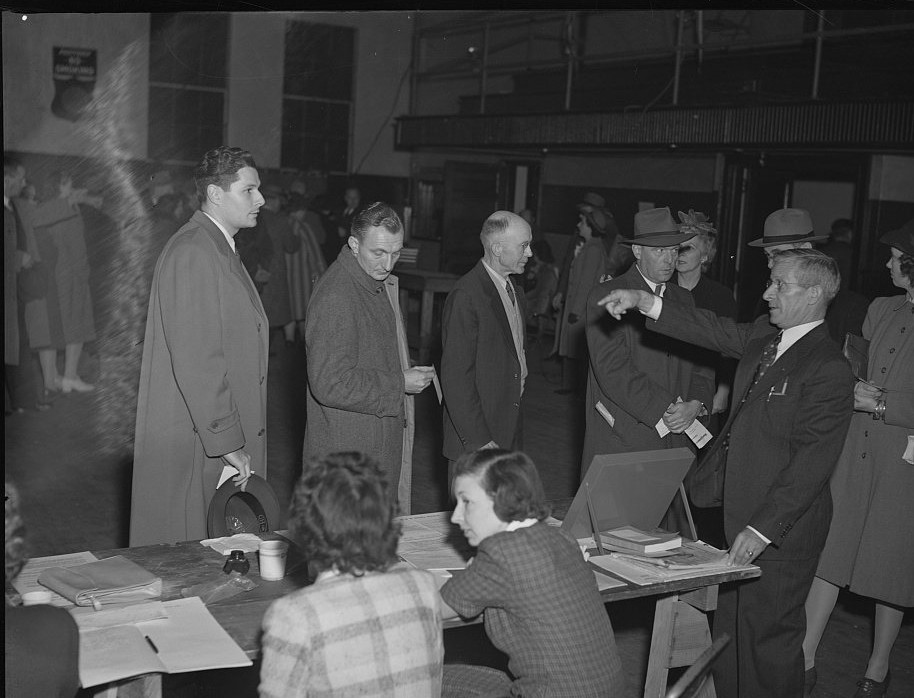
Photograph of voters queuing at a table of poll clerks in a school gymnasium in Olney, Maryland, on election day in November 1942. Marjory Collins, Library of Congress Prints & Photographs Division, no known restrictions
George Caleb Bingham painted what the day looked like in 1852, in Missouri, and the picture above is the engraving that put it in parlours across the country: a crowd of men (only men, and only white men, in Missouri in 1852) on a courthouse porch, a judge swearing in a voter, somebody being carried to the polls drunk, and a banner over the whole business reading "The Will of the People the Supreme Law". It was a day out.
That is the world the Tuesday was built for, and it went away a long time ago. By 1920 more Americans lived in towns than on farms. The county seat became a school gymnasium ten minutes away, and the problem the law solved (how far away the polls were) was replaced by the problem it created (that the polls are open on a working day). Most of Europe and Latin America vote on a Sunday; Australia votes on a Saturday, and fines you if you do not turn up.
The Tuesday today
Every so often someone tries to do something about it. A "Democracy Day" bill to make Election Day a federal holiday has been put before Congress on and off since 2005, Senator Bernie Sanders has reintroduced it more than once, and there is an Election Day Act sitting in the current House. None of them has got anywhere. By my count about ten states, plus Puerto Rico, make the day a state holiday, which closes the schools and government offices and does nothing for anyone who works in a shop.
What has changed is that the country has quietly stopped voting on Election Day. In 2008 roughly three in ten votes were cast before the Tuesday; in 2020 it was most of them. Thirty-two states and the District of Columbia now allow anyone to vote early in person without giving a reason, and Colorado, Hawaii, Oregon, Utah and Washington run their elections almost entirely by post. Texas opened its early-voting sites on Monday and keeps them open until 30 October; Harris County was reporting record numbers within days.
So, to my reader: Election Day is a Tuesday because of an 1845 compromise between the Sabbath and a man on a horse. It is still a Tuesday because changing it would require Congress to agree on something. The way around it, which about half the country has found, is not to vote on Election Day at all.
Enjoyed this story?Get a new one every day on social.