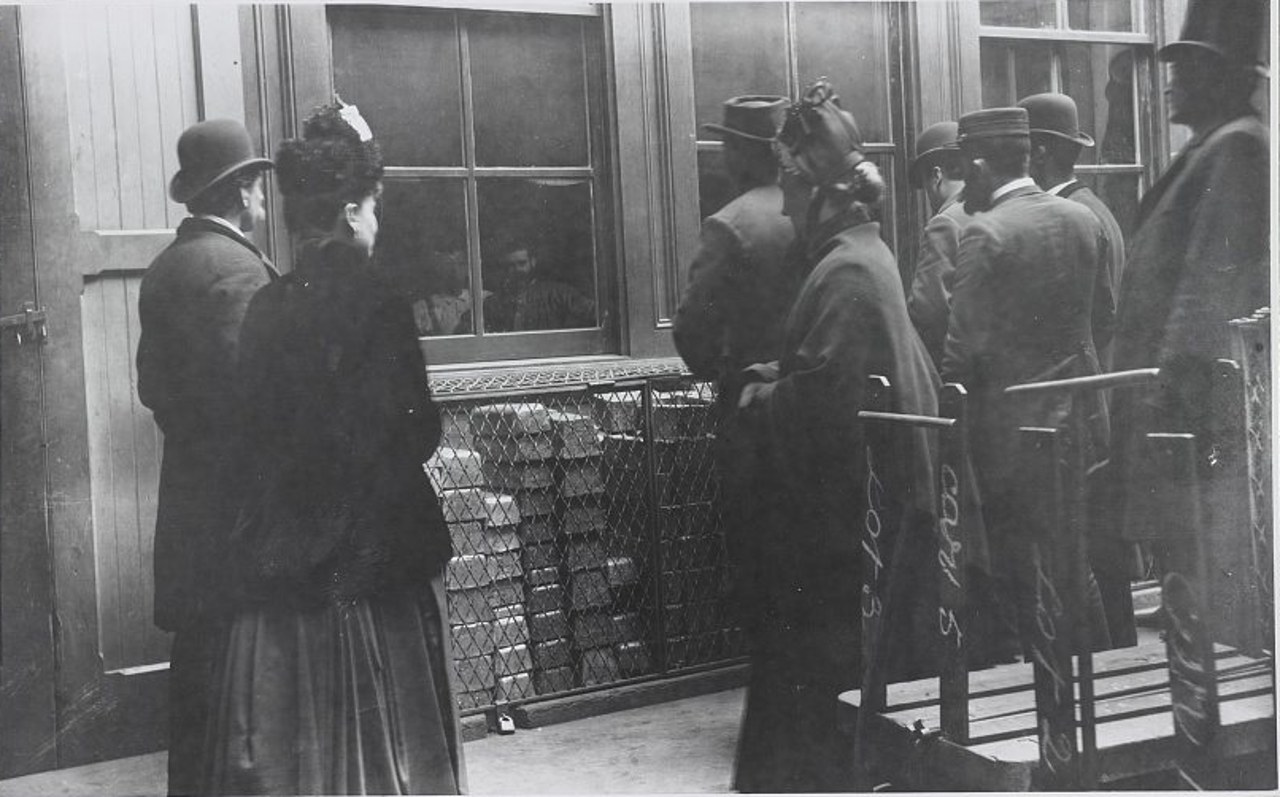
Photo: Frances Benjamin Johnston, 1888, Library of Congress Prints & Photographs Division, no known restrictions
By the time the United States Mint stopped making pennies, each one cost 3.69 cents to produce. That figure comes from the Mint's own press release for the last ceremonial strike, in Philadelphia on November 12, 2025, and it had more than doubled in a decade. There were an estimated 300 billion pennies already out in the world, in jars and ashtrays and car cup holders, which the Mint said was far more than commerce needed.
The coin had been struck continuously since 1793. So the question I keep getting from readers is not really why it ended but how it lasted so long, and the answer runs through Alexander Hamilton, a slavery controversy, a world war and Abraham Lincoln's right profile.
A cent, not a penny
The United States was the first country to put its money on a decimal system. Jefferson argued for it, Hamilton worked out the details, and the Coinage Act of April 2, 1792 created the dollar, divided it into one hundred parts and called the smallest part a cent, from the Latin for a hundred. It also established a Mint in Philadelphia, then the capital.
Nobody called it a cent in daily life. Americans had used British pennies for 150 years and the word stuck. Officially the coin has never been a penny. The Mint's own release in 2025 refers to "the circulating one-cent coin," which is the kind of phrase only a government can produce.
The first cents came off the presses in early 1793. They were big, almost the size of a modern half dollar, because the law required them to contain a cent's worth of copper. The design showed a woman with flowing hair on one side and, on the other, a chain of fifteen links for the fifteen states. The chain lasted a few weeks. Newspapers complained that a chain was a poor emblem for a country that had just fought for liberty, and some pointed out what it suggested about slavery. The Mint replaced it with a wreath the same year.
Shrinking, then Lincoln
The second Philadelphia Mint building, photographed around 1900. Detroit Publishing Co., Library of Congress Prints & Photographs Division, no known restrictions
Copper got expensive in the 1850s, and in 1857 the Mint gave up on the large cent. The new small cent was made of copper and nickel and showed a flying eagle, then from 1859 an "Indian Head," which was in fact a Liberty figure in a feathered headdress. That coin ran for fifty years.
In 1909, for the hundredth anniversary of Lincoln's birth, the Mint put him on the cent. It was the first time a real person had appeared on an everyday American coin, and the sculptor, Victor David Brenner, worked from a photograph so that Lincoln faces right, the opposite way from Jefferson, Roosevelt and Kennedy on the coins that came after. Brenner's initials, V.D.B., were on the reverse of the first batch, and the fuss over an artist signing public money was loud enough that the Mint removed them within weeks. They went back in 1918, tiny, on Lincoln's shoulder, where they still are.
The year the penny was made of steel
The penny's metal has been a running argument. In 1943, with copper needed for shell casings, the Mint struck the cent in zinc-coated steel. The coins looked like dimes, rusted, and confused vending machines, and the Mint went back to copper the next year using, in part, recycled shell casings.
The bigger change came in 1982. Copper had climbed so far that a cent's worth of it cost more than a cent, so the coin became a zinc core with a thin copper plating. That is the penny most of us have in our pockets: 97.5 percent zinc. It kept the Mint ahead of metal prices for about two decades, and then it did not. The cost of making a cent went past one cent in 2006 and never came back under.
Canada stopped making its penny in 2012 and told shops to round cash purchases to the nearest five cents, and Australia and New Zealand had done the same years earlier, so there was a well-tested model. Bills to kill the American penny came up in Congress roughly once a decade from 1990 on. None passed; the zinc industry lobbied against them, and nobody wanted to be the member who took Lincoln off the coin.
The shortage nobody planned for
In February 2025 the President directed the Treasury to stop producing pennies. The Mint used up its remaining blanks over the summer, and on November 12 the Treasurer, Brandon Beach, struck the final circulating cents at the Philadelphia Mint, a few blocks from where the first ones were made in 1793. The coin remains legal tender; there is no plan to withdraw it.
Banks ran short of pennies within weeks, earlier than the Treasury expected, and stores began rounding cash totals to the nearest nickel on their own. Some state laws and the rules for food-stamp purchases do not clearly allow that, and the Treasury's guidance in December 2025 mostly left the question to the states. A bill that would let retailers round to the nearest five cents has been introduced in Congress; as far as I can find, it has not become law.
The last press at Philadelphia stopped on a Wednesday. The first coins struck there in 1793 were, according to the Mint's records, 11,178 copper cents, delivered on March 1 of that year.
Enjoyed this story?Get a new one every day on social.