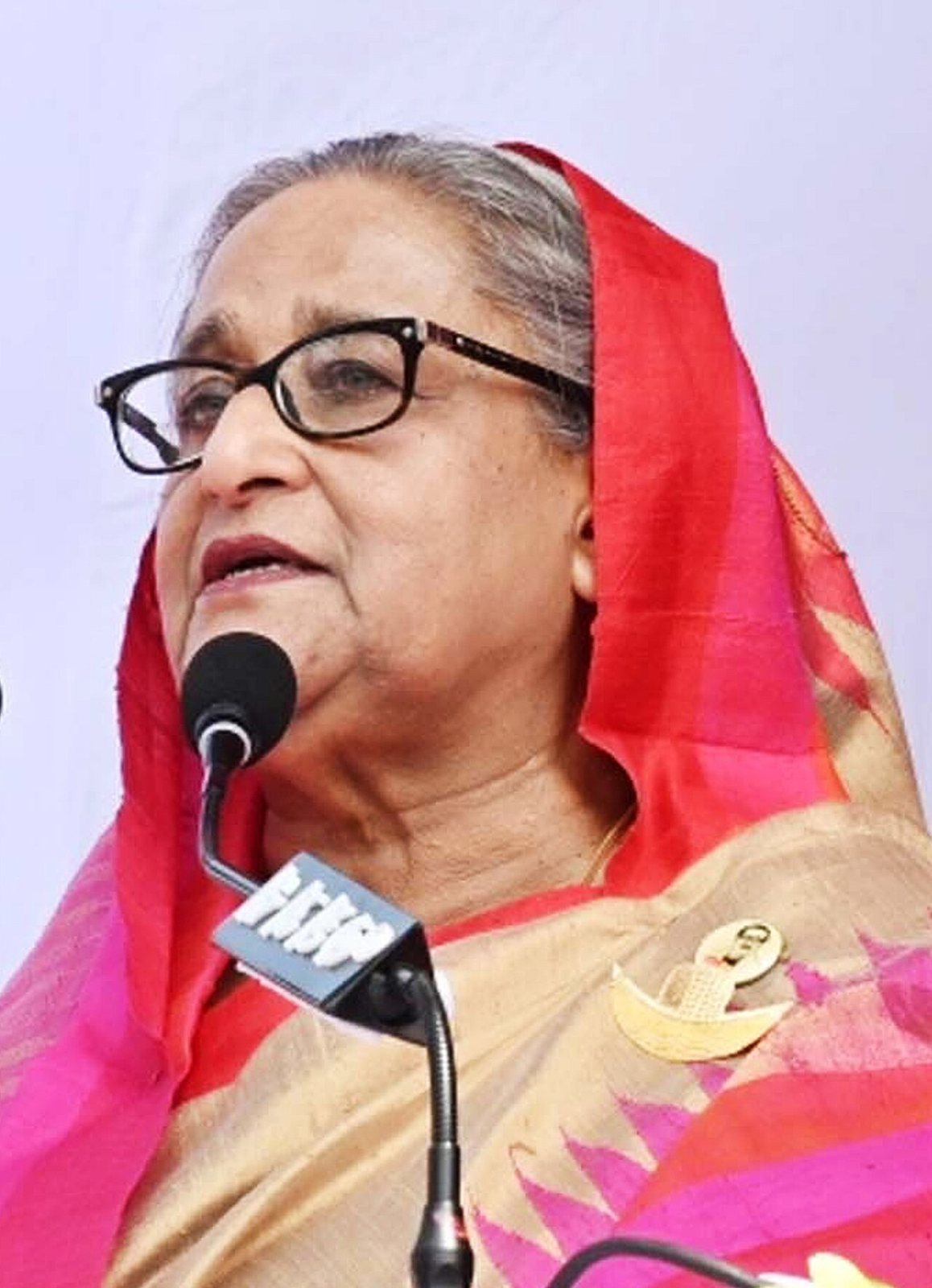
Photo: DelwarHossain, Sheikh Hasina in Gopalganj, 2023, CC BY-SA 4.0, via Wikimedia Commons
On the afternoon of 17 May 1981 it was raining hard on the airport in Dhaka, and had been since noon. The crowd had come anyway. When the plane from Calcutta landed, the woman who stepped off it was 33, had not set foot in her own country for almost six years, and had been elected leader of the country's biggest opposition party three months earlier without being in the room.
Her name was Sheikh Hasina. Most of her family was dead, and she had come home to say so in public.
This week she has asked to do it again. On Monday her lawyers sent a letter to Bangladesh's mission in New Delhi asking for a new passport and a national identity card, her first request since she fled to India in August 2024. The government in Dhaka refused within hours. A state minister for foreign affairs said Bangladesh does not give a "passport to a terrorist" and that it wants India to hand her over.
The night in August 1975
Hasina's father was Sheikh Mujibur Rahman, the man who led East Pakistan to independence as Bangladesh in 1971. In the early hours of 15 August 1975 a group of army officers attacked his house at Road 32 in the Dhanmondi district of Dhaka and killed him, his wife, his three sons (the youngest was ten), two daughters-in-law and other relatives and staff. Other houses were attacked the same night.
Two of Mujib's children were not there. Hasina and her younger sister, Sheikh Rehana, were in West Germany, where Hasina's husband, a nuclear physicist, was working. They were the only immediate family left.
The new authorities did not want them back. Within weeks an Indemnity Ordinance was issued protecting the killers from prosecution, and it later became part of the law. For the next five years the sisters were people with a famous surname and nowhere obvious to go.
Five years in Delhi
Indira Gandhi's government gave them refuge, and after a short spell in Germany they moved to India. Hasina lived in Delhi with her husband and two small children. Accounts from people around her describe a quiet household and a great deal of caution; it has often been written that the family used other names for safety, and I would treat the details of that as family memory rather than record.
What is on the record is what happened back home. Bangladesh went through coups and counter-coups until General Ziaur Rahman took control, became president, and founded his own party. Mujib's Awami League survived but split into factions, and by 1981 it needed someone none of the factions could argue with.
At a council meeting in Dhaka on 14 to 16 February 1981 the party chose Hasina as its president. She was still in Delhi. Two senior party figures, Abdus Samad Azad and Korban Ali, were sent to bring her home.
Storm, rain or dark night
She flew from Delhi to Calcutta and on to Dhaka with her daughter and the party delegation. Bangladeshi newspapers marking the anniversary have described the scene many times since: thunderstorms, a crowd waiting at the airport from midday, police on duty but heavily outnumbered, and a slogan that went round the crowd about being with her through storm, rain or dark night.
From the airport she went to a rally on Manik Mia Avenue, outside the National Parliament. She spoke for about half an hour. She said she had not come to be the leader of the Awami League, which is the kind of thing new party leaders say, but she also said she had come to get justice for her father and for the four Awami League leaders murdered in Dhaka Central Jail in November 1975, and that one she meant.
In the evening she went to the house on Road 32. The authorities had kept it shut, and security would not let her in. She sat on the road outside with party workers and prayed, then went on to her husband's family home.
Two weeks later
On 30 May 1981, thirteen days after she landed, President Ziaur Rahman was killed by army officers in Chittagong. Her return and his death are unconnected, but they arrived together, and the politics of the next four decades came out of that fortnight: two parties, one led by Mujib's daughter and one by Zia's widow, Khaleda Zia, passing power back and forth when there were elections and both opposing General Ershad when there were not.
Hasina spent much of the 1980s under house arrest or in and out of detention. Ershad fell in 1990. She became prime minister in 1996, and her government repealed the Indemnity Ordinance that year so that her father's killers could be tried. Several were eventually hanged. She lost power in 2001, won again by a large margin at the end of 2008, and stayed in office for fifteen years after that.
Leaving by helicopter
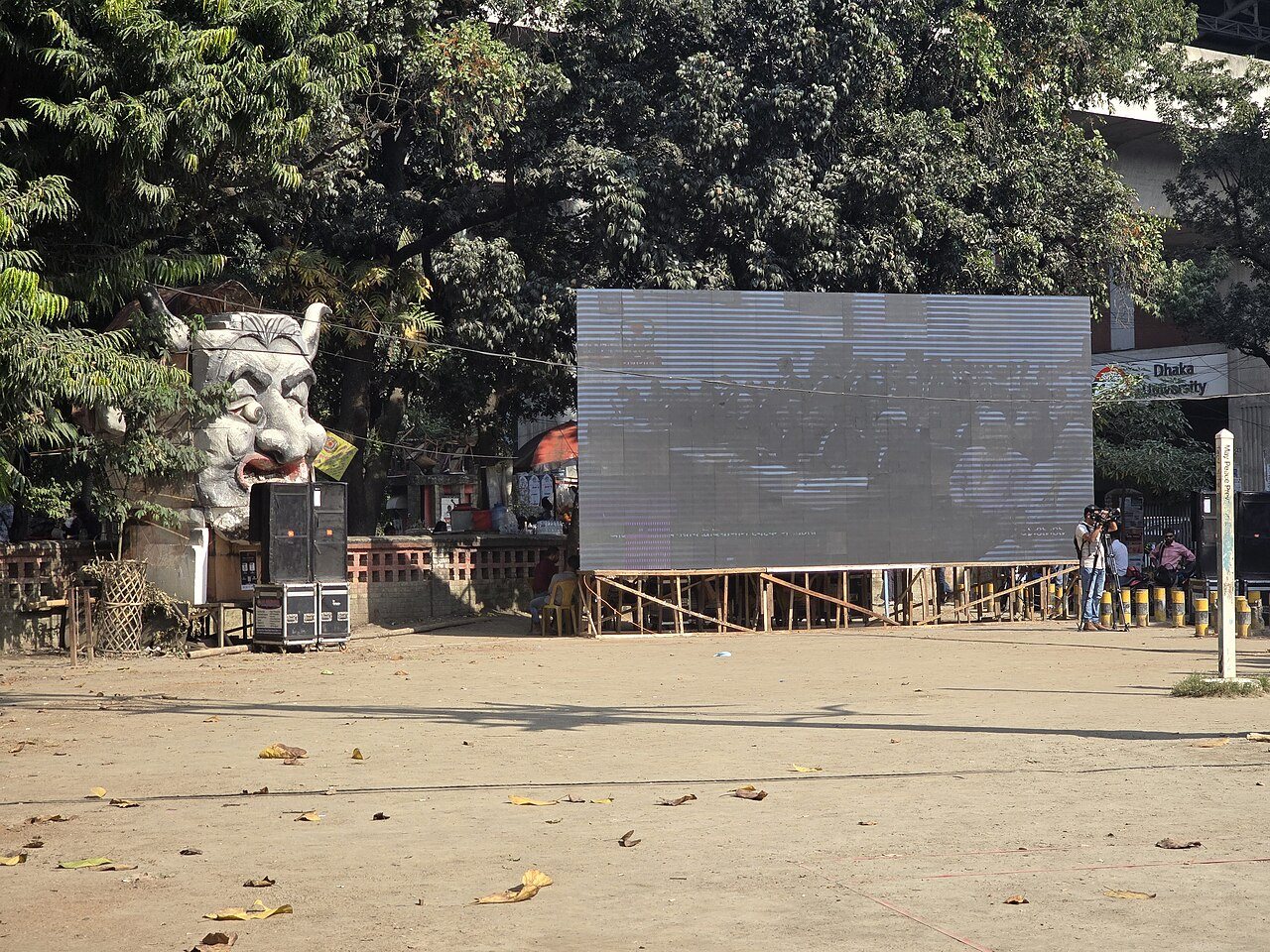
A large outdoor screen set up at the TSC on the Dhaka University campus for the live broadcast of Sheikh Hasina's trial. Photo: Sakib Howlader, CC BY-SA 4.0, via Wikimedia Commons
How those fifteen years are judged is still the most contested question in Bangladeshi politics, and I am not going to settle it in a paragraph. Her supporters talk about the growth figures and the bridges; her critics talk about elections the main opposition boycotted, about people who disappeared, and about Khaleda Zia in prison.
In July 2024 a student protest over job quotas turned into an uprising, and the crackdown that followed killed hundreds of people; a United Nations human rights report later put the possible toll as high as 1,400. On 5 August 2024, with crowds heading for her residence, Hasina left by military helicopter for India. In November 2025 a war crimes tribunal in Dhaka sentenced her to death in absentia for ordering the crackdown. She denies the charges, and her party, the Awami League, is banned.
A December date, maybe
So the situation today is a reversal of 1981, almost point by point. Then she was the daughter of a murdered leader, returning to a country run by people who had benefited from his death. Now she is the one convicted, and the government she wants to come home to is the one that was built on her fall.
The house on Road 32, which had become a museum to her father, was attacked and largely torn down by crowds in February 2025. If she does land in Dhaka, there is no longer a front door to be turned away from.
She has told Reuters she plans to go back in December and surrender to the court, and her aides say a date will be announced once the formalities are done. Dhaka says it will not issue the passport and wants her extradited instead. Whether she gets on a plane at all now depends on Delhi, which said in April that it was examining the extradition request and has said nothing in public since.
Enjoyed this story?Get a new one every day on social.