Photo: Roberto Fiadone, CC BY-SA 3.0, via Wikimedia Commons
"This is not a small error, this is a massive, and purposeful, error." That line comes from a post Donald Trump put on Truth Social on Thanksgiving Day, November 26. He was writing about the second estimate of third-quarter growth, which the Bureau of Economic Analysis published the day before. It revised annualised GDP growth for July to September up to 4.3 percent, from the 3.4 percent first reported before the November 3 midterms, mostly because of stronger investment and consumer spending. Trump said the real numbers published before the election "were fake," asked why the correct number had not been issued before the vote, and called for "an immediate investigation" of the Commerce Department, which houses the bureau.
The complaint is an odd one, since the revision made his economy look better, not worse. Democrats won both houses of Congress on November 3, and Trump now appears to be blaming the earlier, lower number. The BEA works to a revision calendar fixed in advance and operates with statistical independence; Commerce did not reply to the Associated Press on Thursday, a federal holiday. This is also the second time Trump has turned on the government's statisticians: in August 2025 he fired the commissioner of the Bureau of Labor Statistics, Erika McEntarfer, after a weak jobs report he called "rigged." Speaking to Fortune, the Harvard economist Alberto Cavallo reached for the obvious comparison. He knows it better than almost anyone, because he spent years measuring the gap between what Argentina's government said prices were doing and what they were actually doing.
January 2007 at INDEC
Argentina's statistics office, the Instituto Nacional de Estadística y Censos, or INDEC, had a decent reputation in the early 2000s. In January 2007, under President Néstor Kirchner, the government moved in. The trigger was the consumer price index. Graciela Bevacqua, the career statistician who ran the CPI, had calculated inflation for January at about 2 percent from the institute's own data. The figure that was published was 1.1 percent. Bevacqua was removed from her post, the head of the institute resigned in March, and a new leadership was installed by the economy ministry under the eye of the commerce secretary, Guillermo Moreno.
Moreno was the force behind it. According to Bevacqua's own account, he had called her in the year before and described her methods as unpatriotic.
Two inflation rates
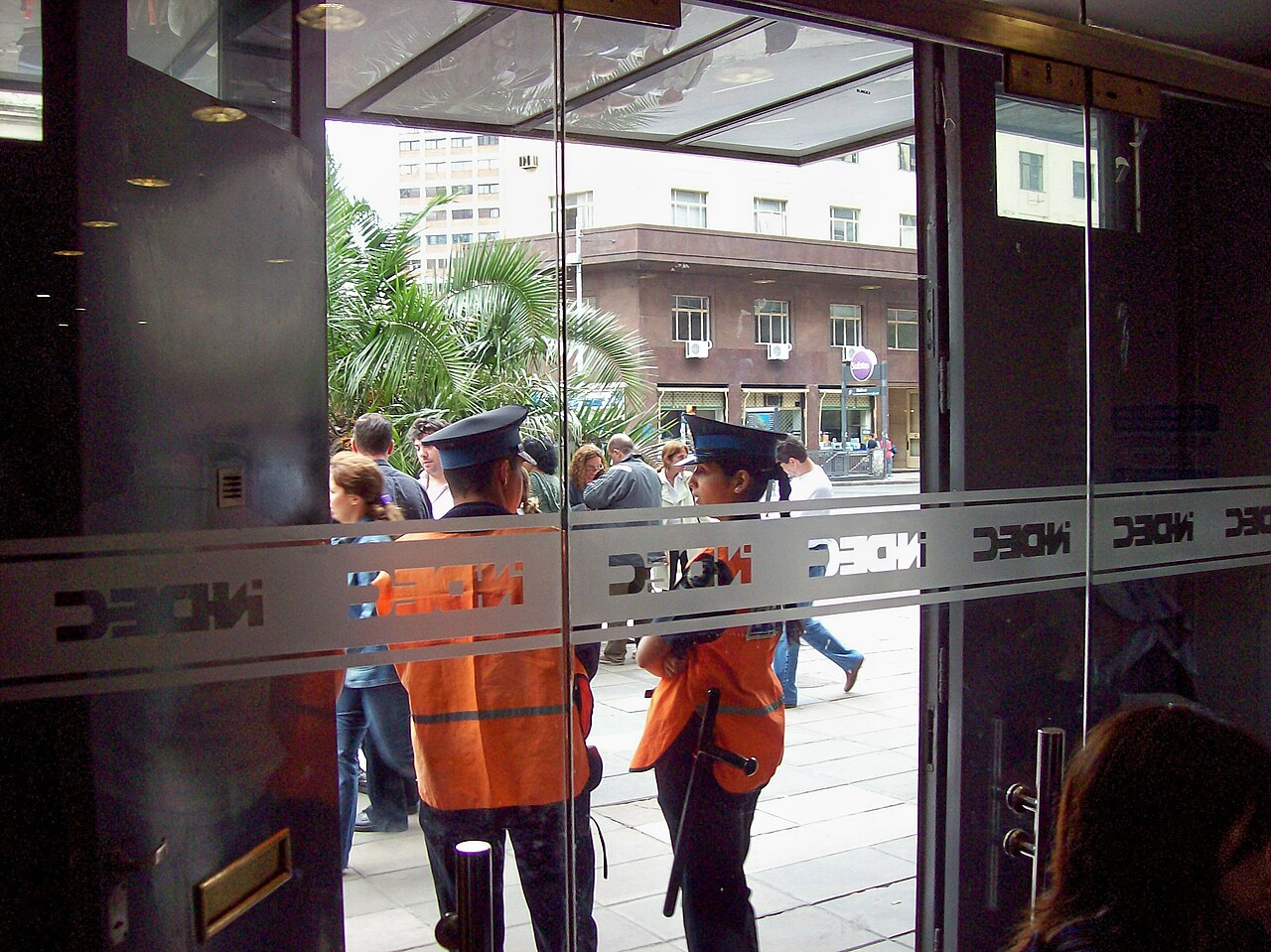
Federal Police officers at the glass doors of the INDEC building in Buenos Aires. Photo: Roberto Fiadone, CC BY-SA 3.0, via Wikimedia Commons
From 2007 the country effectively had two inflation rates. INDEC's index showed prices rising at a little under 10 percent a year. Private economists, provincial statistics offices and the government's own broader price measures showed something closer to 20 or 25 percent. In the third quarter of 2008, for example, the official CPI was up 9.1 percent on the year while the implicit deflator for private consumption, a figure from the national accounts, was up 18.2 percent. Surveys of household inflation expectations kept coming in at 25 to 30 percent, which tells you who the public believed.
The money involved was not trivial. A large share of Argentina's public debt was indexed to inflation, so a lower official rate meant smaller payments to bondholders; estimates of the saving ran into billions of dollars. Unions, meanwhile, bargained for pay rises well above the official rate, because nobody at the table believed it.
In 2011 the commerce secretariat fined more than a dozen private consultancies and economists 500,000 pesos each for publishing their own price estimates. Opposition members of Congress responded by collecting those private estimates and publishing an average every month, which the press called the "Congress index." It became, in practice, the number people used.
The supermarket test
Cavallo's part in the story began online. As a young economist in the United States, first at Harvard and then at MIT, he started collecting prices posted online by Argentine supermarkets, thousands of them each day, and building his own index from them. His data showed inflation running at roughly three times the official rate, and the method became the basis of the Billion Prices Project he ran with Roberto Rigobon, and later of a company that does the same thing in dozens of countries. (It is not a bad use of a supermarket website, though I suspect the supermarkets were less pleased.)
Censure from Washington
In February 2012 The Economist announced that it would stop printing Argentina's official inflation figures, under the headline "Don't lie to me, Argentina." A year later, in February 2013, the International Monetary Fund formally censured Argentina for the quality of its inflation and GDP data. It was the first time the Fund had taken that step against a member over its statistics. The government introduced a new national index in 2014, which narrowed the gap but did not close it. Moreno, meanwhile, was prosecuted over the INDEC affair after a complaint by Jorge Todesca, one of the economists he had fined.
The cleanup in 2016
After Mauricio Macri won the presidency at the end of 2015 he put Todesca in charge of INDEC. In January 2016 the new management declared a statistical emergency and suspended publication of several series while it rebuilt them, which meant the country went months without an official inflation number at all. The IMF declared the statistics back in line with international standards in November 2016.
Cavallo's point to Fortune was that the damage lasted. Removing the statisticians "destroyed trust in Argentina's official statistics for over a decade," he said, while adding that the United States has far stronger institutional checks than Argentina had in 2007. The two cases also run in opposite directions. In Argentina the government made the numbers look better; this week's complaint is about a number that was too low before an election and has since been revised up by the bureau's own statisticians, on their usual schedule. An investigation is not the same as a takeover, and so far there is only the demand for one.
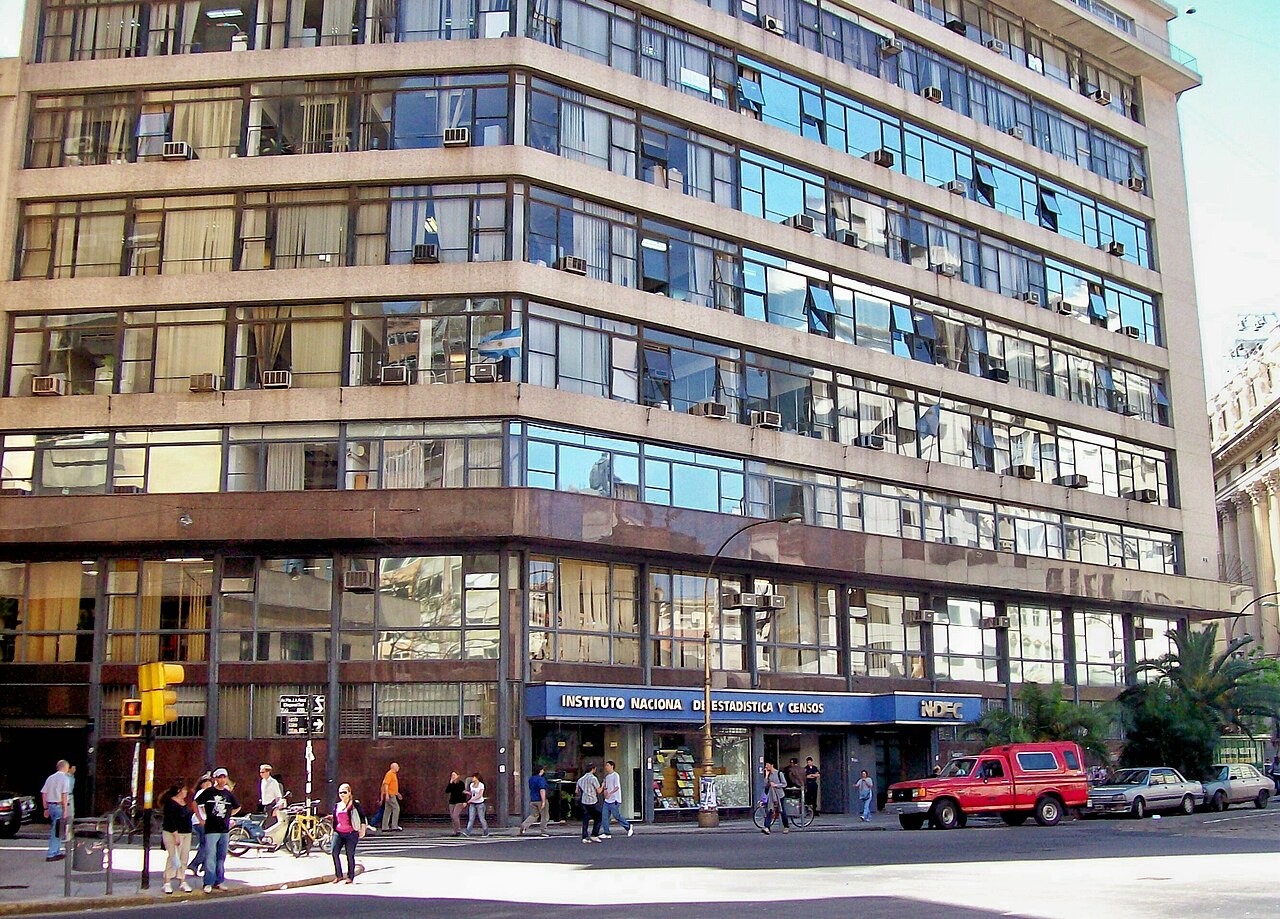
Today INDEC works out of an office block on Avenida Julio A. Roca in Buenos Aires, and its monthly consumer price index is once again the figure Argentines quote when they argue about prices, which is about as much as any statistics office can ask for.
Enjoyed this story?Get a new one every day on social.