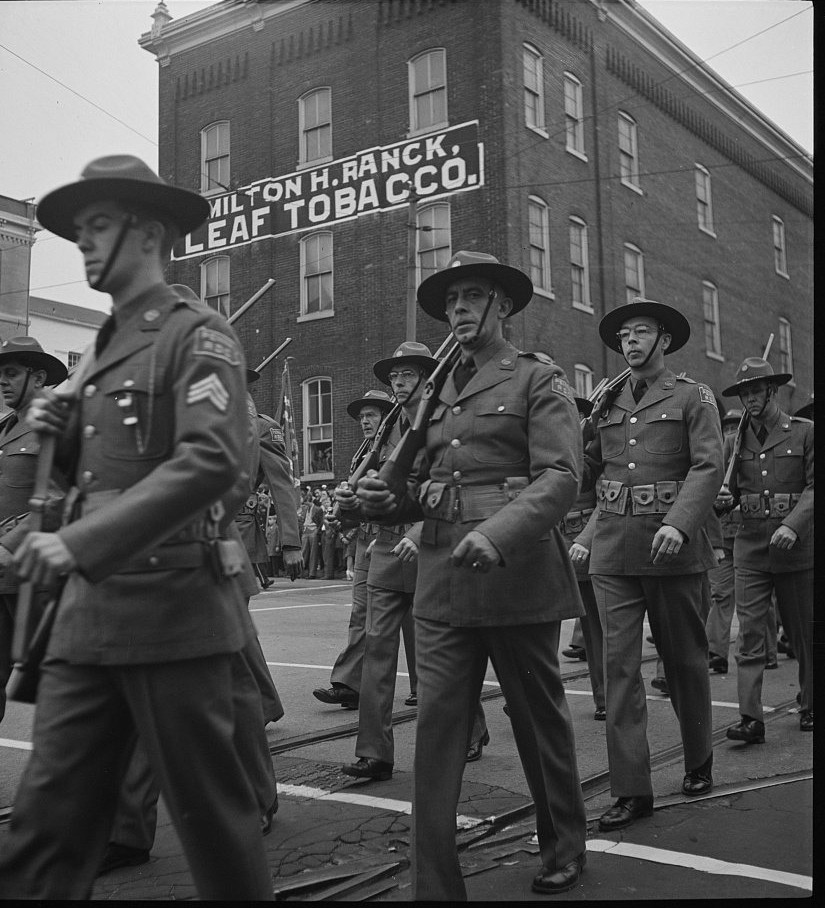
Photo: Marjory Collins, November 1942, Library of Congress Prints & Photographs Division, no known restrictions
For seven years, by act of Congress, Veterans Day was not on November 11. From 1971 through 1977 the federal holiday fell on the fourth Monday in October, which in its first year was October 25. The states were supposed to follow. Within a few years almost all of them had refused, and in 1975 Congress gave up and put the day back where it had been.
That is why today, a Wednesday, is a federal holiday in the middle of the week, with post offices, federal offices and most banks closed and Thanksgiving still two weeks away. The date is the one thing about the holiday that veterans' groups have made clear they will not trade.
Eleven o'clock on the eleventh
The date comes from the armistice that ended the fighting of the First World War, which took effect at 11 a.m. on November 11, 1918. Woodrow Wilson proclaimed the first Armistice Day in 1919. Two years later, on November 11, 1921, an unidentified American soldier brought home from France was buried at Arlington National Cemetery, and the Tomb of the Unknown Soldier became the place where the day is formally kept. By 1926 Congress had asked for annual observances, and a law of May 13, 1938 made November 11 a legal federal holiday, "dedicated to the cause of world peace" and to be known as Armistice Day.
The cause of world peace did not last long. After the Second World War and Korea, the day that had honored one war's dead was being asked to cover millions of new veterans. A veteran named Raymond Weeks organized a "National Veterans Day" parade in Birmingham, Alabama, in 1947, and kept it going. In 1954 Congressman Edward Rees of Kansas carried a bill replacing the word "Armistice" with "Veterans", and President Eisenhower signed it on June 1 that year.
The Monday holiday idea
The trouble started with a good intention. In the 1960s Congress was persuaded that more three-day weekends would be good for families and good for retailers, and that federal workers would take fewer odd days off if they had a long weekend now and then. The Uniform Monday Holiday Act, signed on June 28, 1968, moved Washington's Birthday, Memorial Day and Columbus Day to Mondays. It also made Columbus Day a federal holiday for the first time, and it moved Veterans Day to the fourth Monday in October. The changes took effect in 1971.
A side effect nobody seems to have minded at the time: the third Monday in February can only fall between the 15th and the 21st, so the federal holiday for Washington's Birthday has never once landed on his actual birthday, February 22, since. (It is not called Presidents' Day in the statute either, whatever the mattress advertisements say.)
For most of the holidays, nobody much cared which day they fell on. Veterans Day was different, because the whole point of it was a particular minute on a particular morning in 1918.
Nobody came on Monday
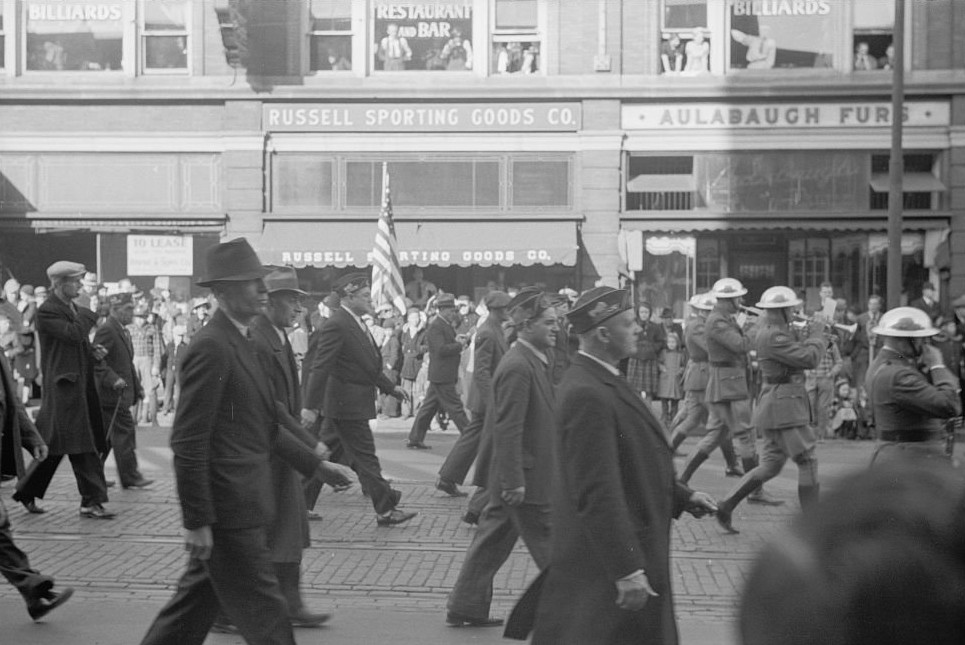
Men in overcoats and hats, with helmeted marchers behind them, walking past shopfronts during the Armistice Day parade in Omaha, Nebraska, November 1938. Photo: John Vachon, Library of Congress Prints & Photographs Division, no known restrictions
The American Legion and the Veterans of Foreign Wars, among others, objected from the start. They kept holding their ceremonies on November 11, and many towns kept their parades there too. Two states refused to adopt the October date at all, and the rest started drifting back. Newspaper editorials grumbled each autumn about having two Veterans Days, one in the statute book and one in the street. By the mid-1970s, according to the National Constitution Center's account, 46 of the 50 states had either returned to November 11 or never left it.
I like this episode because it is one of the few times a national holiday was changed and the public simply declined. Nobody marched on Washington. People just turned up at the war memorial on the wrong day, by the government's calendar, year after year, until the government noticed.
Ford signs it back
Congress amended the act in 1975. President Gerald Ford signed the bill on September 20, 1975, returning Veterans Day to November 11. To give calendars and contracts time to catch up, the change took effect in 1978, and Veterans Day 1977 was the last one to be held in October. The national ceremony at the Tomb of the Unknown Soldier traditionally starts at 11 a.m., and it will again this morning.
The other holidays stayed on their Mondays, which is why Memorial Day is still a long weekend and Veterans Day is not.
Still being renamed
The arguments have not entirely gone away. In November 2025 President Trump issued a proclamation calling November 11 "Victory Day for World War I" as well, a second name layered on top of the one in the statute; the federal holiday itself is still Veterans Day. Whatever the day ends up being called, on the evidence of the 1970s nobody in Washington is going to get away with moving it again.
Enjoyed this story?Get a new one every day on social.