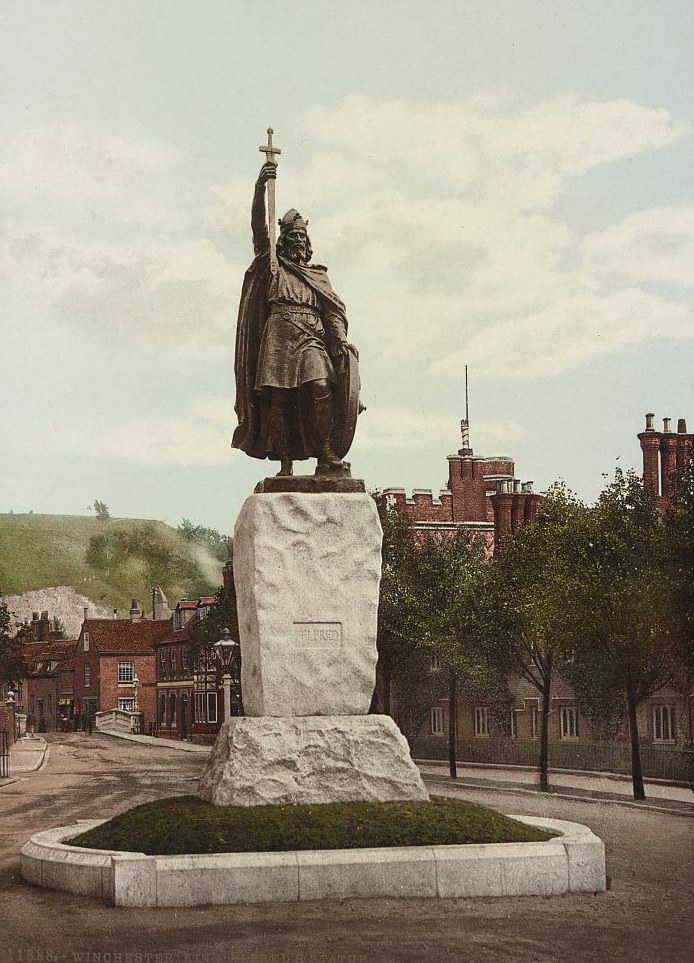
Stereograph: B. L. Singley for Keystone View Company, 1900, Library of Congress Prints & Photographs Division, no known restrictions
A man from Megara walks into a market with a sack over his shoulder. He is thin and he has not eaten properly in some time. In the sack are his two small daughters, and he has taught them to squeal, because he means to sell them as piglets, in exchange for a bunch of garlic and a measure of salt. The buyer pokes the sack, the girls squeal on cue, and the haggling begins.
That is a scene from the Acharnians, a comedy by Aristophanes that won first prize at the Lenaia festival in Athens in the winter of 425 BC. The audience laughed because they knew the joke's source. Megara, a small city twenty-odd miles west along the coast, had lived for generations by selling pigs, salt, garlic and cheap woollen cloaks in the Athenian market. Seven years earlier Athens had shut the market to them. By 425 the Megarians were, by Aristophanes' account and others', going hungry.
On Wednesday the United Nations General Assembly voted, for the 34th year in a row, to condemn the American embargo on Cuba, by 130 votes to 17 with 25 abstentions, a thinner margin than the 165 to 7 of a year ago. The vote changes nothing; only the United States Congress can lift the embargo, which dates in its full form from 1962. But it is as good a week as any to look at the first trade embargo for which we have the arguments on both sides, and at the man who would not take it down.
What the decree actually said
We do not have the text. We know the Megarian decree from Thucydides, who was alive and in Athens when it passed, from Plutarch's biography of Pericles written five centuries later, and from Aristophanes' jokes. Put together, they say this: some time around 433 or 432 BC the Athenian assembly, on Pericles' motion, barred the Megarians from the agora of Athens and from every harbour in the Athenian empire. Since the empire by then meant most of the Aegean, that was a ban from the sea.
The stated reasons were religious and legal. Megara, said the Athenians, had been ploughing up the sacred border land of the goddesses at Eleusis, had been harbouring runaway Athenian slaves, and had killed an Athenian herald, Anthemocritus, who was sent to complain about the first two. Heralds were sacred.
Whether the decree was really about religion, or about punishing a small neighbour that had changed sides from Athens to Sparta in 446, is a question historians still argue. One Oxford scholar, G. E. M. de Ste Croix, argued at length in 1972 that the ban was religious, not economic. Most people who have read the piglet scene find that hard to accept, and so do I.
Sparta's offer
In the winter of 432 to 431 the Spartans, who were Megara's allies, sent a series of embassies to Athens. The last of them, Thucydides says, carried a plain message: there would be no war if Athens revoked the Megarian decree. Everything else was negotiable.
Plutarch tells a story about one of the Spartan envoys, Polyalces, which may or may not be true but is too good to leave out. Pericles replied that there was an Athenian law forbidding anyone to take down the tablet on which the decree was inscribed. "Then don't take it down," said Polyalces. "Turn it to face the wall. There is no law against that."
Pericles says no
Pericles went before the assembly and argued against repeal. Thucydides gives him a long speech, and the heart of it is an answer to the people who thought the Megarian business too small to fight over. The Spartans, Pericles said, had refused arbitration, which the thirty-year peace treaty required, and were issuing orders instead. If Athens gave way on this it would be ordered to give way on the next thing, and then the next. A small concession made under threat was not a small thing at all; it was the whole test of whether Athens would be dictated to.
He added a sweetener that tells you how he saw the dispute. Athens would let the Megarians back into its markets, he said, the day Sparta stopped expelling Athenians and their allies from Spartan territory. Both cities, in other words, were doing the same thing, and he would not do it unilaterally.
The assembly voted with him. The Spartans went home. In the spring of 431 a Theban raid on Plataea started the war, and it did not end until 404, twenty-seven years later, with Athens starved into surrender, its walls pulled down and its empire gone. Pericles himself was dead by 429, of the plague.
What it did to Megara
Megara had the worst of it. The ban on the markets was followed, after Anthemocritus' death, by a standing decree that Athens would invade Megarian territory twice a year, and for the first several years of the war it did. Thucydides, describing the city in 424, says the Megarians were worn down by the twice-yearly invasions and by their own exiles raiding from the port of Pegae. Aristophanes, who was no friend of the war party, puts it more bluntly: the Megarians were starving, and when they begged the Spartans to get the decree lifted, the Athenians refused every time.
The city survived, and was never again anything much. There is a theory, which I rather like, that the piglet scene is funny partly because Megarian pork had been the ordinary Athenian's festival dinner, and the audience missed it.
Why Thucydides buried it
The strange thing about the decree is how little Thucydides makes of it. He mentions it twice, calls it a grievance the Spartans "most insisted on", and then explains that the real cause of the war was Spartan fear of Athenian power. Later Greeks did not agree. Diodorus, following the fourth-century historian Ephorus, says flatly that Athens could have had peace by repealing the decree and that Pericles talked the assembly out of it. Aristophanes agreed, and said (half joking, probably) that Pericles wrote the decree in a temper over a brawl about stolen prostitutes.
It is possible that Thucydides, who admired Pericles, did not want the war to look like one man's stubbornness over a trade dispute. It is also possible he was right, and that Sparta would have found another reason within the year. The arguments made in the Athenian assembly in 432 are the arguments made about every embargo since: that it is a trifle not worth a war, that lifting it under pressure invites the next demand, that it hurts the people it is aimed at and not their rulers, and that the other side does it too.
My own view is that Pericles was right about Sparta and wrong about Megara, and that he could have had both the principle and the peace if he had let Polyalces turn the tablet round.
Enjoyed this story?Get a new one every day on social.