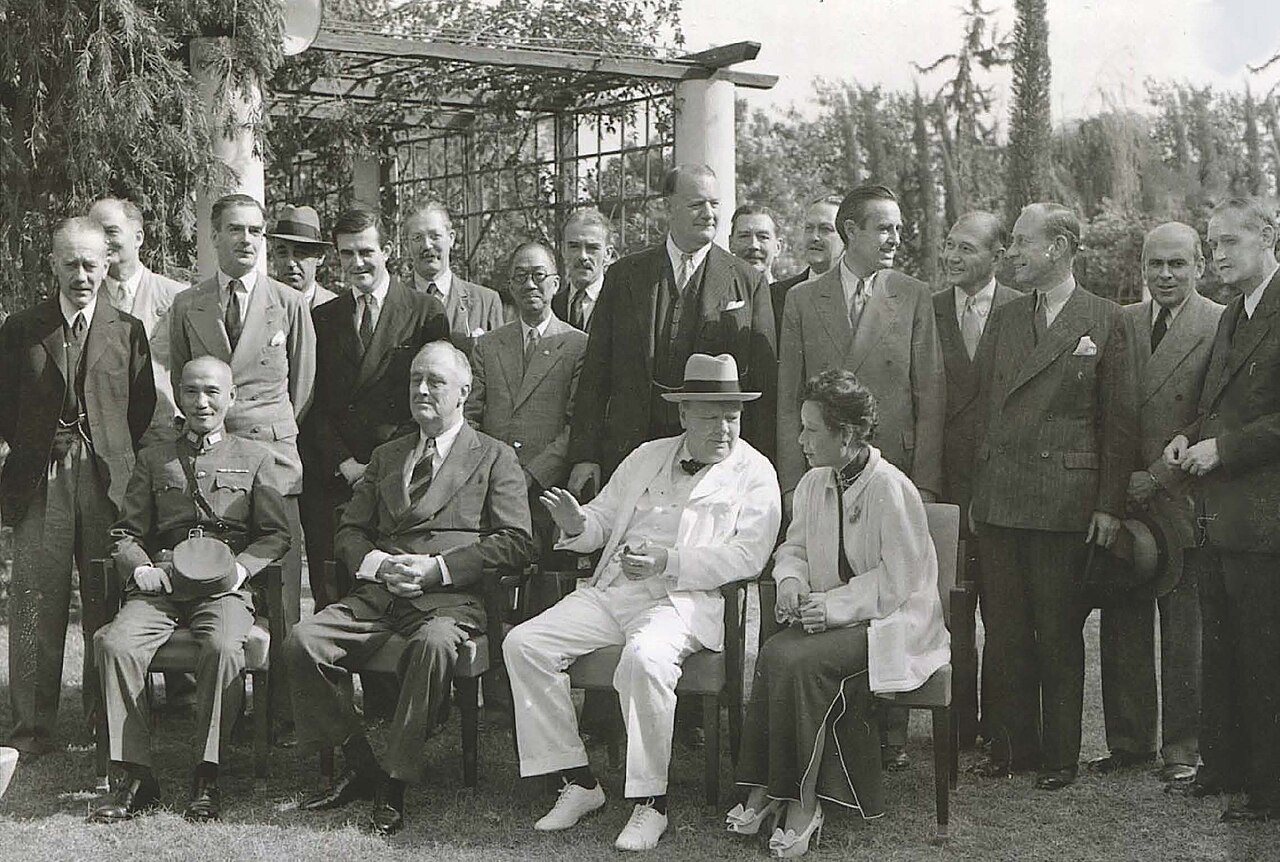
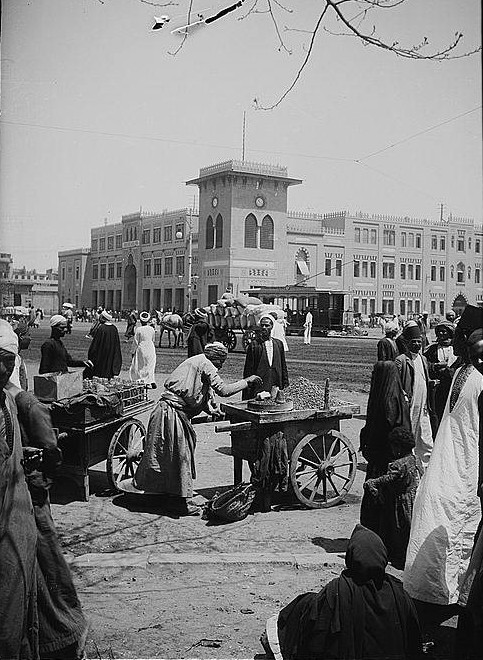
Photo: Jim Hudson, Cairo Conference, November 1943, public domain, via Wikimedia Commons
The White House says Donald Trump, Xi Jinping and Vladimir Putin will meet in Shenzhen next Thursday, on the sidelines of the APEC summit. According to the officials who briefed reporters, it will be the first three-way meeting ever held between the leaders of the United States, Russia and China. Trump wants to talk about cutting nuclear arsenals and about the war with Iran. Ukraine, they said, is not on the list.
"First ever" is the kind of claim I usually go looking to break. This one holds up, and the reason it holds up is a decision Stalin made in November 1943, when Franklin Roosevelt tried to get the same three countries into the same room and ended up flying to two different conferences instead.
Roosevelt's four policemen
By 1943 Roosevelt had a fairly settled idea of how the world should be run after the war. Four great powers would police it: the United States, Britain, the Soviet Union and China. Churchill was openly sceptical about the fourth one. The China in question was Chiang Kai-shek's Nationalist government, pushed back to Chongqing, fighting Japan with very little and fighting the Communists when it could. Roosevelt insisted anyway. He wanted China at the top table partly as a counterweight in Asia and partly, I suspect, because it was easier to keep Chiang fighting if he was treated as an equal.
The obvious move was a single meeting of all four. It never had a chance, and the reason was Japan.
The pact Stalin would not risk
In April 1941 the Soviet Union and Japan had signed a five-year neutrality pact. It suited both of them. Japan could turn south toward the European colonies and, eventually, Pearl Harbor. Stalin could move divisions from Siberia to stop the Germans outside Moscow. Two years later the Red Army was still carrying most of the weight of the land war against Germany, and Stalin had no wish to give Tokyo a reason to open a second front in the east.
Sitting down with Chiang, the head of a government at war with Japan, and signing communiqués about the defeat of Japan, would have been exactly that kind of reason. So he would not do it. The Soviets had planned to send a delegation to the Allied meeting in Cairo. When it became clear Chiang would be there, they stayed away.
Roosevelt's answer was to split the summit in two.
Cairo, with the pyramids in the window
The first half opened on 22 November 1943 at the Mena House hotel, on the edge of the desert at Giza. Roosevelt, Churchill and Chiang met there for five days. Chiang brought his wife, Soong Mei-ling, who had been educated in Georgia and Massachusetts and whose English was better than anyone else's on the Chinese side. She interpreted for her husband and argued with the British on her own account. In the photograph at the top of this page, taken during the conference, she is the one Churchill has turned to talk to.
The talks themselves were uneven. The British and Americans quarrelled over plans for Burma, Churchill was impatient with how much time China was taking, and Chiang left with promises that were later cut back. But the declaration they agreed on was large. Released on 1 December, it said Japan would be stripped of the Pacific islands it had seized since 1914, that Manchuria, Formosa and the Pescadores would be "restored to the Republic of China", and that Korea would become free and independent "in due course". (That last phrase caused trouble for decades.)
Roosevelt and Churchill came back through Cairo in early December, after Tehran, for a second round with Turkey's president, İsmet İnönü, whom they wanted in the war. He listened, thanked them and stayed out, which by 1943 Turkish governments had become quite good at. Chiang was long gone by then; he had flown home to Chongqing soon after the first round ended.
Tehran, without Chiang
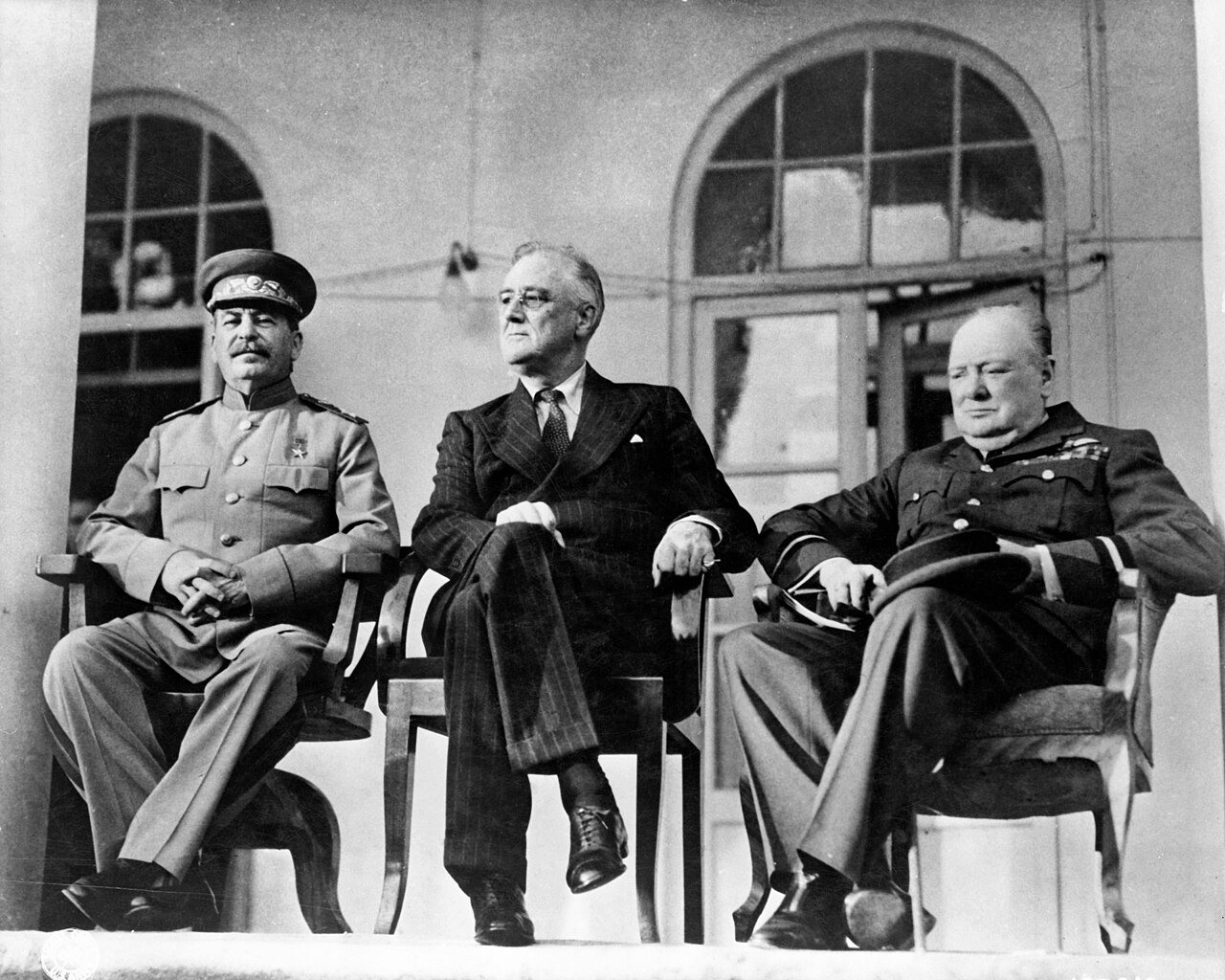
Stalin, Roosevelt and Churchill seated on the portico of the Soviet embassy in Tehran, November 1943. U.S. Signal Corps photo, public domain, via Wikimedia Commons
Roosevelt and Churchill then flew east to Tehran, where Stalin was waiting. The conference ran from 28 November to 1 December. Roosevelt moved into a villa inside the Soviet embassy compound after the Soviets reported a German plot against the visiting leaders; how real that plot was is still argued about, and the Soviet rooms were almost certainly listened to.
Tehran was mostly about Europe. They settled on the invasion of France for the following spring and argued about Poland's borders. Churchill turned 69 there and had a birthday dinner. But Stalin also told the other two, privately, that once Germany was beaten the Soviet Union would join the war against Japan. It was the single most important thing said about Asia that week, and the leader of the Asian ally it most concerned was not in the room, or in the country, when Stalin said it.
Yalta, where China was discussed and not asked
That pattern hardened. At Yalta, in February 1945, Roosevelt and Stalin worked out the price of Soviet entry into the Pacific war. Stalin would declare war on Japan two or three months after Germany surrendered. In return the Soviet Union would get southern Sakhalin and the Kuril Islands from Japan, and, from China, a lease on Port Arthur as a naval base, a preferred position in the port of Dairen, and joint control of the main Manchurian railways. Roosevelt undertook to obtain Chiang's agreement. Chiang was not told for months, and Roosevelt did not live to see the matter settled: he died in April 1945, at Warm Springs in Georgia, about four months before China signed.
When he was, China had little choice. Its foreign minister signed a treaty with Moscow on 14 August 1945 that gave the Soviets most of what Yalta had promised. The Red Army had already poured into Manchuria a week earlier.
Three capitals, never one table
As far as I can find, Chiang and Stalin never met. Mao Zedong did meet Stalin, in Moscow in the winter of 1949, and the meetings were famously cold. Richard Nixon went to Beijing in 1972 precisely to play China against the Soviet Union. Mikhail Gorbachev reached Beijing in May 1989, in the middle of the Tiananmen protests, to end thirty years of Sino-Soviet hostility. Every one of those was a meeting of two, and each time the absent third country was a large part of what the other two had come to talk about.
So next Thursday really is new. What nobody has said yet is whether the three will sign anything, or whether, as in 1943, the important sentences will be said in a smaller room with one of the three outside it.
Enjoyed this story?Get a new one every day on social.