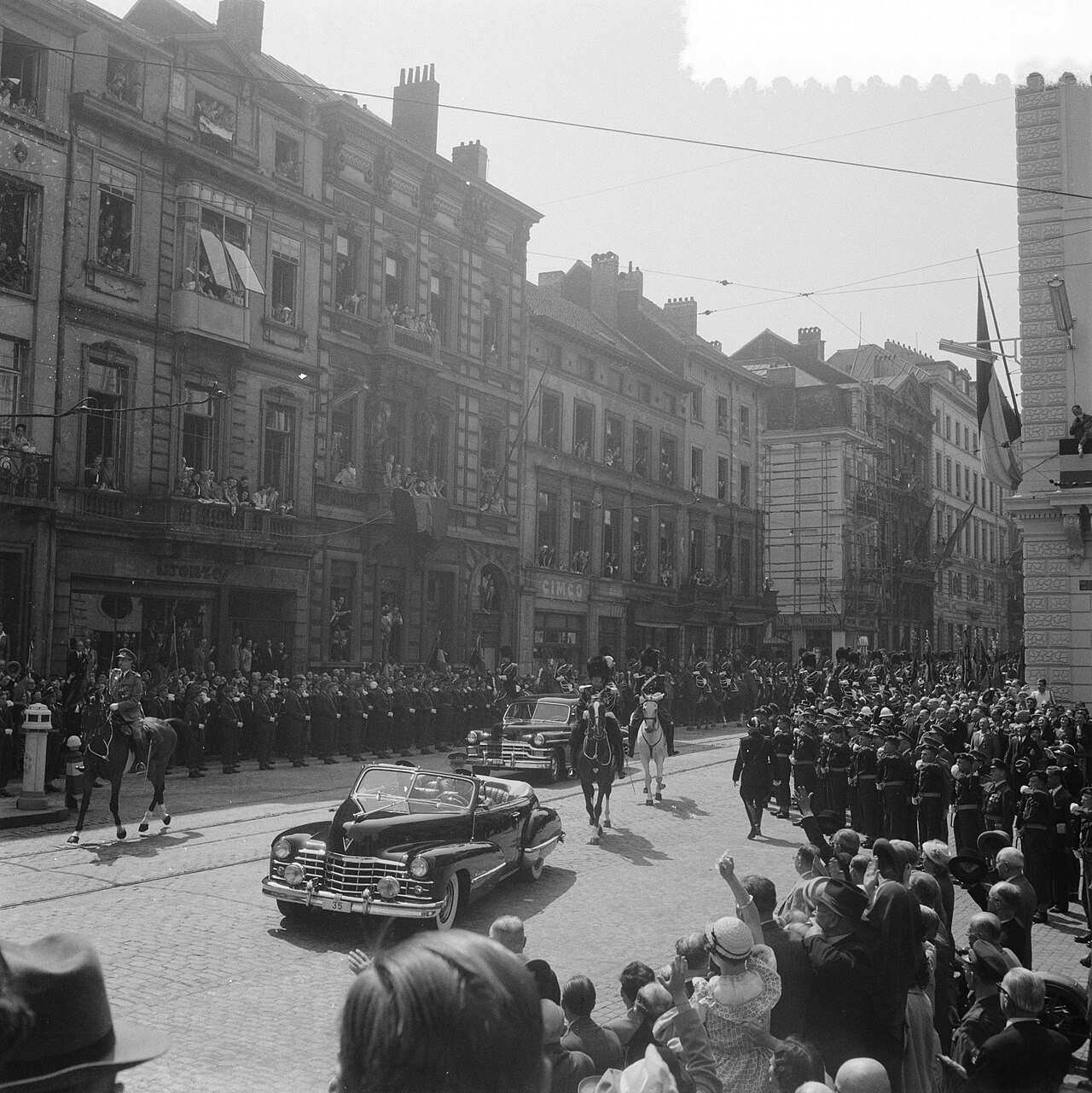
Photo: Harry Pot / Anefo, Nationaal Archief, CC0 1.0, via Wikimedia Commons
On Friday 30 March 1990, King Baudouin of the Belgians sat down and wrote a letter to his prime minister. In substance it said that Parliament had passed a law he could not sign, and that he was not going to sign it.
The law was the one the Chamber of Representatives had adopted the day before, by 126 votes to 69 with 12 abstentions. Sponsored by two senators, the socialist Roger Lallemand and the liberal Lucienne Herman-Michielsens, it allowed abortion in the first twelve weeks of pregnancy and ended a ban that dated from the criminal code of 1867. Baudouin was a devout Catholic. The prime minister, Wilfried Martens, was a Christian Democrat whose own party had voted against the bill, and who now had a constitutional problem nobody had planned for.
A signature the law could not do without
In Belgium a bill passed by Parliament becomes law only when the king sanctions it and a minister countersigns. In practice the king always signs. Nobody had seriously expected the rule to be tested by a monarch who simply would not, and Baudouin's letter made clear he was not bluffing. As far as anyone has shown, he was not trying to block the law so much as keep his own name off it.
Martens had a few bad options. He could let the bill sit unsigned, which would defy Parliament. He could provoke an abdication, which would have been the biggest royal crisis since the 1950s. What the government chose instead was a clause in the constitution of 1831, then Article 82, which said that if the king found himself "in the impossibility to reign", the ministers could exercise his powers until Parliament met.
Switching the king off
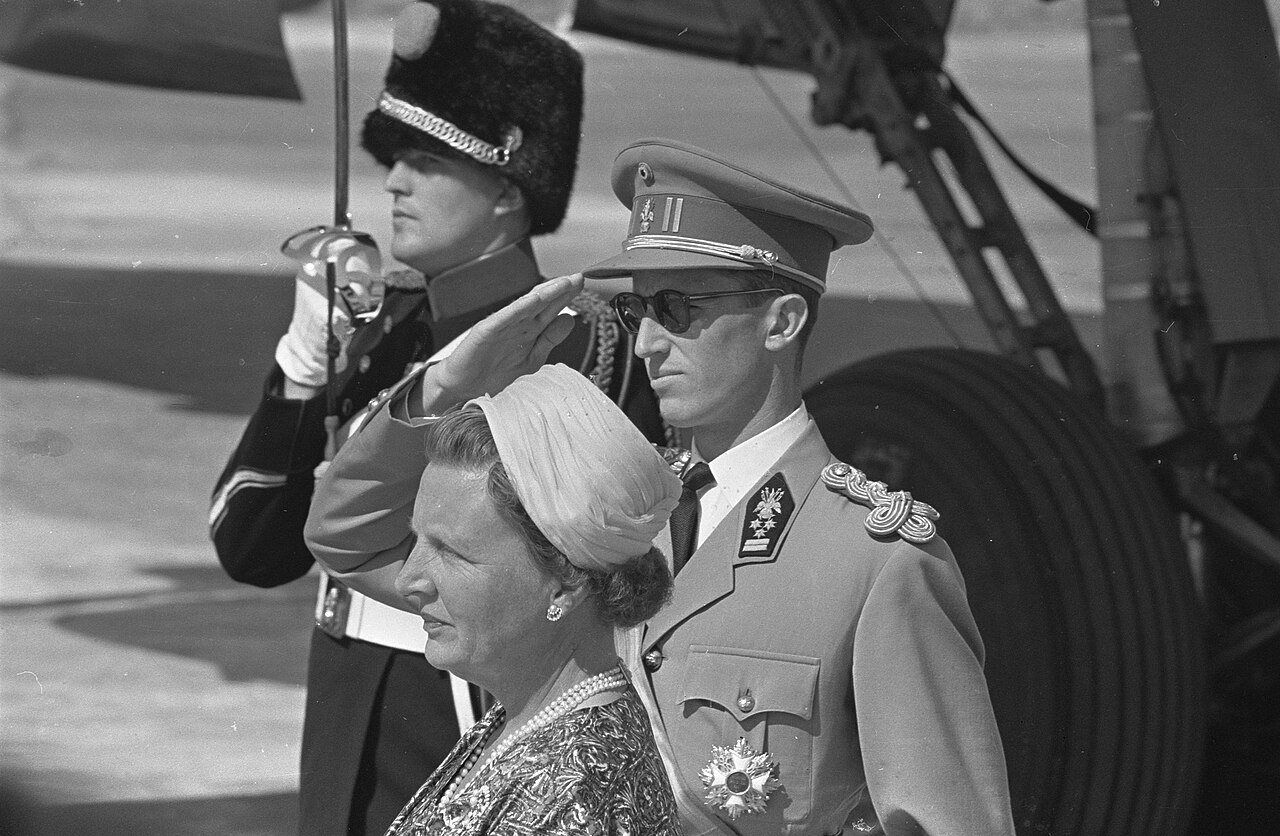
Baudouin salutes beside Queen Juliana on arriving at Schiphol for a state visit to the Netherlands. Photo: Anefo, Nationaal Archief, CC0 1.0, via Wikimedia Commons
The clause had been written for illness or capture, not for conscience. It had been used before, though, under very different circumstances. On 28 May 1940, after Baudouin's father Leopold III surrendered the army to Germany against the advice of his ministers, the ministers, who had left for France, met in Limoges and declared him unable to reign. That impossibility lasted, in one form or another, until 1950, and the bitter fight over Leopold's return ended with him handing the throne to his twenty-year-old son in 1951.
So there was a family precedent, and not a happy one. This time the use was agreed in advance. On 3 April the council of ministers declared Baudouin unable to reign, and the ministers, acting together in the name of the Belgian people, sanctioned the bill. It is still known as the law of 3 April 1990. It was promulgated in the early hours of 4 April.
Then the two chambers of Parliament met in joint session on Thursday 5 April and voted that the impossibility had ended. Baudouin was king again. How long he had been off the throne depends on which clocks you use: the usual figure is 36 hours, and some critics count 44. I have never found a reason to prefer one over the other, which is a fairly Belgian outcome in itself.
Who blinked
Who suggested the device first is still argued over. Some accounts credit Martens, others say the palace saw it coming and was content with it. What is clear is that the king did not resign, Parliament got its law, and everybody involved could tell themselves their principles were intact. Critics on one side called it a constitutional sleight of hand; critics on the other said a king who will not sign laws has no business being king. I think both had a point, and neither got anywhere.
The law outlived the quarrel
The law itself turned out to be durable. It allowed abortion up to twelve weeks after conception, after a counselling interview and a waiting period of six days, and later only where the woman's health was at serious risk or the foetus had a severe condition. It stayed essentially intact for 28 years. In October 2018, under Charles Michel's government, Parliament took abortion out of the criminal code altogether and gave it a separate statute, while keeping the twelve-week limit. No king had to be switched off this time, and Philippe signed it.
Baudouin reigned for another three years. He died on 31 July 1993 in Motril, in southern Spain, without children, and his younger brother became King Albert II. In 2013 Albert abdicated in favour of his son, Philippe, Baudouin's nephew. In September 2024 Pope Francis prayed at Baudouin's tomb at Laeken and said the process toward beatifying him would begin, citing among other things the abortion episode, which went down about as well with Belgium's prime minister of the day as you would expect.
The nephew's turn
Philippe's own week has run the other way: this time it was the government trying to step aside and the king saying no. On 2 November Bart De Wever, the Flemish nationalist who has led a five-party coalition since February 2025, offered the government's resignation after talks on the 2027 budget collapsed. The king consulted the coalition leaders, held the resignation for several days and then, on Friday, refused it. He told De Wever to resume budget negotiations immediately and to report back to him on 16 November.
Enjoyed this story?Get a new one every day on social.