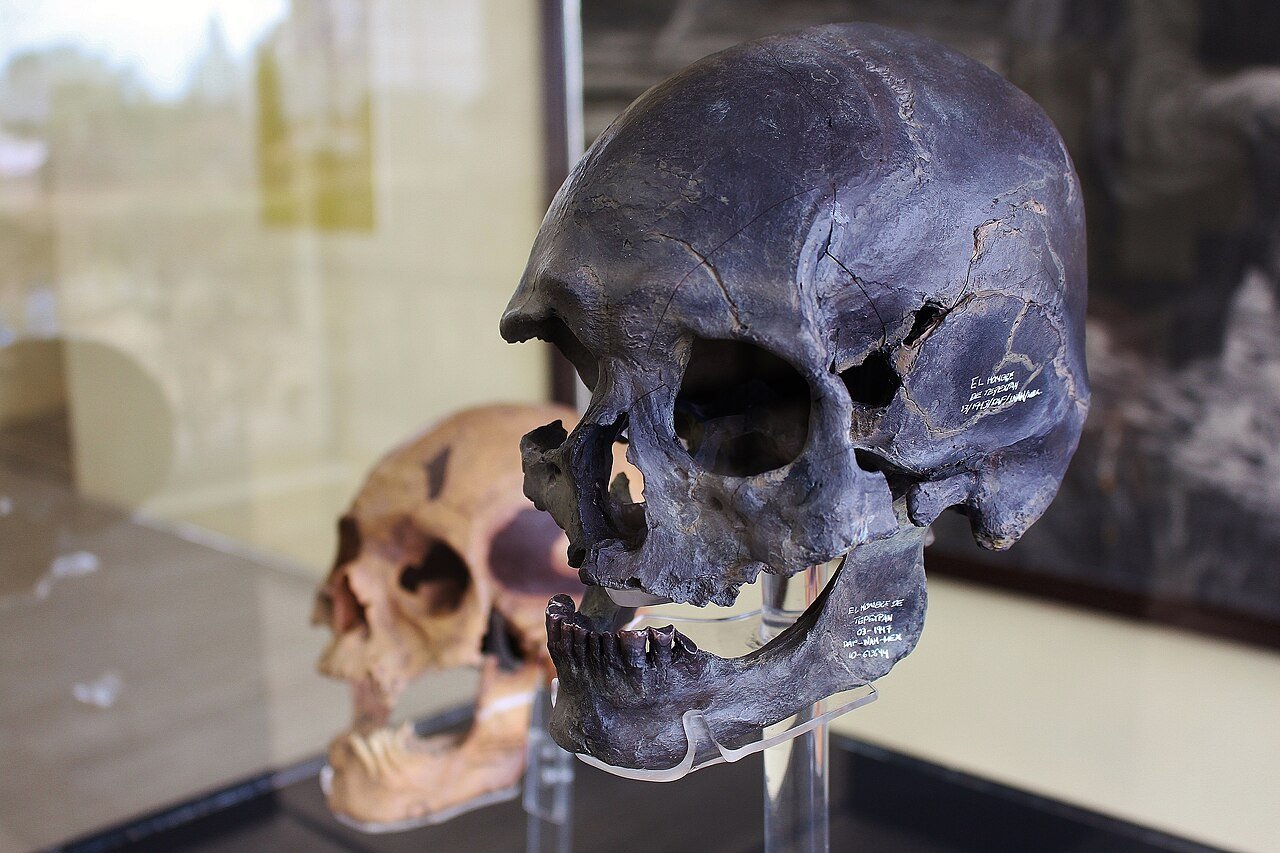
Photo: Mario Yaír TS, CC BY-SA 4.0, via Wikimedia Commons
In February 1947 Helmut de Terra, a German-born geologist and archaeologist working in Mexico, stood in a trench in the dried bed of old Lake Texcoco near the village of Tepexpan, north-east of Mexico City, and looked down at a human skeleton lying face down in the clay. The arms were folded under the chest and the legs were drawn up to the stomach. Not far away lay the bones of mammoths. De Terra concluded that he had found an Ice Age hunter, a man at least 10,000 years old, and within months magazines in the United States were calling him the oldest Mexican.
This week Mexico's National Institute of Anthropology and History, INAH, said much the same thing about a different skeleton. It has been named Yotzin, from a Nahuatl word meaning "unique", and it was found in 2021 by the archaeologist Israel Peña during construction of the Felipe Ángeles International Airport at Santa Lucía, in the same old lake basin. INAH says it is between roughly 13,000 and 11,700 years old. The culture secretary, Claudia Curiel de Icaza, called it one of the oldest human remains known from the Valley of Mexico. Seventy-nine years ago the Tepexpan Man was described in almost the same words.
A hunter in the mud
De Terra's case looked strong in 1947. The skeleton lay in a layer he took to be the same age as the mammoth bones, and obsidian flakes turned up nearby. The man had been at least 40 when he died, judging by his skull and joints, and had a healed fracture in one forearm. De Terra wrote in his preliminary report that the bones indicated "the person was of male sex", and he imagined a hunter killed in the chase or by rivals, his body sinking into the lakeside mud. That would also explain why the shoulders, back and hips were missing.
It was a good story and Mexico took it to heart. The Tepexpan Man went into textbooks and museums, and a site museum was later built nearby, with a diorama of hunters bringing down a mammoth.
The doubters
The trouble began almost at once. In 1949 a critique in American Antiquity, the journal where de Terra had published, questioned how the excavation had been done and whether the skeleton really lay in the layer he claimed. If the body had been buried in a pit dug down into older sediments, it would be surrounded by Ice Age clay without being anywhere near as old. Archaeologists have a name for that, an intrusive burial, and it is one of the oldest traps in the field.
Radiocarbon dating, which arrived in the 1950s, did not settle things. Dates from the sediments around the find ranged wildly, and some results on the remains suggested the man was closer to 2,000 years old than 10,000. Bone is a difficult material to date, and decades of handling, glue and preservatives can make it worse.
4,700 years, give or take
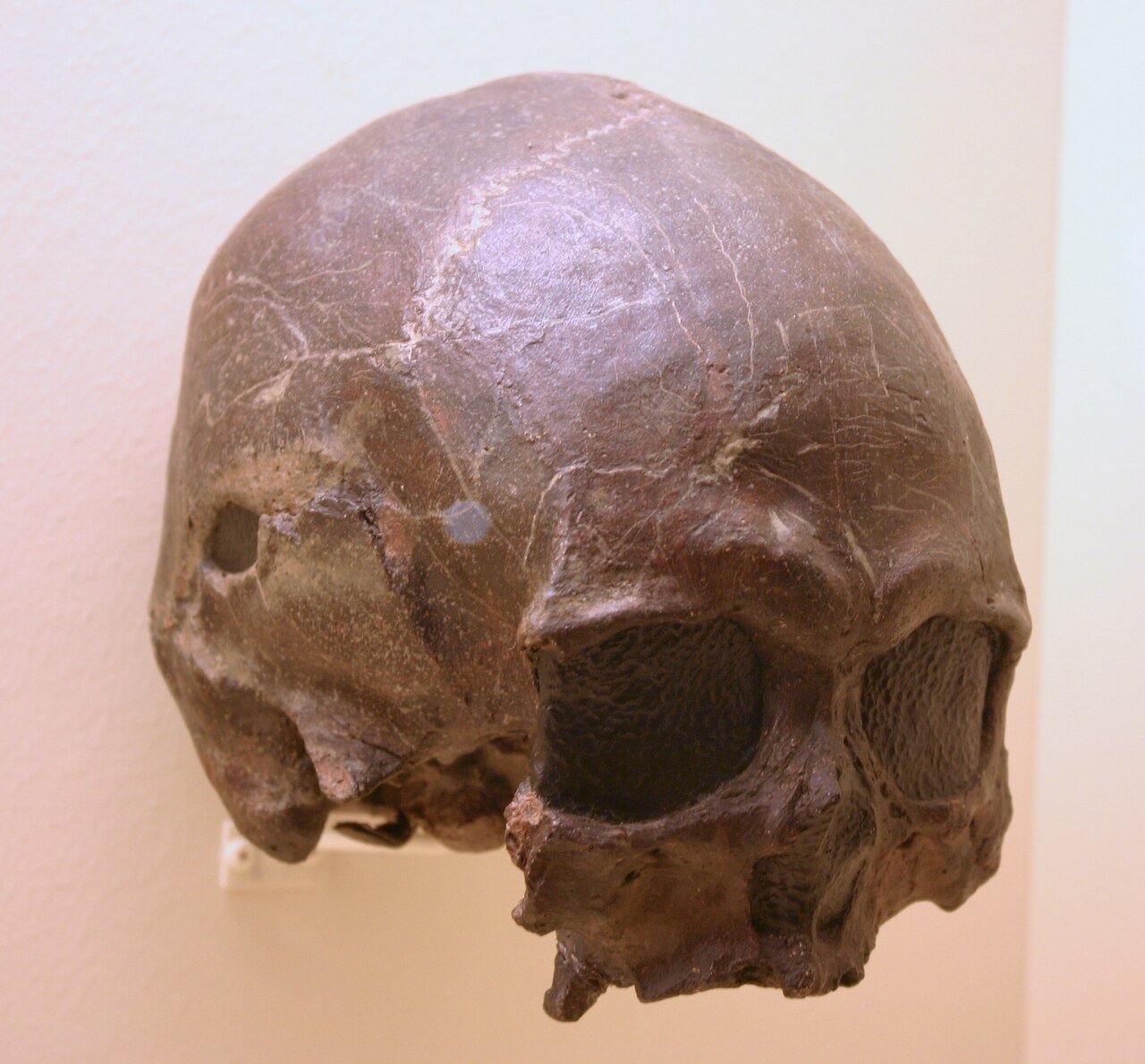
The Tepexpan 1 skull as displayed at the Smithsonian. Photo: Ryan Somma, CC BY-SA 2.0, via Wikimedia Commons
The answer that has stuck came in 2009. A team including Silvia Gonzalez of Liverpool John Moores University used uranium series dating, which measures the slow decay of uranium absorbed into bone, and published an age of about 4,700 years, give or take 200. The Smithsonian's Human Origins programme now lists Tepexpan 1 as about 4,700 years old. Gonzalez argued that contamination explained why the radiocarbon results had been so erratic.
So the Tepexpan Man was real and ancient, a person who lived in the Basin of Mexico long before the first cities there. He was simply not an Ice Age mammoth hunter, and he had lost something like 5,000 years along the way. There is even a later claim that he was a woman, which turns up in popular accounts and which I have never seen properly sourced, so I would leave it alone.
Why Yotzin is different, so far
Yotzin's find looks better documented, at least on what has been released so far. He was the only human found in an area of 25 by 30 metres, with no grave goods and no tools, in a layer of old marsh sediment at a site that has produced the bones of hundreds of mammoths. The INAH physical anthropologist Arturo Talavera González first judged him preceramic from the wear on his teeth. He was a robust man, about 1.75 metres tall.
The dates come from two methods. Collagen from a molar, tested in Belgium, gave about 13,087 to 12,987 years before the present. Bioapatite from the bone, tested at the University of Georgia, gave about 12,050 to 11,700. Those ranges do not overlap, and INAH has combined them without saying which it prefers. Either result would make Yotzin one of the earliest people known in central Mexico. Neither has yet been published in a peer-reviewed journal, as far as I can find, and a genetic study at the University of Burgos in Spain is not expected to report until 2027.
None of that means Yotzin will go the way of Tepexpan, because two independent labs agree he is very old and disagree only on how very. But the Valley of Mexico has made this announcement before, and I would wait for the paper before carving the number into a museum wall.
Enjoyed this story?Get a new one every day on social.