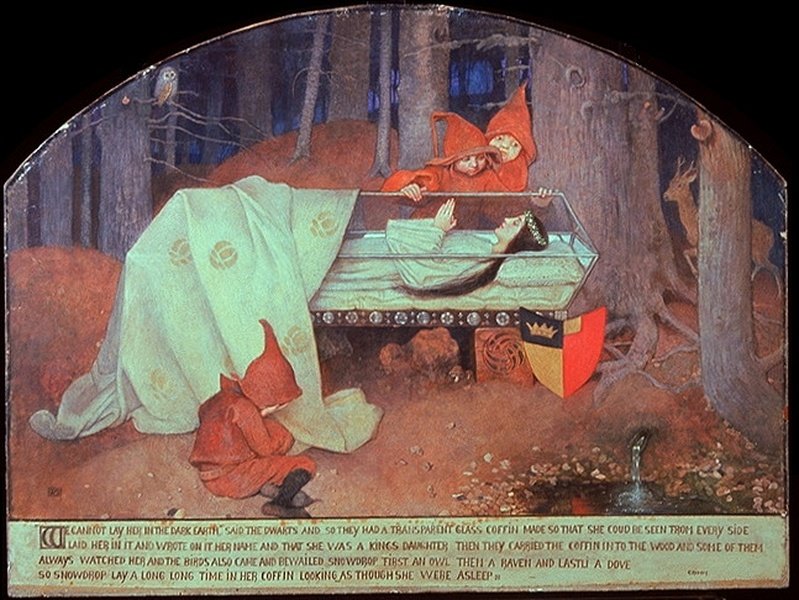
Schneewittchen (Snow White) by Marianne Stokes, public domain, via Wikimedia Commons
Most of Disney's famous characters were borrowed. The studio took them from European fairy tales, a nineteenth-century Italian newspaper serial, a Danish storyteller and, in one case, a real woman who lived and died in the 1600s.
What it changed tells you a lot about what each era thought children could handle. The originals are mostly much darker.
Snow White and the iron shoes
Disney's Snow White and the Seven Dwarfs (1937) was based on the tale the Brothers Grimm published in 1812. In that first edition, the woman who wants Snow White dead is not her stepmother. She is her own mother. The Grimms changed it to a stepmother in a later edition, probably because readers found the original too much.
The ending was also left out of the film for good reason. At Snow White's wedding, the queen is forced to put on red-hot iron shoes and dance until she dies.
Cinderella's stepsisters
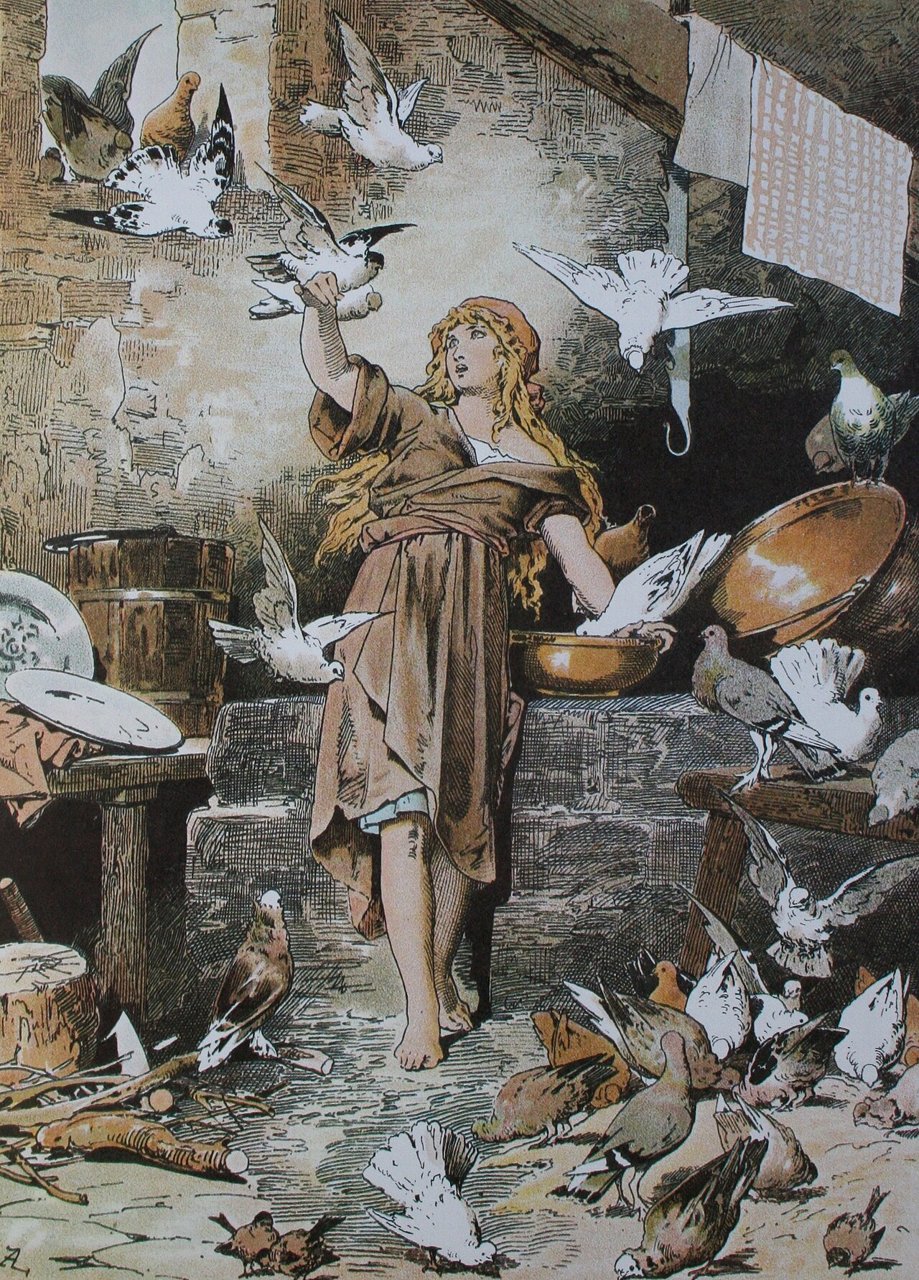
Aschenputtel feeding the birds, by Alexander Zick. Public domain, via Wikimedia Commons
The pumpkin coach, the fairy godmother and the glass slipper come from Charles Perrault's French version of 1697, which Disney followed fairly closely in 1950. The Grimms' German version, Aschenputtel, is a different animal. There is no fairy godmother, just a tree on her mother's grave and some helpful birds.
When the prince comes with the slipper, one stepsister cuts off her toe and the other her heel to make it fit. At the wedding, the birds peck out their eyes. The story is also much older than either version: a Chinese tale of a girl called Ye Xian, with a lost slipper and a king, was written down in the ninth century.
Pinocchio, chapter 15
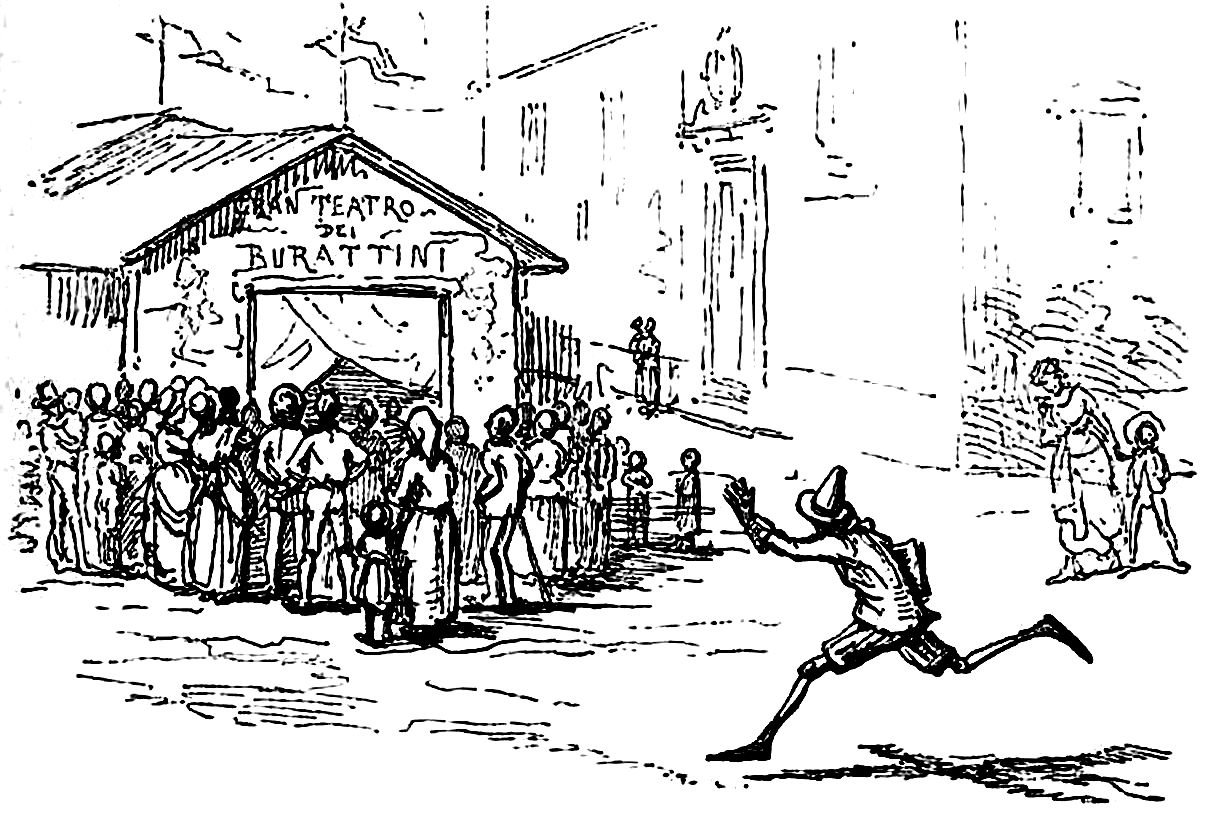
Carlo Collodi's The Adventures of Pinocchio first ran as a serial in an Italian children's magazine in 1881. Collodi's puppet is not a lovable innocent. Early on he kills the talking cricket who tries to give him advice, with a mallet.
In the original serial, the story ended at chapter 15 with Pinocchio hanged from a tree by two con men. Readers and the magazine's editor wanted more, so Collodi brought him back, added the Blue Fairy and eventually let him become a real boy. Disney's 1940 film kept the second half and quietly dropped the first.
The Little Mermaid's bargain
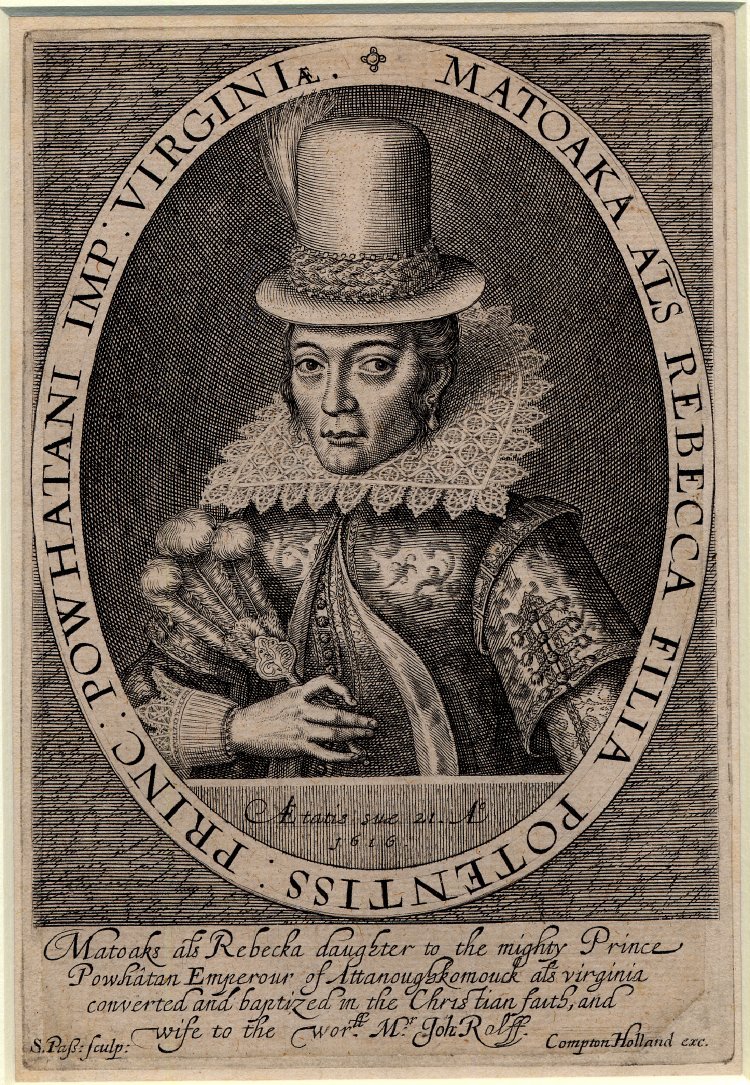
Pocahontas, engraved by Simon van de Passe in London in 1616 and labeled "Matoaka als Rebecka". Public domain, via Wikimedia Commons
Hans Christian Andersen published The Little Mermaid in 1837. His mermaid gives up her voice to the sea witch, who cuts out her tongue, and every step on her new legs feels like walking on knives. The prince marries someone else.
She is offered a way to save herself by killing him and refuses. Andersen ends with her dissolving into sea foam, though he softens it with a final turn in which she joins the daughters of the air. Disney's 1989 version gave her the prince and a much cheerier crab.
Pocahontas was a real person
Pocahontas is the one character on this list who actually lived. She was a daughter of Powhatan, the leader of a powerful alliance of peoples in what is now Virginia, and her personal name was Matoaka. When the English arrived at Jamestown in 1607 she was a child of about ten or eleven, not the young woman of the 1995 film, and there is no evidence of a romance with John Smith.
Smith's famous story of her saving him from execution comes from his own account, written years later, and many historians doubt it happened as he told it. What is documented is harder reading. She was captured by the English in 1613, converted, took the name Rebecca, and married the colonist John Rolfe in 1614. She traveled to England in 1616, where she was presented at court, and died at Gravesend in 1617 on the journey home. She was about 21.
Why the endings changed
None of this is a secret, and the Grimms themselves revised their stories for younger readers over the years. Disney simply continued a very old habit: every generation retells these stories for the audience in front of it. The only difference is that its versions became the ones most people know first.
Enjoyed this story?Get a new one every day on social.