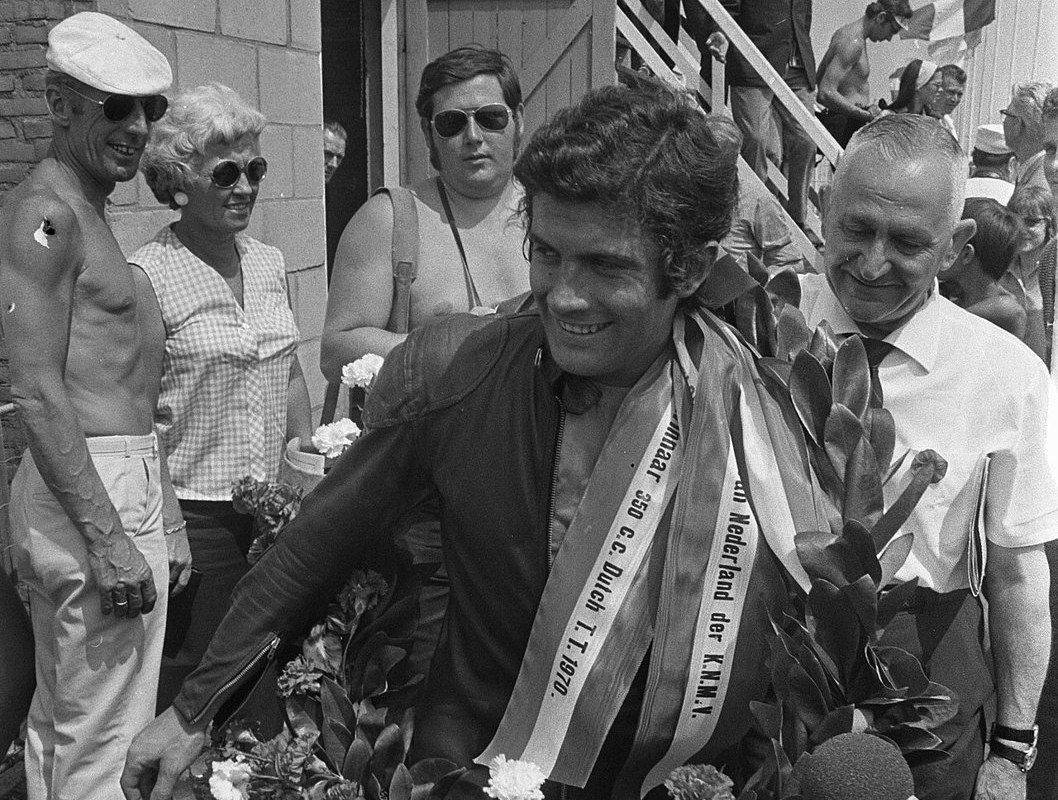
Photo: Anefo / Nationaal Archief, CC0, via Wikimedia Commons
On Friday morning, in the Ducati garage at the Circuit Ricardo Tormo outside Valencia, Marc Márquez recorded a short video. "This will be my last race in MotoGP," he said. "We made history." Five days earlier, on 22 November, an eighth-place finish at Portimão had sealed his eighth premier-class world championship with a round to spare. He is 33. Sunday's Valencia Grand Prix will be his final race, and by Friday afternoon he had set a circuit record in practice, which is a strange way to say goodbye.
The title came the hard way. Márquez was 102 points behind after Mugello, had another operation on his right shoulder in May, and later admitted to episodes of double vision after the Indonesian and French rounds. He then won six of the next nine races. The eighth crown puts him level with exactly one man, Giacomo Agostini, whose number has stood at the top of the sport since 1975. Márquez, asked whether that makes him the greatest, told reporters: "I do not agree that I'm the greatest rider. I don't like it." Then: "I'm one of the greatest, yes, because the numbers are there."
A boy from Lovere and a count's red bikes
Agostini was born in Brescia in June 1942 and grew up in Lovere, on Lake Iseo. He came up racing a Morini, won the Italian 350cc championship in 1964, and the following year was signed by Count Domenico Agusta, the autocratic owner of MV Agusta, a helicopter maker that ran a racing team largely for the glory of it.
MV already had the best rider in the world, Mike Hailwood. For one season the two shared the garage, and Hailwood won the 500cc title. When Hailwood left for Honda in 1966, the young Italian was expected to make up the numbers. Instead he beat Hailwood to the 1966 500cc crown late in the season, and then Honda withdrew from Grand Prix racing at the end of 1967. Agostini won the 500cc title every year from 1966 to 1972: seven in a row.
Why the record looks the way it does
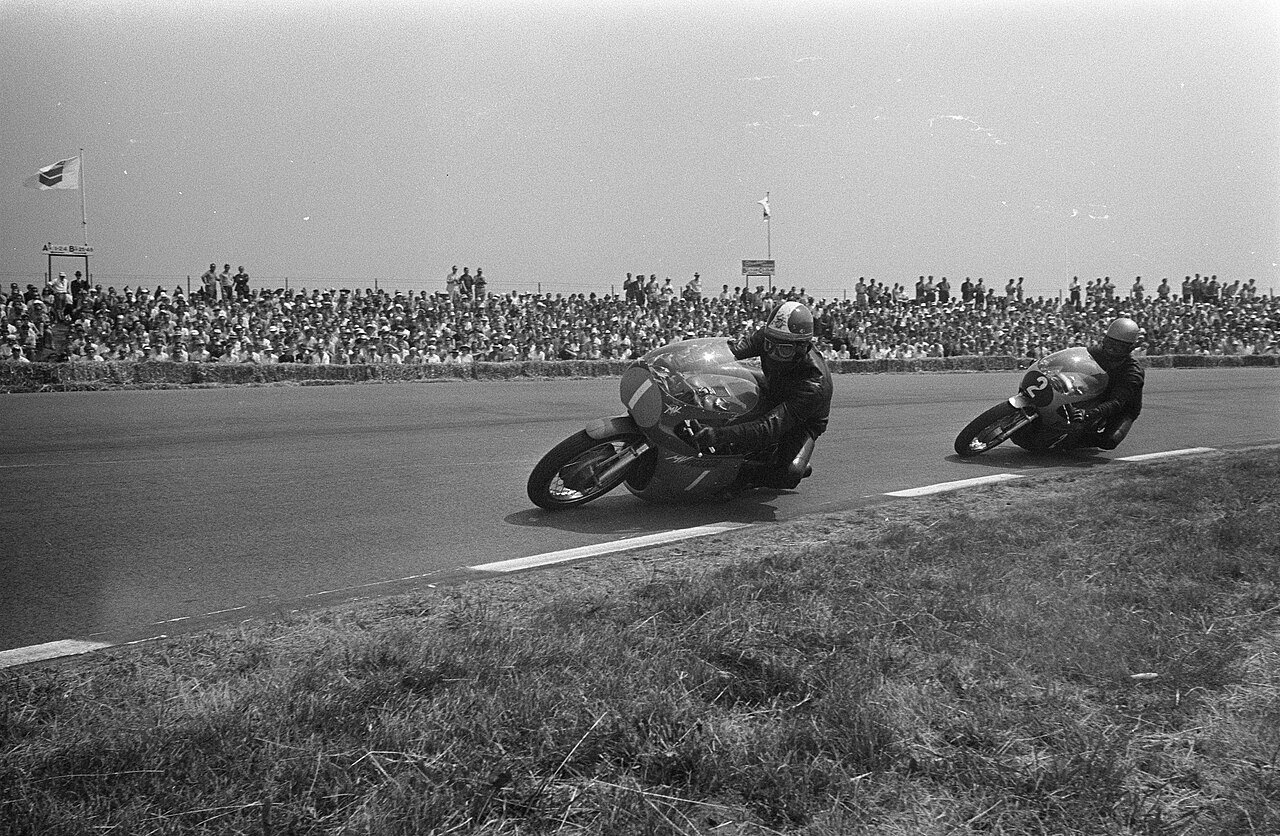
Agostini on the MV Agusta 350 at Assen, ahead of Renzo Pasolini. Photo: Anefo / Nationaal Archief, CC0, via Wikimedia Commons
People who want to argue about Agostini (and in Italy and Spain they very much do) usually start here. For long stretches of those MV years the opposition was thin. The big Japanese factories had left, and the red three-cylinder four-stroke was often the only truly competitive machine on the grid. He also raced in the 350cc class at the same time, often on the same afternoon, and won seven 350cc titles from 1968 to 1974. That is how he reached 15 world championships and 122 Grand Prix wins, 68 of them in the top class.
The other side of the argument is that he kept winning when the odds changed. Márquez equalled those 68 premier-class wins in June 2025, which tells you how long the figure stood.
The race he refused to ride
Agostini's career also changed the calendar. In 1972 his friend and fellow Italian Gilberto Parlotti was killed at the Isle of Man TT, then a round of the world championship, on a course of public roads lined with walls and telegraph poles. Agostini said he would never race there again, and other leading riders followed. The TT lost its world championship status after the 1976 season. Modern riders who complain about a gravel trap are complaining, in part, inside a world Agostini helped build.
The switch that made eight
By 1973 the two-strokes were coming. Phil Read beat him to the 500cc title that year and again in 1974, on another MV. So Agostini did something few champions at his age would risk: he left the team that had made him and signed for Yamaha for 1974. He won the Daytona 200 on his first try with the new machine.
In 1975 he won the 500cc world title on the Yamaha. It was his eighth in the premier class and the first 500cc championship won on a two-stroke. He raced on until 1977, then retired at 35, tried car racing, and later managed the Marlboro Yamaha team that took Eddie Lawson to the 1984 title.
Two careers, one number
The parallel with Márquez is closer than the bare figure. Both men won most of their titles with one manufacturer, Agostini with MV and Márquez with six for Honda between 2013 and 2019. Both then changed camps when the machinery turned against them and won again: Agostini on the Yamaha, Márquez on Ducatis after leaving Honda, first with the Gresini team in 2024 and then the factory squad. Márquez calls the Ducati years his "second life." Agostini never used the phrase, but 1975 was his.
The difference is the body count of injuries. Márquez's crash at Jerez in July 2020 broke his right arm and led to four operations. This year it was the shoulder again. Agostini, for all the danger of his era, never had (as far as I know) that kind of years-long fight just to sit on a bike.
My own view is that the "greatest" question cannot be settled across fifty years of tyres, tracks and rivals, and Márquez's refusal to claim it is the most sensible thing said all week. The record is shared, and from Sunday night it will stay that way.
Enjoyed this story?Get a new one every day on social.