Photo: Dig deeper, CC BY 4.0, via Wikimedia Commons
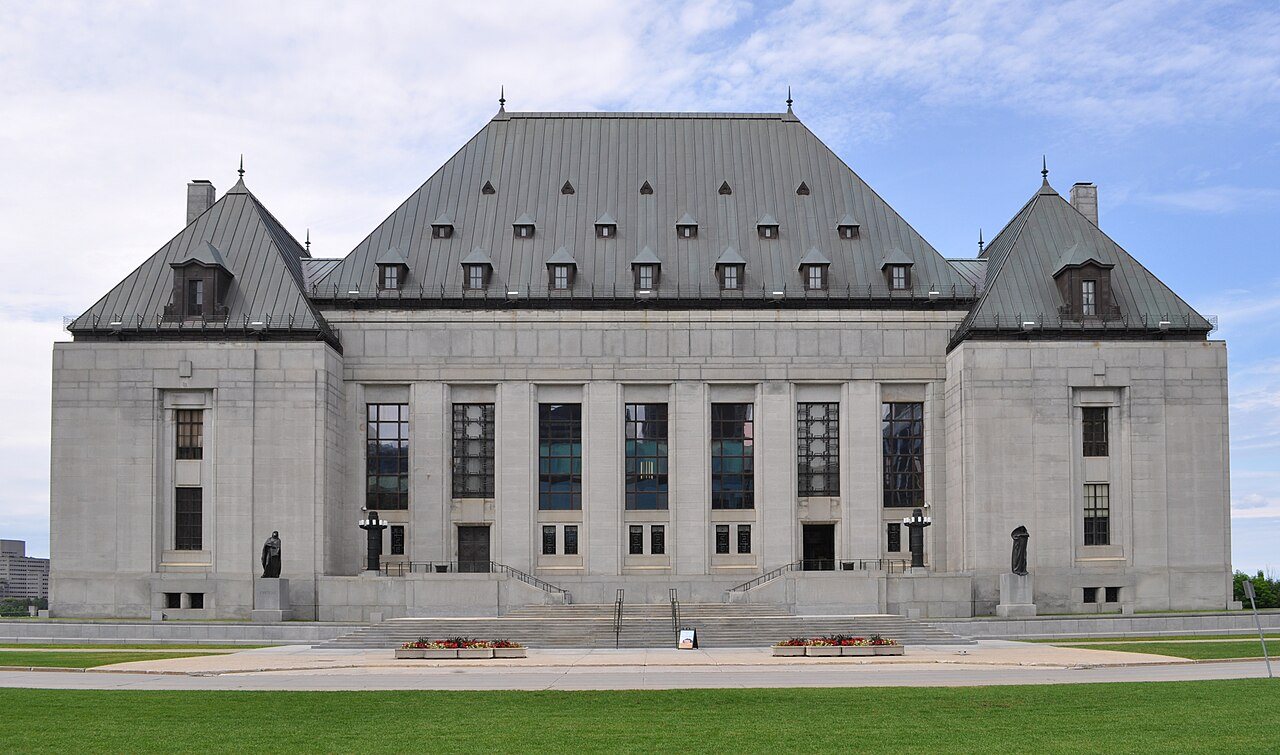
"In short, Bill 21 is rooted in Quebec's legitimate and historical commitment to ensuring the laicity of the state in a free and democratic society." That sentence, from Chief Justice Richard Wagner, sits near the centre of the Supreme Court of Canada's decision released on Friday, 27 November. The court upheld Quebec's 2019 secularism law, which bars many public servants, among them judges, police officers and teachers, from wearing religious symbols at work. Quebec had shielded the law with section 33 of the Charter of Rights and Freedoms, the notwithstanding clause, and the court found it had done so validly.
One piece did not survive. All seven justices agreed that the provision barring members of the National Assembly from wearing face coverings for religious reasons infringes section 3 of the Charter, the right to vote and to stand for election. The court also turned down the English Montreal School Board's argument based on minority-language education rights, and said that while it can issue a declaration that a law is inconsistent with the Charter, it would not do so here. Rights groups warned that the law has already pushed some observant people, especially Muslim women who wear the hijab, out of public-sector jobs.
Why one clause fell and the rest stood
The split outcome is not a mystery once you read section 33 itself. The clause lets Parliament or a provincial legislature declare that a law will operate "notwithstanding" section 2 (fundamental freedoms, including religion and expression) and sections 7 to 15 (legal and equality rights). It does not reach section 3. Democratic rights were left outside the override on purpose, and so a ban on how an elected member may appear in the legislature could be tested in the ordinary way. Everything else in Bill 21 sat behind the clause.
The court that applied those rules this week did not invent them. Most of the working law of section 33 was laid down in a single decision in December 1988, over shop signs in Montreal.
Signs, stores and Bill 101
In 1977 René Lévesque's Parti Québécois government passed the Charter of the French Language, known as Bill 101. Among much else, it required that commercial signs be in French only. Five Montreal businesses challenged it (the case takes its name from one of them, Valerie Ford Inc.).
On 15 December 1988 the Supreme Court ruled unanimously in Ford v Quebec that the French-only rule violated freedom of expression. The judges were careful. They accepted that protecting French was a legitimate aim and suggested that requiring French to be "markedly predominant" on signs would likely pass. A flat ban on other languages went too far.
The same judgment settled a second question that matters more today. After 1982, Quebec, which never signed the patriated constitution, had inserted a notwithstanding declaration into every one of its laws in a single omnibus act. Challengers argued that was an abuse. The court disagreed. Section 33, it held, demands only that a legislature say plainly which rights it is overriding; it does not have to justify the choice to a judge. That formal test is the reason the Bill 21 litigation was always going to be an uphill fight on the main question.
Bourassa's choice
Robert Bourassa had returned as Liberal premier in 1985, with many anglophone voters expecting him to ease the sign rules. The ruling handed him a way to do it. Within days he went the other way.
His government brought in Bill 178, which invoked the notwithstanding clause to keep French-only signs outdoors while allowing other languages inside a shop, provided French dominated. Bourassa judged that letting English back onto the streets would cost him far more in francophone Quebec than any loss among anglophones. Large crowds rallied in Montreal for Bill 101 that week, and he read the room.
Three anglophone ministers resigned from his cabinet: Clifford Lincoln, Herbert Marx and Richard French. Lincoln's speech in the National Assembly gave the episode its line, "rights are rights are rights," and it is still quoted every time the clause is used. (I have never found a satisfying account of what was said around Bourassa's cabinet table that week. He was a careful man who rarely said more than he needed to.)
The bill that hurt Meech Lake
The cost landed outside Quebec. Brian Mulroney's Meech Lake Accord, which would have recognised Quebec as a distinct society, still needed ratification by every province. Within days of Bill 178, Manitoba premier Gary Filmon pulled his government's resolution to approve the accord. Many English Canadians came to see the sign law as proof of what "distinct society" would mean in practice. Meech Lake died in June 1990, and historians generally count Bill 178 as one of the blows that killed it, though not the only one.
In Quebec, angry anglophone voters formed the Equality Party, which won four seats in 1989. A complaint went to the United Nations Human Rights Committee, which found in 1993 that the sign law breached the freedom of expression guaranteed in the International Covenant on Civil and Political Rights.
Section 33 declarations expire after five years. Before Bill 178's override lapsed, Bourassa's government replaced it in 1993 with Bill 86, which allowed other languages on outdoor signs as long as French was markedly predominant. That was, almost word for word, the compromise the Supreme Court had suggested in 1988.
What 1988 tells us about this week
The same clause was used both times, and in both cases Quebec reached for it to put a question of national identity beyond the reach of judges. The order was different. In 1988 the court struck down the sign rule first and Bourassa overrode it afterwards. With Bill 21 the override was written into the law from the start, in 2019, so by the time the case reached Ottawa the court could only test the parts section 33 does not cover. That is why the only casualty was the face-covering rule for members of the National Assembly, and why Ford's formal test did most of the work.
The difference is time. Bill 178 lasted less than five years before a Liberal government quietly softened it. Bill 21 has already been renewed once, in 2024, and Friday's decision tells every province that a properly drafted override will hold. Several have used section 33 in recent years, and the ruling will be read closely in those capitals.
The court also kept one tool for itself: the declaration of inconsistency, a formal statement that a shielded law conflicts with the Charter even while it stays in force. It declined to use it on Bill 21. Whether a future court uses it on some other law, and whether a declaration of that kind would have changed anything in 1988, is a question nobody can answer yet. Quebec's override on Bill 21 comes up for renewal in 2029.
Enjoyed this story?Get a new one every day on social.