Photo: Knesset photographer, CC BY-SA 4.0, via Wikimedia Commons
Benjamin Netanyahu went before the cameras at the Knesset on Wednesday, November 25, and declared that his corruption trial "must end immediately." Hours earlier, at a hearing in Jerusalem, the judges hearing his case had told the prosecution that proving the bribery charge in Case 4000 faced, in Judge Rivka Friedman-Feldman's reported words, "considerable difficulties." They questioned whether the conduct in Case 2000 was criminal at all, and recommended that the two sides reach an agreement to close Case 1000, the one about cigars, champagne and jewellery.
"Ten years of terrible suffering for me, my family," Netanyahu said, calling the cases fabricated. Attorney General Gali Baharav-Miara, summoned to the hearing in an unusual step, said she would consider the recommendations and was "ready for either a verdict or a plea deal." The trial opened in May 2020. Netanyahu, now caretaker prime minister after the inconclusive October 27 election, is the first sitting Israeli premier to stand trial. He is not the first prime minister to sit in that Jerusalem court.
The man who went first
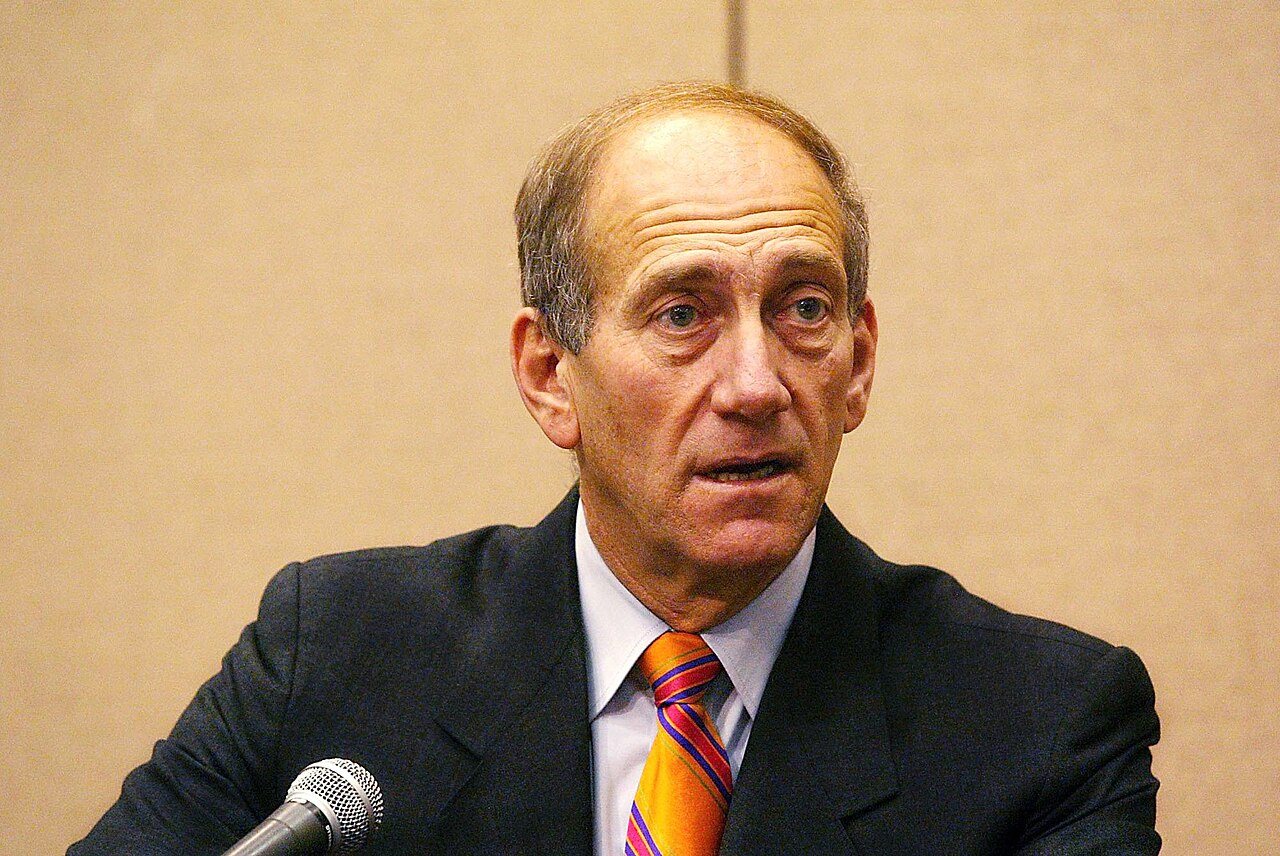
Ehud Olmert was prime minister for barely three years. In 2008 the police were investigating him in several affairs at once, the most vivid involving envelopes of cash from an American businessman, Morris (Moshe) Talansky. Olmert announced at the end of July that he would not run again for the leadership of Kadima and would step down, and he stayed on as caretaker until March 2009, when the man who replaced him was Benjamin Netanyahu.
It is worth remembering what Netanyahu said that summer, because his critics have been quoting it back at him for years. As opposition leader he argued that a prime minister "up to his neck in investigations" had no public or moral mandate to make fateful decisions for the country. The line has not aged well.
Cleared on the big charges in 2012
Olmert became the first former Israeli prime minister to be indicted. His first trial, in the Jerusalem District Court, ended on July 10, 2012 with a ruling of roughly 700 pages. The three judges acquitted him in the Talansky affair, where prosecutors said he had taken about $150,000, and in the Rishon Tours case, which concerned double-billing for overseas trips. "The evidence did not prove beyond a reasonable doubt," Judge Musya Arad said of the Rishon Tours money. Olmert was convicted of one lesser count of breach of trust in the Investment Center case, for favours to his old friend and former law partner Uri Messer. "The accused loved Messer, and took care of him," the court said.
Olmert walked out and told reporters, "There were no envelopes of cash. No envelopes of cash." He borrowed Menachem Begin's famous line, "There are judges in Jerusalem." For a few months it looked like a full political comeback was possible.
Then the case came back
The acquittal did not hold. A separate trial over the Holyland housing project in Jerusalem, dating from Olmert's years as mayor, ended in a bribery conviction in 2014. Then his former bureau chief Shula Zaken, who had stood by him for decades, turned state's witness and handed over recordings of their conversations. The Talansky case was reopened and, on retrial in 2015, Olmert was convicted of fraud and breach of trust in it after all. The Supreme Court trimmed the Holyland verdict on appeal but kept a bribery conviction in place.
In February 2016 Olmert reported to Maasiyahu prison, the first former Israeli prime minister to serve time. He was released on parole in the summer of 2017. (He has since become one of Netanyahu's loudest critics in print, which nobody in 2008 would have predicted.)
What the comparison does and does not show
The two cases are different in kind. Olmert's turned on cash and favours; Netanyahu's most serious charge, Case 4000, alleges regulatory benefits for the Bezeq telecom group in exchange for favourable coverage on the Walla news site. Courts in many countries have struggled with the idea that friendly news coverage can be a bribe, and this week's comments from the bench suggest the Jerusalem panel is struggling with it too.
The Olmert precedent cuts both ways. It shows that Israeli judges will throw out the headline charges against a powerful politician when the evidence is thin, which is the part Netanyahu's camp will point to. It also shows that an acquittal on the main charge is not the end of the story, because the same courts went on to convict Olmert once new evidence surfaced. And Olmert's 2012 verdict came after he had already left office. Netanyahu's comes while he is still caretaker prime minister and while Gadi Eisenkot is trying to put together a government without him.
Where this leaves the trial
Nothing was decided on Wednesday. Judges in Israel's criminal courts sometimes signal their view of the evidence to push the sides toward a deal, and the attorney general has kept both doors open. A plea agreement could mean a conviction on lesser counts, and whether such a deal would carry "moral turpitude" (the label that bars a politician from office for years) is likely to be the real fight. Donald Trump has publicly pushed President Isaac Herzog to pardon Netanyahu.
My own view is that the next few weeks will be decided less by the judges than by whoever forms the next government, which is exactly the kind of overlap Netanyahu warned about in 2008.
Enjoyed this story?Get a new one every day on social.