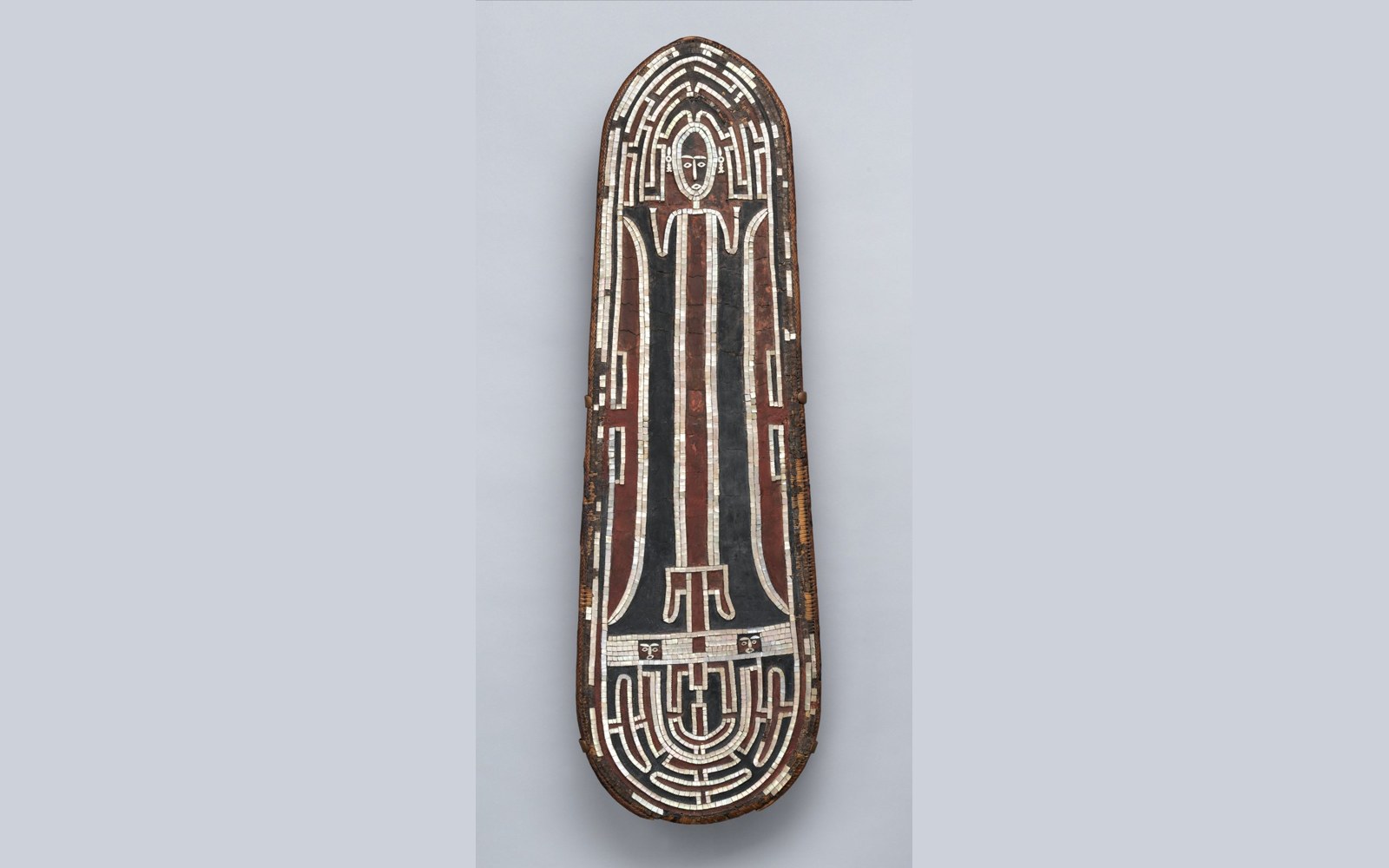
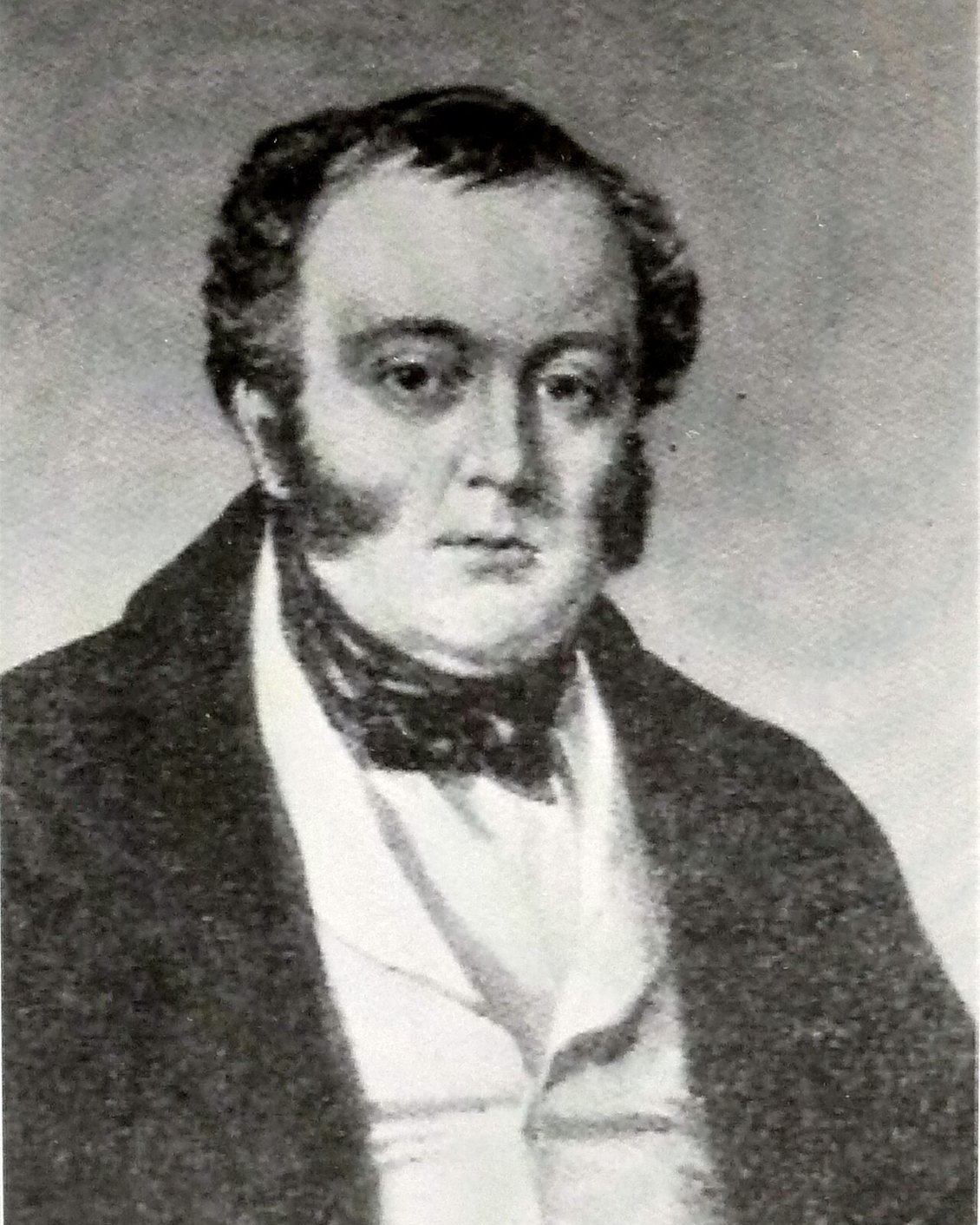
Solomon Islands artist, Grere'o (shield), early to mid-19th century, The Metropolitan Museum of Art, CC0
The guns at Parliament House in Canberra fired 19 times on Wednesday, November 25, for Matthew Wale, the prime minister of the Solomon Islands, who had brought a large delegation of ministers and MPs with him. Inside, he and Anthony Albanese signed the Australia-Solomon Islands Treaty. It names Australia the islands' "primary security partner," commits Honiara to consult Canberra on national security and sensitive infrastructure, and says there will be no foreign military or security base on Solomon Islands soil.
The money is A$740 million over ten years, according to the ABC, most of it grants, for Wale's free schooling policy, roads, renewable energy, policing and general budget support, with new routes for Solomon Islanders to work in Australian aged care and childcare. The ABC also reported on Tuesday that Wale's government had quietly told Beijing that the 2022 security pact signed under a former prime minister, Manasseh Sogavare, would lapse when it comes up for renewal in April 2027. Wale would not confirm it, citing a non-disclosure clause. He did say of the Sogavare years: "Those days are done. Gone. We don't want to be there again."
Australia keeping order in Honiara is an older arrangement than this treaty, and you can date it to July 24, 2003.
The Tensions and a prime minister at gunpoint
From 1998 the Solomon Islands slid into what locals still call the Tensions. Militants on Guadalcanal, the island where Honiara sits, drove thousands of settlers from the neighbouring island of Malaita off land they had farmed for decades. Malaitans formed their own armed group, the Malaita Eagle Force. On June 5, 2000, the Eagle Force, with help from inside the police, seized the armoury in Honiara and forced Prime Minister Bartholomew Ulufa'alu, held under guard at his residence, to resign.
Ulufa'alu had already asked Australia for help and had been turned down. Canberra's line at the time was that sending police or troops into a sovereign Pacific state was neocolonial and unworkable. A peace deal signed in Townsville in October 2000 ended most of the open fighting, but extortion carried on, the treasury was looted, and killings continued on the island's Weather Coast, where the militant leader Harold Keke held out.
Why Canberra changed its mind
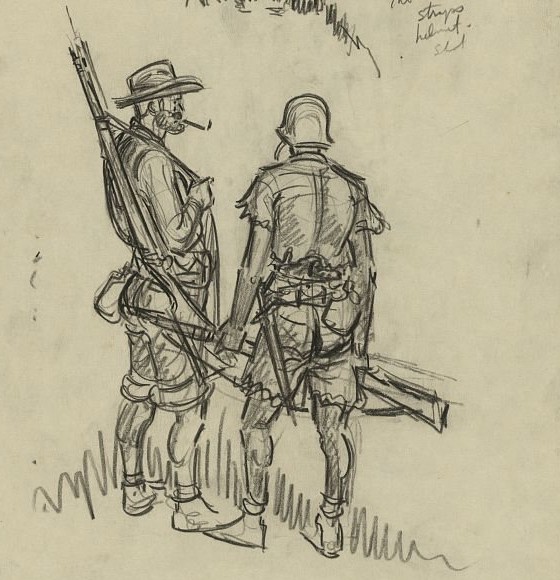
Two soldiers on Guadalcanal, pencil sketch by the war artist Howard Brodie, 1942 to 1943. Library of Congress, no known restrictions
By 2003 the Howard government had changed its view. The usual account credits September 11, the Bali bombings and a June 2003 report from the Australian Strategic Policy Institute called Our Failing Neighbour, which argued that a collapsed state next door was Australia's problem whether it liked it or not. Prime Minister Allan Kemakeza made a formal request, and on June 30, 2003, Pacific Islands Forum foreign ministers meeting in Sydney endorsed a regional mission under the Forum's Biketawa Declaration.
The Regional Assistance Mission to Solomon Islands, RAMSI (or Operation Helpem Fren, in Solomon Islands Pijin), began landing on July 24. It started with roughly 1,800 soldiers and 200 police, most of them Australian, with contingents from New Zealand, Fiji, Papua New Guinea, Tonga and other Forum states. A sea of khaki tents went up on Henderson Field, the airstrip the Americans had fought over in 1942. Keke surrendered within weeks. A gun amnesty took in about 4,000 weapons, and RAMSI later had them destroyed. Hundreds of police officers were sacked.
The mission was also less tidy than that summary sounds. An Australian Federal Police officer, Adam Dunning, was shot dead on patrol in Honiara in December 2004. In April 2006, after parliament chose Snyder Rini as prime minister, crowds burned much of Honiara's Chinatown, and RAMSI was caught short. The man who came out of that crisis as prime minister was Sogavare, who spent much of his first term at war with Canberra and expelled its high commissioner.
A long goodbye and a new partner
RAMSI ended on June 30, 2017, after 14 years and close to A$3 billion, most of it paid by Australia. Surveys found support for the mission among Solomon Islanders above 85 percent through the years they were run, which is a figure any government would envy. Australia signed a bilateral security treaty with Honiara in 2017 so it could come back if asked.
It was asked. In September 2019 Sogavare's government switched diplomatic recognition from Taiwan to Beijing. In November 2021, protesters, many of them from Malaita, which had opposed the switch, tried to storm parliament, and Chinatown burned again. Australian police and soldiers flew in under the 2017 treaty within days. Then, in April 2022, Sogavare signed a security agreement with China, which allowed Chinese police into the country and set off fears in Canberra and Washington of a Chinese naval base 2,000 km from Australia's coast. Sogavare always denied any base was planned. Lachlan Strahan, a former Australian high commissioner, told the ABC this week that Sogavare had been "true to his word" on that.
What the 2003 template explains about 2026
The treaty signed on Wednesday reads like a lesson drawn from both halves of that history. From RAMSI it takes the idea that security in Honiara is a regional job and that the region means the Pacific Islands Forum; the text says security cooperation should come from Forum members. From the 2022 episode it takes the fear of a door left open. It does not name China, and it does not ban partners from outside the Forum outright, but the no-bases clause and the infrastructure clause point in only one direction.
The visas and the money for school fees are the new part. RAMSI's critics in Honiara used to say it rebuilt the police and the treasury and left ordinary people with very little to show for it. This time the opposition, led by Sogavare, calls it chequebook diplomacy. Wale invited it to try another no-confidence motion. (Solomon Islands politics changes prime ministers often enough that Canberra will be aware this treaty has to outlast more than one of them.)
Henderson Field today
Henderson Field is now Honiara International Airport, though plenty of people in town still call it Henderson, and the khaki tents of 2003 are long gone. The road from the airport into Honiara runs past the national stadium China built for the 2023 Pacific Games, so anyone flying in to check on the new treaty will see both partners' handiwork before they reach their hotel.
Enjoyed this story?Get a new one every day on social.