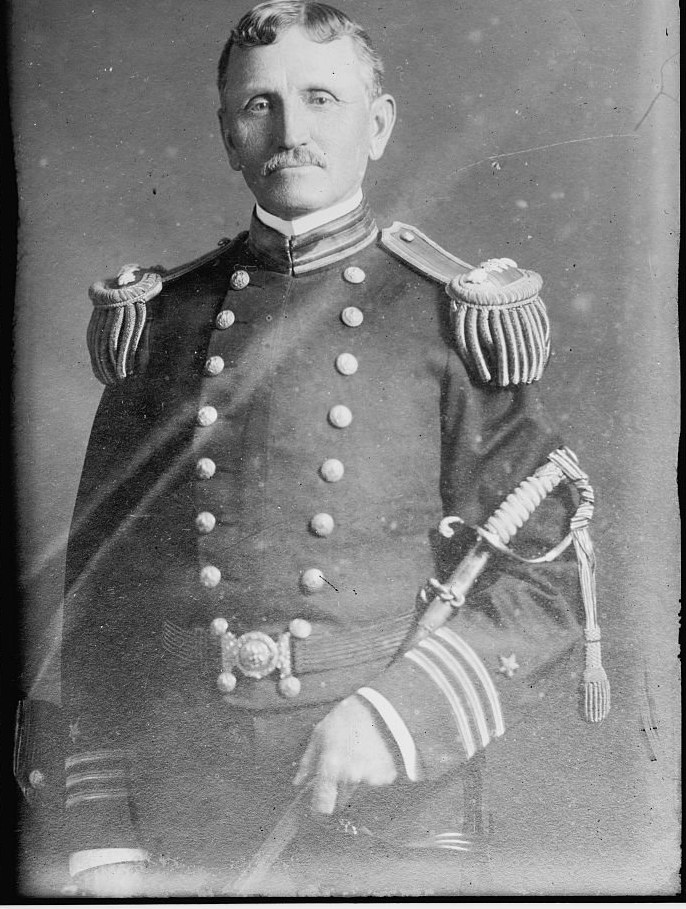
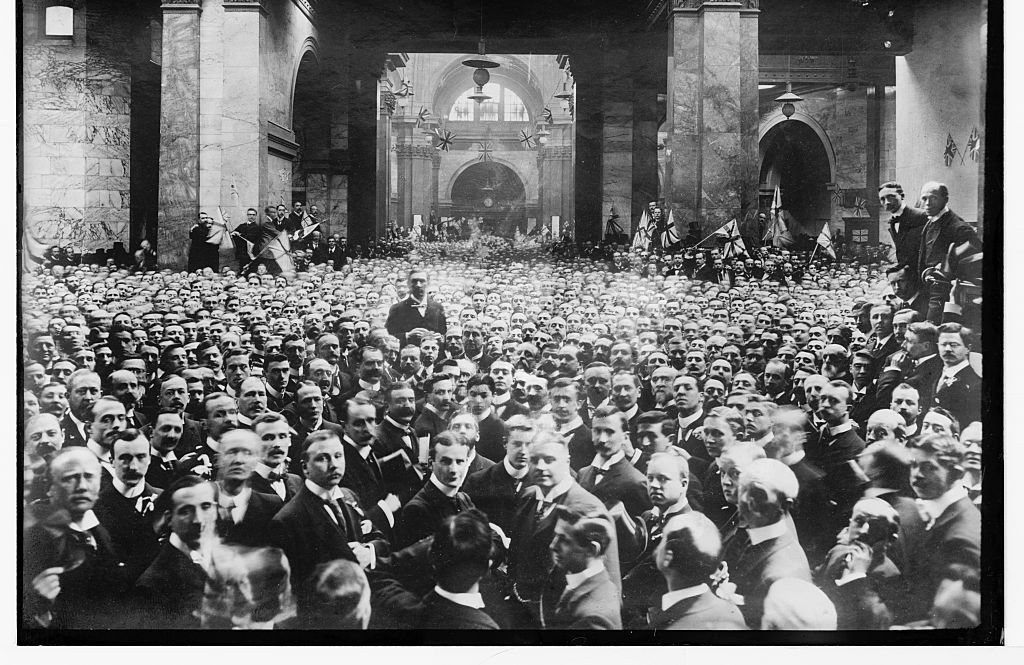
Photo: Bain News Service, c. 1915, Library of Congress Prints & Photographs Division, no known restrictions
On 17 December 1914 a small party of United States Marines walked into the National Bank of Haiti in Port-au-Prince, loaded about $500,000 in gold into boxes, carried the boxes down to the harbour and put them aboard the gunboat USS Machias, which sailed for New York. The gold went into the vaults of the National City Bank, which owned a large share of the Haitian bank and wanted its reserves somewhere safer than Haiti. Nobody in Washington called it an invasion; it was a bank making a withdrawal, with an escort. Seven months later the Marines came back and stayed nineteen years.
Six presidents in four years
Haiti in 1915 had been through six presidents since 1911, and most of them had left office in the same way, pushed out by an armed movement from the north financed by somebody who wanted the job next. The men who did the pushing were called cacos, peasant soldiers from the hills who marched on the capital for pay, installed a president and went home. It was expensive, and Haiti's debts to French and American banks were the reason Washington and Paris took such an interest in who was in the palace.
Vilbrun Guillaume Sam came to power in March 1915 by the usual route. By July he was facing the usual rebellion, led by a rival named Rosalvo Bobo, and he had filled the Port-au-Prince penitentiary with political prisoners, many of them from the old families of the capital. On the night of 27 July rebels attacked the palace. Sam fled to the French legation next door. Before dawn his commander at the prison, Charles Oscar Etienne, had the prisoners killed. The number usually given is 167.
28 July 1915
In the morning a crowd went first to the Dominican legation, where Etienne had taken refuge, and killed him, then to the French legation, climbed the wall, found Sam hiding in a bathroom, and dragged him into the street. What happened to him next was described in detail by the American and French diplomats who watched it, and I will leave it at the statement that the pieces were carried through the city on poles.
The cruiser USS Washington had been lying off the capital for some days under Rear Admiral William Caperton, who had orders to protect foreign lives and property and wide latitude on how. At about five in the afternoon, roughly ten hours after Sam's death, he landed 330 Marines and sailors, who met little resistance. Within six weeks there were about 2,000 Marines in the country and Caperton was choosing a president.
A president chosen in the admiral's cabin
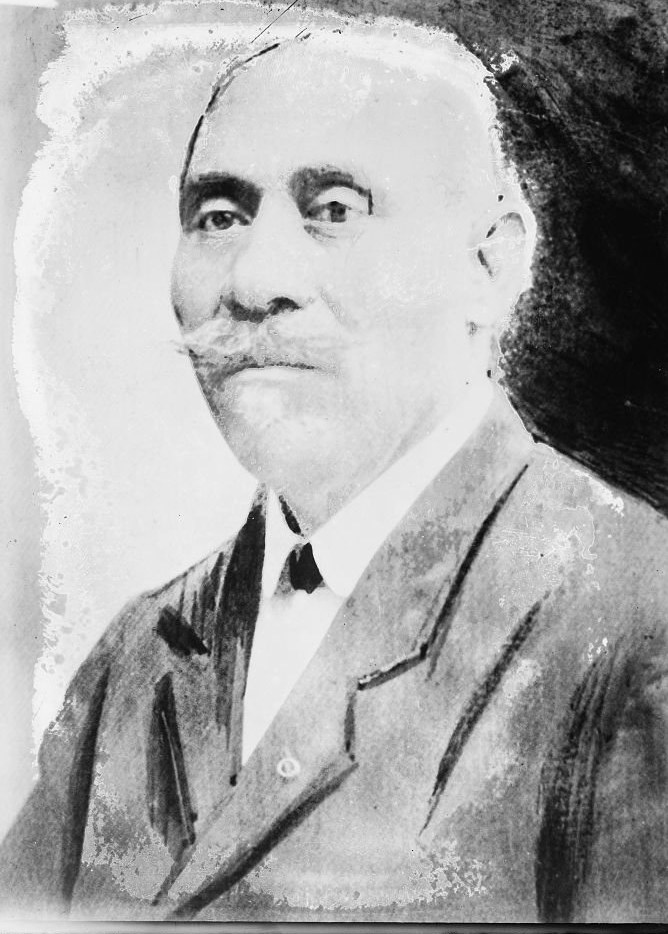
Philippe Sudré Dartiguenave, president of Haiti from 1915 to 1922, in a retouched press photograph. Bain News Service, Library of Congress, no known restrictions
The National Assembly met on 12 August 1915 with Marines at the doors and elected Philippe Sudré Dartiguenave, the candidate the Americans preferred, over Bobo, the candidate who had an army. A treaty signed in September handed the United States control of Haiti's customs, finances and police for ten years, later twenty. When the legislature refused a new constitution allowing foreigners to own land, the Marines dissolved it, and the constitution passed in a 1918 plebiscite with a yes vote above 98 percent. Franklin Roosevelt, assistant secretary of the navy at the time, claimed on the 1920 campaign trail that he had written it himself. He probably had not, but the boast tells you how Washington saw the arrangement.
The police became the Gendarmerie d'Haïti, trained and officered by Marines, under a major named Smedley Butler. Butler spent his retirement regretting all of it. "I helped make Haiti and Cuba a decent place for the National City Bank boys to collect revenues in," he wrote in 1935, and the line is quoted so often that people forget he was describing his own work.
The corvée and the caco war
What turned an unpopular occupation into a war was a road. Butler's gendarmerie wanted a highway from Port-au-Prince to Cap-Haïtien in the north, and to build it they revived an old Haitian law allowing the state to demand a few days' unpaid labour a year from peasants in place of a road tax. In practice men were rounded up, roped together and marched to work camps under armed guard, for weeks rather than days, in a country whose founding event was the abolition of slavery. By 1918 the hills were in revolt.
The caco leader this time was Charlemagne Péralte, a former army officer who had escaped from hard labour, and he fought the Marines for about a year until the night of 31 October 1919, when a Marine sergeant named Herman Hanneken, his face blackened, walked into Péralte's camp with a Haitian guide and shot him. The Marines photographed the body tied to a door and distributed the picture across the country as proof that he was dead. Haitians looked at it and saw a crucifixion, and Péralte has been a national hero ever since. Péralte's successor, Benoît Batraville, was killed in May 1920, and the rebellion died with him. Estimates of Haitians killed during the occupation vary a great deal, from about 3,000 upward, and I have not seen a figure I would trust to the nearest thousand.
The way out took five years
The occupation did build things: something over a thousand miles of road, a telephone system, hospitals, and a customs service that for the first time collected what it was owed. Haitians noticed that the hospitals were run by Americans and the roads led to American plantations, and that nobody had asked them. Marine officers from the American South brought the colour line with them, and the old Haitian elite, who had expected to be treated as the country's gentlemen, found they were not.
The end began on 6 December 1929 at Les Cayes, where Marines fired on a crowd of some 1,500 protesting peasants and killed about a dozen. The shooting made the American papers, President Hoover sent a commission, the commission recommended getting out, and a Haitian election in 1930 produced a president, Sténio Vincent, who negotiated the terms. The last Marines left on 15 August 1934; American control of the Haitian treasury lasted until 1947. The gendarmerie the Marines built became the Haitian army, which produced most of the country's coups for the next sixty years.
The force now in Port-au-Prince
The Salvadoran deployment is the newest layer of a pile that has been growing since 1994, when American troops landed again to restore Jean-Bertrand Aristide; the United Nations ran a stabilisation mission from 2004 to 2017; a Kenyan-led police force arrived in 2024; and in the autumn of 2025 the Security Council turned that into a Gang Suppression Force meant to reach 5,500 men. A year on it has around 2,000, from a list of countries that runs from the Bahamas to Bangladesh to Chad. Gangs control most of the capital and have displaced something like 1.5 million people. There has not been an election since 2016.
The four Salvadoran airmen who went missing on 18 October, in an ambush on the edge of the capital, were technicians coming back from a market, according to their president. Their government has now sent about a thousand soldiers, in American transport aircraft, to look for them. Who will command those soldiers once they are on the ground, how long they will stay and what they are allowed to do while they are there had not been announced when I filed this. Nobody asked those questions in July 1915 either, and the answers turned out to be an admiral, nineteen years, and more or less anything.
Enjoyed this story?Get a new one every day on social.