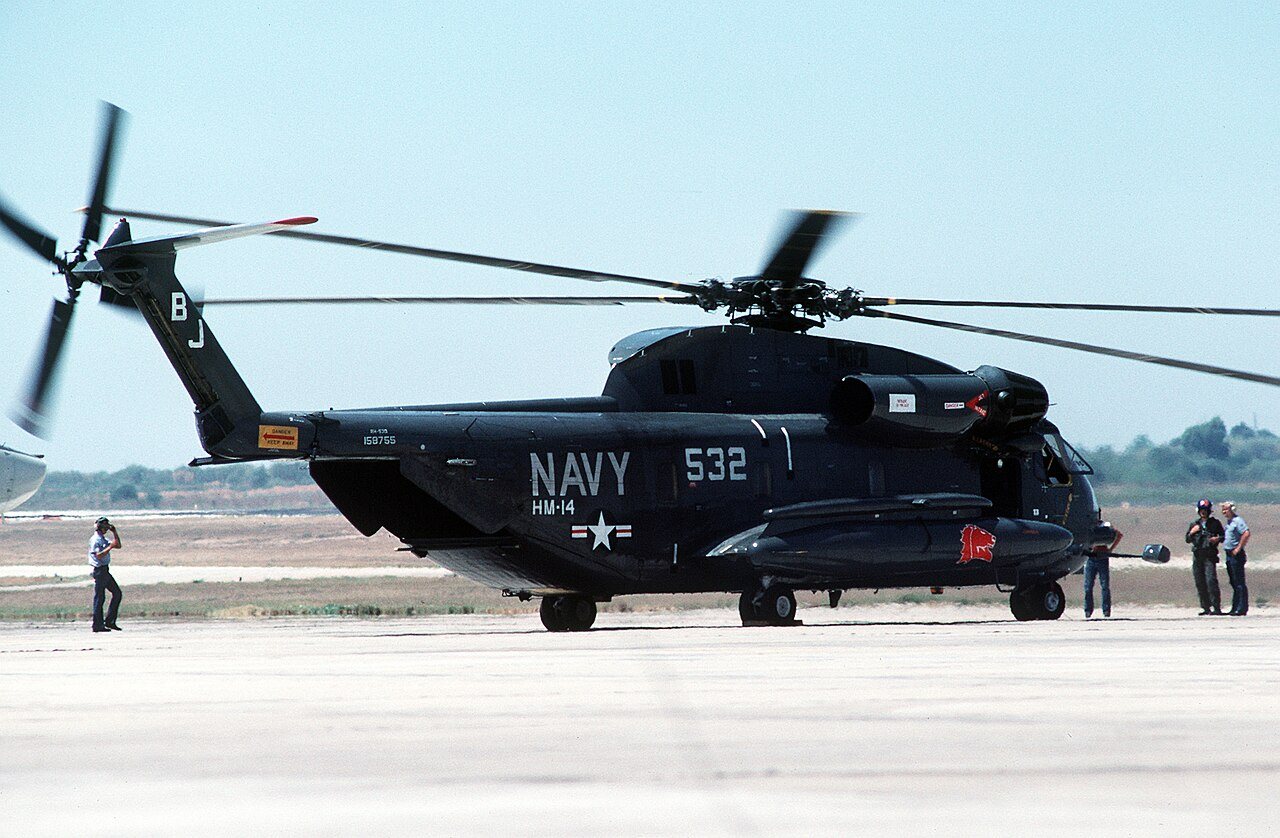
Photo: RH-53D of Helicopter Mine Countermeasures Squadron 14 at NAS Rota, 1984, PHCM Pedrick, US Navy, public domain, via Wikimedia Commons
Between 9 July and 15 August 1984, at least 17 merchant ships were damaged by underwater explosions in the Red Sea and the Gulf of Suez. Some counts reached nineteen. Nobody was at war in those waters and no navy had announced a blockade, yet the ships, all ordinary traffic heading to and from the Suez Canal, kept limping into port with their plates bent inward.
Two tankers off Hormuz
This weekend Iran's Revolutionary Guard Navy said two oil tankers had struck mines and caught fire south of the Strait of Hormuz. Its statement said the ships had been using an unauthorised route with their tracking systems switched off, which is the Guard's way of saying they should have asked permission. I have not seen independent confirmation of the details yet, and the Guard is hardly a neutral narrator in a waterway where it is fighting the United States.
Mines are cheap, and they are hard to pin on anyone, because a mine carries no flag and can wait for weeks. The Red Sea affair turned on exactly that problem, which is why the people who investigated it are still writing about it forty years on.
A string of explosions with no author
The first ship hit was the Soviet-flagged freighter Knud Jespersen, damaged in the northern Red Sea on 9 July. Then nothing happened for 18 days, which made it look like an accident. From 27 July the explosions came in clusters: seven ships in the Gulf of Suez, the approach to the canal, and ten more in the southern Red Sea and around the Bab el-Mandeb strait, at the far end of the sea, more than 1,000 miles away.
In late July a caller claiming to speak for Islamic Jihad phoned international news agencies and said the group had laid 190 mines. American and British analysts did not believe it. Mining two ends of a sea, with weapons sophisticated enough to sit on the bottom and wait, needed a state behind it. The question was which one.
Egypt had the most to lose. The canal was among its biggest earners of foreign currency, and shipping companies were starting to talk about rerouting around Africa. In early August, Egypt and Saudi Arabia asked for international help with mine clearance.
Twenty-six ships go looking
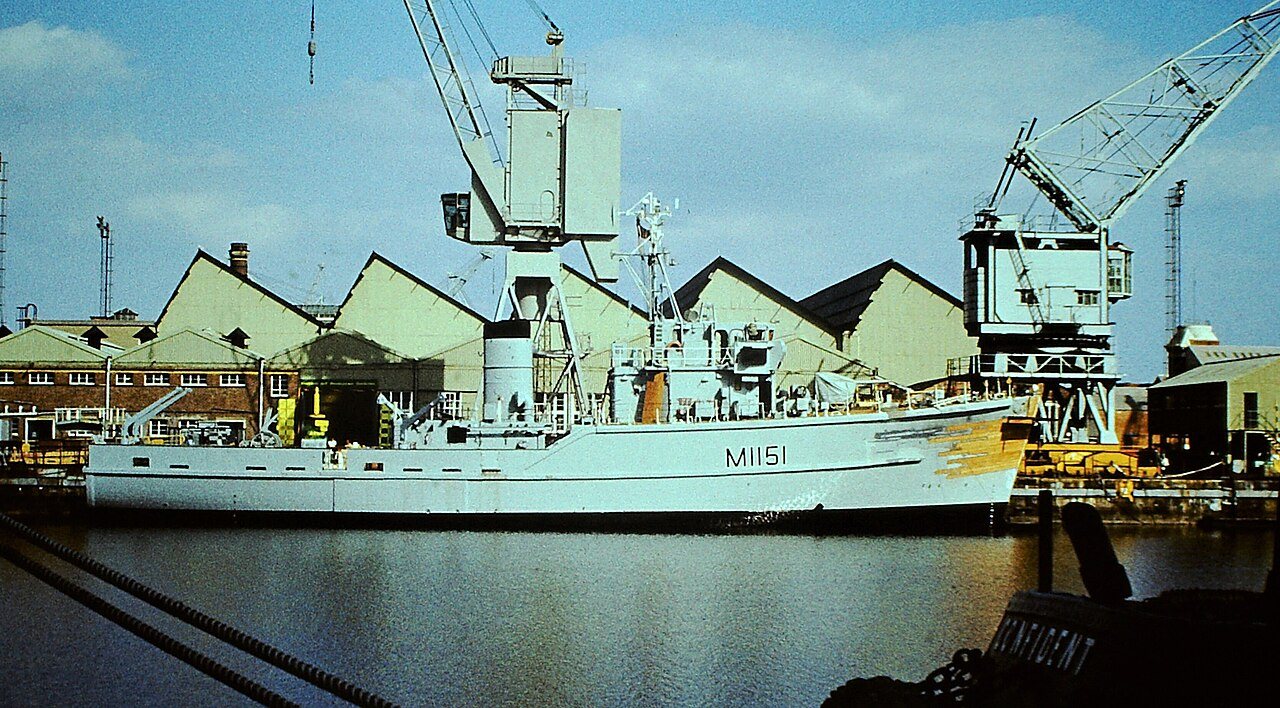
Photo: HMS Iveston, a Ton-class minesweeper of the same type as HMS Gavington, Hugh Llewelyn, CC BY-SA 2.0, via Wikimedia Commons
The response was large and a little chaotic. According to a review published by the CIA's Studies in Intelligence in 2022, written by the retired analyst Richard Mobley, 26 ships from six countries ended up hunting mines in the Red Sea that autumn. The United States sent RH-53D minesweeping helicopters from squadron HM-14, which towed sleds through the water from the air. Britain sent minehunters. The Soviet Union, whose own freighter had been the first casualty, sent ships too. The British later described the coordination between all these navies, in a phrase I enjoy for its restraint, as "less than ideal."
For weeks they found almost nothing. Then on 12 September the British minehunter HMS Gavington, a small wooden-hulled Ton-class ship, located a mine in 42 metres of water on the western edge of the southbound shipping lane out of Suez. It was partly buried in the sand and clean of marine growth, so it had not been there long.
Explosives experts dragged it ashore and cut it in two. The electronics went to Britain and the explosive section to the Admiralty research establishment at Portland. It was Soviet-designed, and the serial numbers on its casing pointed to manufacture in 1981. Western intelligence had no name for it, so they called it the Type 995, after one of the numbers stamped on its skin. British analysts later estimated its charge at about 750 kilograms of explosive, far more than the 100 kilograms everyone had assumed from the damage. Its activation clock had been set to 8 days and 19 hours and never started, because of an electrical fault. Somebody had laid a dud, which is the only reason anyone got to look inside one.
The ferry that took the long way
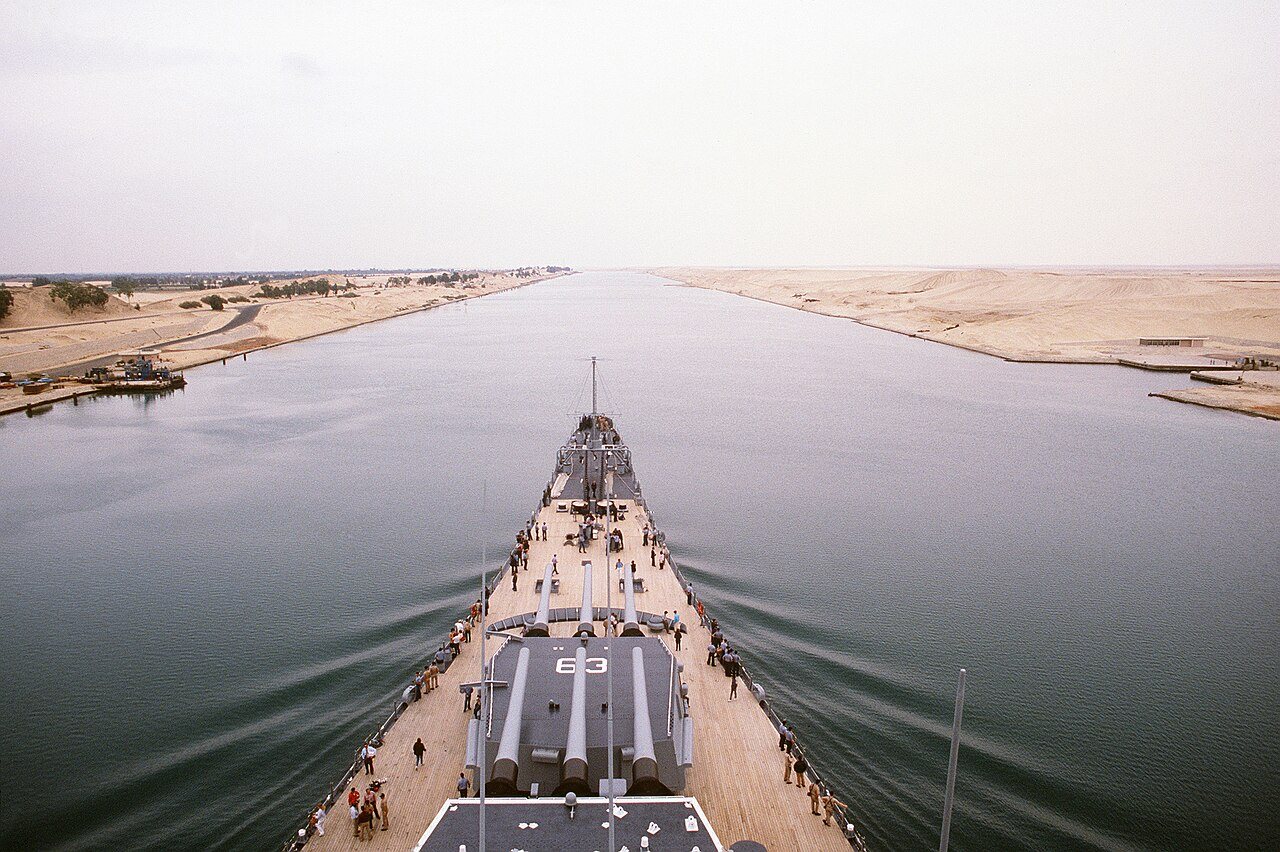
Photo: USS Missouri transiting the Suez Canal in the 1980s, National Museum of the U.S. Navy, public domain, via Wikimedia Commons
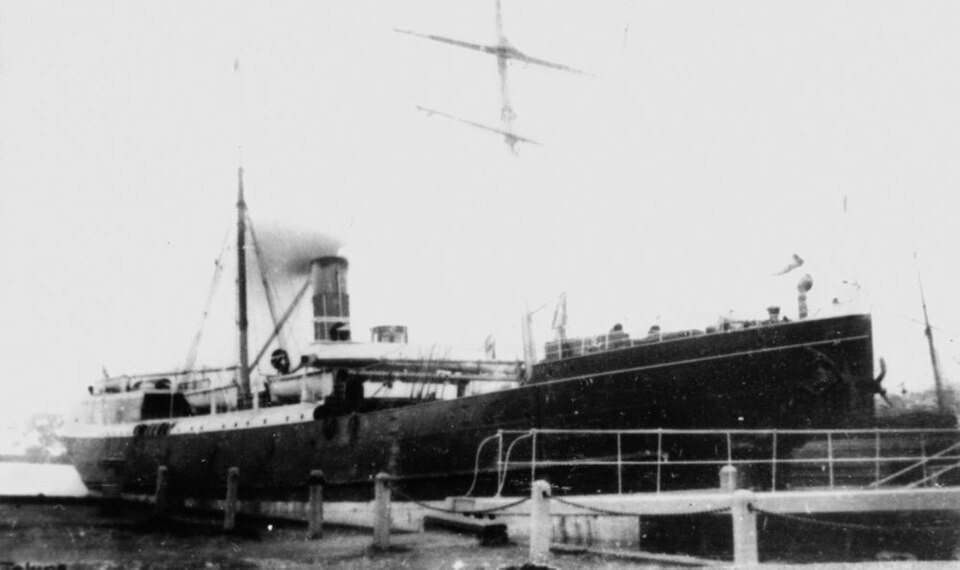
By then suspicion had settled on a single ship. The Ghat was a Libyan roll-on roll-off ferry, the kind with a big ramp at the stern for driving vehicles aboard. A stern ramp is also a convenient way to roll heavy objects off the back of a ship at night.
The Ghat had passed south through the Suez Canal on 6 July, three days before the first explosion. Its papers said it was carrying agricultural machinery to Assab, in Ethiopia. American intelligence later concluded that it was actually carrying about 950 tons of military supplies, mostly ammunition and small arms. The voyage to Assab took 15 days, about a week longer than the trip normally needs. When it went through Suez, the CIA reported, the chief frogman of the Libyan navy was aboard, and a known Libyan naval officer had been added to the crew, which was changed at least twice during the voyage.
Egypt did not wait for the analysts. On 19 August its defence minister, Field Marshal Abu Ghazala, told a visiting American congressional delegation that he was "100 percent sure" Libya was responsible, and cited the Ghat's timing and the swapped crew. Muammar Qadhafi denied everything. That same month French authorities held the Ghat at Marseilles over unrelated violations, and inspectors noticed that its stern ramp looked as if it had been battered by waves, the kind of damage you might get from leaving it open at sea.
From the Red Sea to the Gulf
The Type 995 did not stay a curiosity. The research done on the Gavington mine fed into NATO's mine countermeasures work for years. And the weapon turned up again. According to CIA reporting cited in the 2022 review, in September 1987 a Libyan cargo plane flew nine Soviet-made mines to Tehran, and Libya had supplied Iran with Type 995s. The naval historian Scott Truver has written that Libya bought at least 16 of them from East Germany in the first place.
That was the summer the Tanker War in the Gulf turned into a mine war, with the United States escorting reflagged Kuwaiti tankers through the same waters where the Revolutionary Guard now says ships are burning. The weapons in the Gulf in 1987 came from several sources, and I would not claim the Libyan mines did more than a share of the damage. Still, by that reporting Iran's stock in 1987 included mines with the same maker and the same middleman as the one HMS Gavington pulled out of the sand.
What the Ghat actually did
Libya never admitted laying the mines, and nobody has published a full account from the Libyan side, so the Ghat's voyage is still described in the literature as a reconstruction rather than a record. The timeline the investigators built fits the explosions, the crew and the cargo, and almost every Western government accepted it. What it cannot tell us is how many Type 995s went over the stern that July, and whether every one of them was found.
Enjoyed this story?Get a new one every day on social.