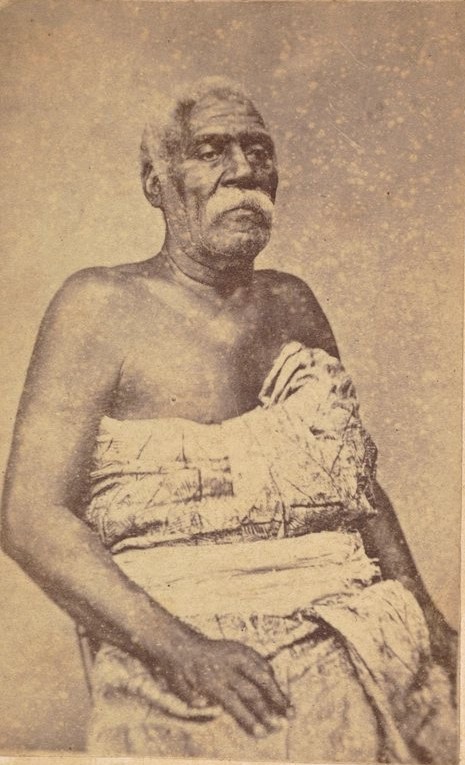
Photo: Ratu Seru Epenisa Cakobau, carte de visite, between 1865 and 1883, Museum of New Zealand Te Papa Tongarewa, CC0, via Openverse
At the end of 1874 an elderly Fijian chief spent a few weeks in Sydney being a guest. Ratu Seru Cakobau had just signed his islands over to Queen Victoria, and the colony of New South Wales showed him around: the governor's house, the harbour, the sights of the city. He brought his sons and a retinue. Sydney had measles that season, and somewhere in the visit Cakobau caught it. He recovered, which in a way was the start of the trouble, because by the time he sailed for home he was well enough that nobody thought to worry about the rest of his party.
Ten deaths this year
This week the number of measles deaths reported in the United States in 2026 reached ten, according to an Al Jazeera tally of state reports (the CDC's own count runs lower, because the federal and state agencies classify deaths differently). The CDC has recorded more than 5,000 confirmed cases this year, the highest figure since 1991. Pennsylvania has been hit hardest. The country was declared free of endemic measles in 2000, which, for anyone born after that, is roughly their whole life.
I am not a doctor, and there are better places than a history site to read about vaccines. What I can do is explain why the people who run measles programmes get so grim about a disease most grandparents remember as a week off school. The reason has a lot to do with Fiji.
Nineteen days on HMS Dido
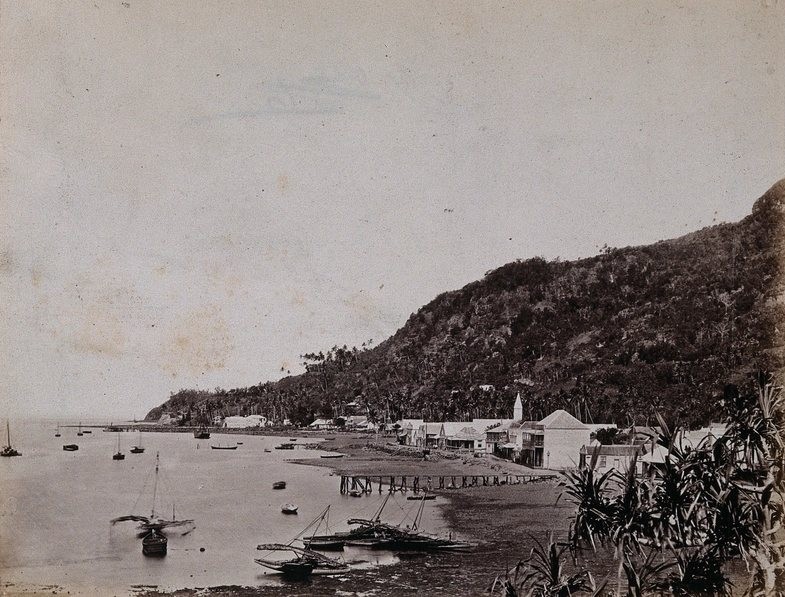
Photo: Levuka, Fiji, panoramic view, about 1880, CC0, via Openverse
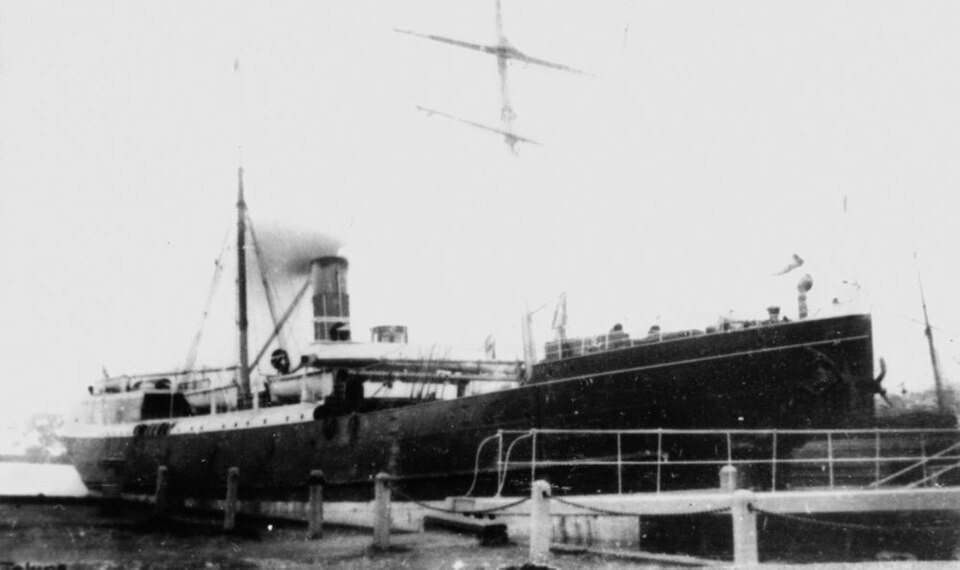
The Deed of Cession was signed at Levuka on 10 October 1874, and Fiji became a British colony. Cakobau's trip to Sydney was part of the arrangement, a courtesy visit to the governor of New South Wales, Sir Hercules Robinson, who had negotiated the handover. In January 1875 the party sailed home on the Royal Navy ship HMS Dido, together with the first batch of British officials sent to run the place.
The voyage took nineteen days. Measles incubates for about fourteen. One of Cakobau's sons fell ill on the way, which means the infection was passing from person to person on board before the ship ever sighted Fiji.
At Levuka, then the capital, nobody stopped them. There was no quarantine, although British ports elsewhere had quarantine rules for exactly this. People paddled out to greet the paramount chief, climbed aboard and escorted the party ashore. Then the chiefs did what made perfect political sense. A great meeting of high chiefs was called for late January, each arriving with followers numbering in the hundreds, to hear what cession to Britain would mean for them. They met, talked, ate together and went home to every corner of the archipelago.
A disease with nobody to stop it
Measles had never been to Fiji before. In a city like Sydney, nearly every adult had had it as a child and was immune for life, so it moved through the young and was often survivable. In Fiji everyone was susceptible at once, adults as much as children, including the people who would normally have nursed the sick.
The epidemic swept the islands from February to June 1875. Nobody counted the dead properly, and estimates have always varied. A despatch from Melbourne read out in the House of Lords on 10 June put the figure at 50,000. The number historians quote most often is around 40,000, and the epidemiologist Dennis Shanks, who has worked through the records, estimates that between a fifth and a quarter of the population died. Shanks also found something odd. The Fijian armed constabulary, who had caught the disease too but were nursed in a more orderly way, had a death rate of about 6 percent. In the general population it was closer to 20.
The chiefs fared worst of all, and his explanation is grimly ordinary. A sick chief lay in an enclosed house packed with attendants and relatives, which is about the most efficient way anyone could have devised to give everyone in the room a heavy dose of virus and then pass round the pneumonia that so often follows measles. By his reading of the records, a great many of the high chiefs who had come to that January meeting were dead by the summer.
"Almost powerless"
In London the colonial secretary, Lord Carnarvon, answered a question from the Earl of Shaftesbury in the Lords. He could not confirm the 50,000, he said, but feared it was substantially true, and he admitted that Her Majesty's Government was "almost powerless in the case", since anything sent from Britain would arrive far too late. He compared it with the epidemic on the Faroe Islands in 1846.
That comparison was well chosen. Measles reached the Faroes in 1846 after decades away, and a young Danish doctor, Peter Panum, went out to study it. He worked out the incubation period and noticed that old islanders who had been through the previous outbreak, in 1781, did not get sick a second time. His observations are still in the textbooks, and they explain Fiji almost exactly.
The colonial accounts mostly blamed Fijian customs and the islanders' habit of moving about, rather than the decision to let a ship with an infectious passenger tie up without a single question. The Fiji Times, to its credit, did criticise official inaction.
Labour from India
The new governor, Sir Arthur Gordon, arrived in June to a colony that had lost a large share of its people and much of its chiefly leadership. The population did not recover, Gordon did not want Fijians pressed into plantation work, and the planters still wanted workers. His answer was labour from India. The first ship, the Leonidas, arrived in 1879, and over the next four decades tens of thousands of indentured workers followed. Their descendants are a large part of Fiji today, and the politics of that arrangement have shaped the country ever since.
None of this was a medical mystery even in 1875. Carnarvon already knew the Faroe Islands story, and he still had to tell the Lords he hoped the worst was past, which by June, with most of the dying done, it was.
Enjoyed this story?Get a new one every day on social.