Eurovision Asia Has a Winner. The 1956 Original Never Published Its Scores
The scoreboard in Bangkok on Saturday night was very precise. Carmelle, a 19-year-old singer from the Philippines, won the first Eurovision Song Contest Asia with "Sobra-Sobra" and 211 points: 93 from the professional juries and 118 from viewers. Eleven countries took part, at the One Bangkok Forum, in a show made under licence from the European Broadcasting Union with Thailand's Channel 3 as host broadcaster. You can look up every number, which these days is half the fun.
The first Eurovision of all, in Switzerland in May 1956, went the other way. It had seven countries and fourteen songs, and when it was over only one fact was announced. Nobody outside the jury room ever learned the rest, and the paper ballots are reported to have been destroyed.
An idea borrowed from Sanremo
The contest began as a test of plumbing. In the early 1950s the European Broadcasting Union was trying to show that its members could link their national networks and send one programme live across borders. Marcel Bezençon, a Swiss broadcasting executive who chaired the relevant EBU committee, wanted a regular light entertainment show to justify the cables. At a meeting in Monaco in 1955 the members settled on a song contest, modelled on Italy's Sanremo festival, which had been running since 1951.
Seven broadcasters signed up: the Netherlands, Switzerland, Belgium, West Germany, France, Luxembourg and Italy. Each sent two songs, something that never happened again. Austria, Denmark and Britain had meant to come and missed the deadline. The BBC held its own selection anyway, after the contest it was supposed to choose an entry for, which is a very British way to miss a bus.
A night at the Kursaal
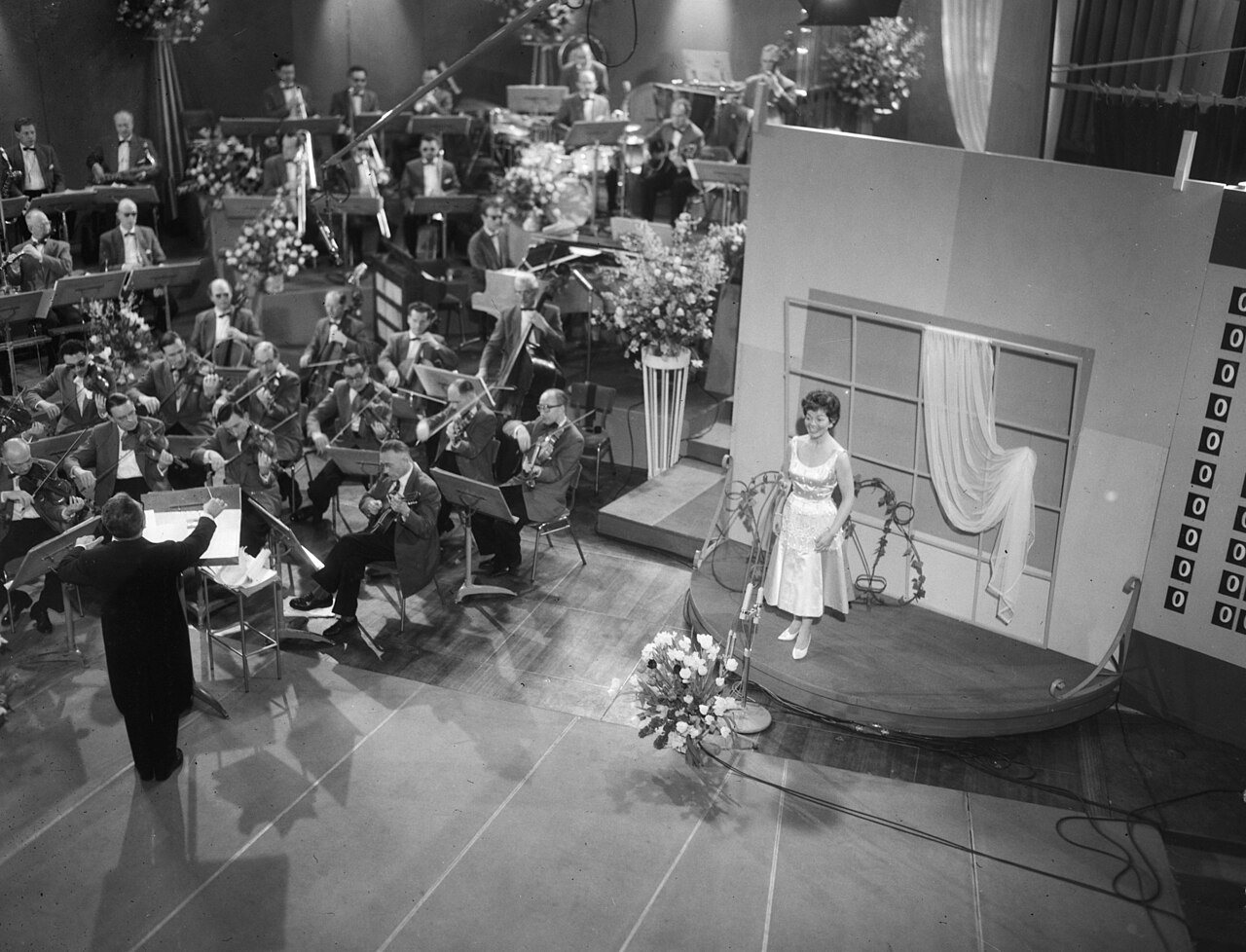
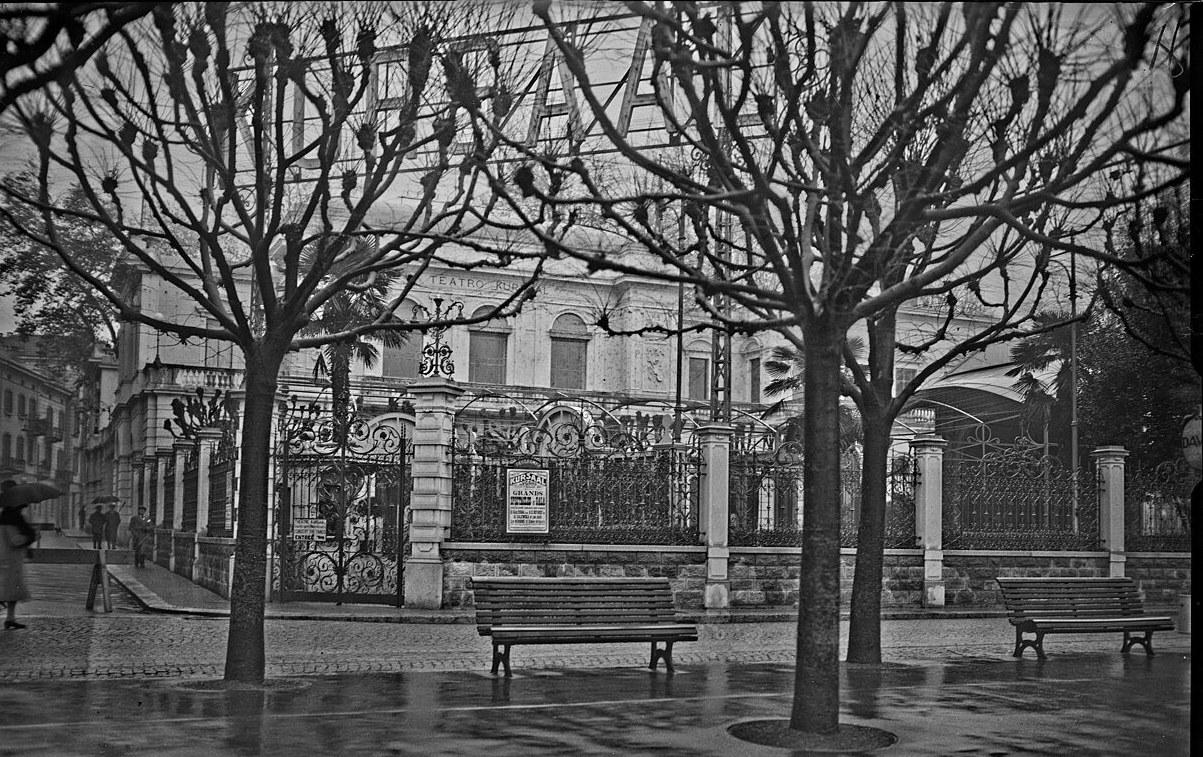
The final was held on 24 May 1956 at the Teatro Kursaal in Lugano, a lakeside casino theatre in Italian-speaking Switzerland. The host was Lohengrin Filipello, and the evening ran about an hour and forty minutes. The audience wore evening dress. The music was mostly ballads and chanson, respectable, orchestral and a long way from the rock and roll that teenagers were buying that year. The Netherlands went first, with Jetty Paerl singing "De vogels van Holland," so the first Eurovision song ever performed was about birds.
It was, above all, a radio programme. Television sets were still expensive and rare in most of Europe, and the staging was built for microphones, with cameras added for the small, well-off audience at home who had them. Several countries carried it with their own commentators.
Because live television was then treated like live theatre, as something that happened once, nobody recorded the pictures. Filming a TV screen was costly and looked dreadful, and there was no obvious reason to keep the result. What survives is a complete audio recording in the Swiss archives, a short silent newsreel, and silent footage of the winner's encore, shot by the photographer Vincenzo Vicari and later matched to the sound. The rest of the broadcast went out over the Alps and was gone.