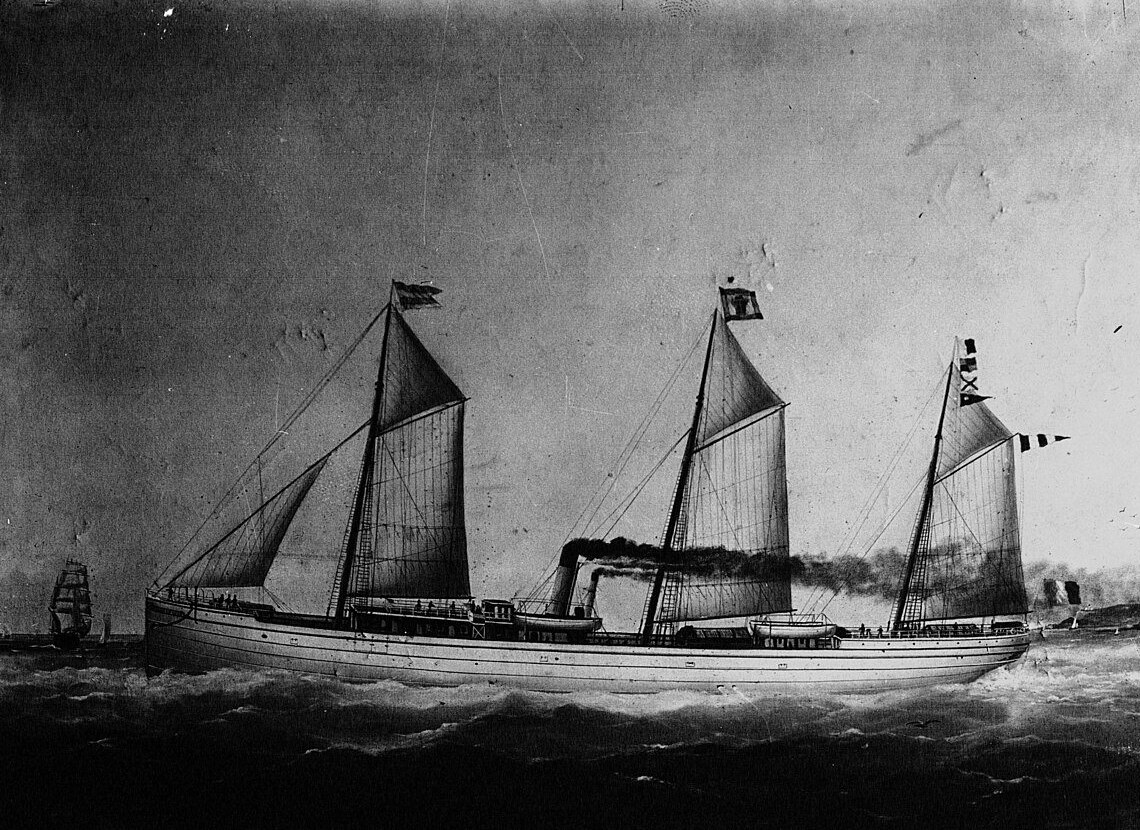
Photo of a painting of Le Frigorifique, Agence Meurisse, public domain, Bibliothèque nationale de France via Wikimedia Commons
Some time in the middle of October, overnight, the refrigeration controllers in about 700 shops across France started raising their own temperatures. Supermarkets, butchers and at least one large blood bank were hit, and food worth millions of euros was thrown away in the morning. On Monday France's national cybersecurity agency, ANSSI, said who it thinks did it: a unit called Shahid Kaveh, which France links to Iran's Revolutionary Guards. Prosecutors in Paris want international arrest warrants. Iran's foreign ministry calls the accusation baseless.
What the hackers went after, the unbroken line of cold that runs from a slaughterhouse to a supermarket shelf, has a French birthplace. It started on a converted cargo ship called Le Frigorifique, and the man who built it spent his last years so poor that a New York newspaper reported his death under the word "starving".
An engineer from Amiens
Charles Tellier was born in Amiens in 1828 and trained as an engineer. In the 1860s, when ice was still cut from lakes or made in small quantities, he started working on machines that could keep a room cold for weeks by evaporating a liquid in a closed loop. He settled on methyl ether as the working fluid and built cold rooms in Paris that held meat for long periods without salting or smoking it. In 1873 he reported his results to the Académie des Sciences.
The commercial problem was obvious to anyone who looked at a map. Argentina and Uruguay had more cattle than people and almost no way to sell the meat abroad except dried, salted, or boiled down for tallow. Europe had expensive meat and a growing city population. Between them lay several weeks of sea, a large part of it in the tropics, and nobody had yet carried fresh meat across the equator and sold it at the other end. On the River Plate, cattle were killed above all for their hides and fat, and much of the meat was either salted into cheap dried beef or simply wasted, a detail I still find hard to picture.
The ship from Rouen
In 1876 Tellier bought a British cargo steamer, the Eboe, of about 690 tons, and fitted her with his machinery and insulated holds. He renamed her Le Frigorifique, which was not subtle, and she sailed from Rouen for the River Plate that autumn with a hold of chilled meat on board (chilled, not frozen: Tellier's method kept it just above freezing).
She reached Buenos Aires on 25 December 1876. What exactly came out of the hold is where the accounts part company. French histories tend to describe a banquet and meat that was still good after more than three months at sea. Argentine writers have been less generous; one recent account in La Nación says the meat did not arrive in good condition. I suspect both are describing the same hold, and that some of it was fine and some was not.
The return trip mattered more, because that was the trade that could make money. Le Frigorifique carried Argentine meat back across the equator to Rouen in 1877. A New Zealand paper, writing up his life in 1913, put the voyage at 104 days and said most of the cargo arrived in good condition. The Parisian public was not impressed. People did not trust meat that had been dead for three months, however cold it had been kept, and the company behind the voyage ran out of money.
Beaten to it by a colder ship
Almost at once, a rival did it better. The Paraguay, using an ammonia machine designed by Ferdinand Carré, froze her cargo hard instead of chilling it. In October 1877 she loaded 5,500 carcasses at San Nicolás on the Paraná and brought them to Le Havre in good condition.
Frozen meat, not chilled, became the trade. Within a few years refrigerated ships were carrying Argentine beef to London and New Zealand lamb around the world, and both countries built a large part of their export trade on it. (This is why some of the warmest obituaries of a French engineer appeared in New Zealand papers, which is not where I expected to find them.)
Tellier had patents, but he spent much of what he had on lawsuits trying to defend them, and he went on inventing things nobody paid him for. By the 1900s he was living in poverty in Paris.
Remembered just in time
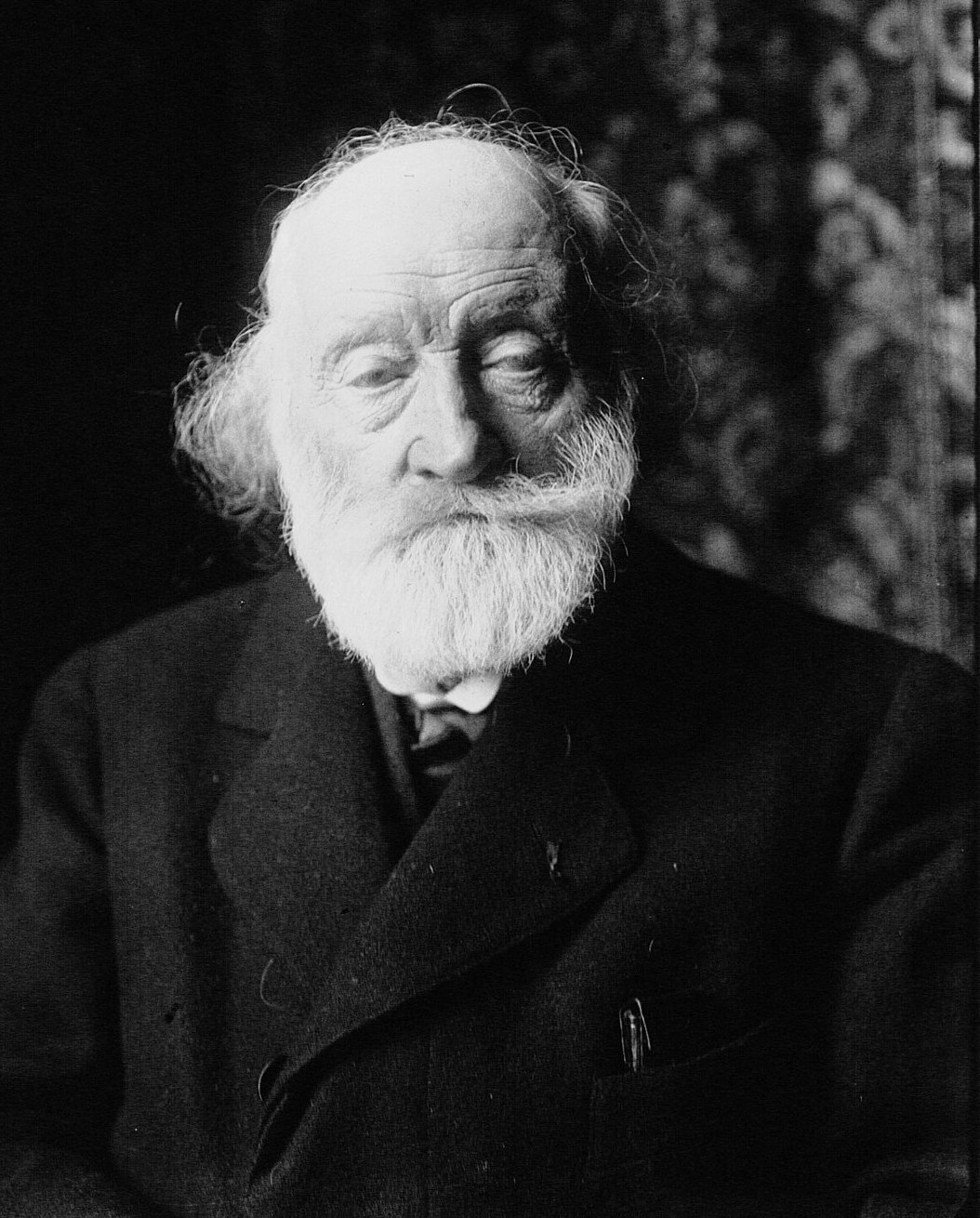
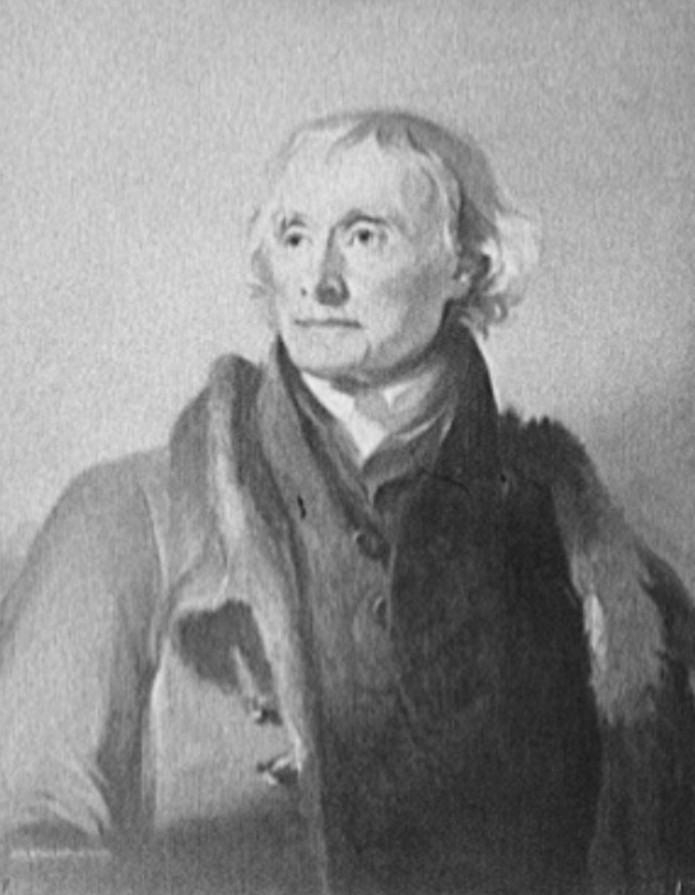
Charles Tellier in old age, with a white beard, in a dark coat. Photo: Agence Meurisse, about 1912, public domain, Bibliothèque nationale de France via Wikimedia Commons
He was rediscovered late. At the first International Congress of Refrigeration in Paris in 1908 he was given an ovation. The Institut de France gave him a prize in 1911, and he was made a knight of the Légion d'honneur in 1912. Argentina, whose beef exports owed something to his ship, sent him money.
Tellier died in Paris on 19 October 1913, aged 85. The next day the New York Times ran the story under the headline "Starving Cold Storage Inventor Dies as Friends Come with $200". That year the city of Buenos Aires renamed a street, calle San Fernando, after him. In 1984 the city changed the name again, to Lisandro de la Torre.
Enjoyed this story?Get a new one every day on social.