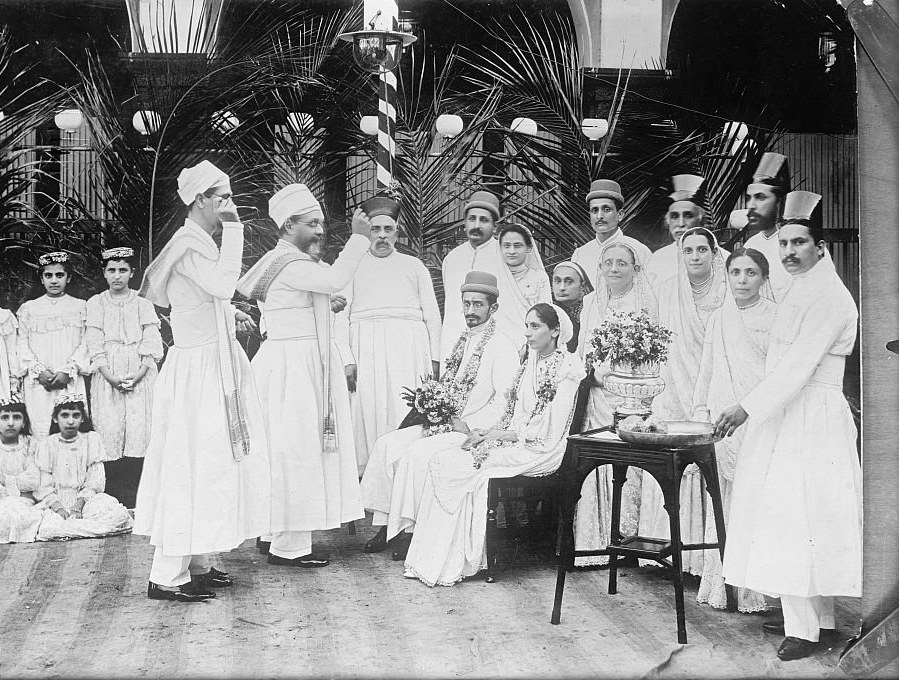
Photo: unknown photographer, between 1909 and 1919, Library of Congress Prints & Photographs Division, no known restrictions
"I regret the incident," Duraimurugan said on Friday. The general secretary of the DMK, one of the most senior figures in Tamil Nadu politics, had just married off his granddaughter, and priests had chanted Sanskrit mantras at the ceremony. He explained that she had studied abroad, was in love with a man from another caste, and had insisted on a Vedic wedding. "I had to accept my granddaughter's wish due to her insistence," he said, and asked that nobody turn it into a political debate.
That request was never going to work. K. Veeramani, who leads the Dravidar Kazhagam, was among the first to criticise him, and the reason a family wedding became a story at all goes back almost a century, to a reformer who thought the priest was the problem.
A movement that started at the wedding
E. V. Ramasamy, known everywhere in Tamil Nadu as Periyar, left the Congress party in 1925 and started what he called the Self-Respect Movement. Its targets were caste and the authority of the Brahmin priests who kept it in place. Plenty of reformers went after temples and schools. Periyar went after the wedding, which was the one ceremony nearly every family performed and the one where caste was most plainly enforced, in who married whom and in who was allowed to officiate.
The first self-respect marriage took place in 1928, and Periyar officiated. There was no priest and no sacred fire, and nobody chanted in Sanskrit. The couple declared in Tamil, in front of witnesses, that they took each other as husband and wife. In some of the early ceremonies there was not even a thali, the gold pendant a Tamil bride traditionally wears; the two simply shook hands. (I find the handshake the most radical detail of the whole thing. It treats the bride as a party to an agreement, which in 1928 was not how most weddings anywhere described her.)
Popular, and not legal
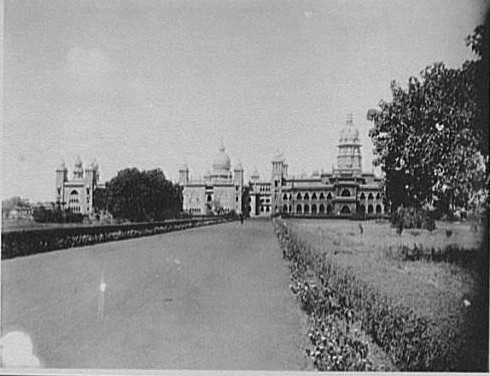
The Madras High Court buildings, photographed by William Henry Jackson in 1895. Library of Congress Prints & Photographs Division, no known restrictions
The weddings caught on, particularly among non-Brahmin castes and couples marrying across caste lines. The trouble was that nobody could say for certain whether they were valid. Hindu marriage law, as the courts read it, required certain rites, and a ceremony built around leaving those rites out was an awkward fit.
In 1953 the Madras High Court gave its answer in a family property dispute, Deivanai Achi v. Chidambaram Chettiar. A man had married under what the judgment called the "self-respecter's cult", and the court held that the marriage was invalid because the essential ceremonies, among them saptapadi, the seven steps around the fire, had not been performed. The movement, the judges said, had not created any binding custom of its own. The children of the marriage were held illegitimate, which mattered a great deal when it came to dividing the family property.
So for decades thousands of Tamil couples who thought of themselves as married were, in the eyes of the law, something less secure than that.
The party that changed the law
By then Periyar's movement had split. In 1949 his closest lieutenant, C. N. Annadurai, walked out of the Dravidar Kazhagam and founded the Dravida Munnetra Kazhagam, the DMK. The immediate cause was Periyar's own marriage that year to Maniammai, a much younger party worker, which many of his followers could not accept. Annadurai took the movement's ideas into electoral politics, and in 1967 the DMK won power in what was then Madras State.
Within months, Annadurai's government fixed the marriage problem. The Hindu Marriage (Madras Amendment) Act of 1967 added a new section, 7-A, to the national Hindu Marriage Act. It made a self-respect marriage valid if the couple declared, in a language they understood, that they took each other as spouses, in front of relatives, friends or other people, and then garlanded each other, put a ring on each other's finger, or tied a thali. The amendment also validated self-respect marriages that had already taken place, which settled the position of a great many families at once.
There is a story, told by the organisers of today's mass self-respect weddings in Chennai, that Annadurai's first draft required the garland or ring "and" the thali, and that Periyar asked him to change the word to "or" so the thali could be left out. I have not seen the draft and cannot confirm it. It sounds exactly like him, though.
Still in the courts in 2023
The law did not end the argument. In 2014 the Madras High Court ruled that marriages performed privately in lawyers' offices were not valid, and in May 2023 a bench in Madurai went further and ordered disciplinary proceedings against advocates who presided over such weddings and issued certificates for them.
The Supreme Court set that aside on 28 August 2023. Justices S. Ravindra Bhat and Aravind Kumar held that a self-respect marriage does not need a public ceremony or a public declaration, and they overruled the 2014 decision. They added that lawyers should not solemnise these marriages in their professional capacity, though they can stand as witnesses as friends or relatives. That was 95 years after the first self-respect wedding, and the courts were still settling the details.
Why one wedding still counts
Inside the DMK, the self-respect wedding is closer to a family custom than a policy. Duraimurugan pointed out on Friday that the party's longtime leader, M. Karunanidhi, had conducted his own wedding and his son's. Senior party figures have presided over the weddings of activists for decades, and a party leader's choice of ceremony is read as a statement whether he means it as one or not.
There is a small irony in this week's version. The granddaughter, by her grandfather's account, was marrying across caste lines, which was precisely the kind of marriage Periyar's movement was built to make possible. She simply wanted the priest as well.
Periyar Thidal, the movement's headquarters in Vepery, Chennai, still hosts self-respect weddings, including an annual mass ceremony called Manral where many couples marry at once. The Periyar Self-Respect Marriage Bureau has worked from there since 1974. On a wedding day the hall looks much like any other Chennai wedding hall: garlands, families, a lot of photographers. The difference is that nobody lights a fire, and there is no priest to chant over one.
Enjoyed this story?Get a new one every day on social.