State Library of Queensland, public domain, via Wikimedia Commons
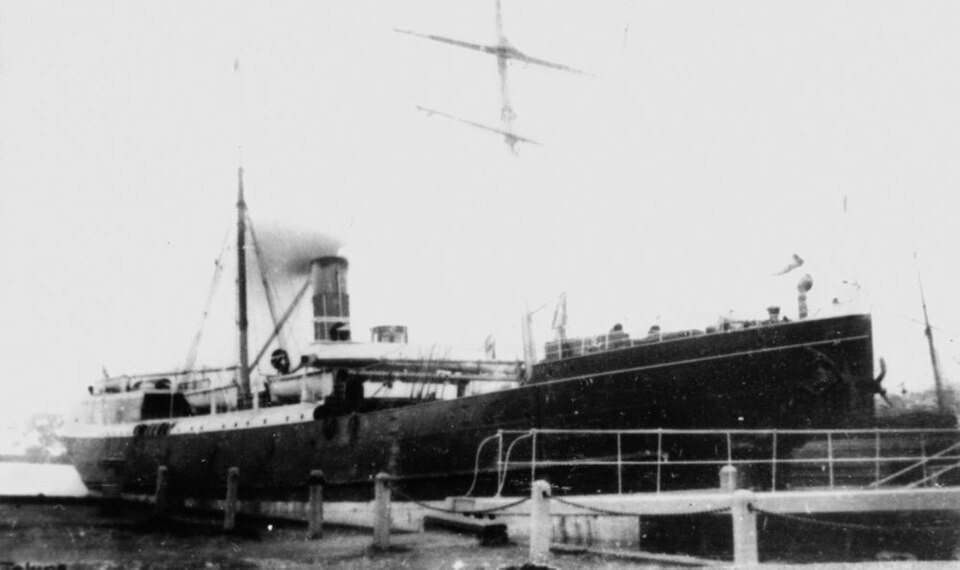
Some time in the first week of November 1918, the acting port health officer at Apia went out to a steamer that had just come in from Auckland, looked over her papers, and gave her pratique. It was the routine bit of paperwork that lets passengers and cargo come ashore, the kind of thing a port officer signed every time a ship called. The ship was the Talune, an old Union Steam Ship Company boat built at Leith in 1890. Six of the people who walked down her gangway were seriously ill.
Within two months about 8,500 people in Western Samoa were dead, more than a fifth of the population. It was one of the worst death rates recorded anywhere in the 1918 influenza pandemic.
What Washington is arguing about
This week the epidemic has a new reason to be remembered. On Wednesday two Democratic senators, Ron Wyden of Oregon and Angela Alsobrooks of Maryland, wrote to Children's Health Defense, the anti-vaccine group that Robert F. Kennedy Jr. used to chair, asking for documents about his 2019 trip to Samoa. Kennedy, now the health secretary, told senators during his confirmation that the visit had "nothing to do with vaccines." In August the Associated Press and the Guardian published a letter he had sent to Samoa's prime minister before the trip, on the group's letterhead, which used the words "vaccine" or "vaccination" eight times. His department calls the suggestion that he misled Congress false and "outright defamatory."
The trip was in June 2019. A few months later measles swept through Samoa and killed 83 people, most of them small children. Whether Kennedy's visit had anything to do with that is the argument, and I am not going to settle it here. But when outsiders start making decisions about Samoan health, Samoans tend to think of 1918 first, and it is worth knowing why.
A missing message from Auckland
The Talune left Auckland on 30 October 1918, when the deadly second wave of influenza was already loose in New Zealand. She was bound for Fiji, Samoa, Tonga and Nauru. Influenza was made a notifiable disease in New Zealand two days before she reached Apia, but nobody sent word to Samoa. Her bill of health said nothing about the epidemic in the port she had come from. According to the inquiry that followed, the captain told sick crew and passengers to keep quiet so the ship would not be held.
Most accounts put her arrival on 7 November (the government's own history site says the 4th, and I have never seen the difference properly explained). She went on to Nuku'alofa, arriving on 12 November, and Tonga lost somewhere between 1,800 and 2,000 people within weeks, roughly a tenth of its population.
Two administrators, two answers
Samoa was then two territories. The western islands, a German colony until 1914, were run by New Zealand under Colonel Robert Logan, a soldier who had taken them at the start of the war. The eastern islands, around Pago Pago, belonged to the United States and were governed by a naval officer, John Martin Poyer.
Poyer had been reading the newspapers. When the news from Auckland reached him, he shut American Samoa to shipping, readied a quarantine station, and asked the Samoan chiefs to post men along the shore to stop boats crossing from Upolu over the reefs. They did, and kept it up. With some changes, the quarantine lasted until 1921, and American Samoa recorded no influenza deaths at all.
Logan did not close the port. Faced with opposition from Apia's traders and no orders from Wellington, he waited for instructions. Once the disease was ashore, Poyer offered help by telegram, and Logan turned it down. The later inquiry heard that he had spoken of Samoans as being "like children," which did not help his case.
How the islands lost a generation
The 1918 virus was unusual in that it killed young adults rather than the very old and very young, and in Samoa it fell hardest on people between about 18 and 50. That meant parents, but it also meant the matai, the chiefs who held family land and titles, and the pastors who ran village life. Accounts from the time describe villages where too few people were left standing to bury the dead, and mass graves were dug at Vaimoso, outside Apia.
A commission was sent from New Zealand in 1919. It blamed the Auckland health authorities for the blank bill of health, the port officer for granting pratique, the captain for hiding his sick, and Logan for a long list of failures. One missionary called the whole affair "a blunder which amounts to a crime." Logan had already left Samoa early that year.
From the epidemic to the Mau
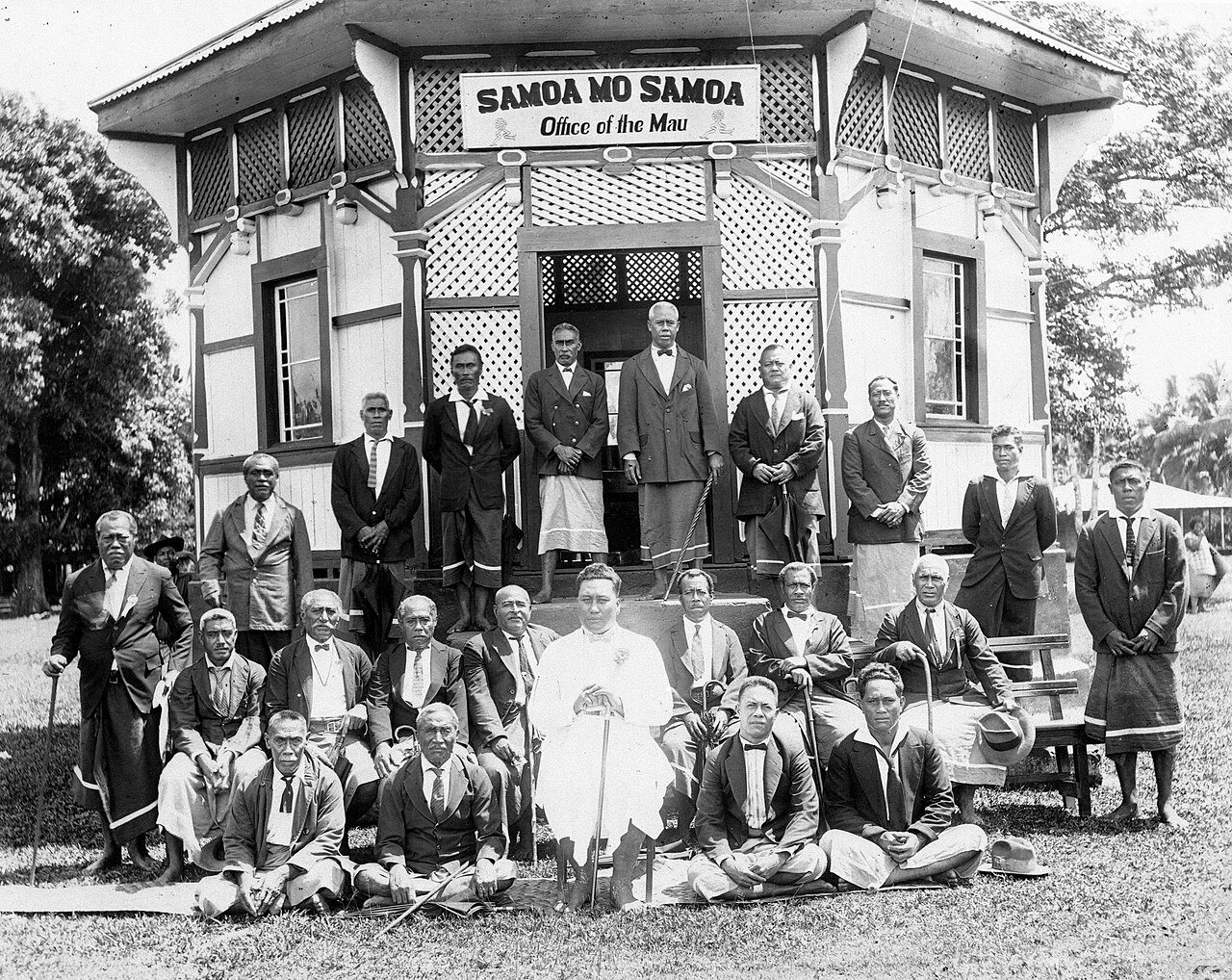
Mau leaders, with Tupua Tamasese Lealofi III seated in white at the centre, outside the Mau office in Apia, 1929. Photo: Alfred John Tattersall, public domain, via Wikimedia Commons
Western Samoa stayed under New Zealand as a League of Nations mandate, and the epidemic sat underneath everything that followed. When the Mau, the Samoan independence movement, petitioned King George V in 1929, the first grievance on its list was the influenza. On 28 December that year New Zealand police fired on a Mau procession in Apia and killed nine Samoans, among them the high chief Tupua Tamasese Lealofi III. Samoa became independent in 1962, the first Pacific island country to do so.
In 2002 New Zealand's prime minister, Helen Clark, apologised formally to Samoa for the injustices of New Zealand's rule, its handling of the epidemic among them. The historian Damon Salesa has said that New Zealand "prefers not to remember" this part of its past, which seems to me a fair description.
Where things stand
The Talune went on working for a couple more years. The Union Company laid her up by 1921, turned her into a hulk, and in November 1925 had her filled with rocks and sunk to make the foundation of a breakwater at Waikokopu, in Hawke Bay. The port has long been closed.
Wyden is expected to chair the Senate Finance Committee, which oversees Kennedy's department, when the new Congress meets in January. In Samoa, the centenary of the epidemic was marked in November 2018 with a public holiday, a national church service, and a new fence around the mass grave at Vaimoso.
Enjoyed this story?Get a new one every day on social.