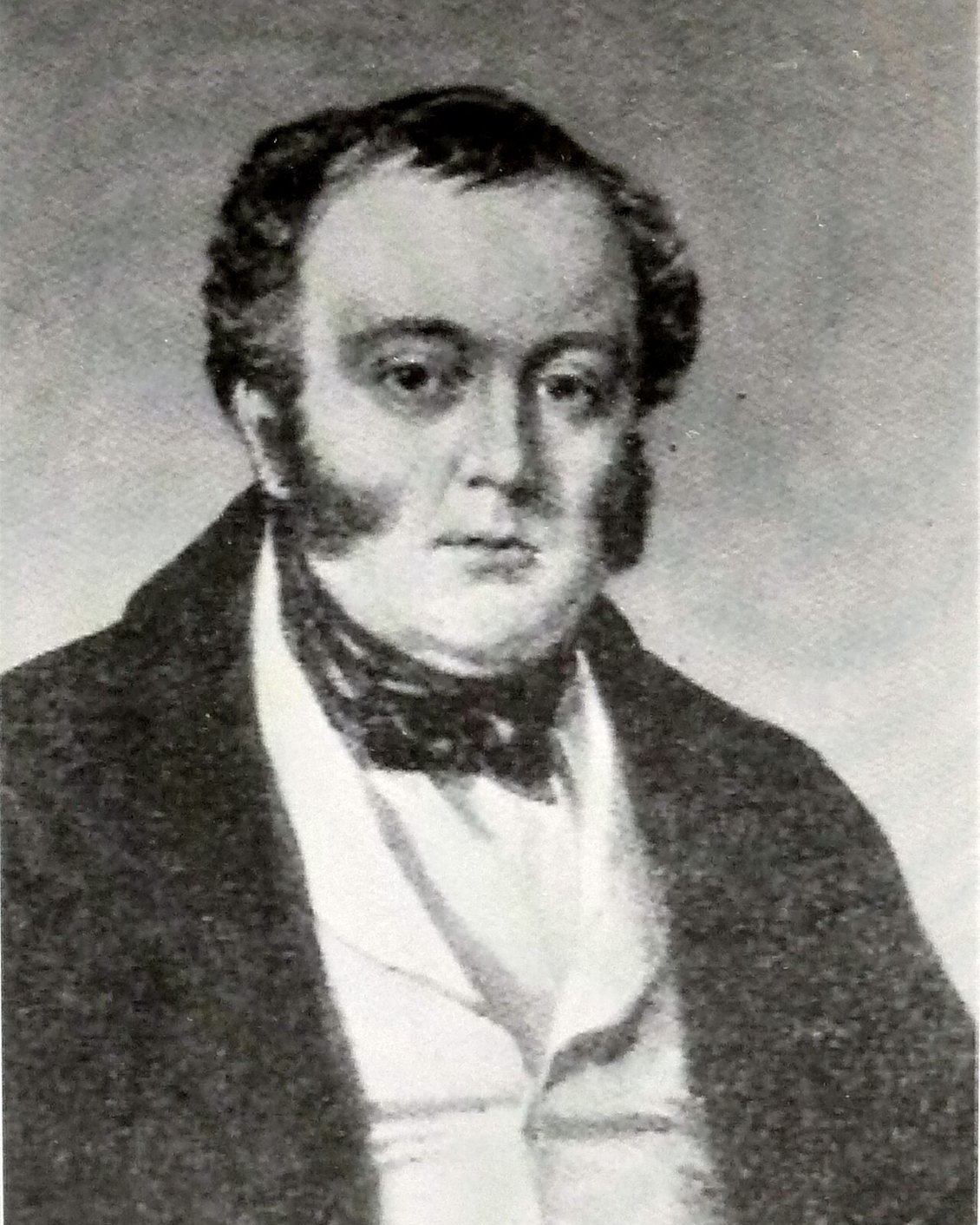
Portrait reproduced by Joseph Tatlow (1851-1929), public domain, via Wikimedia Commons
Thomas Carlyle did not usually waste his anger on businessmen, but in 1850 he made an exception. In one of his Latter-Day Pamphlets, written when a public fund to put up a statue of George Hudson had stalled in embarrassment, he called the former Railway King a "big swollen gambler." Only a few years earlier a good part of Britain's investing middle class had treated Hudson as something close to a wizard.
That is worth keeping in mind this week. On Thursday 19 November the Dow Jones fell 1,101 points and the S&P 500 posted its sixth straight loss, its longest losing run in about two and a half years, as investors worried aloud that the money pouring into artificial intelligence will not come back. The comparison that keeps turning up in the financial press is the British railway mania of the 1840s, and if that boom belonged to any one man, it was Hudson.
A draper with an uncle's fortune
Hudson was born in 1800 in the East Riding of Yorkshire and went to York as a boy to work in a draper's shop. He married into the owner's family and became a partner, which would have been a perfectly respectable life. Then in 1827 a great-uncle, Matthew Bottrill, fell ill, Hudson sat with him, and the old man left him about £30,000. Some people in York thought the bedside attendance had been rather well timed. Nobody ever proved anything.
The money took him into Tory politics (he was Lord Mayor of York in the late 1830s) and into a local bank, and from there into railways. He became the driving force behind the York and North Midland Railway, which opened in 1839 and gave York a connection, via Normanton, to the line to London. He is supposed to have said that he would make all the railways come to York. The line is quoted everywhere and I have never found a contemporary source for it, but it describes what he then did.
Ten thousand miles on paper
Through the early 1840s Hudson bought, leased and merged. In 1844 he put three companies together to form the Midland Railway and became its chairman, and he took control of lines running north towards Newcastle. At his peak he was said to control more than a thousand miles of track, close to a third of the network. In 1845 Sunderland sent him to Parliament.
The mania itself came in 1845 and 1846, when it seemed that any line with a prospectus could raise money. Shares could be bought for a small deposit, with the rest payable later in "calls," so clerks, clergymen and widows took positions far larger than they could afford. Parliament approved more than 260 railway bills in 1846 alone, for something like 9,500 miles of new line. Charlotte Brontë's letters show that she and her sisters held shares in Hudson's York and North Midland, and that Charlotte worried about them more than Emily, who managed the investment, thought she should.
When the Bank of England raised its interest rate in late 1845, the cheap money began to dry up. Railway shares fell through 1846 and collapsed in 1847, and the calls on partly paid shares kept coming in from investors who no longer had the cash.
The committees open the books
Hudson's own fall came in 1849. Shareholders in his companies set up committees of inquiry, and what they found was ugly. Dividends had been paid out of capital rather than profit. Hudson had sold land and iron to companies he chaired at prices that suited him. Shares had moved between accounts in ways nobody could explain. He resigned his chairmanships one after another and agreed to repay large sums.
He kept his seat in the Commons, and that mattered, because a sitting MP could not be arrested for civil debt. Sunderland returned him again in 1852 and 1857. When he lost the seat in 1859 the protection went with it, and he spent most of the next decade abroad, largely in France, living on very little. He came back in 1865 to stand for Whitby and was arrested there by the sheriff and held in York Castle for debt until a friend paid what he owed. He went back to the continent and only settled in London again after imprisonment for debt was abolished in 1870. He died there in December 1871.
Track that outlived the money
The awkward thing about the railway mania, for anyone who wants a simple lesson, is that it built a railway. Most of the authorised mileage was never laid, and a lot of savings disappeared, but Britain's network roughly tripled in length between the early 1840s and 1850, and much of what went down in those years is still in use. The investors lost heavily, and the country kept the lines.
That is roughly the argument now being made for the data centres: whoever ends up owning them, they will still be standing. It is a comforting argument if you are not one of the people holding the shares.
The street in York
York has never quite decided what to do with him. In the 1840s the city named a street after Hudson. After the scandal it was renamed Railway Street, according to the Science Museum, which owns one of the old cast-iron signs. In 1971, a hundred years after his death, the council changed it back to George Hudson Street. So it took York 122 years to forgive him, which is patient even by the standards of a railway shareholder.
Enjoyed this story?Get a new one every day on social.