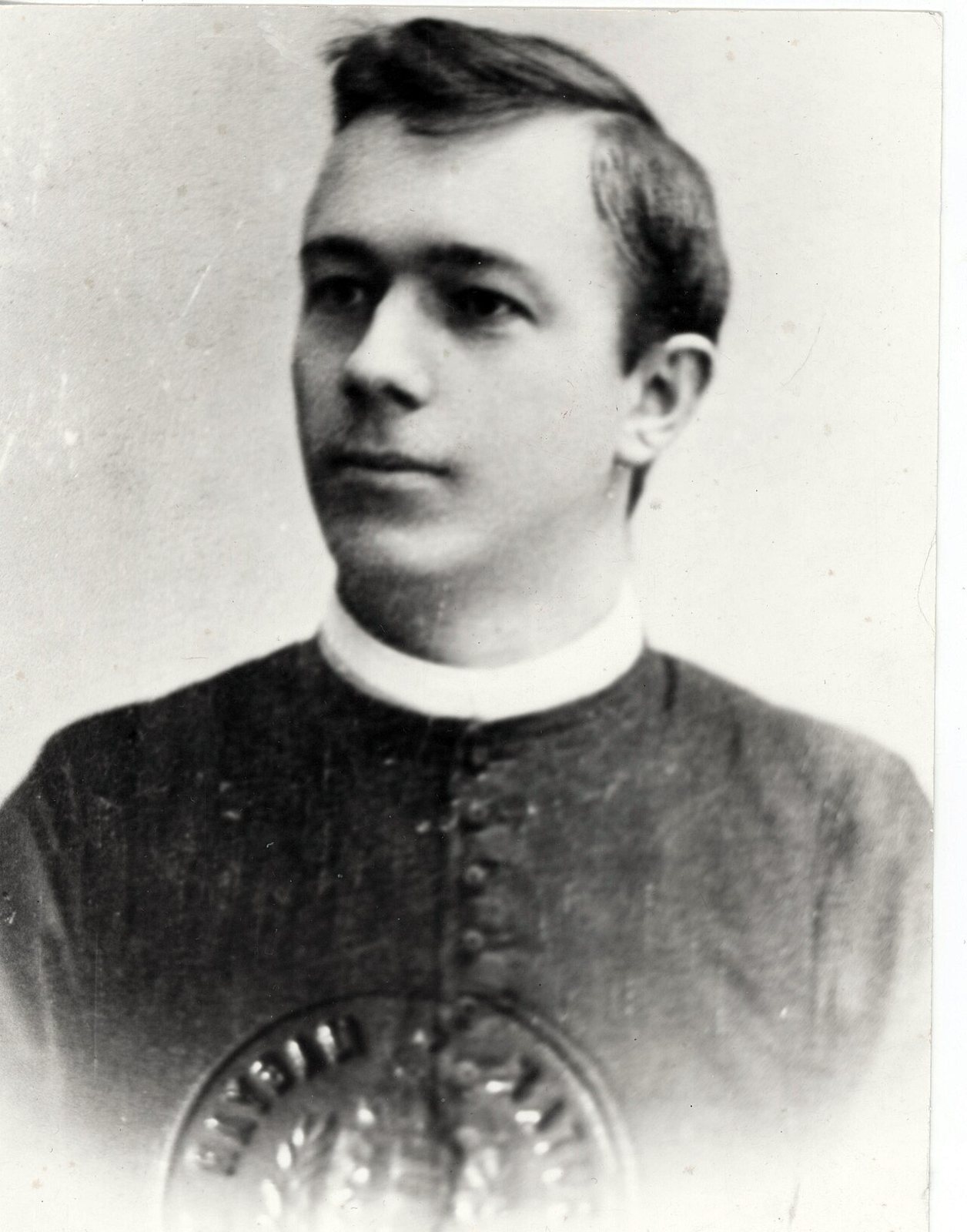
Photo of Avgustyn Voloshyn, photographer unknown, public domain, via Wikimedia Commons
On the afternoon of 15 March 1939, in a school building in the small town of Khust, the deputies of a newly elected parliament, the Soim, voted to declare the independence of Carpatho-Ukraine. They adopted a blue and yellow flag and the anthem that Ukraine still uses. They elected as president a 64-year-old Greek Catholic priest named Avgustyn Voloshyn. Hungarian troops were already moving into the country while they voted.
The region they were declaring free is the one now called Zakarpattia, or Transcarpathia, on the far side of the Carpathians from the rest of Ukraine. It is home to most of Ukraine's ethnic Hungarians, and their rights have been the reason Budapest has held up Ukraine's path into the European Union for years. According to Euronews, Hungary is now set to drop its veto on Ukraine's last two negotiating clusters at a meeting of EU ambassadors on Friday, after Kyiv passed a minority-rights law agreed with Budapest in October.
A province that kept changing countries
For most of the last thousand years this valley country belonged to the Kingdom of Hungary. After the First World War the peacemakers gave it to the new Czechoslovakia, and the Treaty of Trianon in 1920 made it official from Budapest's side. Prague called it Subcarpathian Ruthenia, promised it self-government, and spent most of the next two decades not quite getting round to it. It was the poorest corner of the republic, a place of timber, sheep and emigration to America.
The population was mixed in the way border provinces usually are. Most people were Rusyns or Ukrainians (what to call them was itself a political argument), with large Hungarian, Jewish and Romanian communities. Hungary never accepted the loss.
The priest who ended up in charge
Voloshyn was born in 1874 in the village of Kelechyn. He was a priest, a schoolmaster and a writer of grammars and textbooks, and he ran the teachers' seminary in Uzhhorod for years. He was not a soldier and had little interest in becoming one.
The Munich agreement of September 1938 cracked Czechoslovakia open, and Prague finally granted the province its autonomy. Its first prime minister, Andriy Brody, lasted a few weeks before the Czechoslovak authorities arrested him on suspicion of working for Hungary. Voloshyn replaced him at the end of October 1938.
Within days he lost his capital. On 2 November 1938, in the First Vienna Award, Germany and Italy handed Hungary a strip of southern Czechoslovakia, including Uzhhorod, Mukachevo and Berehove, the region's main towns and much of its Hungarian population. Voloshyn's government moved up the valley to Khust.
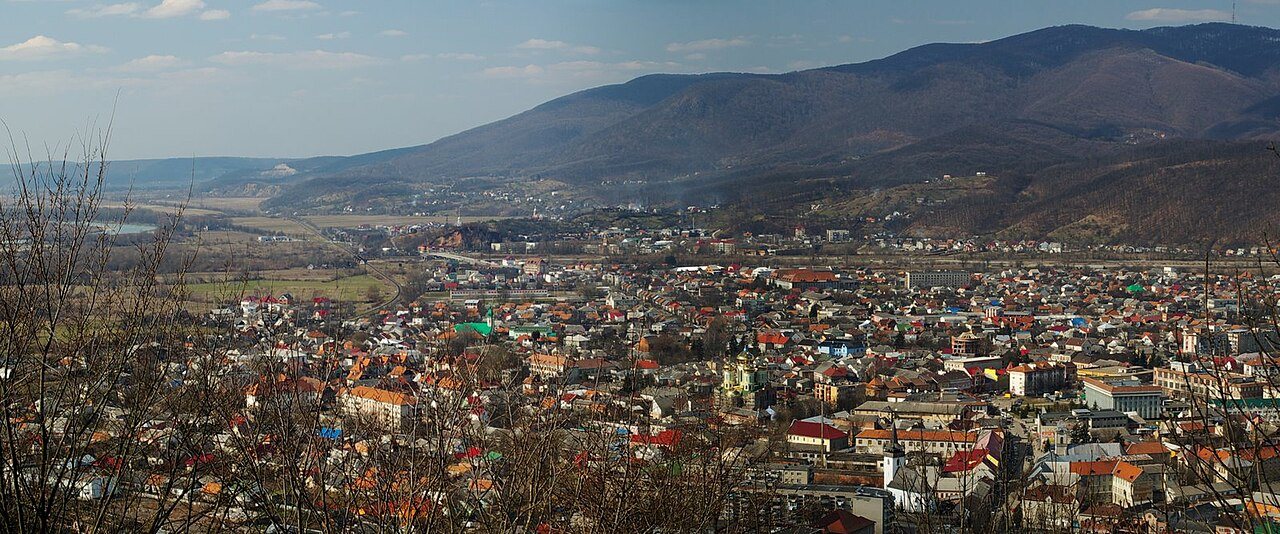
Khust, March 1939
Khust today, the small town that was the capital of Carpatho-Ukraine in 1938 and 1939. Photo: Adan.UA, CC BY-SA 3.0, via Wikimedia Commons
What followed was a very small state trying to look like a real one. A volunteer militia, the Carpathian Sich, drilled in the hills. Elections in February 1939 gave Voloshyn's Ukrainian National Union more than nine-tenths of the vote, which tells you more about the ballot than about the electorate.
It all depended on Berlin, and Berlin had decided to finish off Czechoslovakia. On 14 March Slovakia declared independence under German pressure. Hitler had told Budapest it could take the rest of Ruthenia, and Hungarian forces crossed the line. Voloshyn asked Germany for protection and was told not to resist.
The Soim met anyway on 15 March and proclaimed independence. The same day German troops entered Prague. The Sich and a few Czechoslovak units fought the Hungarian army for a few days, with heavy losses among the young volunteers, and by about 18 March it was over. Voloshyn had already left through Romania.
People call it the one-day republic. That is roughly accurate if you count from the vote to the fall of Khust, and either way it is the shortest-lived state I know of that had its own anthem.
Hungarian, then Soviet, then Ukrainian
Hungary held the province until late 1944, and its Jewish population was deported to Auschwitz in the spring of that year. The Red Army arrived in the autumn. In June 1945 Czechoslovakia signed the region over to the Soviet Union, and it became part of Soviet Ukraine.
That is how a large Hungarian community ended up inside Ukraine without moving anywhere. At Ukraine's 2001 census, the last one it has held, about 150,000 people in Zakarpattia identified as Hungarian, roughly one in eight of the region's population. Many have Hungarian passports as well.
When Ukraine passed its 2017 education law and its 2019 language law to push Ukrainian in schools and public life (aimed mainly at Russian), Budapest took it as an attack on these schools and villages. Under Viktor Orbán that grievance became a standing veto. Péter Magyar's government, in office since the spring, kept the demand but traded it for a deal. According to Euronews, the law that Ukraine's parliament has now passed gives special status to schools where more than half the pupils are taught in a minority language that is also an official EU language, and protects native-language teaching when schools are merged or closed. Ukrainian stays the language of state education, and Russian is left out of the new protections, which nobody in Kyiv will apologise for. The first accession cluster opened in June, a second in July and two more in October; Friday's meeting would clear the last two.
Voloshyn's grave
Voloshyn spent the war in Prague, where he taught and served as rector of the Ukrainian Free University, and stayed when the Red Army arrived in May 1945. Soviet counter-intelligence arrested him within days and took him to Moscow. He died in Butyrka prison in July 1945, aged 71.
Ukraine made him a Hero of Ukraine in 2002, and there is a statue of him in Uzhhorod. Nobody has ever established where the Soviets buried him.
Enjoyed this story?Get a new one every day on social.