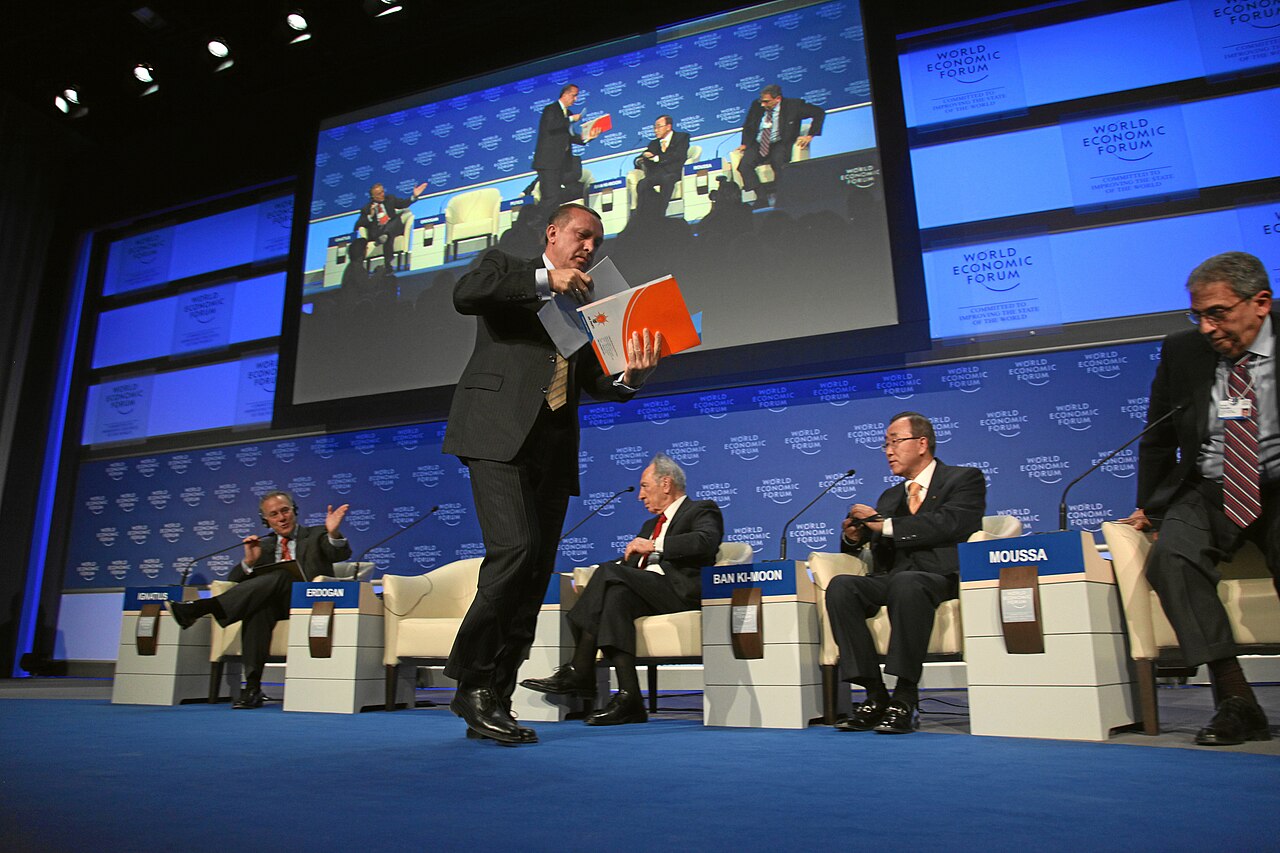
Photo: World Economic Forum, CC BY-SA 2.0, via Wikimedia Commons
Article 101 of the Turkish constitution asks very little of anyone who wants to be president. You must be at least forty, you must be eligible to sit in parliament, and you must have completed higher education. Most years nobody gives the third condition a thought, but this week it settled who can and cannot run in Turkey's next election.
On Thursday, 19 November, Turkey's Council of State, the country's highest administrative court, rejected Ekrem Imamoglu's final appeal over his university degree. Istanbul University cancelled his 1995 business management diploma in March 2025, saying it had been obtained improperly, and police arrested him on corruption charges the next morning. He has been in prison ever since. Without the diploma, he cannot stand in the presidential election expected in 2028, which his Republican People's Party (CHP) had nominated him to fight. He told an earlier hearing he had transferred from a university in Northern Cyprus under the official rules and asked the judges what exactly his fraud was supposed to be. The party calls the whole set of cases political.
The man Imamoglu wanted to beat has been through something like this himself. Recep Tayyip Erdogan was the popular mayor of Istanbul in the 1990s, the politician the people running Ankara worried about most, and a court took him out of the race as well.
A rally in Siirt
In December 1997 Erdogan was 43 and in his fourth year as mayor of Istanbul, elected in 1994 for the Islamist Welfare Party. The army had pushed Welfare's prime minister, Necmettin Erbakan, out of office that summer in what Turks call the postmodern coup, and the Constitutional Court would close the party itself in January 1998. Erdogan was touring the country anyway.
At a rally in Siirt, a city in the south-east, he recited lines from a poem: "The mosques are our barracks, the domes our helmets, the minarets our bayonets and the faithful our soldiers." He attributed them to Ziya Gökalp, the sociologist and poet whose ideas fed straight into Atatürk's nationalism. The attribution is the odd part of the whole affair. Gökalp wrote a poem called "A Soldier's Prayer" in 1912, during the Balkan War, with a similar image of minarets and domes, but the version Erdogan read does not match the published text closely, and people have argued for years about who added what. (I have read three different translations and none of them agrees with the others.)
Ten months for four lines
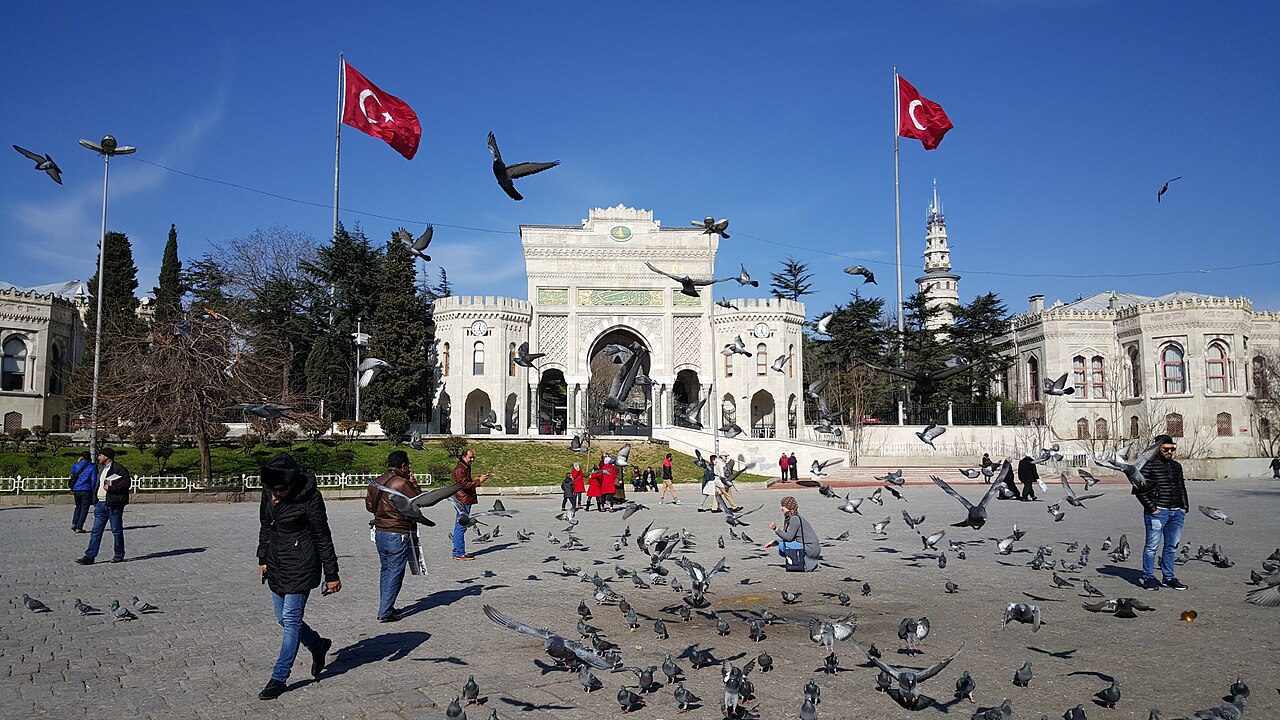
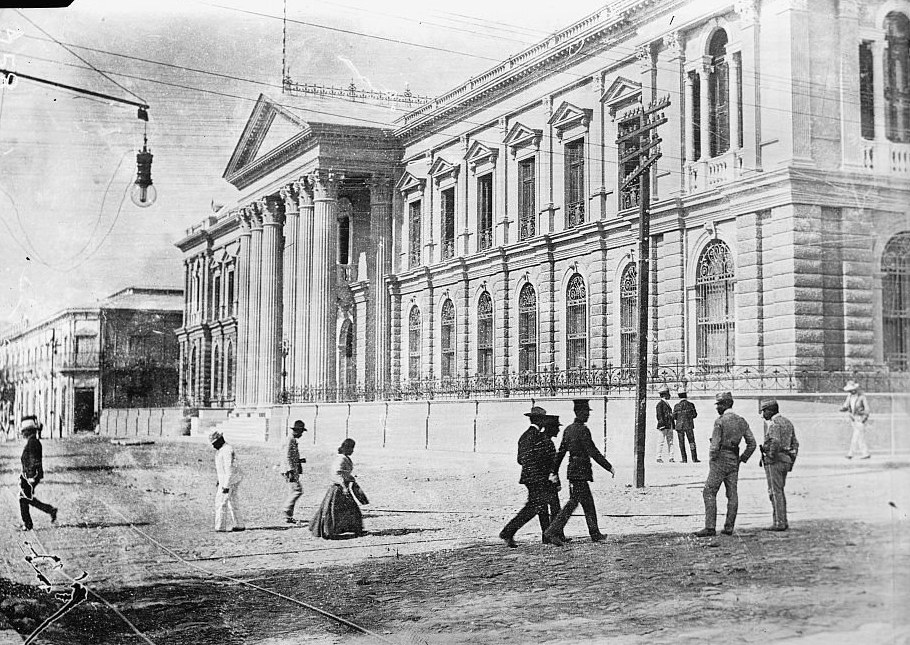
The main gate of Istanbul University on Beyazıt Square, where Imamoglu's degree was issued and later cancelled
Prosecutors charged him under Article 312 of the penal code, which punished incitement to hatred on religious grounds. In April 1998 the State Security Court in Diyarbakır, the special court that handled cases the state considered threats to its order, sentenced him to ten months in prison. The conviction did more damage than the sentence. Under the law of the time, it barred him from holding elected office, which meant he lost the mayoralty and could not stand for parliament.
He went to prison on 26 March 1999, to Pınarhisar in Kırklareli province near the Bulgarian border. On the same day a recording of him reading poems was released under the title "This Song Doesn't End Here", which tells you that someone had thought carefully about the press coverage. He served about four months and came out in July 1999.
A party whose leader could not be prime minister
Out of prison and out of office, Erdogan broke with the old Islamist leadership and founded the Justice and Development Party, the AKP, in August 2001 with Abdullah Gül and others. In the general election of 3 November 2002 it won about 34 percent of the vote and, because so many other parties fell under the ten percent threshold, close to two thirds of the seats in parliament.
Its leader was not one of them. The ban kept Erdogan off the ballot, so Gül became prime minister instead. Parliament then amended the constitution in December 2002 to remove the obstacle, and when the results in Siirt were annulled over irregularities, a fresh election was held there on 9 March 2003. Erdogan won a seat in the city where he had read the poem and became prime minister on 14 March. He has led Turkey ever since, first as prime minister and, from 2014, as president.
The comparison both sides make
Imamoglu's supporters have used Erdogan's own story against him since at least 2022, when a court gave the mayor a prison sentence and a political ban for calling election officials fools. Commentators noticed at once that Erdogan had made his name as a martyr of exactly this kind of case. Opposition rallies quoted "This song doesn't end here" back at him.
The differences matter too, and I would not push the parallel too far. Erdogan was convicted for a speech, under a law that European courts and Turkish liberals had long complained about. Imamoglu has been stopped by a degree, and separately faces more than a hundred charges including corruption, which he denies; prosecutors are seeking a sentence that runs past 2,000 years. Erdogan's conviction came from a secular establishment that distrusted elected Islamists. Imamoglu's came under a government that Erdogan has led for 23 years.
There is also the matter of Erdogan's own diploma. Opposition politicians have claimed for years that his 1981 degree from what is now Marmara University's economics faculty is not what it seems, and the university has repeatedly said it is genuine. No Turkish court has taken those claims up.
Who voted for the amendment
One detail of the 2002 story tends to get left out. When the AKP needed to change the constitution so that its leader could enter parliament, the main opposition party in the new assembly backed the amendment. That party was the CHP, the same one whose candidate the courts have now taken off the 2028 ballot. Its leader then, Deniz Baykal, argued that an elected party's leader ought to be allowed to sit in parliament, which was a reasonable principle and, as it turned out, not one that travels in both directions.
Enjoyed this story?Get a new one every day on social.