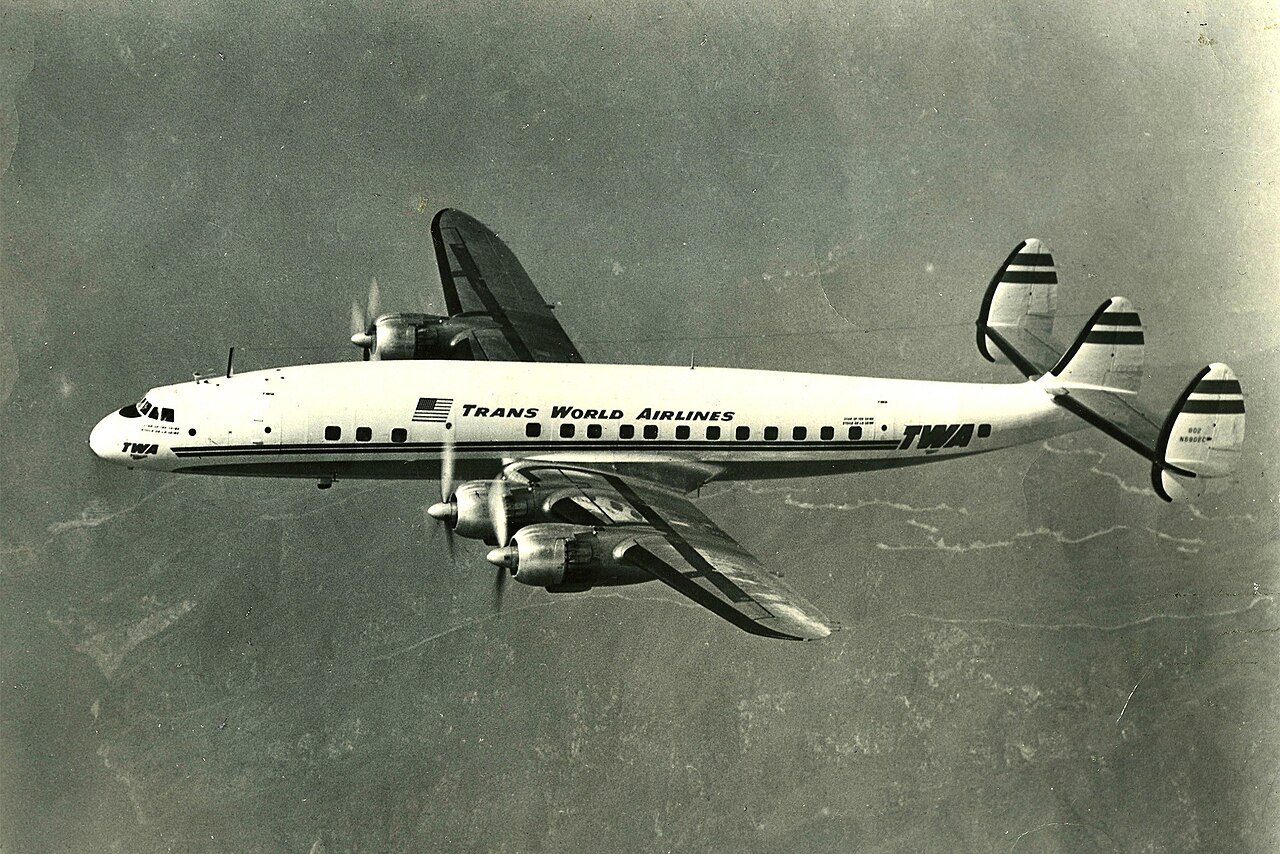
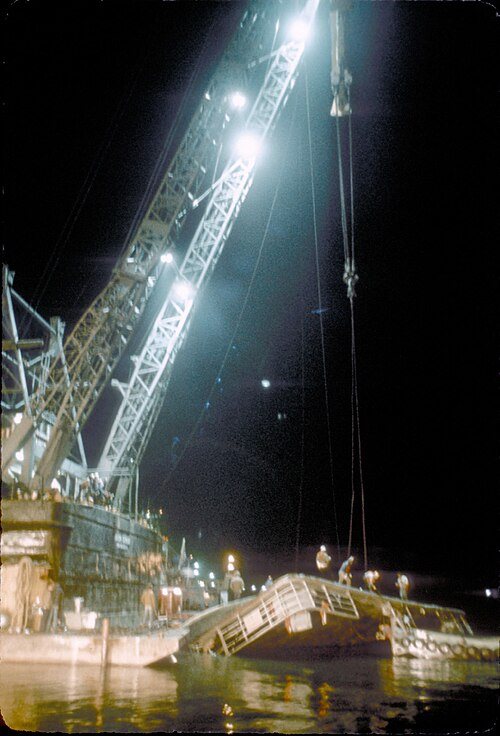
Photo: Trans World Airlines via Jon Proctor, CC BY-SA 3.0, via Wikimedia Commons
For a little over four hours on Friday afternoon, nothing was allowed to take off in American airspace. The Federal Aviation Administration's nationwide ground stop on 13 November led to nearly 8,000 cancellations and more than 10,000 delays, and another 2,500 flights were scrapped on Saturday while the system untangled itself. Transportation Secretary Sean Duffy traced the trouble to a newly installed router at a remote FAA site in southern Arkansas that flooded the network with connection requests. He then asked Congress for $50 billion more for air traffic control, on top of the $12.5 billion already approved.
An argument about worn-out equipment and who pays to replace it is the FAA's oldest argument. The agency exists because of one. In 1956 the agency that ran air traffic control had too little radar and too few controllers, mostly because Congress kept trimming its budget. It took 128 deaths over the Grand Canyon to change that.
Two airliners leave Los Angeles three minutes apart
On the morning of Saturday, 30 June 1956, TWA Flight 2 left Los Angeles at 9:01 for Kansas City. It was a Lockheed Super Constellation called Star of the Seine, with 64 passengers and six crew. Three minutes later United Air Lines Flight 718, a Douglas DC-7 called Mainliner Vancouver, left the same airport for Chicago with 53 passengers and five crew.
TWA was cleared to 19,000 feet. Its captain, Jack Gandy, wanted to climb to 21,000 to get above building thunderheads, but controllers refused: United was already assigned that altitude and they could not guarantee the two planes would be kept apart. So Gandy asked for "1,000 on top," a clearance that let him fly a thousand feet above the cloud deck under visual rules. That was approved. In practice it meant TWA was also at 21,000 feet, outside the airways, where nobody on the ground was responsible for keeping anyone apart. The rule out there was "see and be seen."
The controller did pass on a warning, through TWA's company radio operator: "Advise TWA 2 his traffic is United 718, direct Durango, estimating Needles at 0957." Gandy's crew acknowledged it. Nothing in the rules required more.
"We are going in"
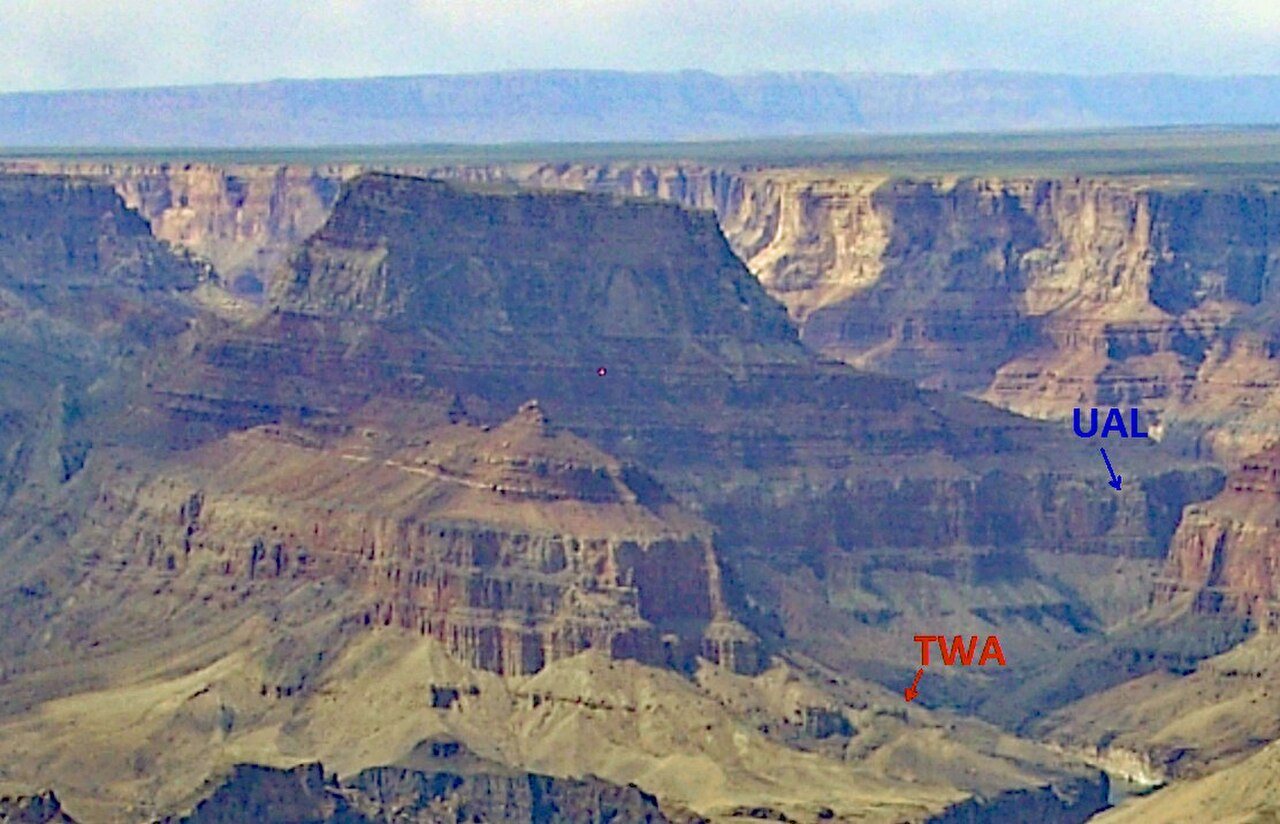
The two aircraft converged over the Grand Canyon at about 10:30 a.m., among towering cloud. Investigators concluded that the DC-7's left wing struck the Constellation's tail. The Constellation went down onto the northeast slope of Temple Butte. The DC-7, badly damaged, hit the cliff of Chuar Butte, near where the Little Colorado meets the Colorado.
United radio operators in Salt Lake City and San Francisco heard a garbled transmission. When investigators slowed the tape, they made out the co-pilot, Robert Harms, saying something close to "Salt Lake, 718 ... we are going in!" with the captain's voice in the background telling the plane to pull up.
Nobody survived. It was the first U.S. airline accident with more than 100 deaths. Two brothers who flew sightseeing tours, Henry and Palen Hudgin, spotted the wreckage that evening. Palen had seen smoke near Temple Butte earlier and assumed it was a lightning fire, which is about what anyone would have assumed.
Recovering the dead from the canyon
The terrain beat the helicopter crews more than once. The airlines eventually hired Swiss mountain rescuers to climb the buttes and bring down what they could. Very few victims could be identified. Twenty-nine of the United dead were buried together at the Grand Canyon Pioneer Cemetery, and sixty-six TWA victims went into a common grave at Flagstaff's Citizens Cemetery.
The Civil Aeronautics Board's report, in April 1957, settled on a dry probable cause: the pilots "did not see each other in time to avoid the collision." Clouds, the cockpit windows, the human eye and the possibility that the crews were showing passengers the view all got a mention. So did "inadequate" en route air traffic advisory information. The controller who had been publicly blamed was cleared.
Money that had been cut, suddenly found
The CAB report was polite. The context was not. Civil aviation was run by the Civil Aeronautics Administration, a branch of the Commerce Department that had been starved for years. Large parts of the country had no radar coverage at all. Controllers tracked airliners by position reports radioed in by the crews, and moved paper strips around a board. The airlines had bought faster, higher-flying planes and the ground had not kept up.
After the Grand Canyon, Congress reversed the budget cuts it had been making. Within months the CAA ordered 23 long-range radar systems for $9 million, the largest single purchase it had ever made. Further collisions, including one in April 1958 between a United DC-7 and an Air Force jet near Las Vegas, kept the pressure on.
The Federal Aviation Act, signed by President Eisenhower in August 1958, abolished the CAA and created an independent Federal Aviation Agency with authority over all American airspace, military flying included. Its first administrator was a retired Air Force general, Elwood "Pete" Quesada. When the Department of Transportation opened in 1967, it became the Federal Aviation Administration inside it, which is the agency Duffy now oversees. (Flight data recorders and onboard collision avoidance can also be traced, in part, back to that morning.)
The same argument, seventy years on
None of this means Friday's outage resembles 1956. No one was hurt, and the ground stop was the system choosing to stop rather than failing silently, which is what it is meant to do. FAA Administrator Bryan Bedford has said the Arkansas router does not fully explain what happened, and the investigation is still open.
What carries over is the shape of the politics. In 1956 Congress found money for radar only after the worst crash in airline history. In 2026 the bill is for fibre, routers and software, and the question in the Capitol is whether it gets paid before something forces the issue or after.
What is left at Temple Butte
Chuar and Temple buttes seen from the South Rim, with the United and TWA crash sites marked. Photo: High Contrast, annotated by Alex Lep, CC BY-SA 3.0, via Wikimedia Commons
Pieces of both airliners are still on the buttes. Recovery crews in 1956 could not reach everything, and later cleanups left fragments of aluminium wedged in the rock. In April 2014 the site was named a National Historic Landmark, the first designated for an event that happened in the air. It has been closed to the public since the 1950s, and the National Park Service keeps it that way.
Enjoyed this story?Get a new one every day on social.