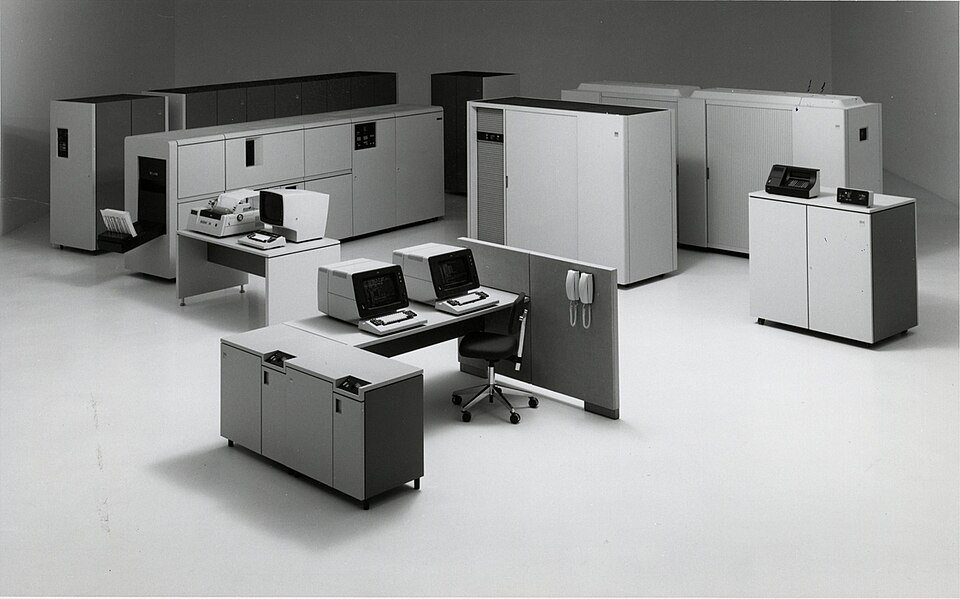
Photo: Norsk Teknisk Museum, CC BY-SA 3.0, via Wikimedia Commons
In a federal courtroom in Brooklyn on Tuesday afternoon, November 24, a jury came back after about four days of deliberation and convicted Huawei on 10 of the 12 counts against it. The Chinese company was found guilty of conspiring to steal trade secrets, of bank fraud, of doing business in Iran and North Korea in breach of US sanctions, and of lying to American officials and banks. The jury acquitted it of the most serious charge, racketeering conspiracy, and of conspiring to obstruct justice.
The trial ran for about 11 weeks. Prosecutors named Cisco, Motorola Solutions, T-Mobile, Quintel and Fujitsu among the victims, with evidence that ranged from copied router source code to a robot arm taken from a T-Mobile lab. Huawei's lawyer, Brian Heberlig, called the racketeering acquittal a "profound rejection" of the government's story and said the company will appeal. Sentencing is set for next September, and the penalties could run to billions of dollars.
American courts have tried a foreign technology giant over stolen secrets before. The first time it made front pages, the defendant was Japanese and the FBI had built the shop it was caught in.
Ten workbooks from Poughkeepsie
In 1981 IBM's crown jewel was the 308X family of mainframes, developed under the code name Adirondack and documented in 27 confidential design workbooks. Hitachi and Mitsubishi Electric built machines that ran IBM software, so knowing how IBM's next generation worked was worth a fortune to them.
According to the account in Marvin Wolf's book The Japanese Conspiracy, which a congressman later read into the Congressional Record, ten of those workbooks walked out of IBM in late 1980 with a former IBM researcher and were photocopied and passed to Hitachi the following summer. (The charges against the two Americans involved were eventually dropped when the government would not produce certain documents, so treat that part as Wolf's version.)
A phone call to Bob Evans
Hitachi's mistake was asking the wrong man for the rest. Kenji Hayashi, a senior Hitachi engineer, approached Maxwell Paley, a San Jose consultant who had spent 21 years at IBM and whose firm got a fifth of its business from Hitachi. Hayashi told him which Adirondack volumes he already had. Paley called IBM's engineering chief, Bob Evans.
IBM handed the matter to Richard Callahan, its security troubleshooter and a former FBI man, and the FBI opened an operation called PENGEM. Its front was a consulting company in San Jose called Glenmar Associates. Callahan played a shady fixer under a false name, and an FBI agent, Alan Garretson, played his partner. Hayashi met them in Las Vegas in November 1981 and began to shop.
About $600,000 for IBM's secrets
Over the next seven months Hitachi paid Glenmar roughly $600,000 for IBM documents, hardware and software. Wolf reports that one software tape cost Hitachi $250,000 even though the package could be bought legitimately for about $100,000, which tells you something about how badly they wanted to be first. The FBI put the figure at $622,000. Mitsubishi Electric officials, caught in a separate strand of the sting, paid $26,000.
On June 22, 1982, FBI agents arrested six Japanese businessmen in California. By Wolf's account, Hayashi and his colleague Isao Ohnishi were among them, picked up at the Glenmar office itself. Warrants went out for a dozen more people in Japan, and the Justice Department said nearly all the defendants were senior employees of Hitachi or Mitsubishi Electric.
The arrests strained relations between Washington and Tokyo for months. Hitachi's answer was to call it entrapment and ask the judge to throw the case out on that ground.
A $10,000 fine and five years of inspections
It never got that far. Hitachi pleaded guilty before the entrapment motions were heard, and on February 8, 1983, Judge Spencer Williams in San Francisco fined the company $10,000. Hayashi was fined $10,000 and Ohnishi $4,000, and nobody went to prison. Nine of the Hitachi people who had gone home to Japan were never extradited.
The real penalty came in a civil settlement with IBM later that year. Hitachi returned everything it held, agreed to name everyone who had offered it IBM secrets, and gave IBM the right to inspect its new computer products before release for five years. It never admitted that IBM secrets ended up in its machines.
Forty-four years later, a different scale
Lay the two cases side by side and the outline is familiar: a foreign champion of a strategic industry, a list of American companies whose secrets it wanted, and cries of a political setup from the other side of the Pacific. The differences are bigger. The Hitachi case was one sting over seven months and a guilty plea. Huawei's indictment stretched over years, folded the trade-secret counts into sanctions and bank-fraud charges, and went to a full jury trial.
The penalties are where the gap really opens. In 1983 the maximum fine for what Hitachi admitted was $10,000, and Congress did not pass the Economic Espionage Act, which made theft of trade secrets a federal crime in its own right, until 1996. Huawei, on the US trade blacklist since 2019, now faces penalties that could run to billions. When Hitachi pleaded guilty, IBM got its inspections and its documents back, and the computers kept selling. Huawei's lawyers are heading for an appeal instead.
The Brooklyn case also ties back to Iran, which Hitachi's never did. The bank-fraud counts grew out of the case against Huawei's chief financial officer, Meng Wanzhou, who was arrested in Canada in 2018 and went home to China in 2021 after the US dropped its case against her.
The Hitachi fines in 1983, for the record, came to $24,000 in total, and Hitachi paid its two engineers' share.
Enjoyed this story?Get a new one every day on social.