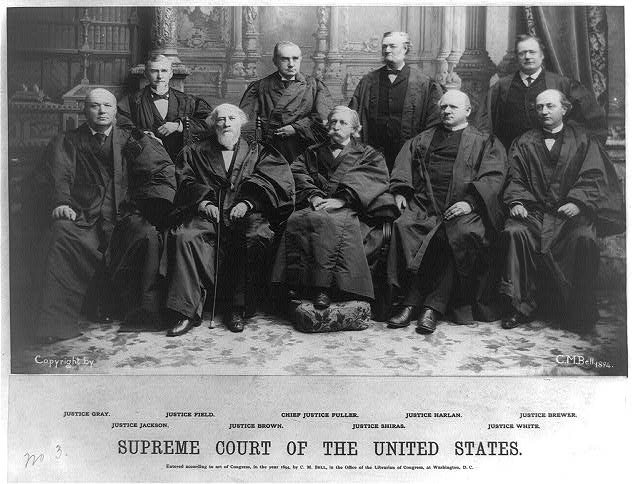
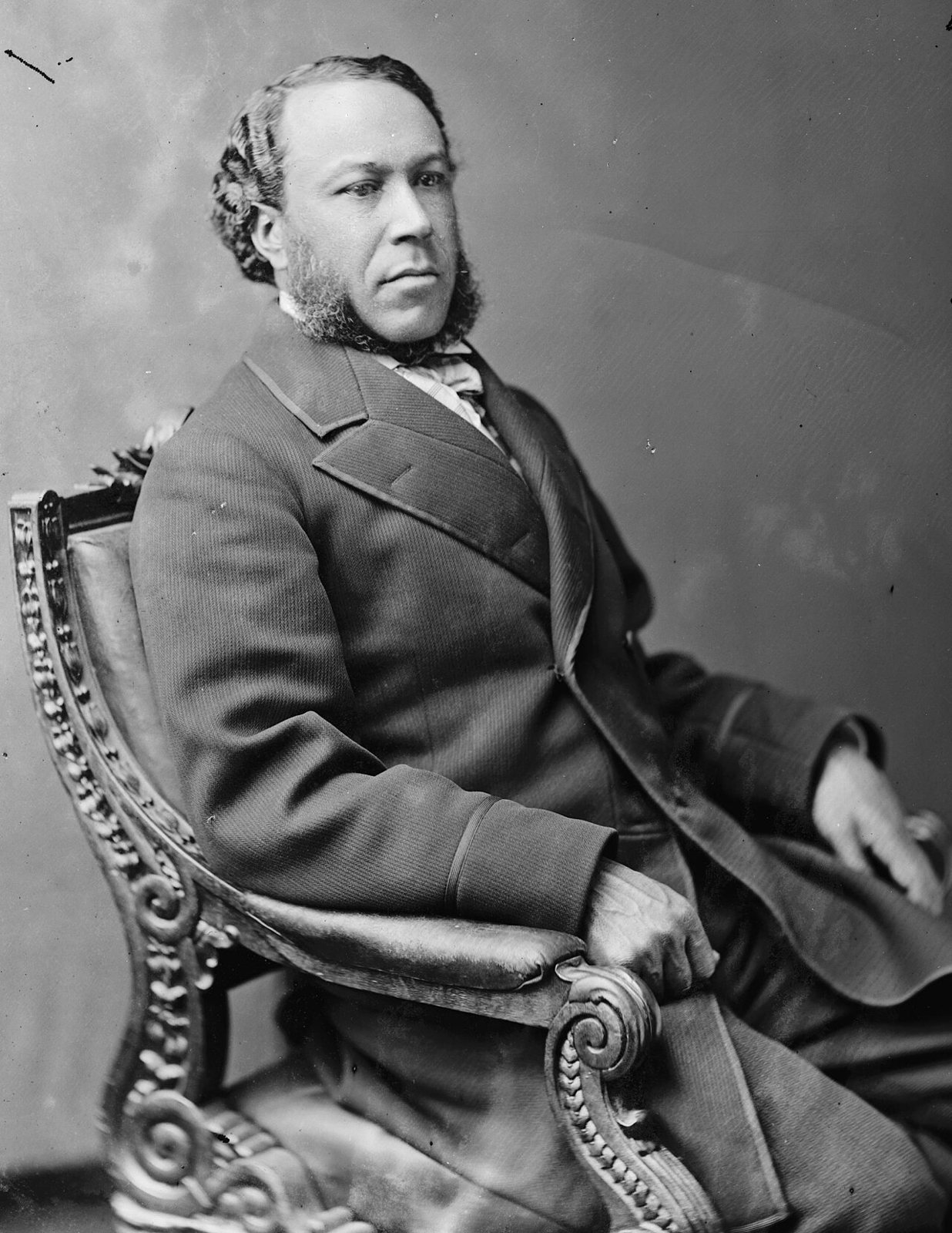
Photo: C. M. Bell, 1894, Library of Congress Prints & Photographs Division, no known restrictions
The rate was 2 percent, and it applied only to income above $4,000 a year, at a time when a skilled worker might earn a few hundred dollars. Congress passed it in August 1894 as part of a tariff bill, and only a small sliver of American households would ever have paid it. Nine months later the Supreme Court struck the whole thing down.
That case, Pollock v. Farmers' Loan and Trust Company, is about to have a busy winter. Over the weekend a summit in Paris, organised by the economist Gabriel Zucman with Thomas Piketty and Joseph Stiglitz, backed a minimum tax of 2 percent a year on billionaires' fortunes. Representative Ro Khanna has said he will push a bill with Senator Bernie Sanders, and the two already filed one in March: a 5 percent annual tax on net worth above $1 billion, which went nowhere in a Republican Congress. Democrats take a large House majority in January. Anyone who wants to tax wealth in the United States runs straight into the ruling of 1895.
A tax the Constitution almost forgot
The problem sits in two short clauses of Article I. Any "direct" tax has to be apportioned among the states by population, so a state with 5 percent of the people pays 5 percent of the bill, whatever its wealth. The framers never defined a direct tax. In 1796, in Hylton v. United States, the justices upheld a federal tax on carriages and suggested, without quite deciding, that direct taxes meant head taxes and taxes on land.
For a century that reading held. The Union paid for the Civil War partly with an income tax, first passed in 1861 and allowed to lapse in 1872. When a lawyer named William Springer challenged it, the Court said in 1881 that it was not a direct tax at all. So when Populists and Southern and Western Democrats pushed a new income tax in 1894, they had precedent on their side. Grover Cleveland disliked the tariff bill it rode in on so much that he let it become law without his signature.
A friendly lawsuit
The challenge came from New York. Charles Pollock owned shares in the Farmers' Loan and Trust Company and sued to stop the company paying the tax, a convenient way of getting the question to court quickly. His side hired Joseph Choate, one of the best-known courtroom lawyers in the country, who told the justices the tax was communistic in its purposes. (Choate was never a man to understate.)
On 8 April 1895 the Court gave half an answer. A tax on income from land, it held, was really a tax on the land itself, and therefore direct, and therefore void unless apportioned. On the rest of the law the eight justices present split four to four. The ninth, Howell Jackson, was at home in Tennessee dying of tuberculosis.
The vote that changed
The Court agreed to hear the case again, and Jackson travelled to Washington for it. Everyone assumed he would decide the matter, and he did vote to uphold the tax. It made no difference. On 20 May the Court struck down the entire income tax, five to four, which means one justice who had been on the tax's side in April had changed his mind. Historians have argued about which one ever since. George Shiras was blamed for decades; some later scholars think it was Horace Gray. The record does not say, and I doubt it ever will.
Chief Justice Melville Fuller wrote that a tax on the income from property was a tax on the property, so the new law was direct and unapportioned. Justice Stephen Field went further in a concurrence that is still quoted, warning that "the present assault upon capital is but the beginning" and would lead to "a war of the poor against the rich." Justice John Marshall Harlan's dissent was just as fierce from the other side. Jackson died that August.
Eighteen years to undo it
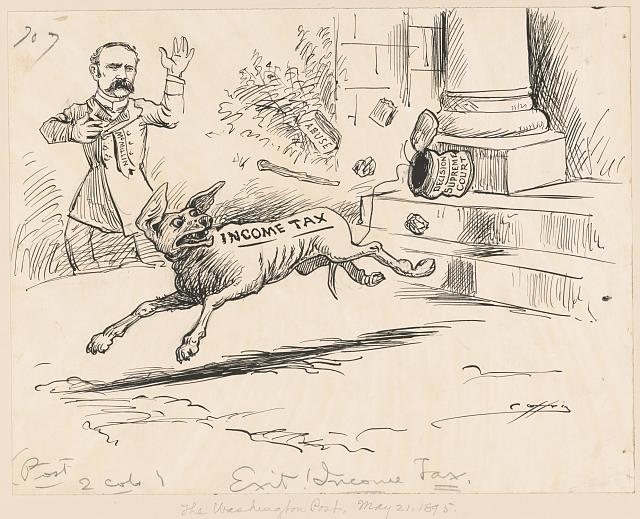
Cartoon by George Y. Coffin for The Washington Post, 21 May 1895: a dog labelled Income Tax flees with a can marked Decision Supreme Court tied to its tail. Library of Congress, no known restrictions
The answer to Pollock was a constitutional amendment, which is about the slowest tool American politics has. The Sixteenth Amendment, ratified on 3 February 1913, lets Congress tax "incomes, from whatever source derived, without apportionment among the several States." The modern income tax followed within months.
The amendment says incomes. It does not mention wealth. A tax on a billionaire's holdings, charged every year whether or not anything is sold, is the closest thing in modern politics to the kind of tax Fuller's Court called direct. Apportioning it by population would be absurd, since billionaires are not spread evenly across the states, and that is the point of the objection. In 2024, in Moore v. United States, the Court upheld a one-time tax on American shareholders' foreign profits but went out of its way not to decide whether income has to be realized before it can be taxed. Justices Clarence Thomas and Neil Gorsuch said it does. That is exactly the question a wealth tax would raise, and the Court left it for another day.
The Paris figure of 2 percent happens to match the 1894 rate, which I doubt anyone in Paris planned. My own view is that whatever Congress does with it in 2027, the decision that matters will be made, as in 1895, by nine people and possibly by one of them changing his or her mind.
Enjoyed this story?Get a new one every day on social.