Klobuchar Picks Her Successor. A Minnesota Governor Once Picked Himself
By Priya Raman · November 21, 2026 · 4 min read
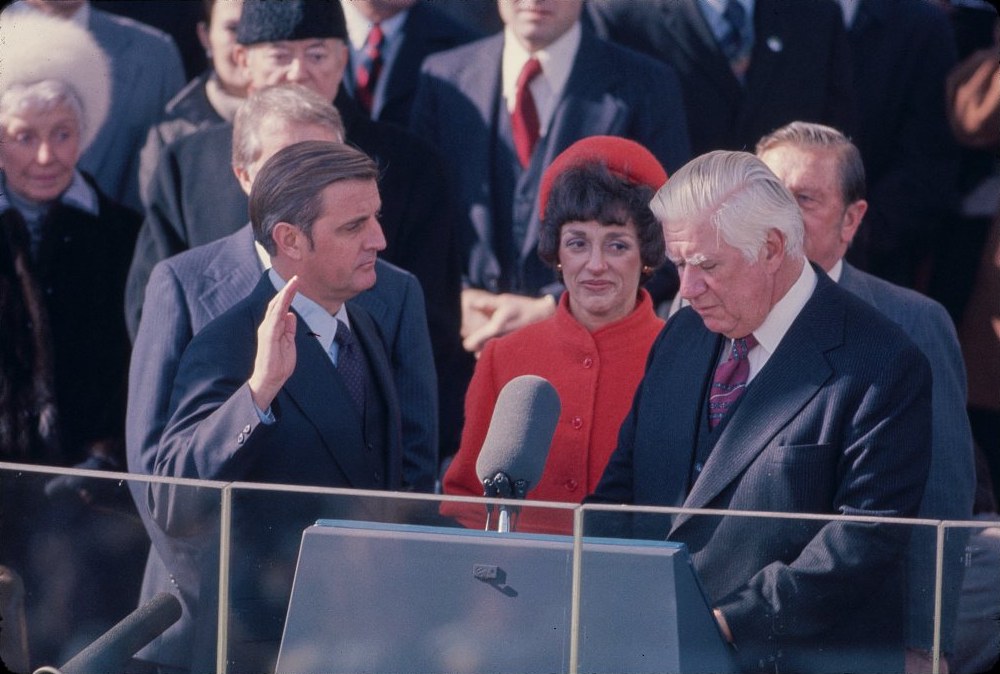
Colour photograph of Walter Mondale raising his right hand to take the vice-presidential oath from House Speaker Tip O'Neill on 20 January 1977, with Joan Mondale beside them
Photo: Bernard Gotfryd, January 1977, Library of Congress Prints & Photographs Division, no known restrictions

In August 1973 the governor of Minnesota appeared on the cover of Time magazine holding up a fish. Wendell Anderson was 40, a St. Paul boy who had played defence on the American hockey team that won silver at the 1956 Winter Olympics, and the cover line was "The Good Life in Minnesota." The next year he was re-elected with nearly 63 percent of the vote and carried all 87 of the state's counties.

Four years after that he carried three.

What happened in between is worth a few minutes of Amy Klobuchar's time. Klobuchar, Minnesota's senior senator, was elected governor on 3 November and is due to be sworn in on 4 January, the first woman to hold the job. State law lets the governor fill a Senate vacancy until a special election, which in her case falls in November 2027. So one of her first acts will be to choose her own replacement. In Tennessee, Marsha Blackburn is in the same position after winning that state's governorship. Klobuchar has called the appointment "an interim position" and said only that she will be "very careful in that decision."

The vacancy Mondale left
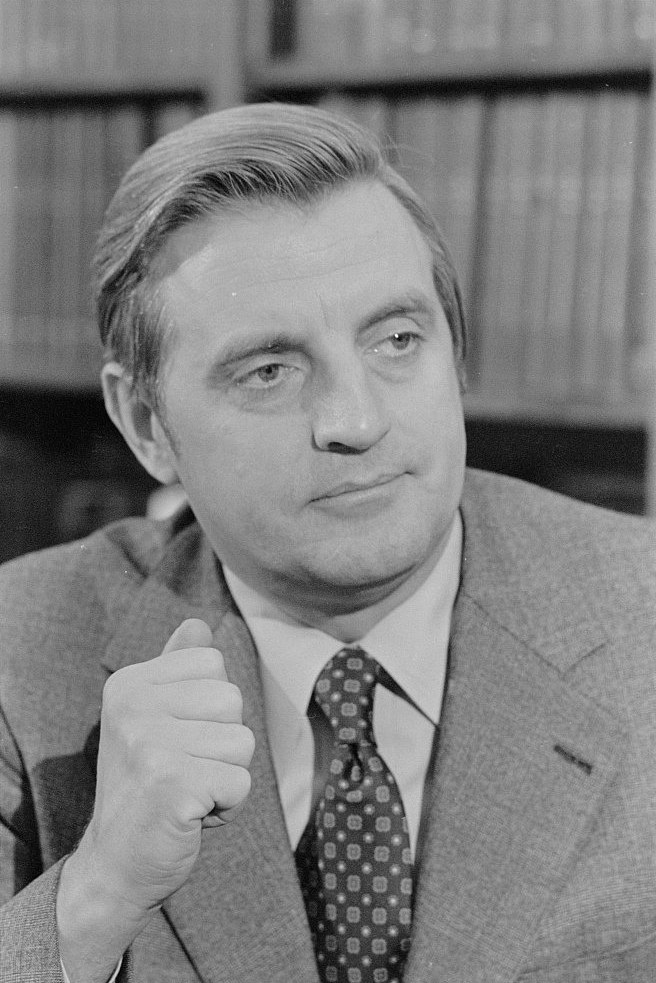
Vice President-elect Walter Mondale photographed in January 1977 by Warren K. Leffler. Library of Congress, no known restrictions

In November 1976 Jimmy Carter won the presidency with Minnesota's other senator, Walter Mondale, as his running mate. Mondale had to give up his Senate seat before taking the vice-presidential oath in January, and the governor would appoint the replacement.

Anderson wanted the seat. The way he got it was simple and, as it turned out, ruinous. On 29 December 1976 he resigned as governor. His lieutenant governor, Rudy Perpich, became governor and appointed Anderson to the Senate, where his term began the next day. The Star Tribune later described it as Anderson having "essentially appointed himself," which is the phrase everybody in Minnesota used then too.

The Minnesota massacre
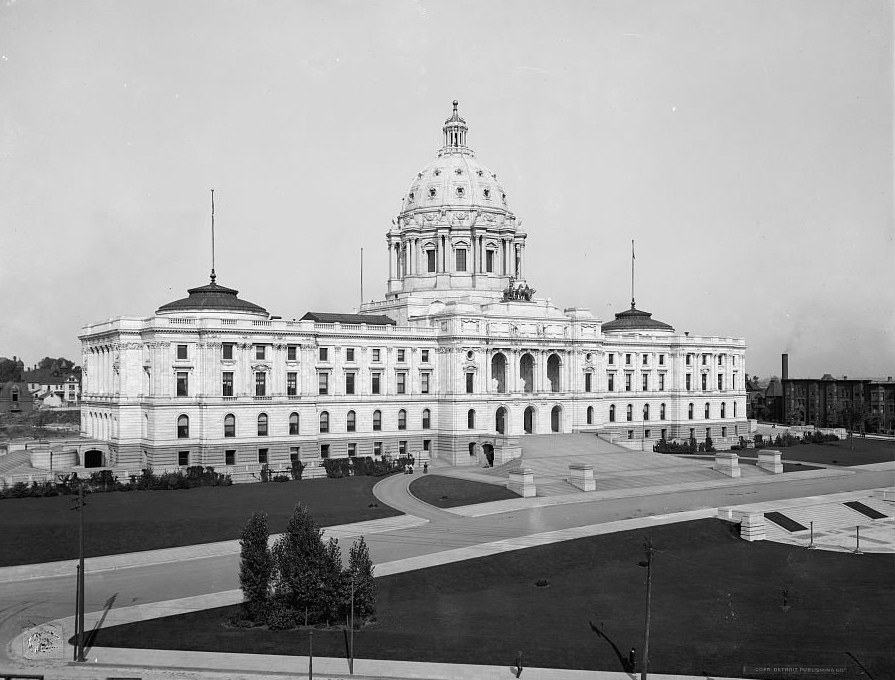
The Minnesota State Capitol in St. Paul, photographed by the Detroit Publishing Company around 1908. Library of Congress, no known restrictions

Things got worse for the Democratic-Farmer-Labor Party in January 1978, when Hubert Humphrey died. Perpich appointed Humphrey's widow, Muriel, to his seat, and she decided not to run for it. That November both of Minnesota's Senate seats and the governorship were on the ballot at once.

The DFL lost all three. The Republican businessman Rudy Boschwitz beat Anderson by more than 250,000 votes. David Durenberger took the Humphrey seat by more than 400,000. Perpich lost the governorship to Al Quie. The party also lost dozens of seats in the state House, which ended up tied at 67 apiece. Minnesotans still call it the Minnesota Massacre.

Not all of that was the self-appointment. Carter was unpopular, inflation and interest rates were high, and the DFL was divided. But people who were there tend to put the Anderson deal near the top of the list, and so, in later years, did Anderson. He resigned his seat a few days early in December 1978 so that Boschwitz could start with a little extra seniority, which was decent of him.
Nine governors, one survivor

Anderson was not the first governor to try this. The Seventeenth Amendment, ratified in 1913, gave Senate elections to voters and let states allow their governors to make temporary appointments, and governors noticed almost at once that the person they knew best for the job was themselves. NPR once counted nine who had arranged their own appointment, in Montana, Kentucky, Nevada, Idaho, Wyoming, New Mexico, Oklahoma, South Carolina and Minnesota, between 1933 and 1976.

Eight of the nine lost their next race, most of them in their own party's primary. The exception was Happy Chandler of Kentucky, who had himself appointed in 1939 and then won the seat outright in 1940 and again in 1942. (He later became commissioner of baseball, which suggests he was a very unusual politician.)

Two senators choosing their successors

Appointees chosen by somebody else have a mixed record, though Minnesota's latest is a good one. Tina Smith, appointed by Governor Mark Dayton in 2018 after Al Franken resigned, won the special election that year and a full term in 2020, and is retiring when her term ends in January.

Tennessee's version of the question has more names in it. Blackburn, who is due to be sworn in on 16 January, told Fox News this month that she had no short list. Glenn Jacobs, the former Knox County mayor better known to wrestling fans as Kane, has said the job would be a "huge honor." Representative Tim Burchett has said he "absolutely" wants it, and that he will run for the seat in 2028 if Blackburn picks someone else. Her appointee will serve until a special election that year.

Neither of them is doing what Anderson did. They are leaving the Senate rather than climbing into it, and the voters will get their say on the replacement within a year or two either way. Klobuchar has not named anyone. Tim Walz, the outgoing governor, has said he would "rather eat glass" than take it.

See more of us on GoogleAdd History All Day as a preferred source and our stories can show up more often for you in Top Stories.