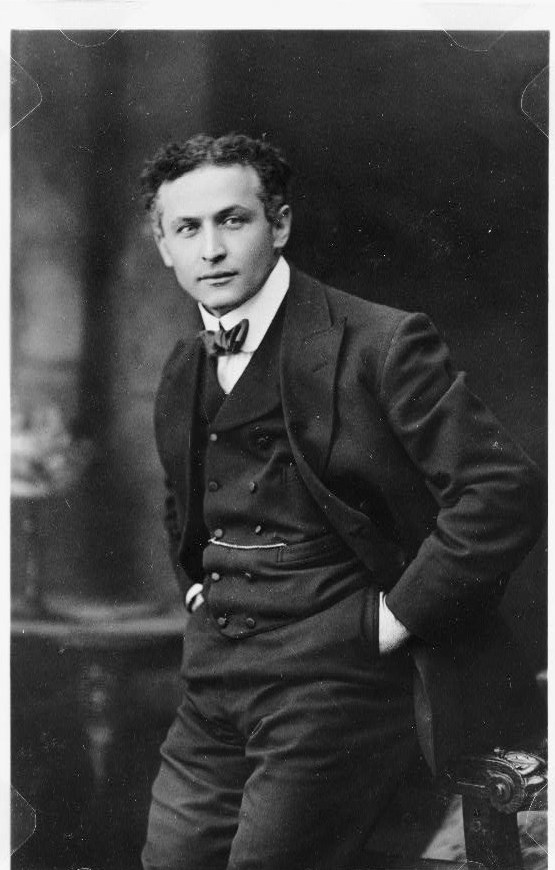
Photo: Campbell-Gray Ltd, about 1913, Library of Congress Prints and Photographs Division, no known restrictions
Detroit is throwing Houdini a party next Saturday. The Detroit Historical Museum has a night of vaudeville stages, sideshow curiosities and magic acts booked for Halloween, and London's Magic Circle is staging a centenary show at the Hippodrome on Monday, in the building where Houdini once performed. There are new books and a documentary. All of it dates from one week in October 1926, and that week began tonight, a hundred years ago, in a theatre that no longer exists.
Harry Houdini had played Detroit nineteen times since 1894, by the Detroit Historical Society's count. The twentieth engagement opened on Sunday 24 October 1926 at the Garrick Theatre on Griswold Street. He should have been in a hospital bed.
The couch in Montreal
The trouble had started two weeks earlier in Albany, where Houdini broke a bone in his left ankle while being hoisted into the Water Torture Cell. He kept performing on it, with a brace. By 22 October he was in Montreal, playing the Princess Theatre and lecturing at McGill University against the spiritualist mediums he had spent the past few years exposing.
That afternoon a group of McGill students visited his dressing room. One of them, J. Gordon Whitehead, asked whether it was true that Houdini could take any punch to the stomach. Accounts differ on exactly what was said next, but they agree on what happened: Houdini, half-reclining on a couch because of the ankle, nodded, and Whitehead hit him several times in the abdomen before he could stand and tighten his muscles. Houdini stopped him, said he had not been ready, and went on with his day. The students who were there described him wincing through the evening performance.
Whether the punches caused what followed is the part historians still argue about. Appendicitis is not normally caused by a blow. The likeliest reading is that Houdini already had an inflamed appendix and the bruising from the punches hid its pain for the few days that mattered. A man who had built a career on ignoring his body ignored this too. (He was still telling people he was fine when the appendix burst.)
104 degrees
He took the train to Detroit on the night of the 23rd, in enough pain that the company wired ahead for a doctor. The doctor who examined him on arrival took his temperature, found it somewhere around 104, and told him he had acute appendicitis and needed surgery immediately. Houdini said there was a full house waiting at the Garrick, and went to the theatre.
What he did that night is a matter of record from people who stood in the wings. He got through the first act, lay on a couch during the interval and had to be helped back up, and got through the second with his assistants doing more of the work than usual. He finished the third act, the magic portion, took his bow and collapsed as the curtain came down.
Even then he refused the hospital. He went back to his hotel, the Statler, and spent the night awake with Bess, his wife, who was ill herself. Only at three in the morning did a doctor persuade him, and it was later still, on the 25th, that he was admitted to Grace Hospital. Surgeons removed the appendix that afternoon. It had already ruptured, and peritonitis had set in. In 1926, with no antibiotics, that was close to a death sentence, and everyone in the room knew it.
Room 401
He held on for six days. A second operation on the 29th did not help. His brother Theo, who performed as Hardeen, was at the bedside, and so was Bess. Near the end, by Hardeen's account, Houdini said he was tired of fighting, which for him was an extraordinary thing to say. He died at 1:26 in the afternoon on Sunday 31 October, Halloween, in room 401. He was fifty-two.
The timing did the rest. The most famous escape artist in the world had died on the one night of the year given over to ghosts, and the newspapers did not fail to notice. The following year the Society of American Magicians named 31 October National Magic Day in his memory, and it is still on the calendar.
His body went back to New York in the bronze coffin he had bought for a buried-alive stunt and had, as it happened, taken on tour with him. Two thousand people came to the funeral. He is buried at Machpelah Cemetery in Queens under a monument he designed himself.
The insurance company, for what it is worth, paid out double. Houdini's policy had a clause for accidental death, and the insurers accepted that the punches in Montreal were the cause. That decision, taken for commercial reasons by people who were not doctors, is a large part of why the punch story has outlasted the appendix story.
Rosabelle, believe
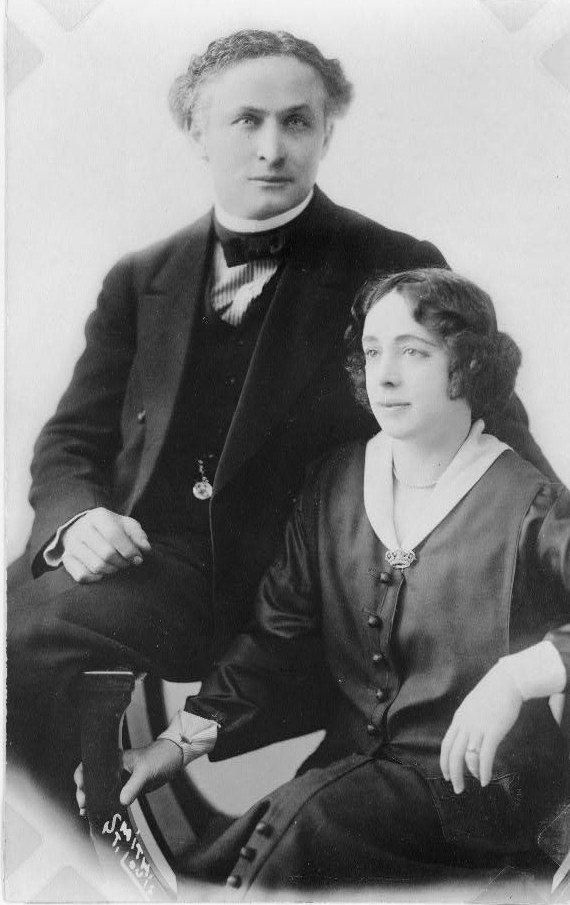
Harry and Bess Houdini in a studio portrait, about 1922. Library of Congress Prints and Photographs Division, no known restrictions
Houdini had spent his last years in open war with spiritualism. He had sat through hundreds of séances in disguise, exposed the famous Boston medium Margery, and testified to Congress in favour of a bill against fortune-telling. He did not think the dead could speak. But he was also a showman and a widow's son who had tried desperately to reach his own mother, and he hedged.
Before he died he and Bess agreed on a code. If he could come back, he would send her a message built on a song from their early days in the dime museums, and the key words were "Rosabelle, believe." Nobody else was supposed to know it.
For ten years Bess held a séance every Halloween. In 1929 a medium named Arthur Ford produced the code, and for a few days the newspapers reported that Houdini had come through; then it emerged that the words had been printed the year before, and Bess, who had briefly endorsed Ford, withdrew. The final séance was on the roof of the Knickerbocker Hotel in Hollywood on 31 October 1936, broadcast on radio. Nothing happened. Bess turned off the light that had burned beside his photograph for a decade and said, in a line that has been quoted ever since, that ten years was long enough to wait for any man.
What is left in Detroit
The Garrick Theatre came down within a few years of his death, and an office tower stands where it stood. The original Grace Hospital was demolished in 1979, and the Detroit Medical Center campus has long since swallowed the site. Neither place is much of a pilgrimage, which seems a pity for a city that is now, a century on, the centre of the Houdini calendar.
The séances, on the other hand, never stopped. Magicians took them over after Bess gave up, and an Official Houdini Séance has been held somewhere in America most Halloweens since, with a different host city and the same empty chair. This year's marks the hundredth anniversary. If anyone has heard the code words, they have not said so.
Enjoyed this story?Get a new one every day on social.