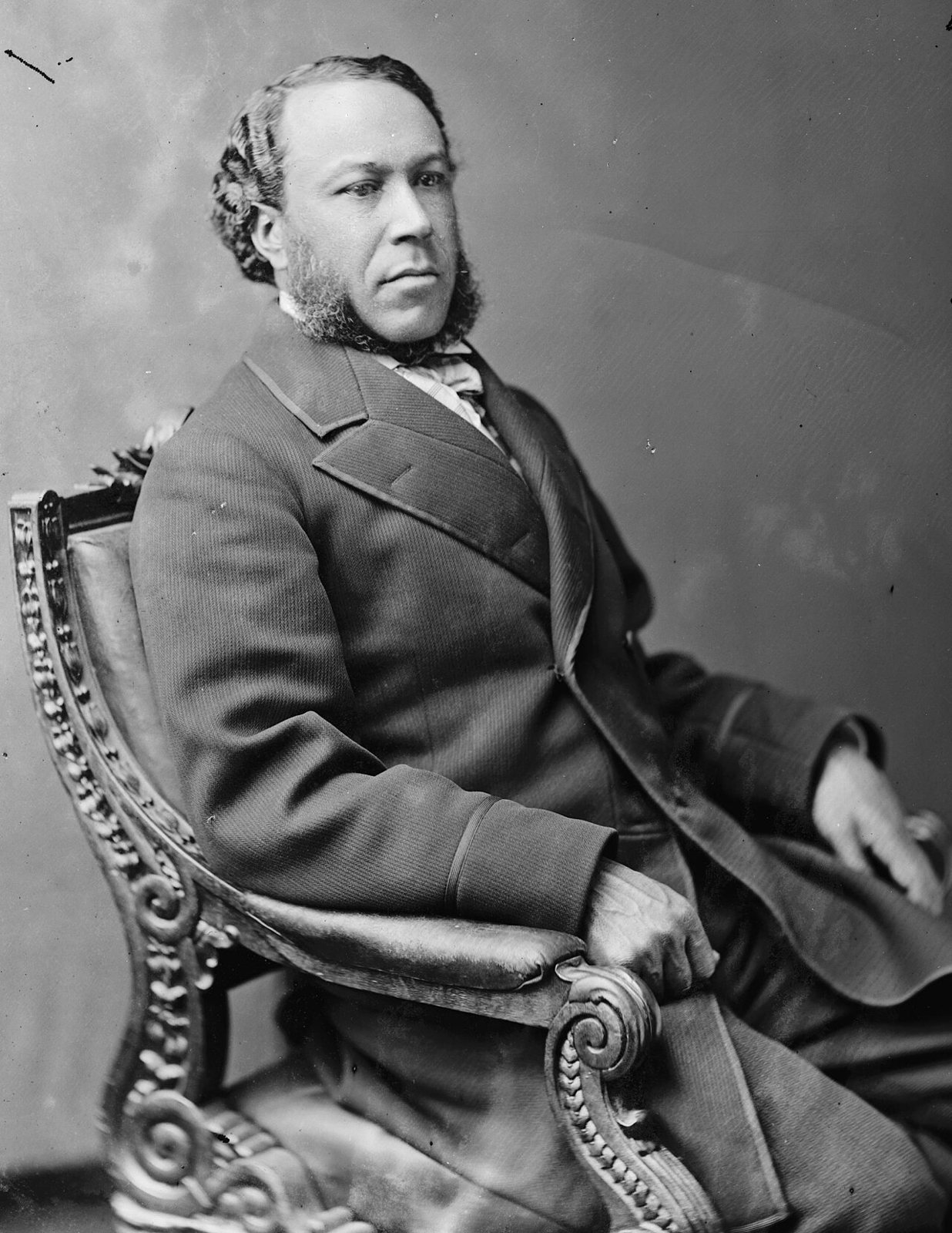
Photo: Mathew Brady studio, public domain, via Wikimedia Commons
On the afternoon of May 29, 1874, the House of Representatives was grinding through the Indian appropriations bill, which is about as unglamorous as congressional business gets. Speaker James G. Blaine of Maine stepped away and handed the chair to a member from South Carolina. For a stretch of that debate, the man running the House was Joseph Hayne Rainey, a former barber who had been born enslaved in Georgetown, South Carolina, 41 years earlier.
He was the first Black American to preside over the House. On Wednesday, House Democrats voted 251 to 11 in a closed-door caucus to nominate Hakeem Jeffries for speaker, and if the full House confirms him in January, as the numbers suggest it will, he will be the first Black American to hold the job outright. Rainey's afternoon is the obvious place to start.
A barber's son who bought his way out
Rainey was born on June 21, 1832. His father, Edward, was a barber who earned enough to buy the family's freedom, and he taught his son the trade. The family moved to Charleston in 1846, and Joseph married in Philadelphia in 1859, which tells you something about how far a free Black barber from the Carolina low country could travel before the war.
When the war came, the Confederacy put him to work. The usual account is that he was pressed into labour connected to a blockade runner in Charleston harbour. (Other accounts put him on the city's fortifications, and I have not seen a document that settles it.) In 1862 he and his wife escaped to Bermuda, a British colony where slavery had been abolished almost 30 years earlier, and he cut hair there until the war was over. He came back in 1866.
Two years from the convention to Washington
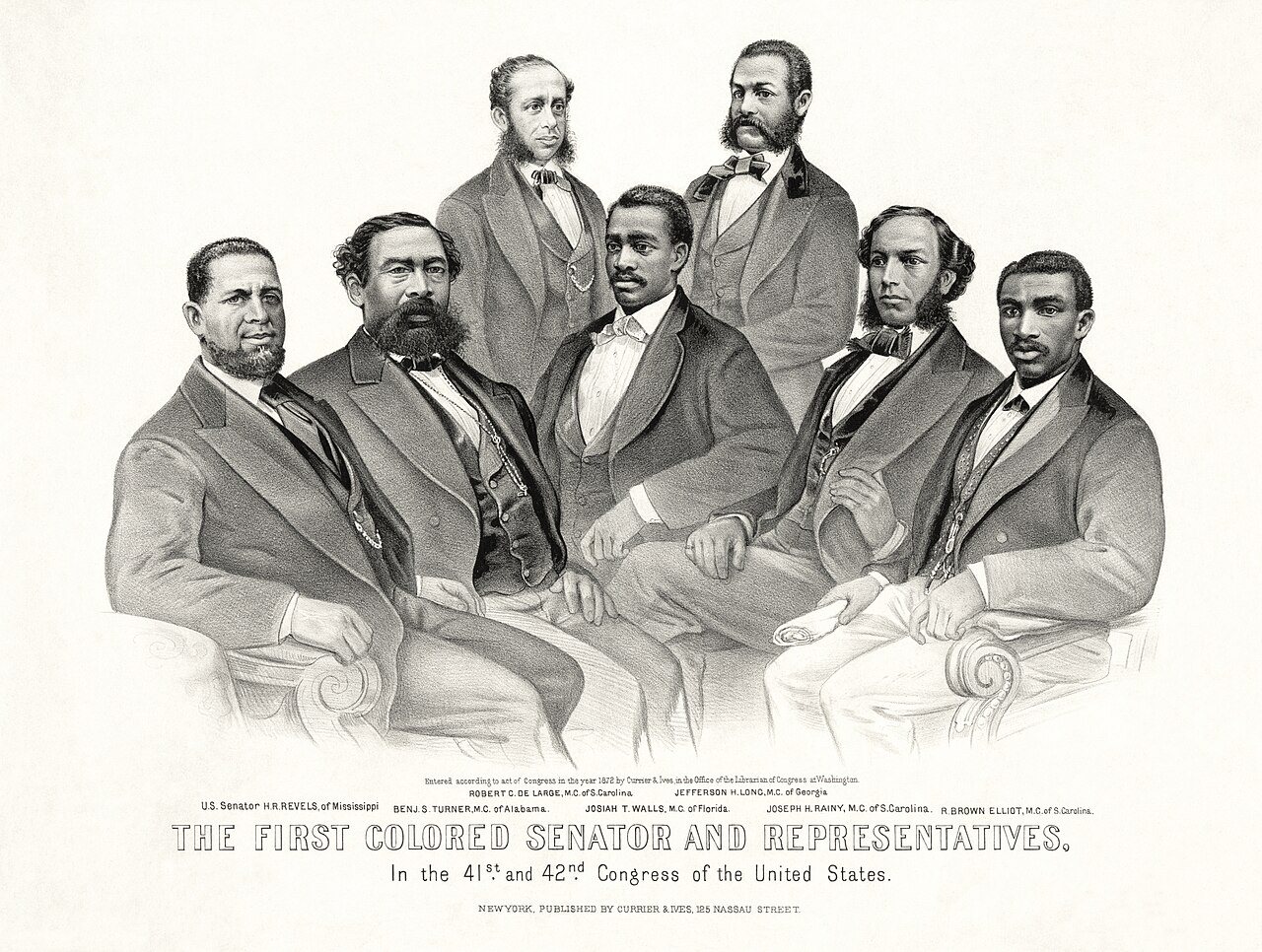
The First Colored Senator and Representatives, a Currier & Ives lithograph of 1872. Rainey is seated second from right. Currier & Ives, public domain, via Wikimedia Commons
Reconstruction moved fast in South Carolina, which had a Black majority and, for a few years, a legislature to match. Rainey was elected a delegate to the 1868 state constitutional convention. In 1870 he won a seat in the state senate and chaired its finance committee.
The House seat came open by scandal. Benjamin F. Whittemore, the Republican who held it, resigned in 1870 while facing censure for selling appointments to the military academies, and Rainey won the election to replace him. He was sworn in on December 12, 1870, the first Black member of the House to take his seat. (Jefferson Long of Georgia followed a few weeks later. John Willis Menard of Louisiana had been elected in 1868, but the House refused to seat him.) Currier & Ives put Rainey into a popular 1872 print of the first Black members of Congress, and spelled his name "Rainy" in the caption.
What the gavel meant, and what it did not
I want to be careful not to overstate that day in May. Presiding as speaker pro tempore is a temporary job, often handed to whichever member the speaker trusts to keep order while he is out of the room. Rainey did not set the agenda or hand out committee seats. He ran the floor for part of one debate.
But the symbolism was obvious to everyone in the chamber, and the timing was sharp. Congress was then fighting over the civil rights bill that Charles Sumner had pushed for years (Sumner had died that March), and Rainey had spoken for it. Within a year it became the Civil Rights Act of 1875, and in 1883 the Supreme Court struck most of it down. So the first Black man to run the House did so in a Congress that passed a law the courts would gut a few years later.
Rainey was blunt on the floor. He spoke for the Ku Klux Klan Act of 1871 and talked about violence against Black voters in his own state, at a time when most of his colleagues would have preferred he talk about tariffs.
The seat he lost by attrition
He kept winning, but the margins kept shrinking as white Democrats took South Carolina back by force and fraud. In 1876 he beat a Democrat named John S. Richardson by a narrow margin. Richardson never conceded and contested the result for two years, and in 1878 he won the seat. Rainey's congressional career ended in March 1879, after a little more than eight years in the House.
President Rutherford B. Hayes then gave him a job as an internal revenue agent in South Carolina, which he held until 1881. He tried to become Clerk of the House and did not get it. A brokerage and banking business he started in Washington failed. He managed a coal and wood yard for a while.
Back in Georgetown
A handful of Black South Carolinians served after him, Robert Smalls among them, but once George Washington Murray left in 1897 the state sent no Black representative to Congress until Jim Clyburn was elected in 1992.
Rainey went home to Georgetown, poor and ill. He died there on August 2, 1887, at the age of 55, and left his widow and five children very little money.
Enjoyed this story?Get a new one every day on social.