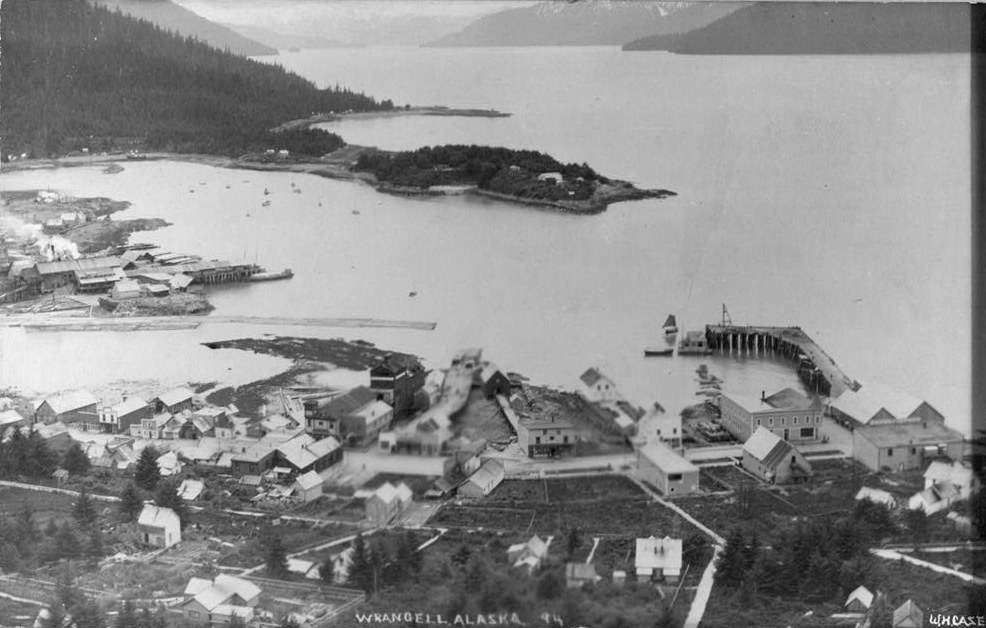
Photo: W. H. Case, c. 1900, Library of Congress Prints & Photographs Division, no known restrictions
On 7 November 1922 Charlie Jones walked down to the polling place in Wrangell, Alaska, to vote in the town election. He was the seventh man to hold the Tlingit title of Chief Shakes, a taxpayer and a father of children in the local school, and the three election officials on duty turned him away. He went back with Tillie Paul Tamaree, 59, who had come along to interpret and who argued his case until he was allowed to cast a ballot. The officials reported the pair to the US Attorney. Both were arrested and taken to Ketchikan to stand trial.
I have been thinking about that walk since the Associated Press called Alaska's Senate race for Mary Peltola. She beat the Republican incumbent, Dan Sullivan, with just over 50 percent of first-choice votes, enough that the state's ranked-choice count was not needed. Peltola, who is Yup'ik, became the first Alaska Native in Congress when she was sworn into the House in 2022. In January she will be the first Alaska Native to sit in the Senate.
The word "civilized"
Jones's offense was voting while Native. Under a territorial law of 1915, Alaska Natives could claim the rights of citizens only by showing they had given up tribal ways and adopted what the statute called a civilized life. Officials decided case by case who qualified, which in practice meant whoever was in charge at the polling place.
Jones was charged with illegal voting and perjury, presumably for swearing he was entitled to vote. Tamaree was charged with "inducing an Indian not entitled to vote to vote," a charge so specific that somebody must have drafted it with people like her in mind.
The lawyer was her son
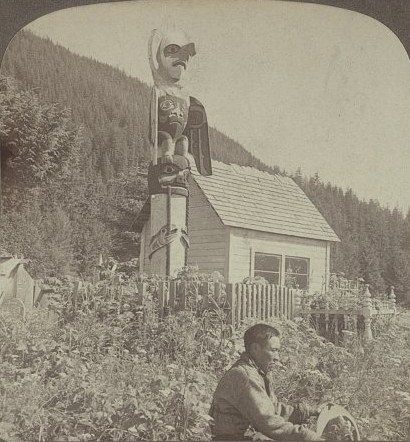
Half of a 1904 stereograph of a Tlingit man in front of a house and totem pole at Wrangell, captioned "The home and totem of a young chief, Fort Wrangle, Alaska". Underwood & Underwood, Library of Congress, no known restrictions
Tamaree's defence lawyer was her son, William Paul. He was Tlingit, had been educated at the Carlisle Indian Industrial School in Pennsylvania and at Whitworth College, studied law by correspondence and is generally described as the first Alaska Native admitted to the bar. He was also by then grand secretary of the Alaska Native Brotherhood, the organization founded in Sitka in 1912 to press for Native citizenship and rights.
Paul took the "civilized" test at face value and turned it on the prosecution. Jones paid his taxes, he showed, sent his children to school and gave money to the Red Cross. By the statute's own standard it was hard to see what else a man could do. The case has come down in family and local memory as the "toilet paper defense," on the theory that Paul was ready to prove Jones lived in a house like any white man's, plumbing included. The Wrangell Sentinel noted in 2022 that he never actually mentioned toilet paper in court, which is a pity.
The jury acquitted Jones in 1923, and the charge against Tamaree was dropped. The next year Paul won a seat in the territorial legislature, carried in large part by Native voters. In June 1924 Congress passed the Indian Citizenship Act, making Native people across the United States citizens.
Then came the literacy test
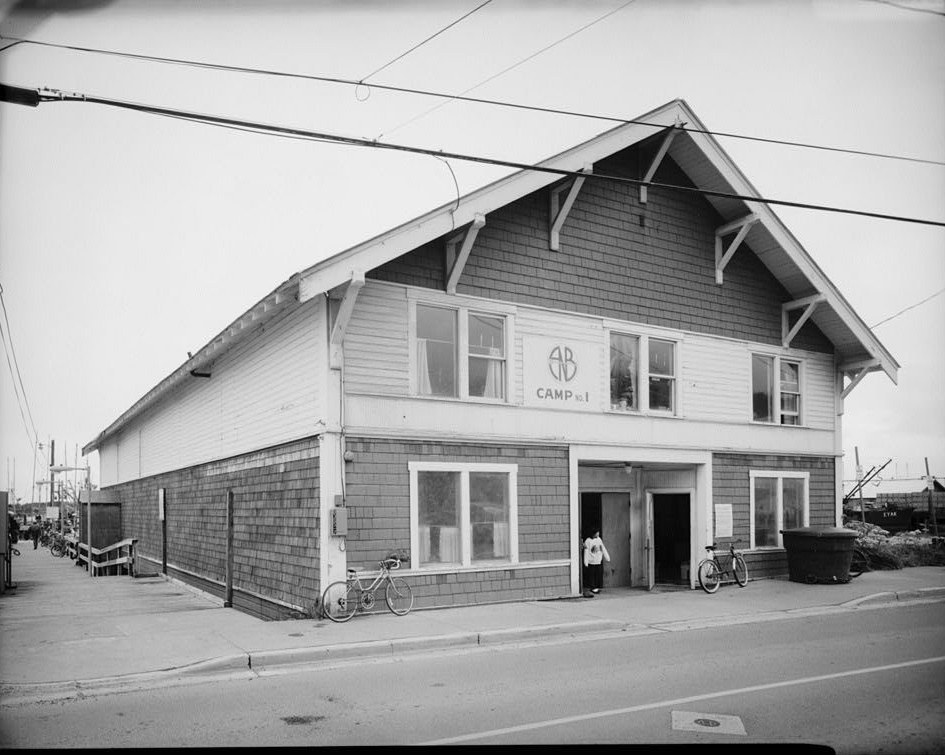
The Alaska Native Brotherhood's Camp No. 1 hall on Katlian Street, Sitka, photographed for the Historic American Buildings Survey. Library of Congress, no known restrictions
The legislature's response, in 1925, was a literacy law requiring voters to read and write English. Nobody in Alaska at the time was confused about whose votes it was meant to stop, and it stayed on the books for decades. (Paul lost his seat in 1928, partly over accusations that he had taken money from the salmon canners, an industry his Native constituents were fighting over fish traps.)
A speech in Juneau
The next big moment came twenty years later in the territorial Senate. In 1945 the legislature took up a bill banning discrimination in public accommodations, at a time when signs in shop and restaurant windows in Juneau and elsewhere told Native customers to stay out. During debate, Senator Allen Shattuck said "the races should be kept further apart."
Elizabeth Peratrovich, a Tlingit woman from Petersburg who served as grand president of the Alaska Native Sisterhood, spoke during public testimony in reply. In the line most often quoted, she said she would not have expected that she, "who am barely out of savagery," would need to remind "gentlemen with five thousand years of recorded civilization behind them of our Bill of Rights." The Senate passed the bill 11 to 5 on 8 February 1945, after a 19 to 5 vote in the House, and Governor Ernest Gruening signed it on 16 February. Alaska now marks that date as Elizabeth Peratrovich Day, and in 2020 the US Mint put her on a dollar coin.
From Wrangell to the Senate floor
The line from 1922 to this week is not straight. William Paul spent the 1950s fighting a land case for his clan that the Supreme Court turned down, and lived long enough to see the Alaska Native Claims Settlement Act pass in 1971. He died in Seattle in 1977. Peltola's own career began in the Alaska state house in 1999.
Some Republicans have signalled they may challenge the result, and a few late overseas ballots were still due on Wednesday. Assuming the call holds, Peltola will be sworn in on 3 January, as the first Democrat to win a Senate race in Alaska since 2008. Whether anyone in the room will ask her to prove she is civilized first seems unlikely, though with the Senate you never quite know.
Enjoyed this story?Get a new one every day on social.