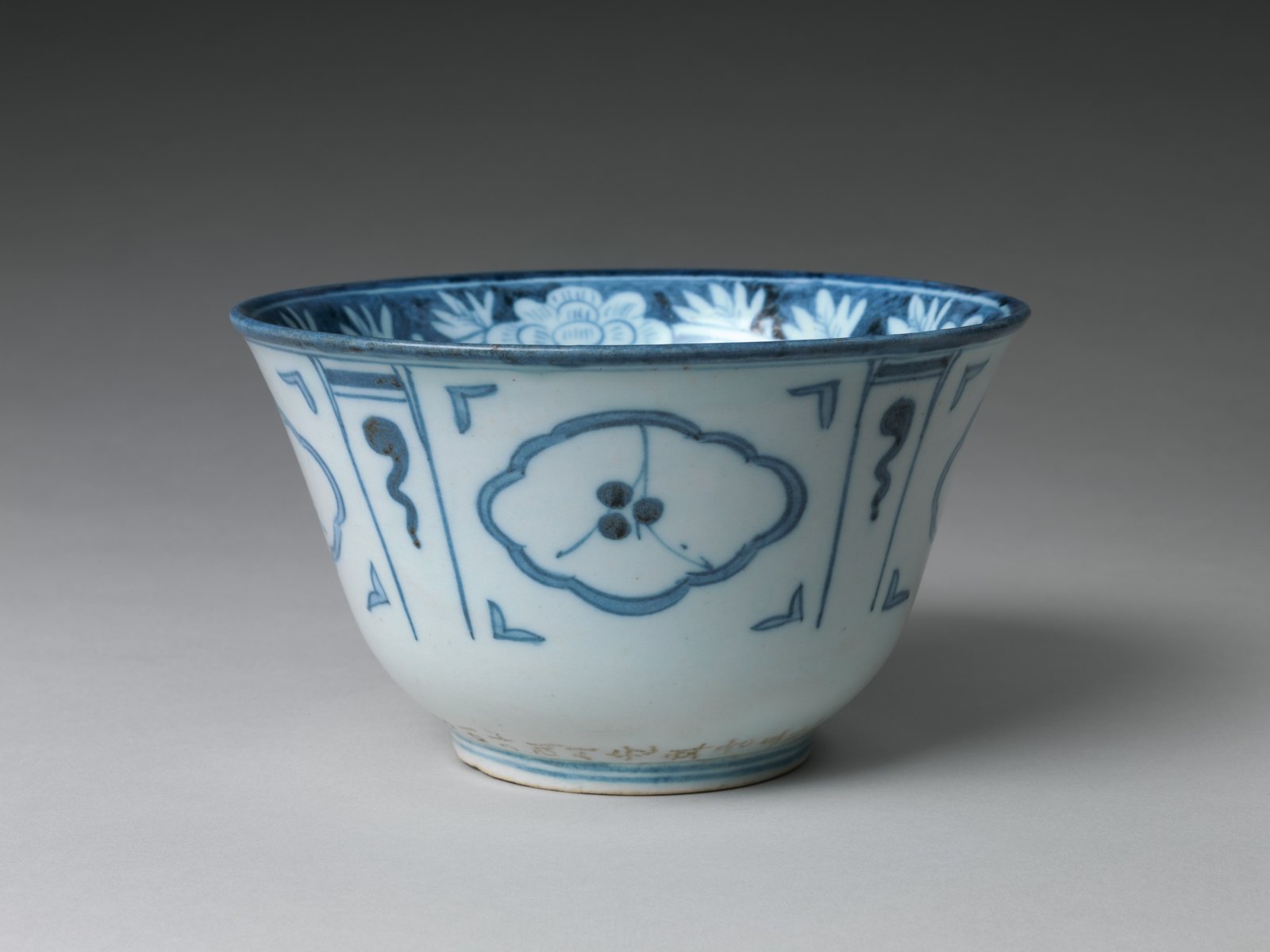
Photo: Bowl with floral and abstract motifs and inscription, dated 1847, The Metropolitan Museum of Art, CC0
"The sounds of our country's language are different from those of China and are not easily communicated with its letters. Therefore, among the ignorant people, there have been many who, having something they wish to say, have in the end been unable to express their feelings. I have been distressed by this and have newly designed twenty-eight letters, which I wish to have everyone practise at their ease and use to advantage in their daily lives."
That is the whole of the preface, in a standard translation, to a short book published in Korea in the autumn of 1446 under the title Hunminjeongeum, which means roughly The Correct Sounds for the Instruction of the People. The author was the king. It is the only case I know of where a writing system still in daily use was invented on purpose, by a named person, at a known date, with the reasoning written down.
What the king was up against
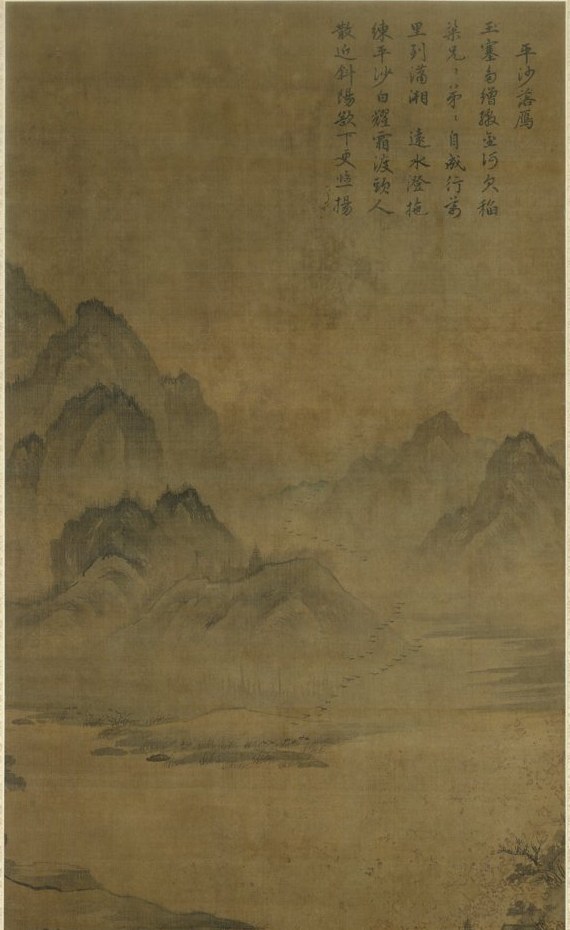
Wild geese descending to a sandbar, a Korean ink landscape of the late 15th or early 16th century with its poem written, as everything official then was, in Chinese characters. The Metropolitan Museum of Art, CC0
Korea in the 1440s had been writing for a thousand years in Chinese characters, which fit the Korean language badly: Korean has grammatical endings and sounds that Chinese does not, and the workarounds clerks had developed were as hard to learn as the characters themselves. Literacy belonged to the yangban, the scholar-official class, who spent their youths learning several thousand characters and had every reason to keep things that way.
Sejong, the fourth king of the Joseon dynasty, had reigned since 1418 and had built a research academy, the Hall of Worthies, that produced among other things a rain gauge. Whether he designed the letters himself or with a team from the academy is argued over; the royal annals say he did it personally, in private, and announced it in the winter of 1443. Either way the design is unlike anything before it. The consonants are drawn as pictures of the mouth making them: the letter for k is the root of the tongue closing the throat, the letter for n is the tongue touching the ridge behind the teeth, the letter for m is a closed mouth. The vowels are built from three strokes standing for heaven, earth and man, and related sounds get related shapes. Linguists have called it the most scientifically designed alphabet in use anywhere, and the ones I have read do not seem to be exaggerating.
The protest
Two months after the alphabet was announced, in February 1444, a group of senior scholars led by Choe Malli, the deputy head of the Hall of Worthies, submitted a formal memorial against it. The document survives. Korea, they said, had always followed China in its writing; a separate script would make Korea like the Mongols, the Jurchens and the Japanese, peoples with their own letters and, by implication, no civilisation. If the letters were easy, officials would stop studying the classics, and if commoners could read the laws they would argue about them. And the king had done the whole thing without consulting his ministers, which I suspect was the complaint the scholars felt most.
Sejong's reply, also in the annals, is unusually sharp for a Joseon king addressing his officials: he asked Choe whether he had actually read the phonological works he was citing, and had several of the signatories jailed for a day. Then he went on with the project for another two and a half years, and in 1446 the book came out, with a long commentary by eight scholars of the academy explaining the letters, the theory behind them and how to combine them into syllables. That commentary, the Haerye, is the reason we know how the alphabet was designed rather than only what it looked like.
Banned, demoted, and then the only thing left
The yangban were right about one thing: the letters were easy. Within a generation the court was publishing Buddhist texts and songs in them, and upper-class women, who were not taught Chinese, wrote letters to one another in the new script. That is roughly where it stayed for four hundred years: scholars called it eonmun, vulgar writing, and did official business in Chinese. In 1504 King Yeonsangun, after anonymous posters criticising him appeared in the new letters, banned its teaching and had books in it burned. It came back because it had never left the kitchens and the women's quarters.
Hangul, as it was named in the 1910s, became an official script of government in the Gabo reforms of 1894. Under the Japanese occupation it became the script of a national movement; members of the Korean Language Society were jailed in 1942 for compiling a dictionary. The original 1446 book itself was thought lost until 1940, when a copy of the Haerye turned up in a private house in Andong and was bought by the collector Jeon Hyeong-pil, who kept it hidden through the war. It is now in the Kansong Art Museum in Seoul.
The letters today
South Korea marks Hangul Day on 9 October, the date the 1446 publication was traditionally fixed to, and restored it as a public holiday in 2013 after a two-decade gap; North Korea marks the alphabet's creation on 15 January instead. Four of Sejong's twenty-eight letters have dropped out of use, so the alphabet now has twenty-four. The Haerye's claim that a wise man could learn the letters in a morning and a stupid one in ten days is tested informally by every foreigner who arrives in Seoul and finds they can sound out the subway signs by the end of the week. The king's statue, about twenty feet of bronze seated with a book open on his knee, has faced down Sejong Boulevard in the centre of Seoul since 2009, with the letters cut into the plinth.
Enjoyed this story?Get a new one every day on social.