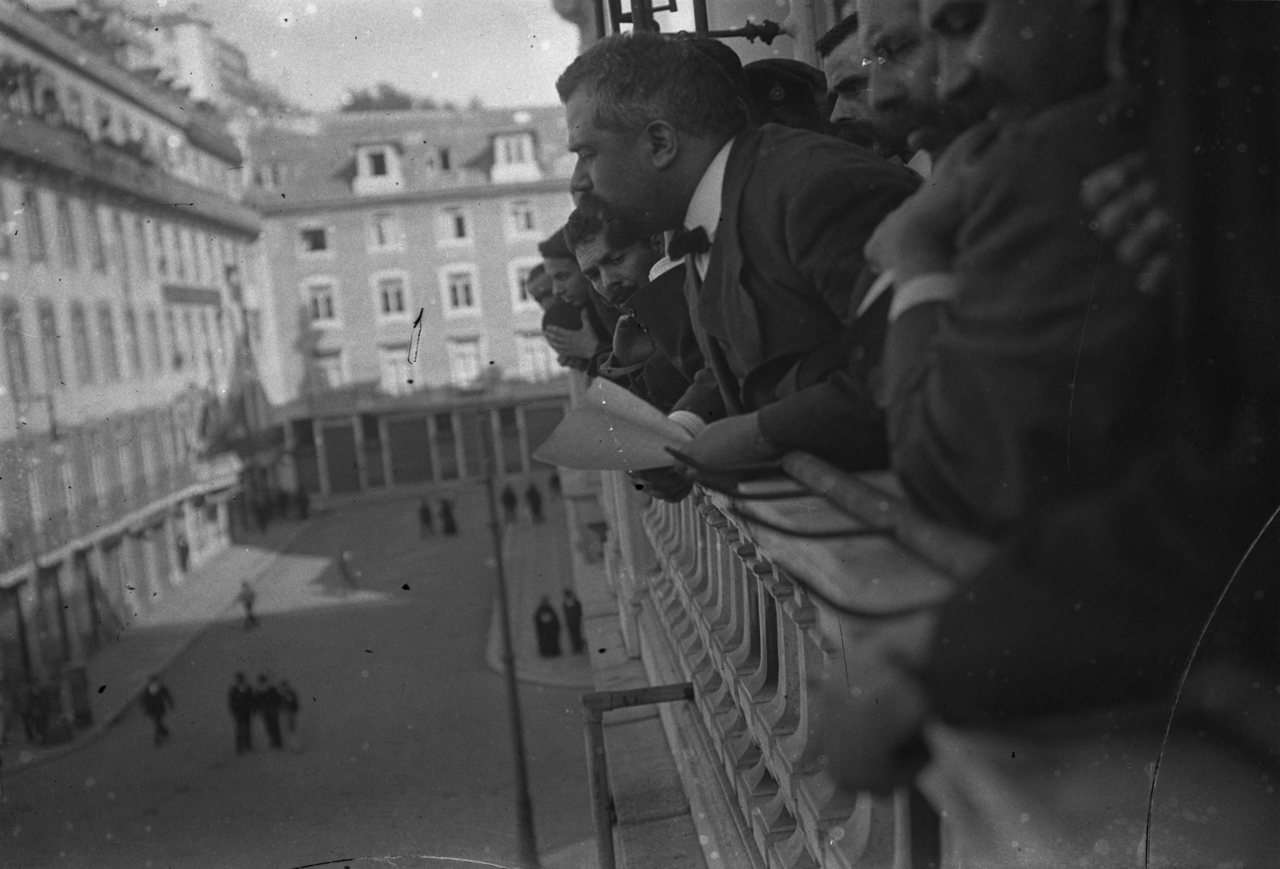
Photo: Joshua Benoliel, 1910, public domain, via Wikimedia Commons
On Saturday 14 November people marched in more than 30 Portuguese towns and cities, from Braga and Porto down to Faro and Portimão, under the slogan "They will not steal our right to a home." Al Jazeera called it the biggest national demonstration since the housing movement started a few weeks earlier. The organizers, a platform called Casa Para Viver that brings together about a hundred associations, want caps on rent increases, stronger protection from eviction and the reversal of changes to rental law that parliament had just approved, which loosen contracts and speed up evictions.
The numbers behind the anger are not in much dispute. Eurostat found that between 2015 and 2025 Portugal had the largest increase in the European Union in house prices relative to income, 61 percent. The national statistics office measured property prices rising almost 20 percent in the year to the first quarter of 2026, and the government itself says rents are up 68 percent since 2020.
What I found interesting, reading up on it, is that the protesters are asking for something Portugal tried for longer than almost any country in Europe.
A decree in the first weeks of the Republic
The monarchy fell on 5 October 1910, and the provisional government was read out from the balcony of Lisbon's city hall (the moment in the photograph above). In November, according to a history of the rent laws published by Diário de Notícias, the new Republic froze rents for a year and lengthened the notice a landlord had to give under the old civil code of 1867. It was meant as a temporary measure for a poor capital full of tenants.
It was not temporary. When Portugal entered the First World War, all rents were frozen except expensive ones, and owners were ordered to let out empty property. A law in 1917, again citing the state of war, banned landlords from evicting tenants simply because they no longer wanted to rent to them. By DN's count the rules were amended more than a hundred times after 1918, and the freeze survived every version.
Lisbon and Porto stay frozen
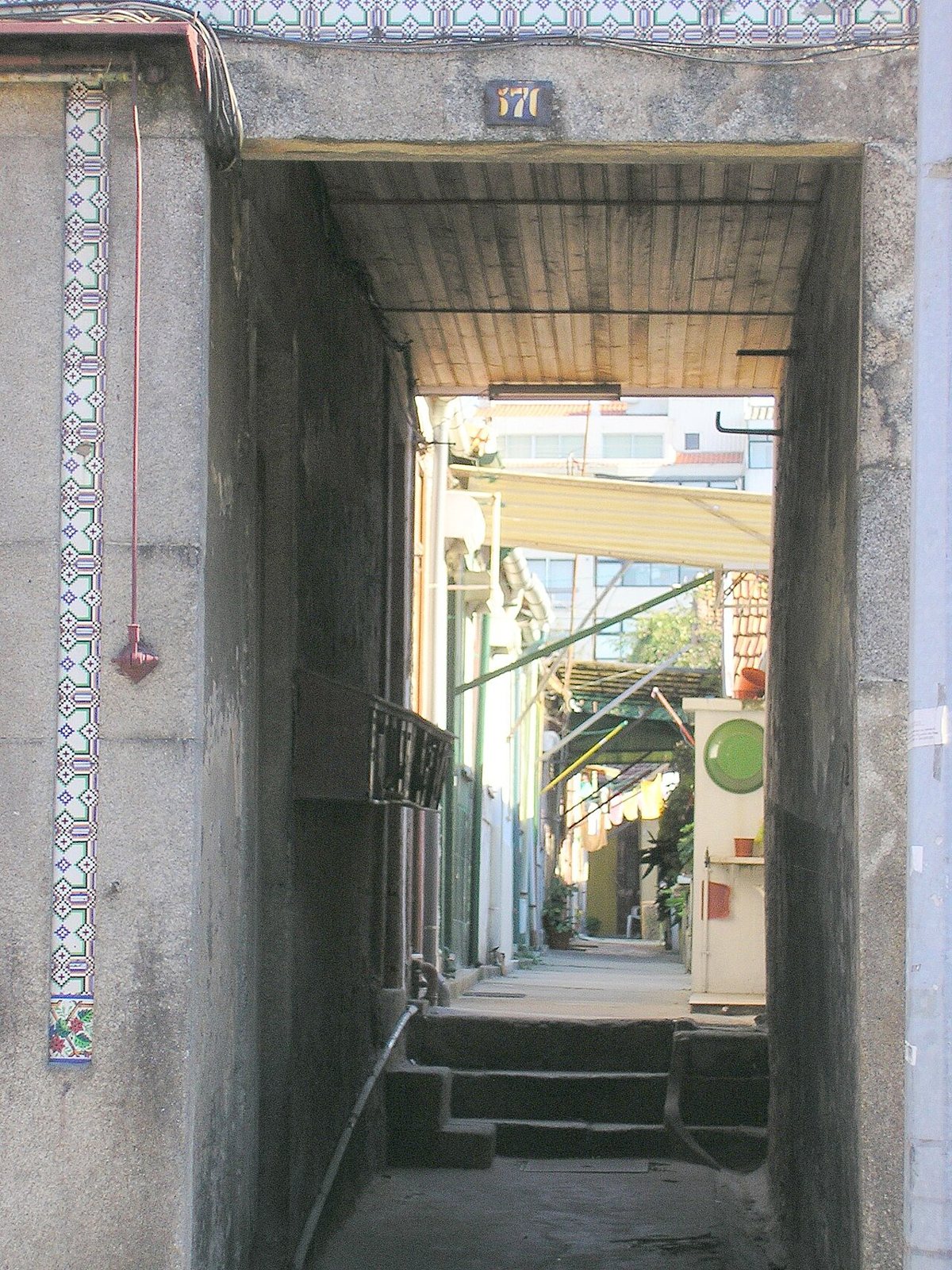
An "ilha" in Porto, one of the narrow courtyards of small terraced houses built for the city's working families
Some loosening came under the dictatorship. Rules in the 1920s allowed rents to rise with a property's tax value, which did little, since the tax values were badly out of date, and from 1928 landlords could set any rent they liked on a property that fell vacant. In 1948 the Salazar regime unfroze rents in the rest of the country, allowing increases in stages. It left Lisbon and Porto out. The new civil code of 1966 kept the freeze in the two big cities.
The effect, as landlords told it, was simple. A tenant who had signed a lease in the 1940s might be paying, decades later, an amount that would not cover a new roof, so the roof was not replaced. When a later minister introduced reforms in 2006, he said the freeze was responsible for the decay of urban property and for buildings being abandoned. That was a politician's claim, but anyone who walked through the old quarters of Lisbon in the 1990s would have found it easy to believe.
The revolution adds to it
After the Carnation Revolution of 25 April 1974 the freeze on reassessing rents, until then a Lisbon and Porto matter, was extended to the whole country. Maximum rents were set for old buildings, with criminal penalties for charging more, and the duty to let empty homes came back. A correction in 1985 allowed rents fixed before 1980 to rise, but from such low starting points that most of them barely moved.
The real break came in 1990, when the government of Aníbal Cavaco Silva ended the rule that residential leases were for life. For the first time since 1910, a landlord could sign a fixed-term contract, with a minimum of five years. Leases signed before 1990 kept their old terms.
Two markets in one city
So Portugal ended up with two rental markets side by side. New contracts were relatively free, and the old ones, often held by elderly tenants in the center of Lisbon and Porto, stayed controlled. A reform in 2006 tried to move about 400,000 old leases into the new system gradually. The 2012 law known as the "lei Cristas," passed under Pedro Passos Coelho during the bailout years, dropped the minimum term for new contracts and created a fast-track eviction office, while protecting tenants over 65, disabled tenants and those on low incomes. In 2018 a Supreme Court judge estimated that 175,000 to 200,000 of the pre-1990 leases were still in place.
The rest is the part people are marching about now: tourism, short-term lets, foreign buyers and remote workers arriving in cities where a lot of the housing stock had spent decades without much maintenance. The government has promised 145,000 new homes, lower taxes on construction and limits on short-term rentals, and admits none of it will help quickly.
The longest experiment
I do not think the history settles the argument either way. Economists have used Lisbon for years as a warning about rent control, and the crumbling façades were real. But the freeze also kept generations of ordinary families in the middle of their own cities, which is exactly what the people on the streets this month are afraid of losing, and it would be odd to tell them that only one half of that record counts.
Enjoyed this story?Get a new one every day on social.