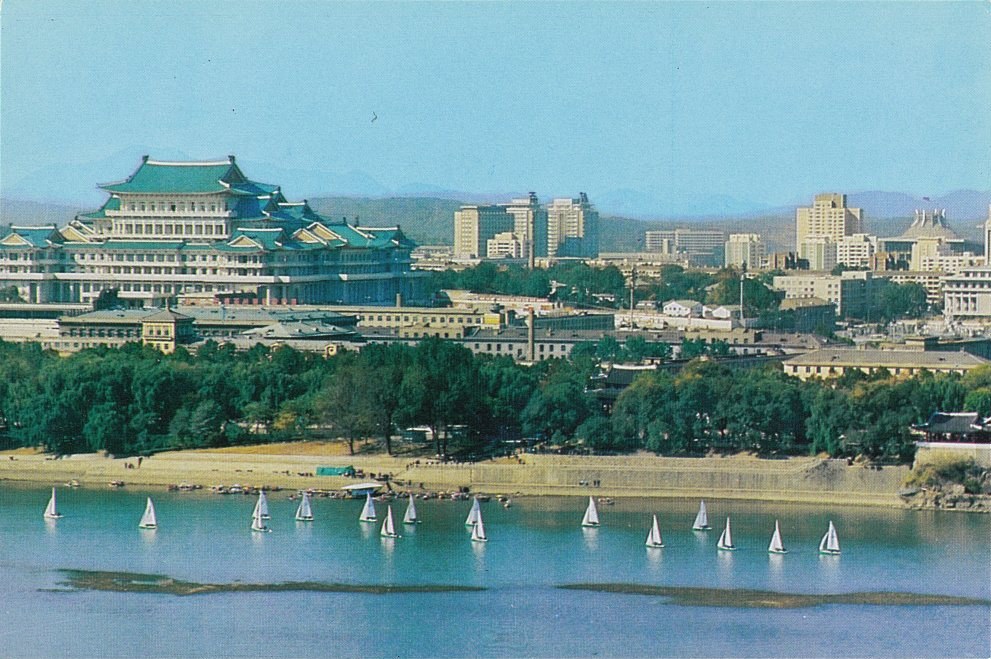
Postcard, 1981, Library of Congress Prints & Photographs Division, no known restrictions
"Neither government would have hostile intent toward the other." That line sits in a joint communiqué that the United States and North Korea released on 12 October 2000, at the end of a four-day visit to Washington by a North Korean marshal. The same document said the American secretary of state would go to Pyongyang soon, to prepare "for a possible visit by the President of the United States."
The president never went. This week Donald Trump flew home from a three-day Asia trip, which ended at the APEC summit in Shenzhen with a first three-way meeting between him, Xi Jinping and Vladimir Putin, without the meeting with Kim Jong Un he had openly floated beforehand. "The relationship is there, but we didn't meet," he told NBC News, adding that there had been too many meetings and that "we'll have that meeting at some point." Kim's stated price for talks has been American acceptance of North Korea as a nuclear state. Twenty-six years ago the price looked very different, and an American president came closer to Pyongyang than any before or since.
A marshal in the Oval Office
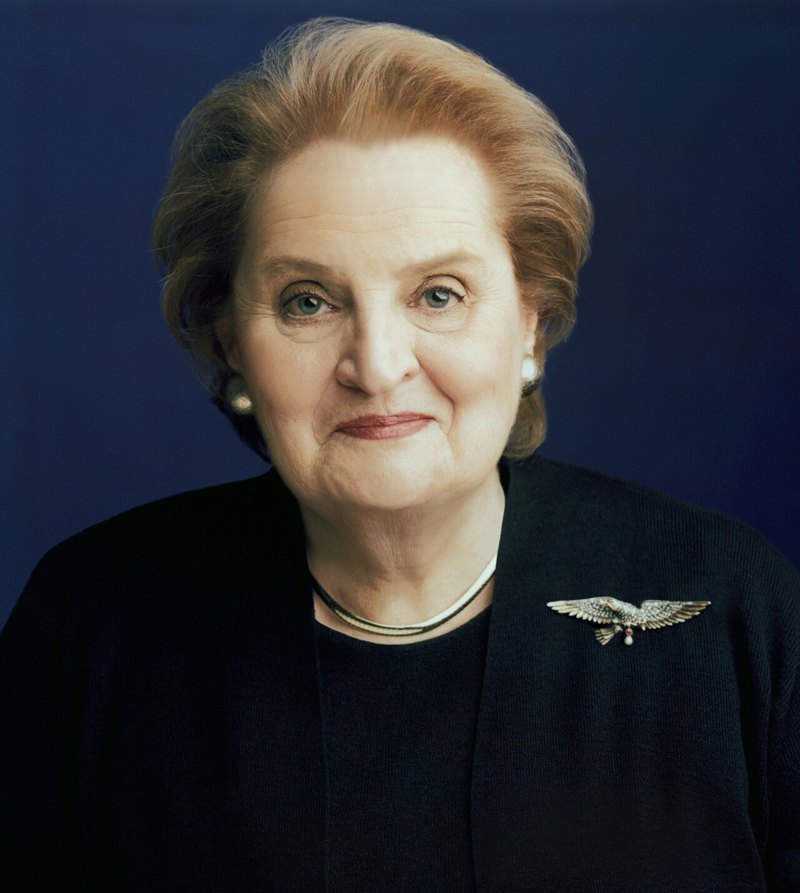
Madeleine Albright, official portrait. United States Department of State, public domain, via Wikimedia Commons
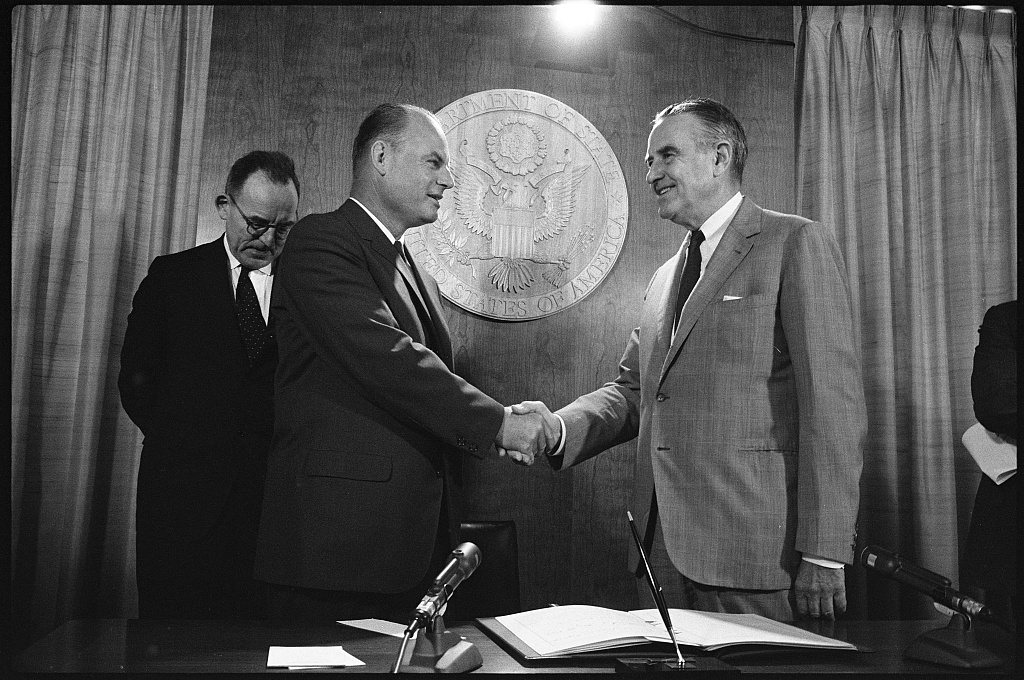
The opening came from Kim Jong Il, Kim Jong Un's father. In early October 2000 he sent his most senior military man, Jo Myong Rok, first vice chairman of the National Defence Commission, to Washington. Jo arrived at Dulles in an ordinary business suit. On 11 October he turned up at the White House in a dull-green marshal's uniform with gold braid and a chest of medals, which the North Koreans had not warned anyone about.
He met Bill Clinton in the Oval Office, with Madeleine Albright and the defence secretary, William Cohen, among others, and handed over a letter from Kim. Clinton read it and said, according to the reporter Mike Chinoy's account of the meeting, "This is a good letter."
The communiqué took hours of haggling. The North Koreans wanted a firm presidential visit. The Americans would not commit to one. Wendy Sherman, Clinton's North Korea coordinator, put the American position neatly: "We said presidents don't come. Summits get prepared for presidents." The text that came out the other end promised Albright's trip and left the president's as a possibility.
Two days with Kim Jong Il
Albright landed in Pyongyang on 23 October, the most senior American official ever to visit and the first to sit down with Kim. They talked over two days. She called the discussions "serious, constructive, and in-depth," which in diplomatic language is close to a rave.
The set piece was a mass performance in a Pyongyang stadium for the anniversary of the ruling Workers' Party. Albright later guessed the crowd at somewhere around 200,000 to 250,000 people. At one point the card section flashed up an image of a rocket launch, a reference to the Taepodong missile North Korea had fired over Japan in August 1998 and described as a satellite. Kim turned to her straight away and, as the Arms Control Association reported it, quipped that it had been the first satellite launch and would be the last.
Albright took that seriously, and she took Kim seriously. Years afterwards she described him to PBS Frontline as "isolated, but not uninformed," and said flatly: "I don't think he's delusional." Plenty of people in Washington did not want to hear that from a secretary of state who had just been to a stadium show in Pyongyang. (The photograph of her toasting Kim with a glass of champagne did not help.)
What was actually on the table
The prize was missiles. North Korea was building and selling them, and Kim seemed open to a deal that would cap development and stop the exports, in return for help putting North Korean satellites into orbit and some form of compensation. The negotiators thought they were close on the outline. They were not close on verification, which is where these deals usually die, and there was very little time left to close the gap.
The calendar was against them. Clinton's term ran out on 20 January 2001. The presidential election of November 2000 was not settled until the Supreme Court's decision in Bush v. Gore on 12 December, and Clinton was spending his last weeks on a final attempt at an Israeli-Palestinian agreement. A trip to Pyongyang without a finished missile deal would have handed Kim a presidential photograph for nothing.
On 28 December 2000 Clinton said he would not go, because there was not enough time to complete the work. Albright and others on his team argued for years afterwards that a deal had been within reach. I am less sure, if only because a great many people have believed that about North Korea at one time or another.
The hand of cards
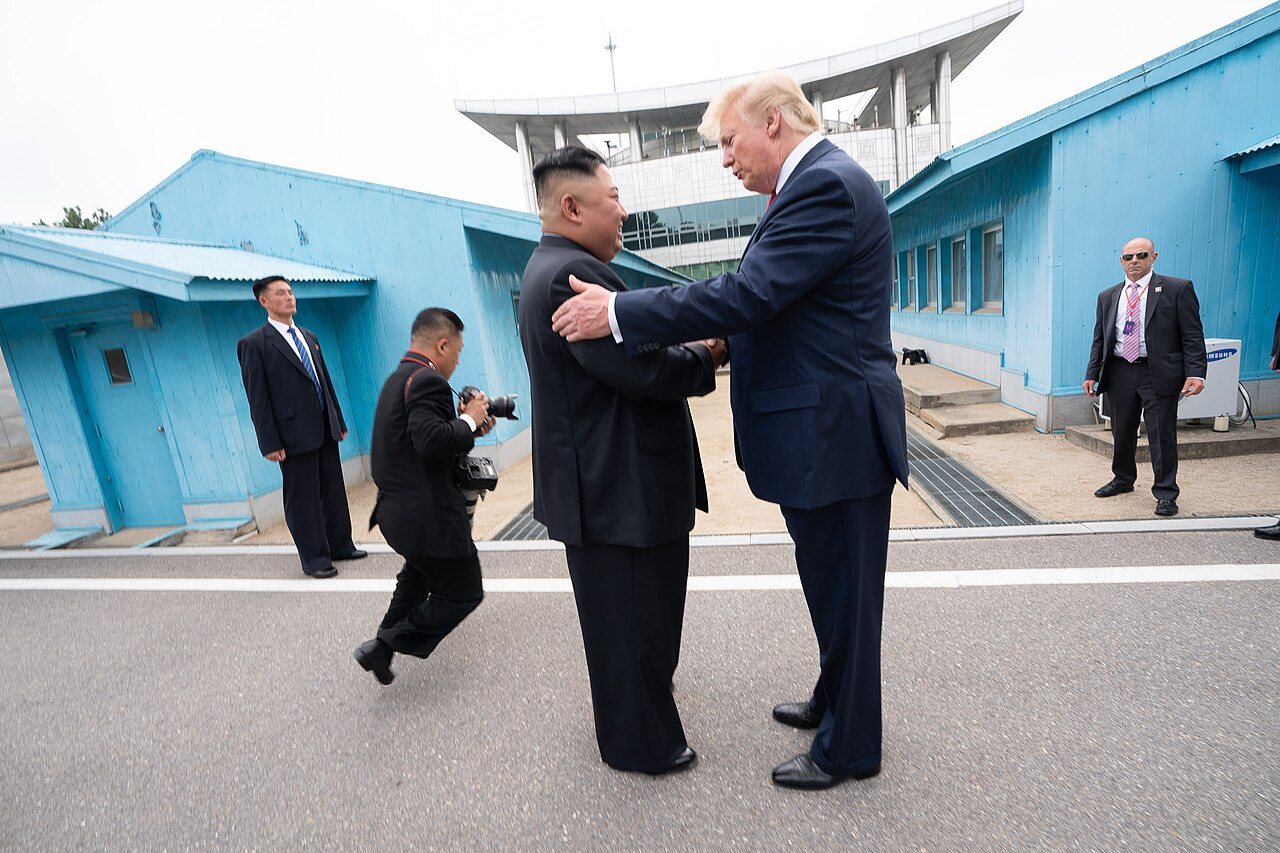
Donald Trump and Kim Jong Un at the Panmunjom border line in the Korean Demilitarized Zone, 30 June 2019. The White House, public domain, via Wikimedia Commons
George W. Bush's team inherited the file and set it aside. After a difficult meeting with South Korea's president, Kim Dae-jung, in March 2001, Colin Powell let it be known that the administration would not simply carry on where Clinton had left off. In January 2002 Bush put North Korea in his "axis of evil" with Iran and Iraq. That October an American envoy, James Kelly, confronted Pyongyang over a secret uranium enrichment programme, and the 1994 agreement that had frozen North Korea's plutonium work fell apart within months. North Korea tested its first nuclear device in 2006.
Albright never stopped arguing that the moment had been wasted. "We left them a pretty good hand of cards on the table," she told Frontline in 2003. Her critics answered that Kim had been cheating on the 1994 deal all along, and that a missile agreement would have been one more piece of paper. I suspect each side was partly right.
Three meetings and a missed fourth
Trump did get his photographs with the younger Kim: Singapore in June 2018, Vietnam in February 2019, and a handshake at the demilitarised zone on 30 June 2019, when he stepped briefly onto North Korean soil. None of them produced an agreement that held. By the time he left Shenzhen this week, the North Korean demand had moved from security guarantees to recognition as a nuclear power, and Seoul's analysts were saying Kim had no interest in a meeting staged mainly for the cameras.
In 2000 it was the American side that refused a summit without a finished deal, and in 2026 it seems to be the North Korean side, which tells you most of what has happened to the balance of power on the peninsula in between.
Enjoyed this story?Get a new one every day on social.