Photo: unknown photographer, public domain, via Wikimedia Commons
Late one evening in the first days of December 1956, a 17-year-old apprentice carpenter called John Ian Wing watched the crowds coming out of the St James cinema in Melbourne and went home to write a letter. He lived above his father's restaurant in Bourke Street. The letter went to Sir Wilfrid Kent Hughes, who chaired the organising committee of the Olympic Games then under way across town, and Wing did not sign it.
What he suggested, in his own later words, was that the athletes of the world should come together for the closing ceremony, "to unite and intermingle and enter the Stadium as One Nation." Kent Hughes took the idea. It has been done at every Summer Games since, and it was proposed in a year when the athletes' governments were very far from one nation.
Back on the MCG at 92
On Sunday, seventy years to the day after the opening ceremony, the Australian Olympic Committee brought thirty of the 1956 Olympians back to the Melbourne Cricket Ground. They walked onto the ground and then went to lunch. Marlene Matthews, now 92, who won bronze in both sprints in 1956, told Athletics Australia it "was known as the Innocent Games." Dawn Fraser, who won the 100 metres freestyle that year, came in a wheelchair at 89. The swimmer Jon Henricks was missing. Henricks, gold medallist in the men's 100 metres freestyle, died in California on 20 November, two days before the reunion, at the age of 91.
The innocent label is an old one and I understand why the athletes use it. Nobody in 1956 had heard of doping controls, and every competitor was, at least on paper, an amateur. But the Games that opened on 22 November 1956 were also, by some distance, the most political the movement had held since Berlin.
Horses in Stockholm, five months early
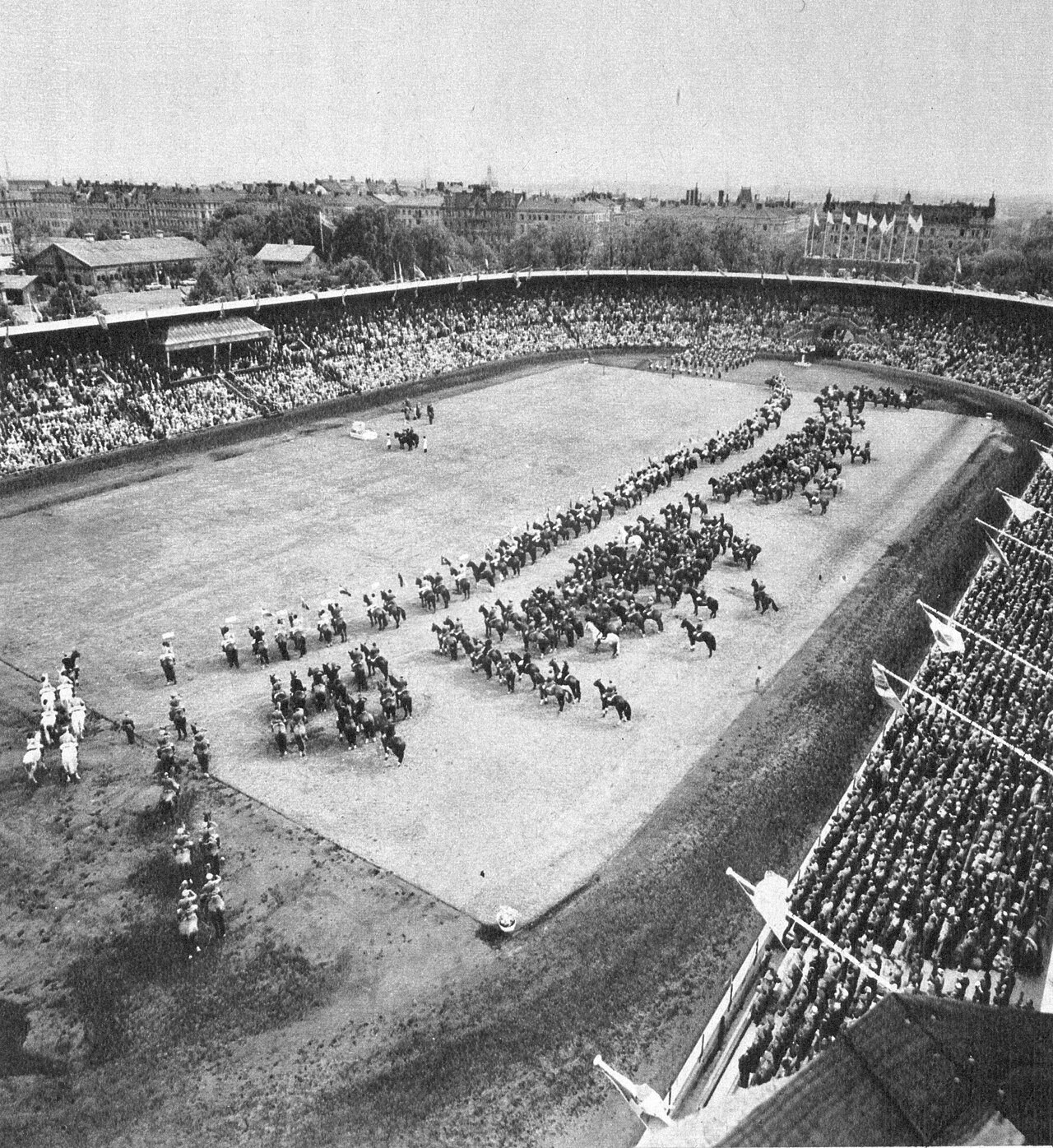
They had a strange start. Australia's quarantine laws for animals were so strict that the equestrian events could not be held in Melbourne at all, and they took place in Stockholm in June, five months early, on the other side of the world. So the 1956 Olympics were opened twice, once by a king and once by a duke. There had also been real doubt that Melbourne would be ready at all: Avery Brundage, the IOC president, had grumbled in public about the pace of the building work and floated moving the Games elsewhere.
When the Games did open in November, the Duke of Edinburgh declared the Games open at the MCG and the young runner Ron Clarke carried the torch into the stadium. It was the first Olympics held in the southern hemisphere, and the only Summer Games ever held in November and December.
Suez and Budapest in the same fortnight
The timing was terrible. On 23 October students in Budapest had started a revolution against Hungary's Soviet-backed government. On 4 November Soviet tanks came back into the city in force and crushed it. Between those two dates, on 29 October, Israel invaded Egypt's Sinai, and within days British and French forces were landing at Port Said to take back the Suez Canal, which Nasser had nationalised in July.
The boycotts followed both crises. The Netherlands, Spain and Switzerland withdrew in protest at the invasion of Hungary. Egypt, Iraq and Lebanon withdrew over Suez, arguing that they could not compete alongside the countries attacking Egypt. The People's Republic of China stayed away for a different reason entirely, because the Republic of China on Taiwan had been invited. Several of the boycotting nations had already sent riders to Stockholm, which tells you how fast the autumn changed things.
The Hungarians and the pool
The Hungarian team had travelled out while the fighting was going on and learned much of what had happened at home only when they reached Australia. In the Olympic Village they took down the official flag of the People's Republic and raised the old tricolour without its communist emblem. Hungarian expatriates filled the stands.
On 6 December Hungary played the Soviet Union in the water polo semi-final round at the Melbourne pool. It was a violent match from the start. Near the end, with Hungary leading 4 to 0, the Hungarian forward Ervin Zádor was punched and came out of the water bleeding from a cut under his eye. The crowd surged towards the poolside, police were called, and the referee ended the game with Hungary declared the winners. They went on to take the gold. The photographs of Zádor, blood running down his face, became the image of the Games, and the match has been known ever since as the Blood in the Water.
A ceremony without flags
The closing ceremony on 8 December was the moment Wing's letter paid off. Instead of marching in national blocks behind their flags, the athletes came into the MCG mixed together, walking and waving in no particular order. Two days after the Cold War had been fought out in a swimming pool, that was quite a sight. For years hardly anyone knew where the idea had come from, and Wing later moved to England.
The ones who did not go home
What nobody has ever settled is how many of the Hungarians stayed away. Some sought asylum in Australia straight after the Games: the gymnast Ágnes Keleti, who won four golds in Melbourne, was one, and the CBC counts 44 others who did the same. Zádor went to the United States, where a group of Hungarian athletes toured with American backing in early 1957. Other accounts put the total number of defectors from the delegation at around half the team, and others lower, depending on who is counted and when. Some came home after a year or two abroad. I have yet to see two sources give the same figure, and the people who could have answered are now in their late eighties and nineties.
Enjoyed this story?Get a new one every day on social.