Photo: Carol M. Highsmith, 2016, Library of Congress Prints & Photographs Division, no known restrictions
Late in the afternoon of Thursday 10 October 1957, in the Bronx, Bill Skowron of the Yankees hit a hard ground ball down the third-base line with the bases loaded. Eddie Mathews of the Milwaukee Braves knocked it down, stepped on third, and the World Series was over. Lew Burdette had thrown his second shutout in five days, 5 to 0, his third complete-game win of the Series, and Milwaukee, a city that had not had a big-league team five years earlier, was champion of baseball.
Last night, at Tropicana Field in St. Petersburg, the Milwaukee Brewers beat the Tampa Bay Rays 4 to 1 to take the World Series four games to one, the first title in the franchise's history, 56 years after it arrived from Seattle. It is the first time a Milwaukee team has won it since Mathews stepped on that bag. What happened between those two nights is the story, because the 1957 team was the most popular in the National League, and it still left.
A team that arrived in March
The Braves had been in Boston since the 1870s and were dying there, outdrawn by the Red Sox and losing money. Their owner, Lou Perini, also owned the minor-league Milwaukee Brewers, and Milwaukee County was finishing a new stadium with no big-league tenant. On 18 March 1953, with spring training already under way, the National League approved the move, the first franchise shift in the majors in fifty years. The Braves became a Milwaukee team about three weeks before Opening Day.
The city responded as if it had been waiting all its life. The Braves drew 1,826,397 fans in 1953, a National League record, and in 1954 became the first National League club to pass two million. They did it again in 1955, 1956 and 1957. Fans brought players cases of beer and free dry cleaning; the players were, by most accounts, slightly embarrassed.
Aaron, Spahn, Mathews and a pitcher who threw a spitball he never admitted to
The 1957 Braves were very good and knew it. Warren Spahn won 21 games and the Cy Young Award, Eddie Mathews hit 32 home runs from third base, and Hank Aaron, 23 years old, led the league with 44 home runs and 132 runs batted in and was voted Most Valuable Player; his eleventh-inning home run against the Cardinals on 23 September clinched the pennant at County Stadium. And there was Lew Burdette, a lanky right-hander from West Virginia who fidgeted constantly on the mound and was accused by half the league of throwing a spitball, which he always denied, usually with a grin.
The Series against the Yankees turned in Game 4 in Milwaukee. The Braves led 4 to 1 going into the ninth, gave up a three-run homer to tie it, and then fell behind in the tenth. In the bottom of the inning a pinch-hitter named Nippy Jones claimed a low pitch had hit him on the foot; the umpire disagreed until Jones retrieved the ball and showed him a smudge of shoe polish. Jones took first, a pinch-runner took his place and came round to tie the game on Johnny Logan's double, and Mathews followed with a two-run homer to win it. Burdette won Game 5 by 1 to 0, and when Spahn came down with the flu before Game 7, Burdette took the ball on two days' rest and shut the Yankees out again. Aaron hit .393 for the Series with three home runs, and Burdette was voted its outstanding player.
The night Wisconsin Avenue filled up
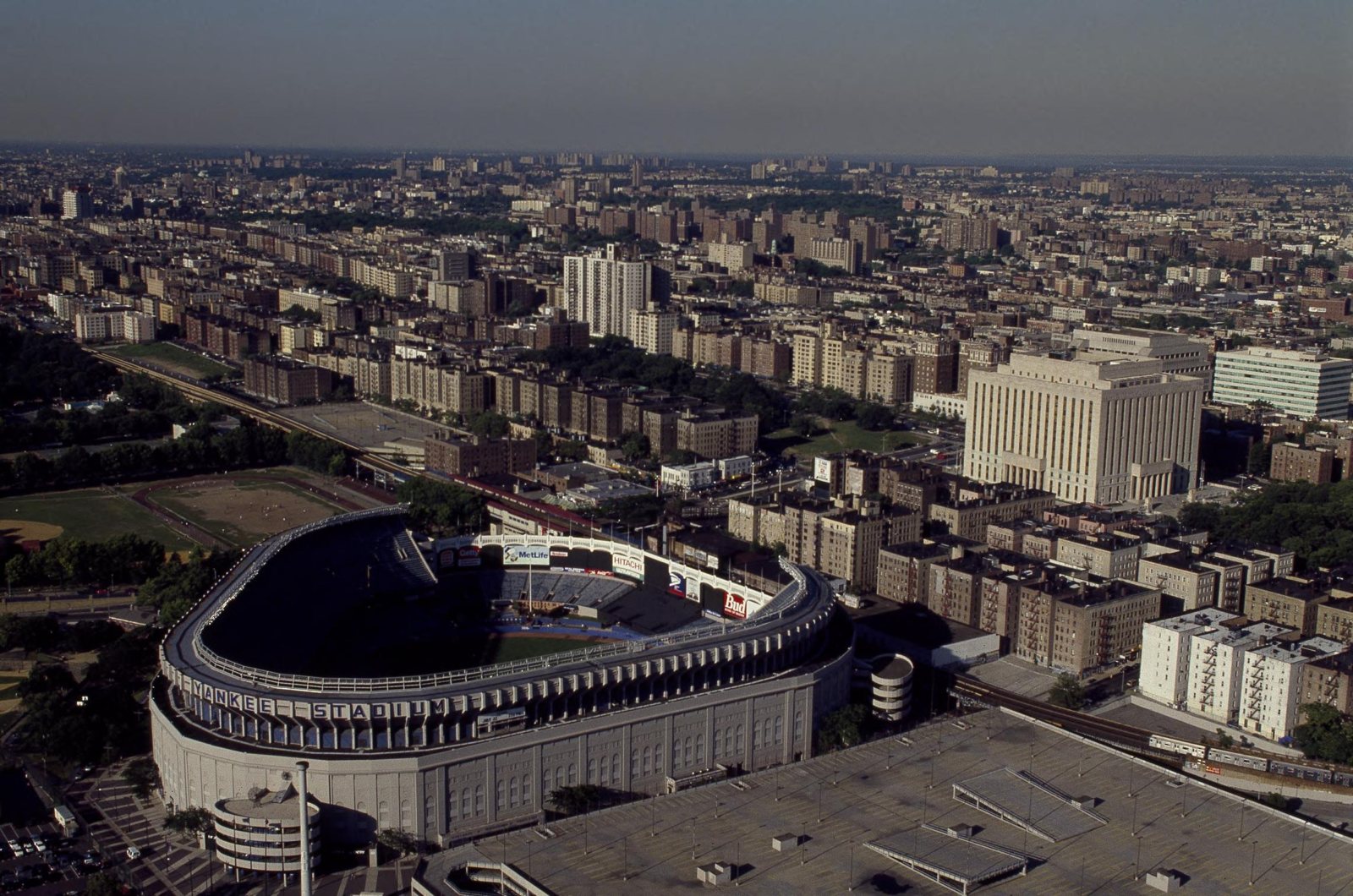
The original Yankee Stadium in the Bronx, where the Braves won Game 7 in 1957, photographed between 1980 and 2006. Photo: Carol M. Highsmith, Library of Congress Prints & Photographs Division, no known restrictions
The team flew home that evening, and the city did not wait for a scheduled parade. Thousands were at Mitchell Field when the plane landed, enough that some players could not get into the cars meant to carry them downtown. The route ran along Wisconsin Avenue and the crowd estimates ran from a quarter of a million upward (they are not precise, and nobody doing the estimating was entirely sober). The local historian Bob Buege, a schoolboy then, watched Game 7 on a television wheeled into his classroom and has said that as soon as it ended, everyone simply headed downtown. One player later admitted he could not remember how much he drank at the party afterwards, which seems about right.
How two million fans became half a million
The Braves went back to the Series in 1958, led the Yankees three games to one, and lost in seven. They were never bad after that, but they were never champions again, and the crowds thinned faster than the results explain. Attendance fell under a million in 1961 and to 766,921 in 1962. Television and the fading of novelty were part of it, and a 1961 decision to stop fans bringing their own beer into the stadium did not help, in Milwaukee of all places.
In November 1962 Perini sold the club to a group of Chicago businessmen led by Bill Bartholomay, for roughly six million dollars. Within two years the new owners were negotiating with Atlanta, which offered a new stadium and a television market covering the whole Southeast. In October 1964 they announced the move. Milwaukee County went to court and won an injunction that forced the Braves to play out their lease, so the 1965 season was a lame-duck year in a stadium that had held two million people eight years earlier and now drew 555,584. Wisconsin fought on in the courts and lost in 1966, and by then the Braves were in Atlanta.
Bud Selig's long route back
Among the people in the stands in 1957 was a young car dealer named Bud Selig, who spent the years after the Braves left trying to get baseball back, lost a bid for the White Sox, and finally bought the bankrupt Seattle Pilots out of a bankruptcy court a week before the 1970 season (we told that story here last week). The Pilots became the Brewers, inherited County Stadium, and in 1982 came within one game of a title before losing the Series to St. Louis in seven.
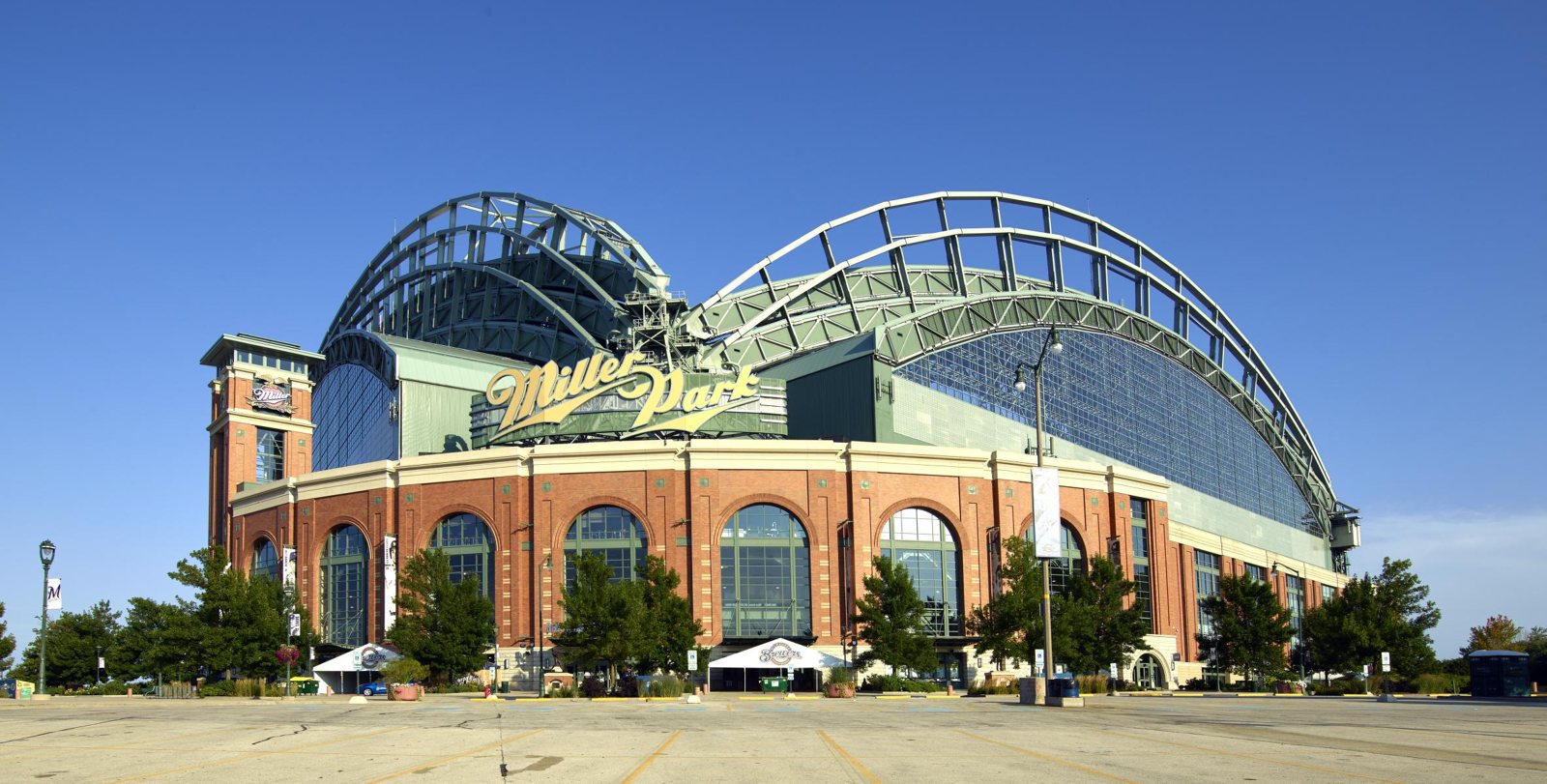
County Stadium closed in 2000 and came down in 2001. The retractable-roofed park built beside it opened as Miller Park and has been American Family Field since 2021; its home plate is a short walk from where the old one stood.
The part I keep coming back to
The 1957 story is usually told as a triumph, and it was one. What stays with me, though, is that Milwaukee did everything a baseball town is supposed to do. It built the stadium first, it showed up in record numbers, it gave the players beer and dry cleaning, and the team still left within a decade because a bigger television market made a better offer. That is worth remembering this week, as the city plans its first championship parade in 69 years. The parade in 1957 bought Milwaukee exactly eight more seasons. My own view is that the fans who filled the watch party at American Family Field on Wednesday night have earned the right not to think about that until at least Monday.
Enjoyed this story?Get a new one every day on social.