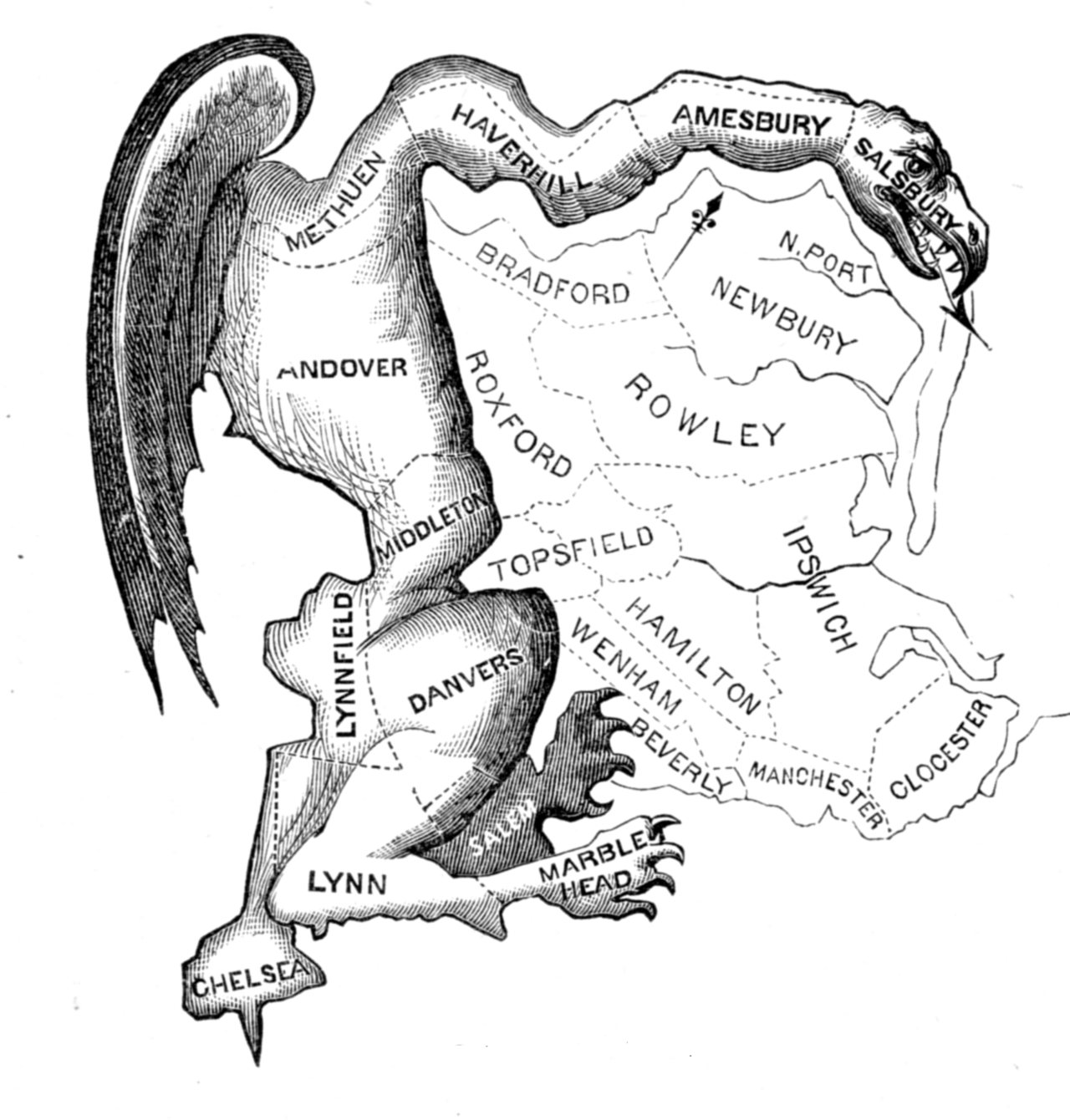
Elkanah Tisdale (1771-1835) (often falsely attributed to Gilbert Stuart), public domain, via Wikimedia Commons
"A new species of Monster," the Boston Gazette called it on 26 March 1812, and printed a picture: a state senate district in Essex County, Massachusetts, with wings, claws and a set of teeth added by the engraver. The caption gave the creature a name built from the governor's. It is the only joke from the Madison era still in daily use, and this week it was in every American newspaper.
On Tuesday the mid-decade maps Republicans redrew to protect their House majority mostly failed, and some actively hurt them. Rolling Stone ran the word "dummymander" in a headline. I would like to report that this is a modern embarrassment, but the original gerrymander did the same thing, and it took about a year.
A law the governor found disagreeable
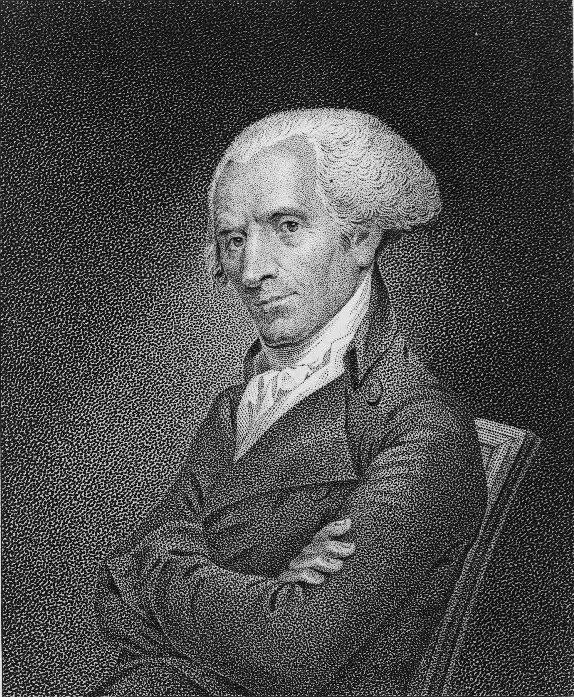
Engraved portrait of Elbridge Gerry, seated with arms folded. Engraved by James Barton Longacre, 1847, Library of Congress Prints & Photographs Division, no known restrictions
In early 1812 the Democratic-Republicans held Massachusetts by slim majorities, with the Federalists close behind. Their answer was to redraw the state senate districts, which had followed county lines. The bill passed the House 278 to 231 over a written Federalist protest. Elbridge Gerry, the governor, signed it in February.
Gerry did not much like it. His son-in-law and first biographer, James T. Austin, wrote that he found the scheme "exceedingly disagreeable" and thought about sending it back. The Massachusetts Historical Society has said there is little evidence he wrote it or even strongly supported it. All the same, it was his signature, and so his name.
(He pronounced that name with a hard G, as in Gary. Almost nobody has followed him.)
The worst of the new districts started at Chelsea, ran east to Marblehead, then climbed north along the Merrimack River towns to Salisbury, going around the middle of Essex County, a Federalist stronghold, and splitting it in two.
Who drew the monster
Elkanah Tisdale engraved the cartoon. That much is secure. Who thought of the joke is less so. In the version told in 1892 by the historian John Ward Dean, it came out of a Federalist dinner party in Boston, where one guest remarked that the district looked like a salamander and the poet Richard Alsop offered "Gerry-mander" instead. Another version has the painter Gilbert Stuart sketching claws on a map in the office of the editor Benjamin Russell. Dean himself doubted the Stuart story, and so do I. It is too good, and Stuart was the only celebrity available.
April 1812: the map works perfectly
Massachusetts voted on 6 April. Federalists won more senate votes statewide, 51,766 to 50,164, and took 11 seats out of 40. The Democratic-Republicans took 29. In Essex, the new district sent three of their men to the senate and displaced five Federalists.
As engineering, it was a triumph, though it did Gerry himself no good. He lost the governorship to Caleb Strong by 1,370 votes. The cartoon, published eleven days before the polls opened, cannot have helped.
The war arrived, and the margins went
A gerrymander wins by spreading your voters thinly across as many districts as possible, so every seat is won but few are won comfortably. That works until the voters move.
In June 1812 Congress declared war on Britain. New England's merchants and shipowners hated it, and Massachusetts Federalists opposed it from the first day. The following spring Strong was re-elected with nearly 57 percent, about six points better than the year before, and the Federalists took 29 senate seats, including in the salamander itself. The party that had been fenced in won the same lopsided total the fence had been built to deny it. The new majority repealed the law and put senate districts back on county lines.
So the first gerrymander lasted one election, and it failed in a way anyone in Texas could now recite: thin margins, and then a war that moved the voters.
Texas, 214 years later
In 2025, under pressure from President Trump, Texas Republicans redrew five Democratic-held districts so that Trump would have carried each by at least 10 points. They hoped for a 30 to 8 delegation. According to the Texas Tribune, they lost four of the five and two seats they already held, ending at 24 to 14, one fewer Republican than they started with. The map assumed that Trump's 2024 gains among Latino voters would stay put. Newsweek reported that of nine redrawn races Cook had rated competitive or leaning Democratic, Republicans lost all nine.
Democrats are not in a position to be smug, having drawn California's counter-map for the same reason, and the fact that it worked this year proves nothing about the next one. Vice President Vance blamed the Iran war for the party's losses, and Trump called that largely true. Caleb Strong would have recognized the argument.
Gerry got a better ending than his maps did. Madison took him as running mate in 1812 and they won. He died in office on 23 November 1814, on his way to the Senate, and lies in the Congressional Cemetery in Washington, the only signer of the Declaration of Independence buried in the capital.
Enjoyed this story?Get a new one every day on social.