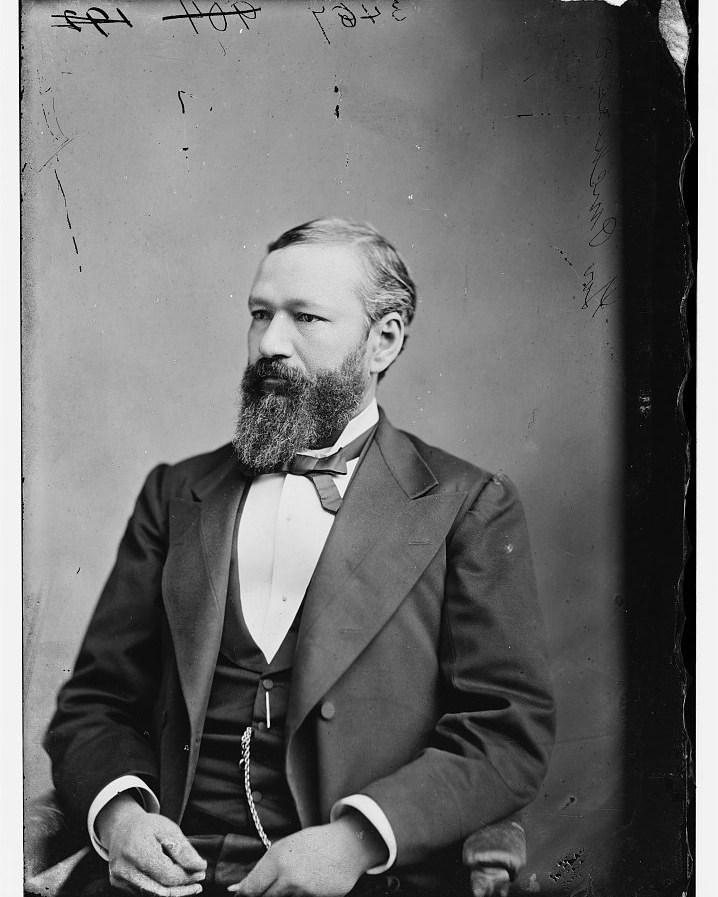
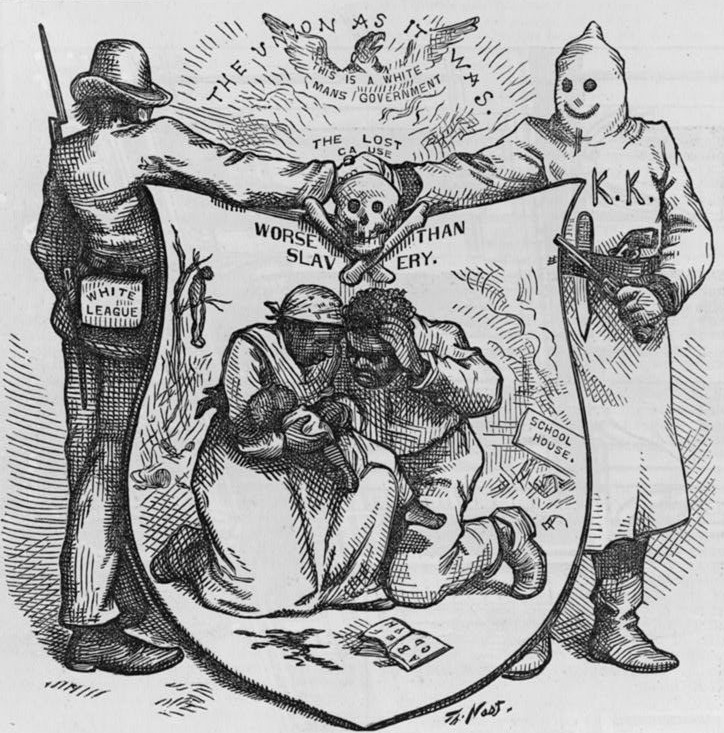
Photograph, between 1870 and 1880, Library of Congress Prints & Photographs Division, no known restrictions
Some time around 1849 a boy of 12 left school in Cincinnati and went to work on the boats. He did the jobs a boy gets on the canals and then on the Ohio and the Mississippi. His mother needed the money, because his father's white relatives had taken everything when the old man died. He was using the surname Stewart.
Twenty-three years later he was sworn in as governor of Louisiana. Most Americans have never heard of him, and they might this week, because on Tuesday Keisha Lance Bottoms beat Rick Jackson by about 360,000 votes in Georgia and became the first Black woman elected to lead an American state. Georgia is also where Pinckney Benton Stewart Pinchback was born, in Macon, in 1837.
Macon, Holmes County, Cincinnati
His mother, Eliza Stewart, had been enslaved by William Pinchback, a white planter, who freed her and raised their children on his land in Holmes County, Mississippi. When he died in 1848 his relatives cut the family out. Eliza took the children to Ohio because she was afraid that in Mississippi they could be re-enslaved. That was a reasonable fear.
The boy spent his teens and early twenties on the rivers, around the gamblers who worked the boats. When Union forces took New Orleans in 1862 he went there and raised companies for the Louisiana Native Guard, one of the few Black men to hold a captain's commission in the Union Army. He resigned in September 1863. Some accounts say white officers had passed him over twice, and others say he walked out rather than sit the new fitness exam the army demanded of its Black officers. Both can be true, and I wouldn't blame him for either.
Thirty-five days in New Orleans
After the war he took his father's name and went into Republican politics, which in Louisiana was closer to a knife fight than a career. At the 1868 constitutional convention he wrote the clause guaranteeing equal access to streetcars and trains. He went to the Republican convention that nominated Ulysses Grant, which he counted among his proudest moments, then won a state Senate seat, became its president, and started a newspaper. When Lieutenant Governor Oscar Dunn, also Black, died suddenly in 1871, Pinchback took his place.
(A note for the careful reader: Dunn had already filled in as acting governor for about 39 days with the governor out of action, though he never took an oath. Pinchback's claim to be first rests on being sworn in. Dunn's admirers have a case.)
In late 1872 the state fell apart over a disputed election between Republican William Kellogg and Democrat John McEnery. Governor Henry Clay Warmoth, on the wrong side of his own party, was impeached by the legislature in December. Under the 1868 constitution that suspended him, and on 9 December 1872 Pinchback took the oath.
He held the office until Warmoth's term ran out on 13 January 1873. Sources give 34, 35 or 36 days, and I count 35. Ten acts became law. Warmoth was never tried. That same month Kellogg and McEnery each held an inauguration, so Louisiana had two governors and President Grant had to decide which was real.
The seat he never got
The Republican legislature elected Pinchback to the US Senate. He had a claim to a House seat as well, which he gave up to hold out for the Senate. Neither chamber would have him. The fight dragged on for years, and when it finally ended against him the Senate paid him $16,000 in compensation, which is one way to settle a civil rights question.
He stayed useful. He helped get Southern University chartered at the 1879 state convention, worked at the New Orleans customs house, and earned a law degree in his late forties. By 1892 Jim Crow was closing in on Louisiana, and he moved to Washington, where he lived among the city's mixed-race elite. Six years later his old state rewrote its constitution to keep men like him from voting.
Georgia was no kinder in those years. In 1868 its legislature expelled its Black members, and Congress had to step in to put them back.
To the day
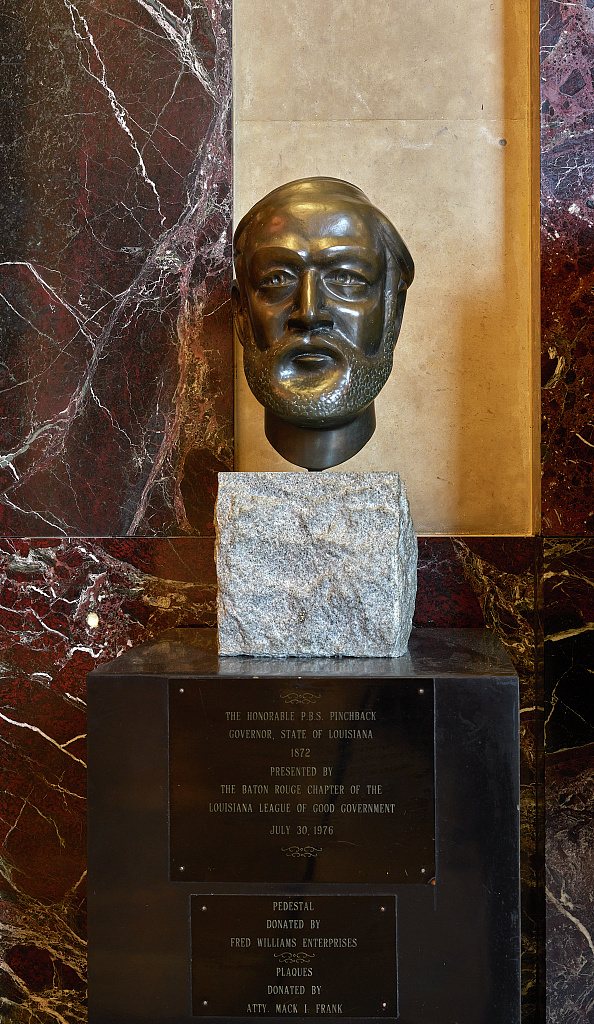
Bust of P.B.S. Pinchback in Memorial Hall at the Louisiana State Capitol in Baton Rouge. Carol M. Highsmith, 2021, Library of Congress Prints & Photographs Division, no known restrictions
L. Douglas Wilder of Virginia was inaugurated on 13 January 1990, the first Black American elected governor of any state. That is 117 years to the day after Pinchback left office in New Orleans, which nobody planned. Deval Patrick in Massachusetts, David Paterson in New York and Wes Moore in Maryland came after him. Bottoms, when she is sworn in next year, will end 24 years of Republican rule in Georgia and be the first woman on that list.
Pinchback died in Washington in 1921 and was taken back to Louisiana, to Metairie Cemetery. His grandson Jean Toomer, who grew up partly in his house, published the novel Cane in 1923.
Enjoyed this story?Get a new one every day on social.