Photo: South Australia Police, 1949, public domain, via Wikimedia Commons
Every label had been cut out of his clothes. That is the detail the Adelaide police noticed first on the morning of 1 December 1948, when they got to the man lying against the sea wall at Somerton Park beach, and it is the detail that kept the case alive for the next seventy-three years. A man in a good suit, a tie and polished shoes, about forty-five, clean-shaven, fit, with the calves of a dancer or a runner, and nothing on him that said who he was.
He had been seen the evening before, slumped in the same spot with his feet crossed, by a couple who thought he was drunk and by another couple who watched him raise his right arm once and let it fall. When he was found at dawn there was a half-smoked cigarette resting on his collar. The pathologist put the death at about two in the morning, found the spleen three times its normal size and the liver congested with blood, and concluded that the man had been poisoned by something that left no trace he could detect.
The pockets
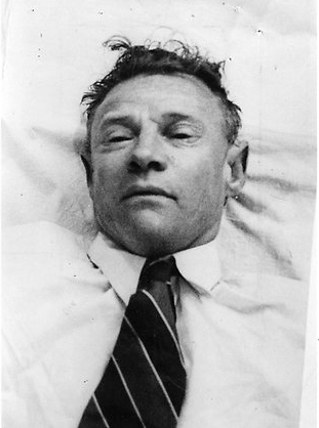
Police photograph of the unidentified man, Adelaide, December 1948. South Australia Police, public domain, via Wikimedia Commons
What the man had on him would fit in two hands: an unused second-class rail ticket from Adelaide to Henley Beach, a bus ticket from the city, a narrow aluminium comb made in America, a half-finished packet of Juicy Fruit, a box of matches, and a packet of Army Club cigarettes containing seven cigarettes of a different, dearer brand, Kensitas. He had no wallet, no hat (in 1948 a man in a suit without a hat was itself odd), and no identity card.
Six weeks later, on 14 January 1949, staff at Adelaide railway station found a brown suitcase in the cloakroom, checked in on the morning of 30 November, the man's last day. Its label had been removed too. Inside were pyjamas and shaving things, a pair of trousers with sand in the cuffs, an electrician's screwdriver, a table knife cut down to a short blade, a stencilling brush of the kind used to mark cargo, and a card of orange waxed thread of a brand not sold in Australia, which matched the thread used to mend a pocket in the trousers he died in. Three items carried a name: a tie marked T. Keane, a laundry bag marked Keane, a singlet marked Kean. Police checked every Keane they could find in the English-speaking world and found none missing.
Two words
The strangest item did not turn up until the inquest, in June 1949, when a pathologist going back over the clothes found a small fob pocket sewn inside the waistband of the trousers and, rolled tightly inside it, a scrap of printed paper bearing two words: Tamám Shud. It is Persian, and it means something like "it is ended". It is also the last line of the Rubaiyat of Omar Khayyam in Edward FitzGerald's famous Victorian translation, and the scrap had been torn from the final page of a copy of the book.
The police appealed for the book. In July a man came forward, saying he had found a copy of the Rubaiyat, a 1941 New Zealand edition, on the back seat of his car, which he had left unlocked near Somerton beach around the time of the death. The last page had been torn. The man asked not to be named and never was; the police file calls him Ronald Francis, which is not his name.
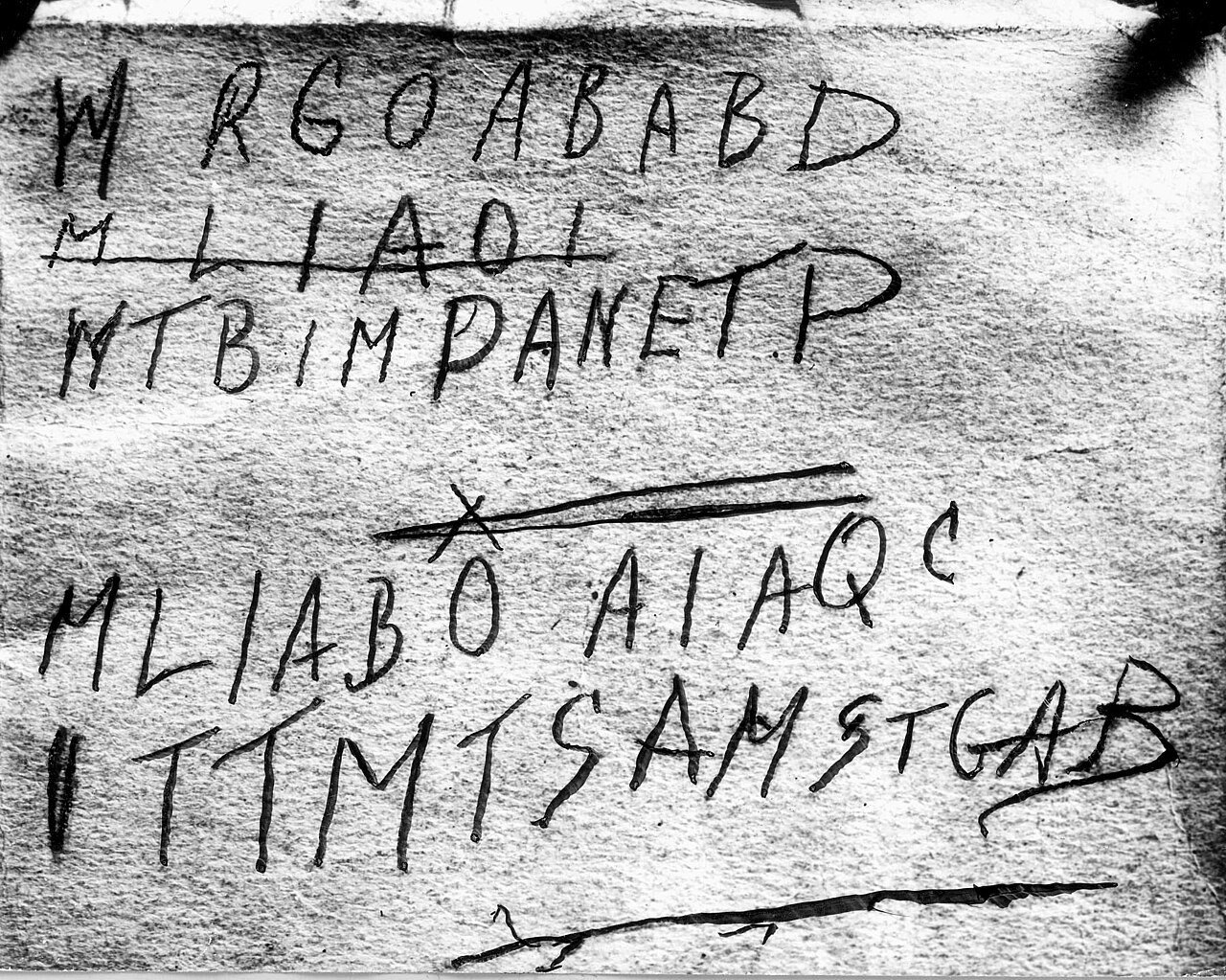
On the inside back cover, visible under ultraviolet light, were faint pencil indentations: a local telephone number, and five lines of capital letters, the second crossed out, which military cryptographers, university engineers and several thousand amateurs have examined and nobody has read. The current best guess, for what it is worth, is that the letters are the initials of words, and that without the words there is nothing to decode.
The nurse
The telephone number belonged to a nurse called Jessica Thomson, who lived in Moseley Street, Glenelg, about four hundred metres from where the body was found. Shown a plaster cast of the dead man's head and shoulders, she said she did not know him, and, according to the detective who was there, very nearly fainted. She admitted that she had once given a copy of the Rubaiyat to an army lieutenant named Alf Boxall, in Sydney in 1945, signed with the pen name Jestyn. The police found Boxall alive in Sydney with his copy intact and the last page in place.
Thomson asked the police not to put her name in the record, and they agreed, which is one reason the case stayed a mystery for so long. She died in 2007. Six years later her daughter told a television programme that her mother had lied to the police and had known who the man was.
Burial
The coroner adjourned the inquest without a finding, and in June 1949 the man was buried at West Terrace Cemetery in Adelaide under a stone that read "Here lies the unknown man who was found at Somerton Beach". The Salvation Army conducted the service and the state's bookmakers' association paid for it, on the grounds that he might have been one of their customers. The suitcase and its contents were destroyed by the police in 1986 as no longer required. The plaster bust survived.
A professor and a bust
Derek Abbott, a professor of electrical engineering at the University of Adelaide, began working on the code in 2009 and did not stop. Along the way he tracked down Jessica Thomson's son, Robin, a ballet dancer with the same unusual ear shape and dental quirk as the dead man, and then Robin's daughter, Rachel Egan, whom he married in 2010. Readers who find that detail hard to believe are in good company. DNA later showed that Robin Thomson was not the Somerton Man's son after all.
Abbott spent a decade asking for the body to be exhumed, and the South Australian government agreed in 2019; the grave was opened on 19 May 2021. The breakthrough, when it came, came from the bust rather than the bones. Pressed into the plaster when it was cast in 1949 were a few of the dead man's hairs. Abbott had them extracted and, after years of coaxing usable DNA out of them, handed the results to Colleen Fitzpatrick, an American forensic genealogist, who built a family tree from distant cousins who had uploaded their DNA to public databases, the same method that has been closing American cold cases since the Golden State Killer. In July 2022 the two of them announced a name.
Carl Webb
Carl Webb, who went by Charles, was born in Footscray, Melbourne, on 16 November 1905, the youngest of six children of a baker who had come out from Hamburg. He was an electrical engineer and instrument maker. In 1941 he married a pharmacist named Dorothy Robertson; the marriage was unhappy, and when she filed for divorce in 1951 she told the court she had not seen him since 1947, and that he had been in the habit of writing poetry about death. His brother Roy had died a prisoner of war in Burma in 1943. His sister had married a man named Keane. Abbott believes Webb went to Adelaide looking for his estranged wife, who had moved to South Australia, and that his death was his own doing; the coroner has never ruled on it either way.
A Melbourne engineer in his forties with a screwdriver in his case and a Keane in the family fits the evidence almost too neatly. What the identification does not explain is why a man who had cut the labels out of his clothes kept a line of Persian poetry sewn into his waistband, or how the book it came from ended up in a stranger's car, or what the five lines of letters say, or what Jessica Thomson knew.
As of this summer the South Australian police had still not formally confirmed the identification, saying only that the investigation was complex and ongoing and that a report would go to the coroner once complete; Abbott told the ABC in July that he was "99.99 per cent sure" and did not expect the police to find otherwise. As far as I can establish, the stone at West Terrace still says unknown man. Whether a coroner's finding changes it, and whether anyone can now say what Carl Webb was doing on that beach, is, at the time of writing, open.
Enjoyed this story?Get a new one every day on social.